Hydrangeas: 5 Expert Tips For Gorgeous Blooms
Master hydrangea care with expert tips for stunning blooms year after year.
5 Tips for Growing Gorgeous Hydrangeas
Hydrangeas are among the most rewarding flowering shrubs for home gardeners, known for their stunning, voluminous blooms that can transform any landscape. Whether you’re a seasoned gardener or just beginning your gardening journey, growing gorgeous hydrangeas doesn’t have to be complicated. With the right knowledge and techniques, you can cultivate thriving hydrangeas that produce abundant, vibrant flowers year after year. This comprehensive guide walks you through five essential tips to ensure your hydrangeas reach their full potential and become the showstopping features of your garden.
Tip 1: Choose the Right Location with Proper Sunlight
One of the most critical factors in growing gorgeous hydrangeas is selecting the right location in your garden. Sunlight plays a fundamental role in determining not only the health of your hydrangea but also the quality and quantity of blooms it produces. Most hydrangea varieties thrive in partial shade, which typically means receiving morning sun followed by afternoon shade. This combination provides the plant with the energy it needs to photosynthesize while protecting it from the intense heat of the afternoon sun, which can stress the plant and reduce flowering.
Different hydrangea varieties have varying sunlight requirements. Panicle hydrangeas are more tolerant of full sun and can handle up to six hours of direct sunlight daily. However, in extremely hot climates, even panicle varieties benefit from afternoon shade to prevent leaf scorch and maintain soil moisture. Oakleaf and bigleaf hydrangeas generally prefer more shade, particularly in southern regions where temperatures soar during summer months. When selecting a planting location, assess how sunlight moves across your garden throughout the day. North-facing locations typically provide consistent, gentle shade, while east-facing spots offer the ideal morning sun without excessive afternoon heat.
In addition to preventing leaf damage, proper sunlight exposure helps regulate soil temperature and moisture retention. Shaded areas tend to retain soil moisture longer, which is beneficial since hydrangeas appreciate consistent watering without waterlogging. If your garden is particularly shaded, you might consider lighter-colored mulches that reflect available light toward the plant.
Tip 2: Prepare and Amend Your Soil Correctly
Soil preparation is foundational to growing gorgeous hydrangeas, as these plants are particular about their growing medium. Hydrangeas thrive in well-draining, rich soil that contains ample organic matter. Before planting, take time to test your soil to understand its composition and pH level, as this information will guide your amendment strategy.
Begin by clearing your planting area of weeds, grass, and debris. Dig a hole that is twice as wide as the root ball and approximately the same depth. This spacious planting hole encourages the roots to spread outward easily into the surrounding soil. The crucial step in soil preparation involves amending the native soil with organic compost. Work compost into the backfill soil at a ratio of approximately one part compost to two parts native soil. This amendment improves soil structure, enhances drainage to prevent root rot, and increases the soil’s water-holding capacity—a critical balance for hydrangeas.
If your soil tends to be heavy clay, add additional compost or aged bark to improve aeration and drainage. Conversely, if your soil is sandy and drains too quickly, organic matter helps retain moisture and nutrients. Some gardeners also incorporate bone meal into the planting hole, which provides phosphorus for root development and flowering. After backfilling, create a water-catching basin around the plant by forming a slight ridge in the soil, which directs water toward the root zone during irrigation.
Tip 3: Master Watering and Mulching Techniques
Proper watering is essential for growing gorgeous hydrangeas, as these plants have moderate to high water requirements, particularly during the growing season. Hydrangeas prefer consistent moisture but not waterlogged conditions. The key is to water deeply and regularly, especially during the first growing season when the plant is establishing its root system. Deep watering encourages roots to grow deeper into the soil, creating a more drought-tolerant plant in the long term.
Water your hydrangeas at the base of the plant rather than from above, as this method reduces the risk of fungal diseases and ensures water reaches the roots where it’s needed most. During dry spells or hot weather, water thoroughly two to three times per week, depending on rainfall and soil drainage. Feel the soil two inches below the surface; if it feels dry, it’s time to water. A drip irrigation system can be particularly effective for hydrangeas, providing steady, consistent moisture without waste.
Mulching plays a vital supporting role in hydrangea care. Apply a two- to three-inch layer of organic mulch around the base of the plant, keeping it a few inches away from the stem to prevent rot and pest problems. Quality mulch options include shredded bark, compost, or wood chips. Mulch serves multiple purposes: it retains soil moisture, regulates soil temperature, suppresses weed growth, and gradually breaks down to improve soil quality. In autumn, refresh the mulch layer to provide extra insulation during winter months, particularly in regions with severe cold.
Tip 4: Fertilize Strategically for Maximum Blooms
Fertilization is crucial for producing gorgeous hydrangea blooms, but like many aspects of hydrangea care, moderation is key. Over-fertilizing hydrangeas, particularly with high-nitrogen formulations, results in excessive leafy growth at the expense of flowers. Instead, opt for a balanced, slow-release fertilizer specifically formulated for hydrangeas, or use a general-purpose balanced fertilizer with equal parts nitrogen, phosphorus, and potassium.
Apply fertilizer in early spring as new growth emerges, following the product’s instructions carefully. Some gardeners prefer a second light application in early summer to support continued flowering. If you prefer organic fertilizing methods, bone meal and compost are excellent choices that provide slow-release nutrients without the risk of over-fertilization. Bone meal is particularly rich in phosphorus, which promotes flowering.
Nutrient deficiencies can limit bloom production. Yellow leaves with green veins may indicate iron deficiency, which can be addressed with chelated iron applications. Consistent, moderate fertilization combined with proper watering and mulching creates ideal conditions for abundant flowering. Always follow application rates to avoid nutrient burn and environmental harm.
Tip 5: Adjust Soil pH to Control Bloom Color
One of the most fascinating aspects of growing gorgeous hydrangeas is the ability to influence bloom color through soil pH management, particularly with bigleaf hydrangea varieties. This remarkable characteristic allows gardeners to customize their hydrangeas’ appearance to match their garden design or personal preferences.
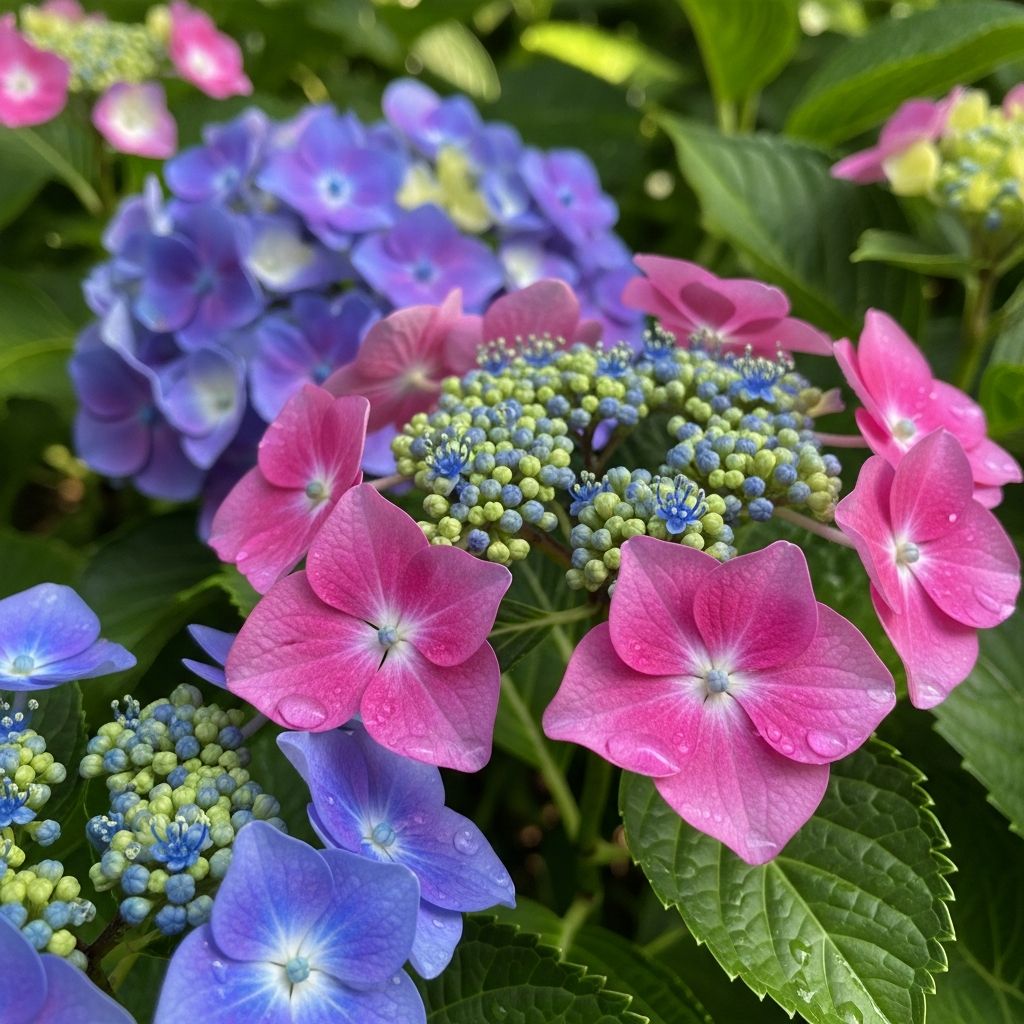
Soil pH directly determines the availability of aluminum to the plant. Acidic soils with a pH below 6.0 contain more available aluminum, which hydrangeas absorb and incorporate into their cell sap, resulting in blue flowers. Alkaline soils with a pH above 7.0 contain less available aluminum, producing pink flowers instead. Neutral soils with a pH around 7.0 typically result in purple or mauve blooms.
To lower soil pH and encourage blue flowers, incorporate aluminum sulfate into the soil around the plant, applying approximately one cup per plant mixed into the top few inches of soil. Test soil pH before and after amendments to monitor changes. To raise soil pH and promote pink flowers, apply horticultural lime in spring or fall, again testing soil afterward to avoid over-correction. White and panicle hydrangeas do not respond to pH adjustments and will maintain their colors regardless of soil chemistry.
This pH adjustment strategy typically takes effect during the growing season following application, so patience is required. Some gardeners make annual adjustments to maintain their desired bloom color, particularly in regions with naturally neutral or changing soil conditions.
Seasonal Care and Maintenance
Beyond the five primary tips, understanding seasonal care helps ensure consistently gorgeous hydrangeas. In spring, focus on pruning dead or weak stems and applying your first round of fertilizer. Summer demands consistent watering and monitoring for pests or diseases. Autumn is ideal for applying fresh mulch and protecting plants for the upcoming winter. In colder regions, wrap shrubs in burlap and apply extra mulch for winter protection.
Pruning timing varies by hydrangea type. Bigleaf and oakleaf hydrangeas bloom on old wood and should be pruned immediately after flowering in late summer. Panicle and smooth hydrangeas bloom on new wood and tolerate late winter or early spring pruning. Understanding your hydrangea type ensures you prune at the right time without sacrificing next year’s blooms.
Troubleshooting Common Hydrangea Problems
Even with proper care, hydrangeas occasionally face challenges. Lack of blooms often results from improper pruning that removes flower buds, late spring frosts, insufficient sunlight, or overfertilization with high-nitrogen products. Address each potential cause systematically. Yellow leaves between veins may indicate pH problems or nutrient deficiencies, while wilting despite adequate water suggests root rot from poor drainage. Brown or scorched leaf edges typically indicate excessive sun exposure or inconsistent watering.
Pest issues are relatively rare on hydrangeas but can occasionally include spider mites or scale insects. Monitor plants regularly and address pest problems early with appropriate organic or chemical solutions. Fungal diseases like powdery mildew may occur in humid conditions; improve air circulation through proper pruning and avoid overhead watering.
Frequently Asked Questions
Q: When is the best time to plant hydrangeas?
A: Spring and fall are ideal planting times when temperatures are mild, allowing the plant to establish roots before facing extreme weather conditions. Avoid planting during hot summers or freezing winters.
Q: How often should I water my hydrangeas?
A: Water deeply two to three times per week during growing season, depending on rainfall and soil drainage. Check soil moisture two inches down; if dry, water thoroughly. Adjust frequency based on weather and soil type.
Q: Can I change my hydrangea’s bloom color?
A: Yes, bigleaf hydrangea colors can be altered by adjusting soil pH. Blue flowers require acidic soil (pH below 6), pink flowers need alkaline soil (pH above 7), and purple flowers result from neutral pH. White and panicle hydrangeas don’t respond to pH adjustments.
Q: Why isn’t my hydrangea blooming?
A: Common causes include improper pruning that removes flower buds, insufficient sunlight, late spring frosts, or overfertilization with nitrogen-heavy products. Ensure correct pruning timing for your variety and provide adequate light.
Q: How much mulch should I apply around hydrangeas?
A: Apply a two- to three-inch layer of organic mulch around the plant base, keeping it several inches away from the stem to prevent rot and pest issues. Refresh mulch annually.
Q: Do all hydrangea varieties need the same care?
A: While basic care principles are similar, different varieties have varying pruning requirements, sun tolerance, and cold hardiness. Identify your hydrangea type to provide species-specific care for optimal results.
References
- How To Choose and Plant Hydrangeas — This Old House. 2024. https://www.thisoldhouse.com/gardening/21017250/how-to-choose-and-plant-hydrangeas
- Everything To Know About Hydrangeas — This Old House. 2024. https://www.thisoldhouse.com/gardening/23068591/types-of-hydrangeas
- How to Choose and Plant Hydrangeas | Ask This Old House — This Old House Video Series. https://www.thisoldhouse.com/gardening/21017250/how-to-choose-and-plant-hydrangeas
Similar Articles







Read full bio of medha deb