American Standard Furnace Troubleshooting Guide
Master DIY fixes for common American Standard furnace issues, from error codes to no-heat problems, and know when to call pros.
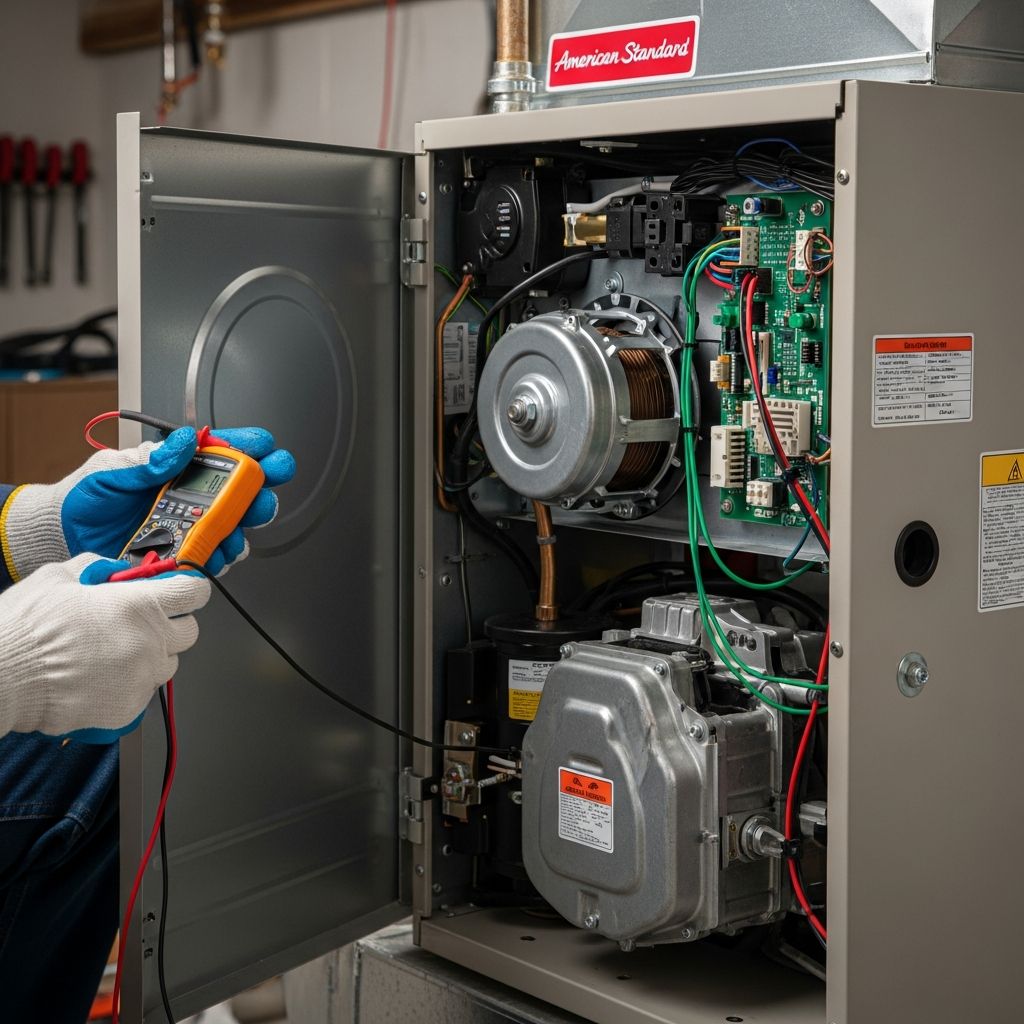
American Standard furnaces are reliable heating systems designed for efficiency and durability, but like all HVAC equipment, they can encounter issues over time. Whether it’s a lack of heat during winter, strange noises, or blinking error lights, understanding common problems allows homeowners to perform basic diagnostics and fixes. This guide draws from official recommendations and technical resources to help you identify and resolve issues safely, potentially avoiding costly service calls.
Essential Safety Precautions Before Starting
Before inspecting or repairing your furnace, prioritize safety to prevent electrical shocks, gas leaks, or fires. Always turn off power at the circuit breaker and shut off the gas supply valve. Wear protective gloves and eyewear, and avoid working on live components. If you smell gas, evacuate immediately and call emergency services—do not attempt fixes. Never bypass safety switches or ignore error codes, as they protect against hazards like overheating.
- Locate and switch off the furnace’s dedicated breaker in your electrical panel.
- Close the manual gas shutoff valve, typically near the unit.
- Allow the system to cool if it has been running.
- Use tools like a multimeter only if you have experience; otherwise, note observations for a technician.
Initial Diagnostic Steps for Any Furnace Issue
Most problems stem from simple oversights. Start with these universal checks to rule out easy fixes before diving deeper.
- Verify Thermostat Settings: Ensure it’s set to ‘Heat’ mode and the temperature is above room temperature by at least 5°F. Switch the fan to ‘On’ to test if it runs independently.
- Inspect Power Supply: Check if the breaker has tripped or fuses are blown. Reset if needed, but if it trips repeatedly, there’s a short circuit.
- Confirm Furnace Power Switch: Look for an on/off switch on or near the unit, often in the basement or by stairs—ensure it’s in the ‘On’ position.
- Examine the Door Switch: Make sure the furnace door is securely closed, as an open safety switch prevents operation.
After these, wait 30 minutes and attempt to restart. If no improvement, proceed to symptom-specific troubleshooting.
Common Symptoms and Step-by-Step Fixes
Furnaces exhibit distinct signs of trouble. Use this section to match your issue and apply targeted solutions.
No Heat or Furnace Won’t Start
The most frequent complaint, often due to power, filter, or ignition failures.
- Clean or replace the air filter: Locate it on the side or return duct, slide out the old one, and insert a new filter with airflow arrows pointing toward the blower.
- Test the igniter: For gas models, inspect for cracks or white spots. Use a multimeter to check continuity—if faulty, replace it.
- Check the flame sensor: A sooty rod near the burner; clean with fine steel wool if dirty, or replace if damaged.
Furnace Starts but Shuts Off Quickly
This indicates safety lockouts from flame detection or pressure issues.
- Verify pressure switch: Ensure vents are clear of blockages like bird nests or debris.
- Clean the flame sensor as above—dirt prevents flame recognition.
- Inspect limit switches: Overheating triggers these; restricted airflow from dirty filters or coils is common.
| Symptom | Possible Cause | DIY Fix | Pro Needed If… |
|---|---|---|---|
| No Heat | Tripped Breaker | Reset breaker; check connections | Trips repeatedly |
| Short Cycling | Dirty Flame Sensor | Clean with abrasive pad | Sensor won’t clean |
| Cold Air Only | Failed Blower Motor | Test for power; inspect belt | Motor receives power but doesn’t run |
| Excessive Airflow | Stuck Thermostat Contact | Multimeter test for continuity | Control board fault |
Irregular Cycling or Continuous Blower Operation
Thermostat or control board problems cause on-off fluctuations or nonstop fan.
- Adjust thermostat heat anticipator if equipped, or recalibrate per manual.
- Check blower relay on the control board for stuck contacts.
- Vacuum blower compartment and fan blades to remove dust buildup.
Water Leaks or Strange Noises
Leaking condensate points to a clogged drain pipe—flush with vinegar solution. Noises like banging suggest loose parts or expanding ducts; inspect for debris in the heat exchanger.
Understanding American Standard Error Codes
LED lights on the control board flash patterns signaling specific faults. Note the code before resetting power, as it clears on shutdown.
- LED Off: No power—check breaker, wiring, transformer.
- Slow Flash: Normal, no heat demand—verify thermostat.
- Fast Flash: Running normally or minor issue—monitor.
- Steady On: Control board failure—professional replacement needed.
- 2 Flashes: Lockout from retries, often ignition or gas supply.
- 3 Flashes: Pressure switch open—clear vents.
- 4 Flashes: Limit switch tripped—check airflow restrictions.
- 5 Flashes: Flame sensed without gas valve on—gas valve or board issue.
- 7 Flashes: Gas valve circuit error.
- 8-9 Flashes: Low flame sense, igniter, or gas problems.
- 22 Flashes: Flame current issue.
Refer to your model’s manual for exact interpretations, as codes vary slightly by series.
Air Filter Maintenance and Replacement
A clogged filter starves the system of air, causing overheating and shutdowns. Replace every 1-3 months based on usage.
- Consult manual for filter size (e.g., 16x25x1).
- Power off unit.
- Remove access panel, slide out filter.
- Install new one, arrows toward furnace.
- Clean surrounding area and vents.
For high-efficiency models, use pleated filters matching MERV ratings.
When to Contact a Professional Technician
DIY resolves 70% of issues, but complex problems require experts to avoid voiding warranties or causing damage. Call pros for:
- Gas odors, soot buildup, or cracks in heat exchanger.
- Persistent error codes after basic resets.
- Noises like screeching or rumbling.
- Blower or motor failures confirmed by testing.
- Any electrical or gas component replacement.
Professionals use diagnostic tools for control boards, pressure tests, and combustion analysis.
Preventive Maintenance Tips for Longevity
Annual tune-ups extend life to 15-20 years. Schedule professional inspections, change filters quarterly, keep vents clear, and test thermostats yearly. Upgrade to smart thermostats for efficiency.
Frequently Asked Questions (FAQs)
What does a blinking red light mean on my American Standard furnace?
A continuous flash often means normal operation, but specific flash counts indicate errors like lockouts or sensor issues—check the code chart.
How do I reset my American Standard furnace?
Turn off power for 30 minutes, check basics, then restore power. Avoid frequent resets, as they indicate underlying problems.
Why is my furnace blowing cold air?
Common causes include dirty filters, faulty igniter, or blower issues—start with filter and thermostat checks.
Can I fix error code 3 flashes myself?
Yes, often by clearing blocked vents or pressure tubes, but test the switch if persistent.
How often should I service my furnace?
Annually in fall, plus monthly filter checks during heating season.
References
- American Standard Furnace Repair: Error Codes & Guide — FurnacePrices.ca. 2023. https://www.furnaceprices.ca/repairs/furnace-repair/american-standard-furnace-repair/
- Furnace Troubleshooting — AmericanStandardAir.com. 2024-10-15. https://www.americanstandardair.com/resources/hvac-troubleshooting/furnace/
- American Standard, Trane Furnace Error Codes — AdvanPro.ca. 2024. https://www.advanpro.ca/furnace-troubleshooting/american-standard-trane-furnace-error-codes/
- Common American Standard Furnace Error Codes: Troubleshooting Tips — PenguinHVAC.ca. 2023-11-20. https://www.penguinhvac.ca/common-american-standard-furnace-error-codes-troubleshooting-tips
- HVAC Troubleshooting — AmericanStandardAir.com. 2024. https://www.americanstandardair.com/resources/hvac-troubleshooting/
Similar Articles






Read full bio of medha deb