Apartment Balcony Protection: Strategic Methods to Deter Squirrels
Comprehensive strategies for maintaining a squirrel-free apartment balcony using proven deterrent methods.
Managing Squirrel Invasions on Your Apartment Balcony
Apartment living often means enjoying outdoor space with a balcony, yet uninvited wildlife can quickly transform this peaceful retreat into a frustrating battleground. Squirrels, in particular, have become a common nuisance for urban and suburban residents, causing damage to plants, creating unsightly messes, and occasionally finding their way indoors. These agile creatures possess remarkable climbing abilities and an insatiable curiosity about human spaces, making them particularly challenging to manage in multi-story residential buildings. The challenge intensifies when living in an apartment, where your options may be limited compared to homeowners with larger properties and greater control over their surroundings.
The good news is that preventing squirrel invasions does not require hiring expensive professional services or tolerating their presence indefinitely. By understanding what attracts squirrels and implementing a combination of strategic interventions, you can reclaim your balcony and maintain it as a squirrel-free zone. This comprehensive guide explores multiple approaches to squirrel prevention, ranging from environmental modifications to repellent applications, helping you select the most appropriate solutions for your specific situation.
Identifying and Eliminating Squirrel Attractants
The foundation of any effective squirrel prevention strategy begins with understanding what draws these creatures to your balcony in the first place. Squirrels are not randomly selecting your space; they are responding to specific environmental cues that signal food availability, shelter, or safe passage. By systematically removing these attractants, you eliminate the primary motivation for squirrels to visit your balcony repeatedly.
Food sources represent the most powerful squirrel attractant. Bird feeders containing seeds, nuts, or other edible materials essentially serve as open invitations to hungry squirrels. If you maintain bird feeders on your balcony, consider relocating them to a distant location on your property, away from your residence. Alternatively, invest in specialized squirrel-resistant feeders that allow birds to access food while preventing larger animals from reaching the contents. These engineered feeders typically incorporate weight-activated mechanisms or narrow feeding ports that accommodate birds but frustrate squirrels.
Beyond bird feeders, ornamental and vegetable plants attract squirrels seeking natural food sources. Flowering plants, vegetable gardens, and fruiting containers provide nutrition that squirrels recognize as reliable food sources. If your balcony hosts a garden, consider implementing protective measures such as fencing individual planters or applying deterrent sprays to soil surfaces. This approach allows you to maintain your horticultural interests while minimizing squirrel access to the plants themselves.
Environmental debris also contributes to squirrel attraction. Fallen leaves, dirt accumulation, scattered seeds, and food remnants from human activity create an environment that appears hospitable to wildlife. Establishing a regular cleaning routine—sweeping your balcony, removing leaf litter, and hosing down surfaces—eliminates these subtle attractants. Additionally, seal or remove any garbage containers left on your balcony, and dispose of food waste promptly to prevent odors that might lure squirrels from surrounding areas.
Creating Physical Barriers and Access Prevention
While removing attractants addresses motivation, physical barriers address opportunity. Even the most food-deprived squirrel cannot access your balcony if structural obstacles prevent entry. A multi-layered approach to physical security involves sealing entry points, installing protective coverings, and modifying the balcony structure itself.
Begin with a thorough inspection of your balcony’s perimeter, paying particular attention to windows and doors. Squirrels can exploit surprisingly small openings, squeezing through cracks in door frames, gaps around window seals, or damaged screening. Examine these areas closely and apply high-quality weatherstripping or caulking to seal gaps. For damaged window or door screens, repair tears promptly or replace screens entirely to prevent squirrels (and other unwanted animals) from entering your apartment directly.
Next, evaluate the vertical accessibility of your balcony. Squirrels approach balconies using several pathways: tree branches extending near the structure, adjacent building features, drain pipes, and climbing along railings themselves. If possible, consult with your building management about trimming tree branches that extend within several feet of your balcony. Creating distance between tree limbs and your balcony significantly reduces squirrel access since they prefer not to leap across open space when approaching a structure.
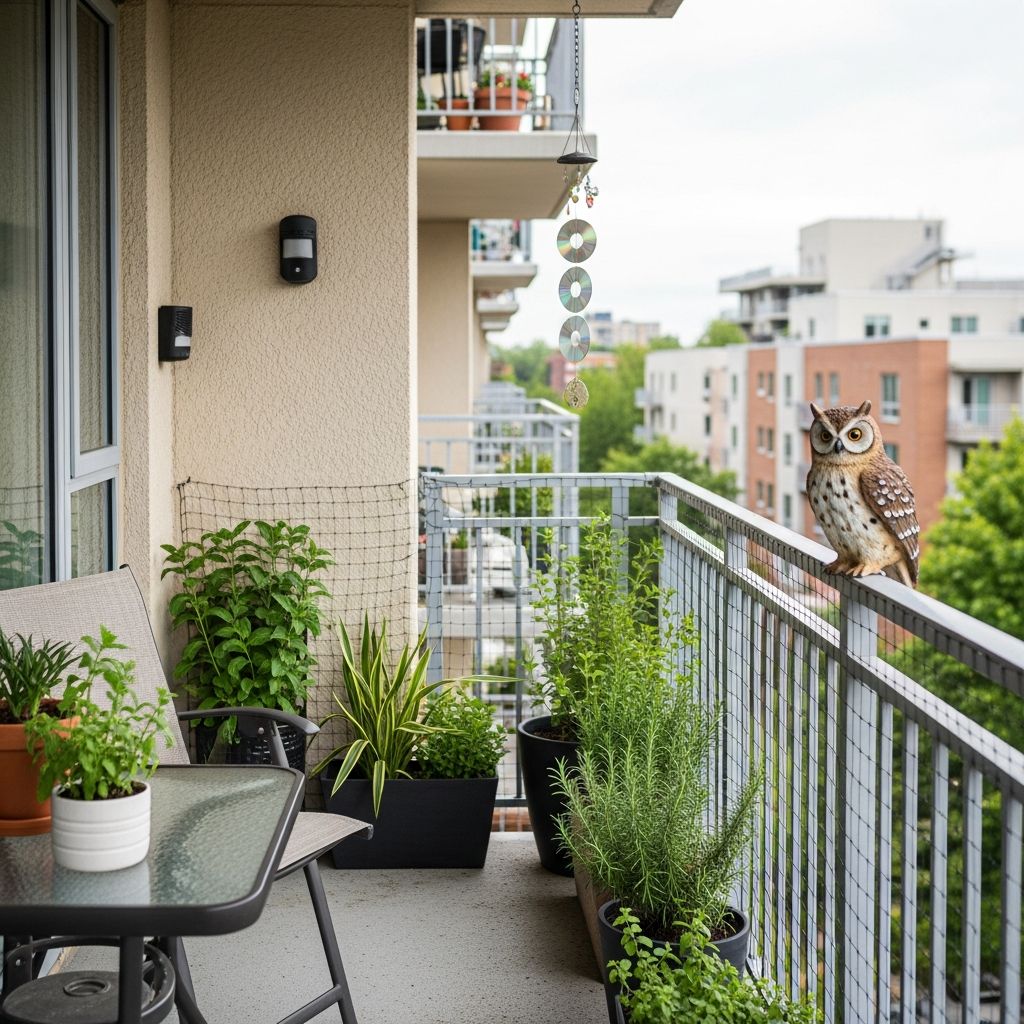
For the balcony railings themselves, consider installing a physical barrier using hardware cloth or fine-mesh fencing material. Unlike standard window screening, which squirrels can tear through with their sharp claws, hardware cloth provides durable protection. Install this material securely along the outer edge of railings, ensuring no gaps exist where determined squirrels might find purchase. Pull the material taut and secure it with staples or fasteners spaced closely together, eliminating any slack that might create handholds for climbing.
Another protective approach involves enclosing your entire balcony with fine-mesh screening or hardware cloth. This creates a complete perimeter defense, transforming your balcony into a controlled space. While this approach requires more materials and installation effort, it provides the highest level of protection and allows you to use bird feeders or maintain plants without concern about squirrel interference.
Applying Commercial and Natural Repellent Solutions
Repellents work by making your balcony an unpleasant or uncomfortable environment for squirrels, encouraging them to seek alternative locations. These products function through multiple mechanisms: offensive odors, irritating tastes, or disorienting sensations.
Commercial repellent products available in spray or granular form contain ingredients specifically formulated to produce scents that squirrels find objectionable. These products typically feature plant-based compounds with strong olfactory properties. Apply commercial repellents to areas where squirrels are most likely to concentrate—railings, corners, planter boxes, and ground surfaces. Maintain a consistent application schedule, reapplying after rain or as product labels direct, to reinforce the message that your balcony remains inhospitable.
For those preferring natural approaches, several household substances create effective deterrent effects. Soaking rags in apple cider vinegar or ammonia produces potent odors that mimic predator scent, triggering an instinctive fear response in squirrels. Place these scent-soaked rags in perforated plastic bags and position them near areas where squirrels frequent. Similarly, used cat litter carries predator scent that unsettles squirrels, particularly mother squirrels concerned about safety for their young.
Plants themselves can serve as living repellents. Incorporating strong-smelling varieties such as garlic, leeks, peppermint, or geraniums into your balcony landscape creates an environment that naturally discourages squirrel visitation. These plants offer the dual benefit of providing aesthetic appeal while functioning as biological deterrents. Alternatively, prepare homemade repellent sprays by combining jalapeños, onions, or cayenne pepper with water. Spray this mixture directly on soil around plants, creating an unpalatable environment that squirrels prefer to avoid.
Electronic deterrents represent another category of repellent technology. Ultrasonic animal repellers emit high-frequency sounds inaudible to human ears but irritating to squirrels and other wildlife. These battery-operated or solar-powered devices can be effective when squirrels cannot physically reach your balcony but are still creating problems in surrounding areas. Position these devices strategically to cover your balcony space while pointing toward probable approach routes.
Structural Modifications and Building Cooperation
As an apartment resident, your ability to implement comprehensive structural modifications may depend on building management approval and cooperation. However, several modifications fall within typical apartment-dweller authority and can significantly improve squirrel prevention outcomes.
Securing window and door screens represents a priority maintenance task. Inspect screens regularly for tears, punctures, or separation from frames, addressing any damage immediately. Squirrels quickly learn to target weakened screens, so prompt repair prevents exploitation of these vulnerabilities. Consider upgrading to heavy-duty screening materials designed specifically to resist animal damage.
Communication with building management opens possibilities for larger-scale interventions. Many property managers recognize that squirrel problems affect multiple units and impact property value and resident satisfaction. Propose trimming adjacent tree branches, installing perimeter fencing with appropriate mesh materials, or establishing building-wide wildlife management strategies. Demonstrating that these interventions benefit the entire community may facilitate approval and cost-sharing arrangements.
Some properties maintain bird feeders or food sources specifically to redirect wildlife away from residential balconies. If your building permits this approach, encourage management to position feeders far from the building in less problematic locations. This strategy acknowledges squirrels’ presence while minimizing their interaction with apartment spaces.
Maintaining Long-Term Success and Prevention
Squirrel prevention requires sustained effort rather than one-time interventions. These persistent creatures learn from experience and may test your defenses repeatedly until convinced that your balcony offers no advantages. Consistency and vigilance form the cornerstones of lasting success.
Establish a maintenance schedule that includes regular balcony cleaning, periodic inspection of screens and seals, and timely reapplication of repellents. Document any squirrel activity, noting which deterrents proved most effective and which areas require additional attention. This record helps you refine your approach based on real-world results rather than relying solely on general recommendations.
Environmental conditions change seasonally, affecting squirrel behavior patterns. Fall and winter typically bring increased squirrel activity as animals search for food to sustain them through colder months. Increase vigilance during these seasons, intensify repellent applications, and ensure that all physical barriers remain secure. Spring and summer may bring new juvenile squirrels exploring territories unfamiliar to them, requiring preventative messaging through repellent use and deterrent visibility.
Remain flexible in your approach, adjusting strategies based on effectiveness. If one repellent product loses effectiveness—which can happen as squirrels become accustomed to specific scents—rotate to alternative products or switch between different deterrent types. This rotation prevents habituation and maintains deterrent effectiveness over extended periods.
Special Considerations for Balcony Gardens
Apartment dwellers who maintain balcony gardens face particular challenges, as these cultivated spaces simultaneously attract and accommodate squirrel activity. Protecting plants while maintaining a functional garden requires targeted interventions that balance squirrel prevention with horticultural success.
Apply repellent sprays directly to soil surfaces around plants, focusing on areas where squirrels typically dig or disturb soil. Spray after watering to ensure proper absorption and maximum effectiveness. Concentrate repellent application on soil rather than leaves unless leaf damage occurs, as this approach minimizes impact on plant health and edibility while targeting squirrel-attractive substrate.
Individual plant containers can be protected by installing perimeter fencing or mesh covers that allow plant growth while preventing squirrel access. Vertical gardening systems with caged or enclosed compartments provide both efficient space utilization and built-in squirrel protection. Companion planting strategies that incorporate repellent plant varieties create living barriers that deter squirrels while contributing to overall garden aesthetics.
Frequently Asked Questions
Q: Will squirrels eventually abandon my balcony if I consistently use repellents?
A: Yes, consistent application of repellents—whether commercial sprays, natural scent deterrents, or electronic devices—can eventually discourage squirrels from frequenting your balcony. However, success depends on persistence, as squirrels may test your defenses multiple times before concluding your space offers no value. Most sources recommend maintaining preventative measures for several weeks to several months before expecting complete abandonment.
Q: Can I use mothballs as a squirrel deterrent?
A: While mothballs produce strong odors that may temporarily deter squirrels, they are not recommended for balcony use due to health concerns. Mothballs release toxic fumes that can accumulate in enclosed or semi-enclosed balcony spaces, potentially affecting both human residents and pets. Safer alternatives include apple cider vinegar, ammonia-soaked rags, or plant-based repellent products specifically formulated for outdoor animal deterrence.
Q: What should I do if squirrels have already entered my apartment?
A: If squirrels have accessed your apartment interior, contact your building management immediately and consider professional wildlife removal services. Do not attempt to trap or handle squirrels yourself, as they may bite or scratch if cornered or frightened. Professional services safely capture and relocate animals while addressing entry points to prevent future invasions.
Q: Are ultrasonic repellers effective for squirrels?
A: Ultrasonic repellers produce variable results depending on squirrel population and environmental factors. Some research suggests they can deter squirrels, particularly when used in conjunction with other deterrent methods. However, they should not be relied upon as sole prevention strategies. Combining ultrasonic devices with physical barriers, repellent sprays, and environmental modifications increases overall effectiveness.
Q: How long should I maintain preventative measures on my balcony?
A: Ideally, maintain preventative measures year-round, with increased vigilance during fall and winter when squirrel activity peaks. Even after achieving apparent success, squirrels may return seasonally or following migration of new individuals into your area. Sustainable balcony protection involves ongoing maintenance rather than temporary interventions.
References
- Squirrel-Proof Your Balcony: Effective Strategies to Keep Squirrels Away — FJ Outdoors. Accessed January 2026. https://fj-outdoors.com/blogs/guide/squirrel-proof-your-balcony-effective-strategies-to-keep-squirrels-away
- How to Keep Squirrels Off of Your Balcony — Skedaddle Wildlife. Accessed January 2026. https://www.skedaddlewildlife.com/location/oshawa/blog/how-to-keep-squirrels-off-of-your-balcony/
- Squirrels on the Balcony — Toronto Wildlife Centre. Accessed January 2026. https://www.torontowildlifecentre.com/wildlife-emergency-rescue-hotline/conflicts-with-wildlife/common-squirrel-problems/squirrel-living-on-your-balcony/
- How I Keep Squirrels Off My Balcony Garden with a DIY Spray — By Brittany Goldwyn. Accessed January 2026. https://www.bybrittanygoldwyn.com/make-squirrel-repellant-spray/
- How to Get Rid of Squirrels in 10 Different Ways — Polywood. Accessed January 2026. https://www.polywood.com/blogs/outdoor-living/how-to-get-rid-of-squirrels-in-10-different-ways
Similar Articles




Read full bio of Sneha Tete