Complete Guide to Attic Fans and Summer Cooling
Reduce cooling costs and protect your home with strategic attic ventilation
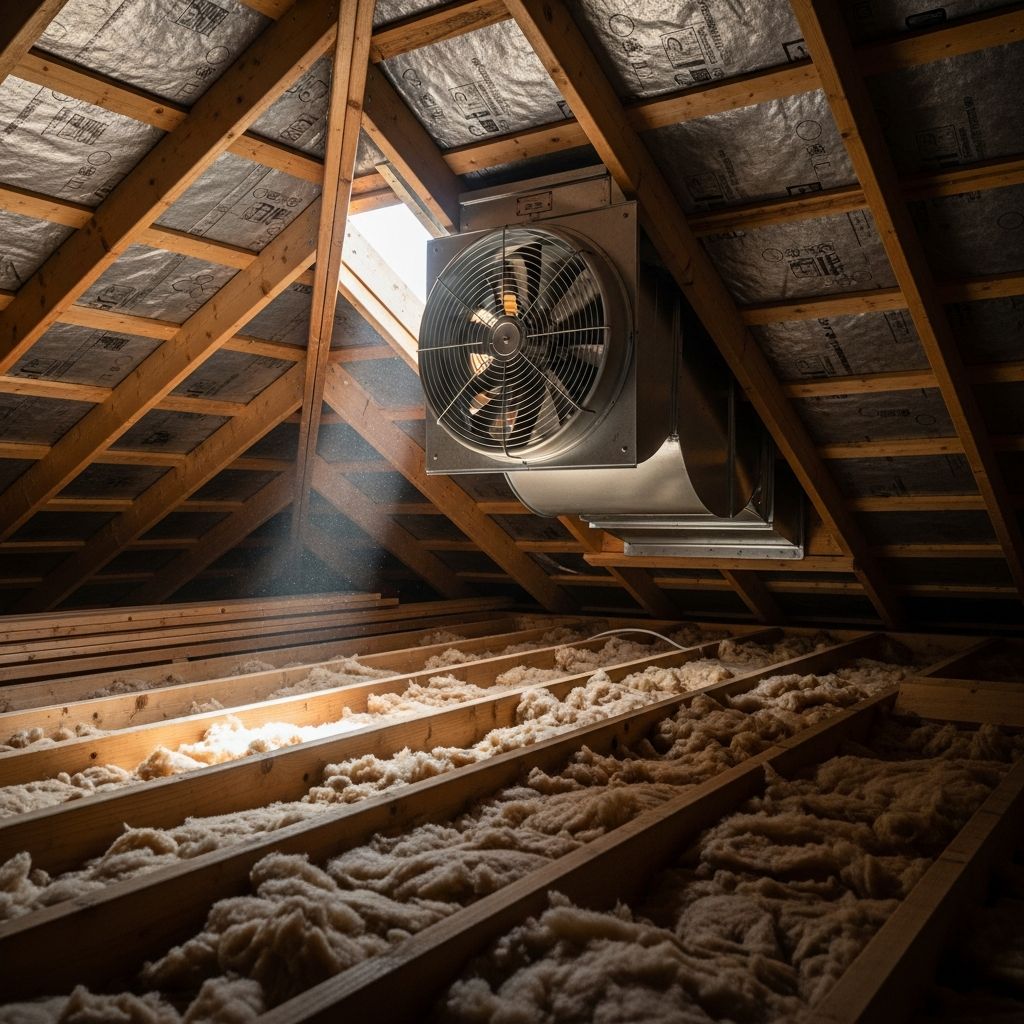
Understanding the Mechanics Behind Attic Ventilation
An attic fan operates as an exhaust system designed to manage temperature and moisture levels in your home’s uppermost space. The mechanism works by drawing hot, stagnant air from the attic and expelling it to the outside environment while simultaneously pulling cooler outside air through existing vents into the attic space. This continuous circulation process creates a significant temperature differential that reduces heat transfer into your living areas, thereby decreasing the workload on your air conditioning system.
The fundamental principle underlying attic fan operation involves negative pressure dynamics. As the fan pulls air outward, it creates lower pressure within the attic, which naturally draws replacement air from intake vents located at lower elevations, typically soffit vents positioned under the eaves. Without adequate intake ventilation, the system cannot function properly and may paradoxically draw conditioned air from your living spaces, negating potential energy benefits.
Temperature Impact and Energy Efficiency Benefits
Unventilated attics during summer months can reach temperatures exceeding 150°F, forcing air conditioning systems to work considerably harder and resulting in elevated energy consumption. By installing an attic fan, homeowners can maintain attic temperatures within 5 to 10 degrees Fahrenheit of the outdoor temperature, creating a more moderate thermal environment. This temperature regulation translates directly into measurable energy savings, with many homeowners experiencing cooling cost reductions of up to 30 percent annually.
Beyond summer cooling applications, attic fans provide substantial benefits during colder months. Winter operation allows these systems to equalize interior and exterior temperatures, which inhibits the formation of moisture and prevents mold development within the attic cavity. This dual-season functionality makes attic fans valuable investments for year-round home protection.
Protecting Your Roof Structure
Asphalt roof shingles deteriorate more rapidly in poorly ventilated attics due to sustained exposure to elevated temperatures. The heat accumulation accelerates oxidation and breaks down the materials binding shingles together, leading to premature warping and shortened roof lifespan. By maintaining cooler attic conditions through active ventilation, homeowners can slow the aging process and extend the useful life of their roofing materials, potentially delaying expensive replacement investments.
Moisture Management and Mold Prevention
Moisture accumulation represents one of the most serious threats to attic integrity. Without proper ventilation, condensation builds within the attic cavity, creating ideal conditions for mold and mildew colonization. Active attic ventilation systems remove moist air before it can condense, maintaining humidity at levels incompatible with mold growth. This preventive approach protects structural wood members, insulation materials, and stored items from moisture-related damage.
Installation Options: Roof-Mounted Versus Gable-Mounted Systems
Homeowners have two primary installation configurations when adding attic ventilation capacity. Roof-mounted fans install directly on the roof slope, positioning the intake at the attic’s peak where heat naturally accumulates most intensely. This placement maximizes heat removal efficiency but requires cutting through roofing materials and managing proper flashing installation.
Gable-mounted fans attach to existing openings in the gable walls, eliminating the need for roof penetration. This configuration proves simpler for retrofitting but may not capture heat as effectively since the intake point sits at mid-height rather than the attic peak. Some homeowners choose gable-mounted systems specifically to avoid roof work and associated potential for leaks.
Step-by-Step Installation Process for Roof-Mounted Fans
Preparation and Location Marking
Begin by selecting your installation location between roof rafters, typically near the ridge line where temperatures run highest. From the interior attic space, measure equal distances between adjacent rafters and mark your chosen point. Drill a pilot nail hole through the roof at this location to create a reference point visible from outside.
Roof Opening Creation
Place the circular template provided with your fan unit on the roof using the pilot hole as the center point. Trace around the template, then use a jigsaw to cut through both roof shingles and underlying decking. This step requires careful execution to avoid damaging surrounding materials or creating pathways for water infiltration.
Flashing and Fan Installation
Before mounting the fan, carefully pry up shingles surrounding the opening to allow the fan’s flashing to slide beneath the upper shingles and rest on top of lower shingles. This overlapping arrangement mirrors standard roof flashing techniques used for skylights and vents, ensuring water flows over rather than into the opening. Center the fan directly over the hole and secure it with weatherproof screws.
Sealing and Weatherproofing
Apply weatherproof caulking or roofing mastic generously around all edges where the fan base meets the roof surface. This sealing step proves absolutely critical for preventing leaks. Additionally, seal any interior gaps where ducting connects to the fan using expanding foam insulation. Proper sealing prevents both water infiltration and air leakage that could reduce system efficiency.
Shingle Replacement
Finally, cut the uppermost shingles to fit around the fan’s throat section and nail them back down securely. Ensure all cut edges are properly sealed and no nails penetrate the fan housing.
Gable-Mounted Installation Procedures
For gable installations, the process differs significantly. From inside the attic, measure the existing gable vent opening dimensions. Cut a piece of plywood slightly larger than this opening and cut a circular hole in the center sized for your fan unit. Mount the fan directly to the plywood using appropriate brackets, then secure the entire assembly over the existing gable vent opening from inside the attic. This approach eliminates roof penetration entirely while maintaining effective ventilation.
Electrical Connections and Thermostat Integration
Proper electrical installation requires running power supply cable through a cable clamp secured to a nearby rafter or wall stud. Never run electrical wires loosely or allow them to contact sharp edges. Always step on ceiling joists when working in the attic, never between them, as stepping on insulation-covered areas risks falling through the ceiling below.
Installing a thermal switch or adjustable thermostat represents a critical upgrade that dramatically improves system efficiency. These devices automatically activate the fan when attic temperature reaches a predetermined threshold and deactivate it when temperatures drop, eliminating wasteful operation during cool periods. Users simply set the temperature dial and allow the system to operate autonomously.
Ensuring Adequate Intake Ventilation
The most frequently overlooked aspect of attic fan installation involves intake ventilation capacity. Your fan can only exhaust air as fast as replacement air enters through intake vents. If intake vents prove insufficient, the system operates under negative pressure conditions, potentially drawing conditioned air from living spaces and canceling energy savings.
Proper system design requires locating intake vents at lower elevations, ideally soffit vents at the eaves, positioned far from exhaust locations. This separation allows cooling air to traverse the entire attic space, ensuring even temperature distribution and preventing hot spots. When soffit vents prove inadequate, rafter vents installed near the base of rafters can supplement intake capacity.
Cost Considerations and Installation Timeline
DIY installation of attic fans typically requires materials costs between $100 and $400, depending on fan quality and supplementary components. Professional installation ranges from $975 to $2,700, including labor and materials. The installation process generally takes 4 to 6 hours for experienced DIYers and 2 to 3 hours for professional contractors.
Common Installation Mistakes to Avoid
Many homeowners compromise their attic fan systems through preventable errors. Insufficient sealing around fan housings allows air leakage that reduces efficiency and invites water infiltration. Inadequate intake ventilation prevents proper airflow circulation. Improper thermostat placement away from the fan’s airflow path can result in incorrect temperature sensing. Additionally, failing to air-seal the ceiling between the attic and living spaces before installing ventilation fans can worsen moisture problems.
Maintenance Requirements for Long-Term Performance
Regular maintenance ensures your attic fan continues delivering benefits throughout its operational life. Inspect fan housing quarterly for debris accumulation or damage. Check thermostat calibration seasonally to ensure accurate temperature triggering. Verify that intake vents remain clear of obstructions, dust, or nesting materials. Examine flashing annually for signs of deterioration or caulk failure that could permit water infiltration.
Frequently Asked Questions
How much energy can I realistically save with an attic fan?
Energy savings typically range from 10 to 30 percent on cooling costs, depending on climate, existing insulation levels, and system configuration. Savings prove more substantial in hot climates where air conditioning operates extensively during summer months.
Can I install an attic fan myself without professional help?
Many homeowners successfully install attic fans independently, particularly for gable-mounted models that avoid roof work. Roof-mounted installations require comfort with roofing materials and working at heights. If uncertain about electrical work or roofing techniques, hiring professionals ensures proper installation and maintains warranty coverage.
Should my attic fan run continuously during summer?
No. A thermostat-equipped fan operates only when attic temperature exceeds your preset threshold, typically 85 to 95 degrees Fahrenheit. This automatic operation optimizes energy efficiency by preventing unnecessary running during cool morning and evening hours.
What intake ventilation capacity do I need?
Your total intake vent area should equal or exceed your fan’s exhaust capacity measured in CFM (cubic feet per minute), as specified in your fan’s documentation. Never install more exhaust vent area than intake capacity, as this imbalance creates problematic negative pressure.
Can attic fans cause problems in my living space?
Yes, if intake ventilation proves insufficient or the ceiling above living spaces lacks proper air sealing. Negative pressure within the attic can pull indoor air upward through light fixtures, outlet gaps, and other openings. This problem manifests as increased heating or cooling costs and potential moisture issues.
References
- Mastering Attic Fan Installation: A Guide for Homeowners — Sunlight Concept. 2024. https://sunlightconcept.com/mastering-attic-fan-installation-a-guide-for-homeowners/
- How to Install Attic Ventilation — Lowe’s. 2024. https://www.lowes.com/n/how-to/install-an-attic-fan
- Attic Fan Installation: Master Your Cool in 2025 — Perfect Climate. 2025. https://www.callperfectclimate.com/attic-fan-installation-guide/
- Benefits of Installing an Attic Fan for Summer — TriState Coop. 2024. https://tristate.coop/benefits-installing-attic-fan-summer
- Attic Ventilation Fans — Building America Solution Center (Pacific Northwest National Laboratory). 2024. https://basc.pnnl.gov/information/attic-ventilation-fans
- Your Guide to Attic Fans — Oransi. 2024. https://oransi.com/blogs/blog/attic-fans-guide
- Attic Ventilation Fans Pros and Cons: Will They Save Electricity? — Energy Texas. 2024. https://www.energytexas.com/get-to-learnin/attic-ventilation-fans-pros-and-cons-will-they-save-electricity/
- About Attic Ventilation — Energy Star. 2024. https://www.energystar.gov/saveathome/seal_insulate/do-it-yourself-guide/about-attic-ventilation
Similar Articles





Read full bio of medha deb