Creating a Backyard Japanese Garden: Complete Guide
Transform your outdoor space into a serene Japanese retreat with expert design and landscaping tips.
Creating a Backyard Japanese Garden: A Complete Homeowner’s Guide
A Japanese garden represents more than just landscaping—it’s a philosophy of creating harmony between nature and human design. Whether you have a sprawling yard or a compact urban space, transforming your backyard into a Japanese garden offers a peaceful retreat that brings tranquility and aesthetic beauty to your home. This comprehensive guide will walk you through every step of creating your own serene outdoor sanctuary.
Understanding Japanese Garden Philosophy
Japanese gardens are built on centuries-old principles that emphasize balance, simplicity, and the representation of natural landscapes in miniature form. The fundamental concept is to create spaces that evoke a sense of peace and contemplation. Unlike Western gardens that often showcase plant abundance and vibrant colors, Japanese gardens focus on carefully selected elements arranged with intentional spacing and negative space.
The key philosophy involves creating what the Japanese call “Utsukushi,” which translates to beautiful and perfect harmony. This is achieved through thoughtful placement of rocks, water features, plants, and pathways that work together to create an overall sense of tranquility and balance.
Assessing Your Space and Planning
Before diving into construction, evaluate your available space and sunlight conditions. Japanese gardens can be adapted to various yard sizes, from small urban courtyards to larger suburban properties. Consider how much time and maintenance you’re willing to invest—many modern Japanese gardens are designed to be low-maintenance while still capturing the essence of traditional design.
Map out your yard’s current conditions, including:
– Existing trees and structures- Sunlight patterns throughout the day- Drainage and soil conditions- Views from your home’s windows- Budget constraints
These factors will help you determine the best layout and elements to incorporate into your design.
Essential Elements of a Japanese Garden
Water Features
Water is a central component in most Japanese gardens, representing life and movement within a peaceful setting. Water features can range from simple basins and fountains to elaborate pond systems with circulating water. A basic water feature includes a reservoir, a pump, and a spillway that creates gentle flowing sounds. The sound of water adds to the meditative quality of the garden while serving practical purposes like attracting wildlife and maintaining moisture in the landscape.
For smaller yards, a compact water feature with rocks and gravel can create the illusion of a stream without requiring extensive construction. The key is ensuring proper water circulation and maintenance to keep the feature functional and clean.
Stone and Rock Placement
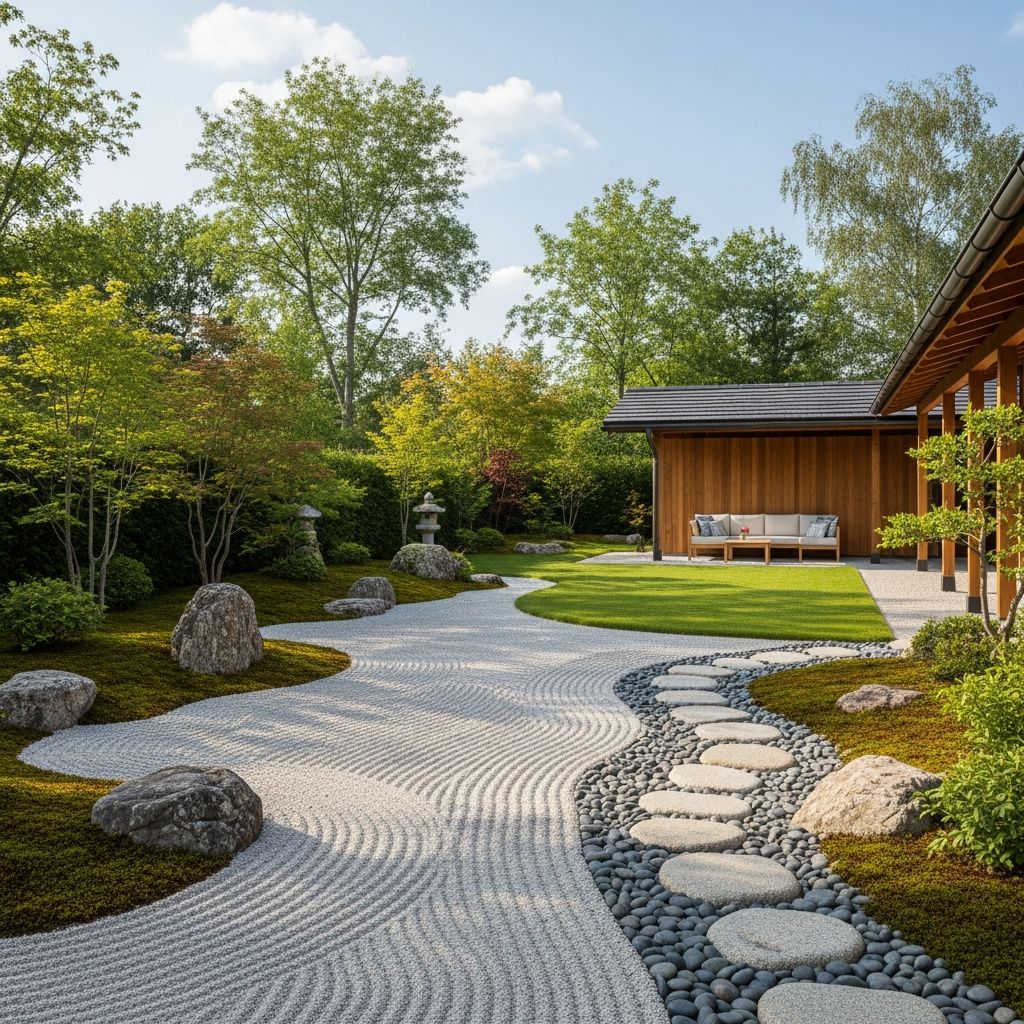
Rocks and stones are fundamental to Japanese garden design, representing mountains, islands, and natural formations in miniature. Rock placement isn’t random—it follows specific principles that guide the flow of energy through the garden. Strategically placed stones should allow air and energy (known as “chi”) to move freely throughout the space while maintaining visual balance.
Large foundation rocks anchor different areas of the garden, while smaller stones create pathways and accents. When selecting rocks, consider their color, texture, and shape—each stone should contribute to the overall aesthetic harmony of the space.
Gravel and Sand
Gravel serves both practical and aesthetic purposes in Japanese gardens. Fine gravel areas are traditionally raked in patterns that represent water ripples, creating visual movement in static spaces. Gravel provides excellent drainage, reduces weeds, and offers a clean, minimalist look that complements planted areas.
Japanese gardens often utilize different grades of gravel—coarser stones for pathways and finer gravel for raked meditation areas. The raking patterns themselves become a meditative practice for garden maintenance.
Key Plant Selections
Japanese Maple
The Japanese maple is perhaps the most iconic plant for Japanese gardens, prized for its delicate foliage and graceful branching structure. These trees provide year-round interest with spring growth, summer shade, and brilliant fall colors. They work well as focal point trees in garden compositions and can adapt to various light conditions.
Bamboo Screening
Bamboo provides both functional screening and authentic Japanese aesthetic. Modern off-the-shelf bamboo screening products offer privacy while maintaining the garden’s visual theme. Bamboo can also be integrated as living plants for taller screening applications, though it requires management to prevent invasive spreading.
Ground Covers and Accent Plants
Mondo grass and moss are traditional ground covers in Japanese gardens, creating soft green layers that soften hardscaping elements. Camellia shrubs, known for their elegant foliage and flowers, provide year-round structure and seasonal interest. Grasses and sedges add movement and texture without overwhelming the landscape.
Ornamental Features
Stone lanterns serve as both functional and decorative elements, providing subtle illumination while adding architectural interest. Tea houses, bridges, and viewing platforms can be incorporated based on garden size and personal preference.
Structural Elements and Hardscaping
Decking and Platforms
Japanese-style decking creates elevated viewing areas and connects different garden zones. Overlapping deck designs add visual interest and can be constructed using treated timber that resists rot and weather damage. Decking platforms serve as gathering spaces and vantage points for appreciating the garden’s design.
Stepping Stone Paths
Pathways guide visitors through the garden experience while protecting plants from foot traffic. Stepping stones, whether natural or concrete, should be spaced to create a natural walking rhythm. Concrete stones can be shaped into random patterns that complement the landscape’s organic feel.
Bamboo Gates and Screens
Decorative gates and screens define garden spaces and provide visual interest while maintaining privacy. Double gates with bamboo screening combine traditional framing with functional privacy screening. These structures should coordinate with your garden’s overall aesthetic while serving practical purposes.
Construction Considerations
Building a Japanese garden requires careful planning and attention to detail. Proper foundation work is essential for longevity—treated timber foundations should extend below ground level to prevent rot. When installing decking, ensure concrete footings go completely around posts for maximum stability and protection.
Water features require proper installation of pumps, reservoirs, and spillways to function efficiently. Lava stone or river rocks can disguise reservoir edges while maintaining aesthetic appeal. All electrical components should meet safety codes and be installed by qualified professionals.
Maintenance and Seasonal Care
Japanese gardens require regular but manageable maintenance. Gravel areas benefit from seasonal raking to maintain patterns and remove debris. Plants need pruning to maintain their intended forms and encourage healthy growth. Water features require periodic cleaning and pump maintenance.
Seasonal tasks include:
– Spring: New growth pruning, moss maintenance- Summer: Regular watering during dry periods- Fall: Leaf removal from gravel areas- Winter: Protection for sensitive plants
Budget-Friendly Approaches
Creating a Japanese garden doesn’t require unlimited funds. Start with essential elements like basic hardscaping and a few key plants, then expand over time. Many Japanese garden effects can be achieved with simple materials—gravel raking areas, stepping stone paths, and carefully selected rocks create authentic aesthetics without expensive construction.
Prioritize elements that provide the greatest impact on your garden’s atmosphere—water features and strategic plantings typically offer the best return on investment.
Lighting Your Japanese Garden
Subtle lighting transforms your garden for evening enjoyment. Stone lanterns can incorporate LED lighting, and ground-level lights can illuminate pathways. The goal is creating ambient lighting that maintains the garden’s peaceful atmosphere rather than bright illumination that disrupts the tranquil mood.
Common Mistakes to Avoid
– Over-planting that creates visual chaos- Placing rocks randomly without considering flow and balance- Neglecting drainage leading to water pooling- Choosing plants inappropriate for your climate- Creating structures that don’t integrate with the landscape- Ignoring maintenance requirements that affect garden longevity
Frequently Asked Questions
Q: What’s the minimum space needed for a Japanese garden?
A: Japanese gardens can be created in spaces as small as 100 square feet. The key is thoughtful design and quality materials rather than size. Even compact urban spaces can capture Japanese garden principles through miniaturized elements and careful composition.
Q: Do Japanese gardens require constant maintenance?
A: Modern Japanese gardens can be designed as low-maintenance retreats. Choosing durable plants, incorporating proper drainage, and using hardscaping wisely minimizes upkeep while maintaining aesthetic appeal.
Q: What if I don’t have space for water features?
A: Water features are traditional but not mandatory. Dry gardens using gravel and rock placements create the same meditative qualities and capture Japanese design philosophy without requiring water or pumps.
Q: Can I incorporate Japanese garden elements into an existing landscape?
A: Yes, Japanese elements blend well with contemporary design. Adding a focal Japanese maple, incorporating stepping stone paths, or creating a meditation area with rocks and gravel can transform existing yards without complete redesigns.
Q: Which plants work best for small Japanese gardens?
A: Japanese maples (dwarf varieties), bamboo, camellia, mondo grass, and compact hostas work well in limited spaces. Select plants that mature at appropriate sizes and don’t require excessive pruning.
References
- Transforming Backyard Into Japanese Zen Garden | Great Home Ideas — Great Home Ideas. 2025-05-07. https://www.youtube.com/watch?v=b2srcD-I6dU
Similar Articles







Read full bio of medha deb