Bamboo Preparation Essentials for Quality Furniture
Master the art of preparing raw bamboo for durable, beautiful furniture projects.
Understanding Bamboo as a Furniture Material
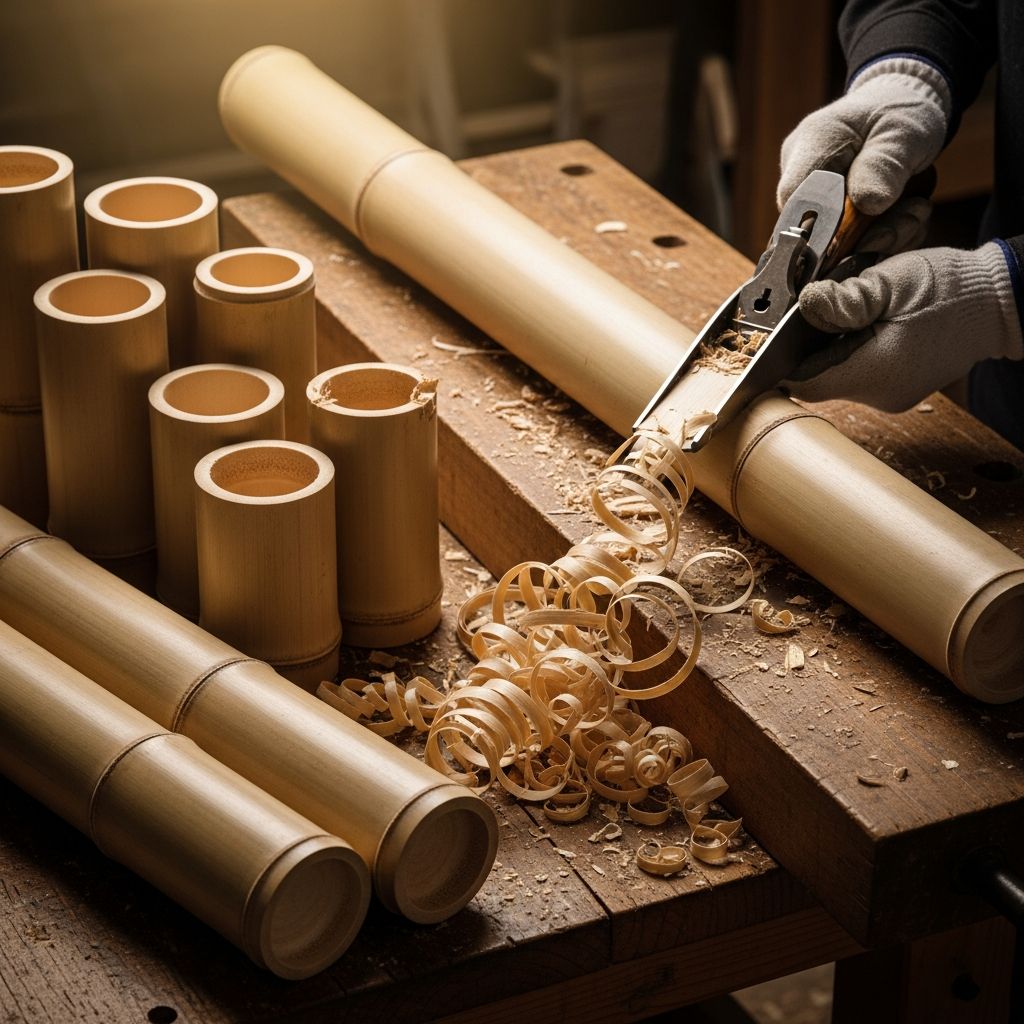
Bamboo has emerged as a popular choice for furniture manufacturing due to its renewable nature, rapid growth cycle, and impressive structural properties. Unlike traditional hardwoods that can take decades to mature, bamboo reaches harvestable maturity within three to five years, making it an environmentally sustainable option for conscientious craftspeople and manufacturers. The material possesses a unique combination of flexibility and strength that allows artisans to create both functional and aesthetically pleasing pieces. However, transforming raw bamboo into quality furniture requires a methodical approach grounded in proper material selection and preparation techniques.
The success of any bamboo furniture project depends fundamentally on beginning with appropriate raw material. Different bamboo species exhibit varying characteristics that influence their suitability for specific furniture applications. Understanding these distinctions and implementing correct preparation methods ensures the finished piece will endure years of use while maintaining its structural integrity and visual appeal.
Selecting the Right Bamboo Species and Culms
Not all bamboo species are equally suited for furniture construction. Experienced craftspeople recognize that specific species possess superior working properties and durability characteristics. Traditional Chinese furniture makers commonly utilize Phyllostachys pubescens, Phyllostachys sulphurea, Dendrocalamopsis latiflorus, and Pseudosasa amabilis, each offering distinct advantages depending on the intended application and design aesthetic.
When selecting individual culms, maturity represents a critical factor. Bamboo harvested at the proper developmental stage exhibits superior strength and stability compared to younger growth. Mature culms feature thicker walls and more developed structural fibers that resist warping and cracking during the treatment and drying phases. Craftspeople should inspect culms for straightness, uniform wall thickness, and absence of significant damage or disease.
The positioning of material within the bamboo culm also influences its end use. The lower third of a mature culm typically features denser tissue and greater strength, making it ideal for structural components such as chair legs, frame supports, and load-bearing elements. The middle section provides versatile material suitable for panels, decorative elements, and components that benefit from moderate flexibility. Understanding these distinctions allows artisans to optimize material usage and allocate specific portions to applications where their inherent properties deliver optimal performance.
Initial Processing and Preparation Steps
The transition from freshly harvested bamboo to workable furniture components involves several sequential preparation stages. Each step addresses specific material challenges and prepares the bamboo for subsequent processing.
Removing Protective Layers
Raw bamboo arrives encased in a waxy outer layer that must be removed to allow proper penetration of treatment solutions and finishes. Craftspeople employ mechanical scraping techniques to eliminate this protective coating, revealing the clean material beneath. This preliminary step enhances the effectiveness of all subsequent treatment processes and ensures consistent finishing results.
Addressing Node Structures
Bamboo culms feature natural node divisions that create internal barriers. When furniture design requires internal access or component joining, artisans must systematically remove these nodes through careful drilling or punching techniques. This process creates passages that facilitate preservative treatment penetration and enables specialized joinery methods employed in traditional furniture construction.
Carbonization and Chemical Treatment
Many manufacturers implement carbonization processes that enhance bamboo durability and resistance to biological degradation. This thermal treatment typically occurs in controlled-pressure environments where temperature and duration are precisely regulated. The carbonization process modifies the cellular structure, improving dimensional stability and reducing susceptibility to insect damage and fungal decay. Temperature ranges of 120-130°C maintained for 40-60 minutes represent typical parameters in industrial applications.
Drying and Moisture Management
Moisture content represents perhaps the most critical factor influencing bamboo’s final performance in furniture applications. Improper drying leads to warping, cracking, and dimensional instability that compromise both aesthetics and structural integrity.
Initial Air Drying
Following treatment processes, bamboo enters the initial drying phase where excess surface moisture is removed. Craftspeople may employ natural air circulation methods or accelerated drying techniques depending on production timelines and environmental conditions. During this phase, proper spacing and airflow prevent moisture pockets that could lead to internal stress and splitting.
Low-Temperature Oven Drying
Controlled kiln drying represents the preferred method for achieving consistent moisture levels throughout the bamboo cross-section. Target moisture content typically ranges between 12-15%, a level that balances dimensional stability with workability. Oven temperatures maintained at 35-42°C for 6-8 hours allow moisture to gradually escape without inducing excessive stress within the material structure. Rapid drying at elevated temperatures causes outer layers to dry faster than interior regions, creating internal tensions that result in warping and splitting.
Post-Drying Protection
Once dried to target moisture levels, bamboo requires protective covering to prevent reabsorption of atmospheric moisture. Plastic sheeting or similar protective materials maintain the achieved moisture equilibrium and prevent dimensional changes during storage and subsequent fabrication steps.
Preservation and Chemical Protection Methods
Extending bamboo’s service life in furniture applications requires systematic protection against biological threats including insect infestation and fungal colonization. Several preservation approaches offer varying levels of protection and implementation complexity.
Immersion and Steeping Techniques
Traditional steeping processes involve submerging bamboo in preservative solutions allowing chemical uptake through passive diffusion. Hot and cold alternating processes enhance penetration by creating thermal gradients that facilitate solution movement into deeper cellular layers.
Pressure-Based Treatment Systems
More intensive protection strategies employ pressure-driven methods that force preservatives deep into the bamboo structure. The full-cell process begins with vacuum treatment followed by pressurized impregnation of chemical solutions, ensuring thorough saturation of cellular cavities. The empty-cell or Reuping process provides alternative protection through modified pressure sequences that yield different chemical retention patterns suitable for varying environmental exposures.
High-Pressure Sap Displacement
For freshly harvested bamboo, high-pressure sap displacement methods force preservative solutions through natural channels while simultaneously extracting water content from living tissue. This approach proves particularly effective for rapidly reducing moisture while establishing chemical protection.
Surface Preparation and Refinement
Before assembly into finished furniture, bamboo components require careful surface preparation that enhances both appearance and workability for joinery operations.
Polishing and Sanding
Mechanical polishing processes smooth the bamboo surface, removing irregularities and preparing the material for finish application. Sequential sanding with progressively finer abrasives creates surfaces that accept stains, oils, and protective coatings uniformly, resulting in professional-quality aesthetics.
Fragment Crack Management
During drying and processing, bamboo occasionally develops surface cracks or stress fractures. Skilled artisans employ various filling and repair techniques to address these imperfections, restoring structural integrity and visual continuity before assembly.
Joinery Preparation and Component Fabrication
The specific joining methods employed in bamboo furniture influence how components must be prepared during the material processing phase. Traditional Chinese furniture construction techniques utilize specialized joinery that requires precise component preparation.
Creating Mortise and Tenon Components
Furniture designs employing mortise and tenon joinery require careful cutting of receptacles and corresponding projections during the component fabrication stage. Bamboo’s natural node structure can be strategically incorporated into these joinery systems, with carefully positioned nodes serving as structural reinforcement at joint locations.
Panel Construction Methods
Panel-based furniture employs either knot-panel or non-knot configurations depending on design preferences. Non-knot panels, fabricated from bamboo material harvested between natural nodes, prove suitable for smaller furniture pieces and allow craftspeople to optimize material utilization. Fragment montage techniques arrange slit sections into cohesive panels, with careful attention to thickness consistency and alignment ensuring structurally sound results.
Quality Control and Final Inspection
Throughout the preparation and processing phases, systematic quality assessment ensures that components meet specifications for strength, moisture content, and dimensional accuracy. Semi-finished product detection procedures verify that components possess requisite characteristics before proceeding to assembly operations. This proactive quality management prevents waste and ensures finished pieces meet performance expectations.
Common Challenges and Solutions
Warping and Dimensional Change: Improper drying protocols represent the primary cause of unwanted warping. Solutions include implementing controlled low-temperature drying, maintaining consistent humidity during storage, and employing moisture barriers post-drying.
Insect Infestation: Inadequate chemical treatment allows bamboo-boring insects to colonize untreated material. Comprehensive pressure-based preservation methods provide effective protection against common pest species.
Fungal Discoloration: Moisture-rich environments promote fungal growth that creates staining and potential structural degradation. Prompt drying and environmental humidity control mitigate this risk.
Splitting and Checking: Rapid surface drying combined with slow interior drying creates stress that manifests as surface checks or splitting. Gradual low-temperature drying with appropriate humidity control prevents this common defect.
Frequently Asked Questions
Q: How long does the complete bamboo preparation process require?
A: Depending on the specific methods employed, the full cycle from raw material selection through final component preparation typically requires 2-4 weeks, with drying and treatment processes consuming the majority of this timeframe.
Q: Can homecraft artisans implement these preparation techniques without industrial equipment?
A: Yes, many traditional techniques can be adapted for smaller operations, though achieving professional-quality results typically benefits from access to controlled drying facilities and pressure treatment equipment.
Q: What moisture content indicates bamboo is ready for fabrication?
A: Target moisture content of 12-15% represents the industry standard for furniture-grade bamboo components, providing optimal dimensional stability while maintaining workability.
Q: How do different preservation methods compare in effectiveness?
A: Pressure-based methods typically provide superior long-term protection compared to passive soaking techniques, though increased complexity and equipment requirements must be weighed against the enhanced durability benefits.
Q: Should harvested bamboo receive treatment immediately, or can it be stored untreated?
A: While short-term storage is possible, prompt treatment prevents fungal colonization and insect infestation that can occur in untreated bamboo stored in humid environments.
References
- Manufacturing Process of Raw Bamboo Furniture — Google Patents (CN103659999B). 2016. https://patents.google.com/patent/CN103659999B/en
- Traditional Chinese Bamboo Furniture Processing Techniques — International Network for Bamboo and Rattan (INBAR). 2015-03-13. https://www.inbar.int/wp-content/uploads/2020/05/1489453235.pdf
Similar Articles







Read full bio of Sneha Tete