Install Basement Shower Without Concrete Breaking
Discover proven methods to add a functional shower in your basement without the hassle and cost of breaking up existing concrete floors.
Adding a shower to a finished basement presents unique challenges, particularly when avoiding the disruption of breaking concrete. Traditional approaches often require slab demolition, but innovative techniques allow homeowners to route plumbing through trenches beneath the existing floor, install elevated prefab units, or leverage existing access points. This comprehensive guide draws from professional plumbing practices and DIY successes to outline safe, efficient methods that minimize mess, cost, and time while ensuring code compliance and durability.
Why Skip Concrete Demolition?
Breaking concrete generates dust, debris, and significant expenses—often $5-10 per square foot for removal and repouring. It also risks structural damage to your home’s foundation. Instead, strategic trenching connects new fixtures to main drains without surface disruption. Professionals like those featured in This Old House demonstrate digging narrow channels from existing pipes to shower locations, then encasing them before a thin concrete overlay. Prefab shower kits with raised bases further simplify the process by accommodating uneven plumbing heights common in basements.
Essential Planning and Preparation
Success begins with meticulous planning. Assess your basement’s layout: locate the nearest main drain stack, typically a 3-4 inch cast-iron or PVC line. Measure distances for shower drain (usually 2-inch pipe), toilet flange if adding one, and water supply lines. Check local building codes—most require permits for plumbing alterations and inspections before encasing pipes.
- Tools needed: Reciprocating saw, trenching shovel or mini-excavator rental, PVC pipes/fittings, mechanical couplings, level, laser measure.
- Materials: 2-3 inch PVC drain pipes, P-traps, primer/glue, rebar for support, concrete mix for backfill.
- Safety first: Wear respirators for dust, gloves for sharp edges, and ensure stable footing in trenches.
Mark fixture locations with 2×4 plates simulating walls. Basements often have low ceilings, so opt for low-profile showers (under 6 inches high) or elevate bases on platforms built from pressure-treated lumber.
Step-by-Step Plumbing Rough-In
The core technique involves creating a subsurface drain network. Start by exposing the main drain if needed—often via a cleanout plug.
- Trench the path: Use a saw to cut a 6-8 inch wide, 12-18 inch deep channel from main drain to shower site. Slope at 1/8 inch per foot for gravity drainage.
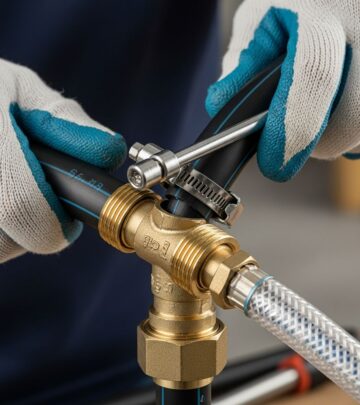
- Assemble drain assembly: Cut and glue 3-inch PVC main line, branching to 2-inch lines for shower and sink. Connect to old iron pipe with no-hub couplings tightened by hose clamps.
- Install traps and supports: Add P-traps under each fixture. Drive rebar stakes beside traps and secure with tape to prevent floating during pour.
- Test and protect: Pressure-test pipes with air or water. Cap ends with foam/plastic for concrete pour.
Water supply runs parallel in shallower 4-inch trenches, using 1/2-inch PEX or copper, connected via manifold valves for shutoff.
Building the Shower Foundation
With plumbing set, prepare the base. For custom pans, create a pre-slope mortar bed (2% toward drain) over the slab, then install a waterproof liner like PVC or CPE.
| Method | Pros | Cons | Best For |
|---|---|---|---|
| Tiled Custom Pan | Fully customizable size/shape | Time-intensive, skill required | Matching existing decor |
| Prefab Acrylic Base | Quick install, leak-resistant | Limited sizes | DIY beginners |
| Fiberglass Kit | All-in-one walls/base | Less premium look | Budget remodels |
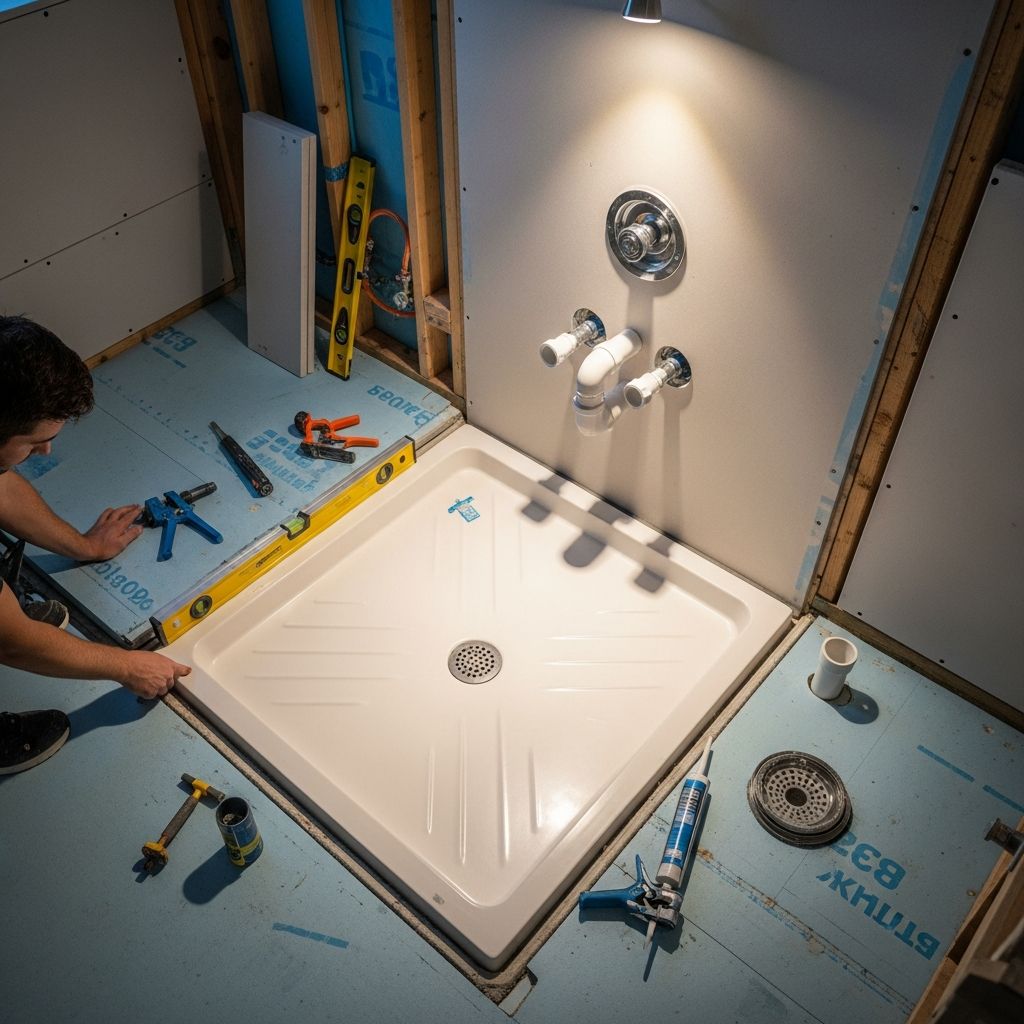
For liner installs: Drill a 4.5-inch drain hole, secure flange, fold liner edges, seal with silicone, and clamp. Backfill trenches with gravel for drainage, then 4-6 inches of concrete. Elevated bases, as in MAAX installs, use wood frames to raise 4-6 inches, aligning drains perfectly.
Framing and Shower Enclosure Setup
Erect walls using 2×4 studs on 16-inch centers, ensuring plumb with shims. For prefab surrounds, position base first, mark drain height, and cut vertical PVC risers to fit—glue after dry-fitting.
- Screw back panel to studs through pre-drilled holes.
- Snap side/end panels into grooves; secure tops.
- Cut openings for valves/shower arms using jigsaw; caulk flanges.
PVC or cement board backer on framed walls provides a waterproof tile substrate. Seal all joints with silicone.
Waterproofing and Tiling Mastery
Prevent leaks with robust waterproofing. Apply membrane (e.g., Schluter-Kerdi) over backer board, overlapping seams. Tile showers demand thinset mortar beds for slope, followed by porcelain or ceramic tiles.
Grout after 24-48 hours, then silicone all corners/edges. For basement humidity, add a pan liner under tiles and exhaust fan venting outside.
Finishing Fixtures and Fixtures
Install shower valve trim, head, and door/curtain. Connect sink/toilet similarly, wax-ringing flanges. Test all for leaks over 24 hours before walls close.
Common Pitfalls and Pro Tips
Avoid these errors:
- Insufficient slope: Causes standing water—use laser levels.
- Pipe float: Always stake traps.
- Poor seals: Double-caulk liners.
- Code skips: Get inspections pre-pour.
Pro tip: Rent a plate compactor for trench backfill stability. Budget $2,000-5,000 for DIY materials; pros add $3,000-7,000 labor.
Frequently Asked Questions (FAQs)
Can I add a shower to a basement with slab foundation without breaking concrete?
Yes, trench under the slab to main drains, assemble PVC lines, and backfill before minor overlay. This method is shown in expert demos.
How deep should basement shower trenches be?
12-18 inches, depending on slab thickness, with 1/8-inch-per-foot slope. Support pipes to prevent shifting.
What’s the easiest shower base for basements?
Prefab acrylic or fiberglass kits; they elevate easily and include surrounds for quick setup.
Do I need a permit for basement plumbing?
Typically yes—check local codes for rough-in inspections to avoid fines.
How to handle low basement ceilings?
Choose low-profile bases (3-4 inches) and surface-mount valves; frame strategically.
Cost Breakdown Table
| Component | Estimated Cost |
|---|---|
| Plumbing Materials | $400-800 |
| Shower Kit/Base | $500-1,500 |
| Tile/Backer | $300-700 |
| Tools Rental | $100-300 |
| Total DIY | $1,800-4,000 |
This approach empowers homeowners to expand usable space safely. With patience and precision, your basement shower becomes a reality without the wrecking hammer.
References
- How to Install a Basement Bathroom | Ask This Old House — This Old House. 2023-05-15. https://www.youtube.com/watch?v=gqwAETNyTnE
- How to Install a Shower Pan Liner — Oatey. 2024-02-10. https://www.oatey.com/resources/project-guides/how-install-shower-pan-liner
- Installing (and elevating) a Basement Shower, MAAX Begonia — YouTube. 2022-11-20. https://www.youtube.com/watch?v=xD128bUv7vU
- DIY Basement Shower Installation Techniques — YouTube. 2021-08-05. https://www.youtube.com/watch?v=TSmuxHy44qg
- How To Build A Bathroom In A Basement — Block Renovation. 2024-06-12. https://www.blockrenovation.com/guides/how-to-build-a-bathroom-in-a-basement
- Shower base install (DIY guide) — YouTube. 2023-03-18. https://www.youtube.com/watch?v=ex02I595dWs
- How to Tile a Basement Shower — The Home Depot. 2024-01-22. https://www.homedepot.com/c/ap/how-to-tile-a-basement-shower/9ba683603be9fa5395fab901038924ed
Similar Articles


Read full bio of medha deb