Bathroom Heater Fan Installation: Step-By-Step Guide
Master the step-by-step process to install a bathroom heater fan for warmth, ventilation, and comfort in your home.
Bathroom Heater Fan Installation Guide
Installing a bathroom heater fan combines ventilation, lighting, and instant heat, transforming a chilly space into a cozy retreat. These units pull moist air out while providing warmth and illumination, essential for small bathrooms lacking central heating. Proper installation ensures efficiency, safety, and compliance with building codes.
Why Choose a Combined Heater-Vent Fan Unit?
Standard exhaust fans remove humidity to prevent mold, but adding a heater addresses cold mornings directly. Models like those from Broan-NuTone offer 1100 watts of heat, quiet operation at under 1 sone, and LED lights for energy savings. They mount between joists, directing heat toward showers for maximum comfort. Benefits include reduced energy bills from targeted heating and improved air quality year-round.
Essential Tools and Materials
Gather these items before starting to avoid interruptions:
- Drill with bits and hole saw (5-6 inch for duct)
- Screwdriver set (Phillips and flathead)
- Wire strippers and cutters
- Voltage tester
- Ladders or sturdy step stool
- Duct tape, foil tape, and silicone caulk
- Reciprocating saw or drywall knife
- Safety gear: gloves, goggles, dust mask
- Flexible ducting (4-6 inch diameter), hanger bars, screws
For electrical work, use 14/2 or 12/2 NM cable rated for 90°C, depending on the unit’s amp draw.
Safety Precautions First
Electricity and heights demand caution. Turn off power at the breaker and verify with a voltage tester at the switch and ceiling box. Wear protective gear to shield against dust and debris. Work with a partner for attic access. Avoid installing near insulation touching the housing, as it poses fire risks. Direct heat away from walls or windows for optimal performance.
Planning Your Installation Location
Position the unit over the shower or tub for best airflow, ideally between ceiling joists spaced 16-24 inches apart. Measure the housing dimensions (typically 14×14 inches) against your joists. Plan a straight, short duct run to the roof or soffit vent—minimum elbows for quiet operation. Check attic access and ensure at least 7.25 inches of depth clearance. For replacements, note existing wiring: heaters often need dedicated 15-20 amp circuits.
| Installation Type | Key Considerations | Tools Needed |
|---|---|---|
| New Construction | Flexible framing; hanger bars span joists | Hammer, screws |
| Remodel/Replace | Remove old unit; match opening size | Recip saw, wire nuts |
| Tight Spaces | Use remodel kits with tension springs | No framing cuts |
Step 1: Preparing the Ceiling Opening
Mark the joist centers and trace the housing template provided with your unit. Cut drywall precisely with a drywall saw, avoiding joist damage. For new installs, nail or screw hanger bars across joists, extending to frame the opening. Test-fit the housing: tabs should hook under joist bottoms. If replacing, disconnect the old fan, lower it, and expand the hole if needed for the larger heater model.
Step 2: Running Ductwork and Venting
From the attic, attach 4-inch flexible aluminum duct to the unit’s collar using foil tape—no screws inside ducts to avoid airflow blocks. Route to exterior: cut a 5-inch roof hole with a hole saw, install a roof cap or wall vent, sealing with roofing cement. Secure duct with straps every 3 feet; insulate in unheated attics. Short runs under 20 feet minimize noise and backdraft.
Step 3: Electrical Wiring Essentials
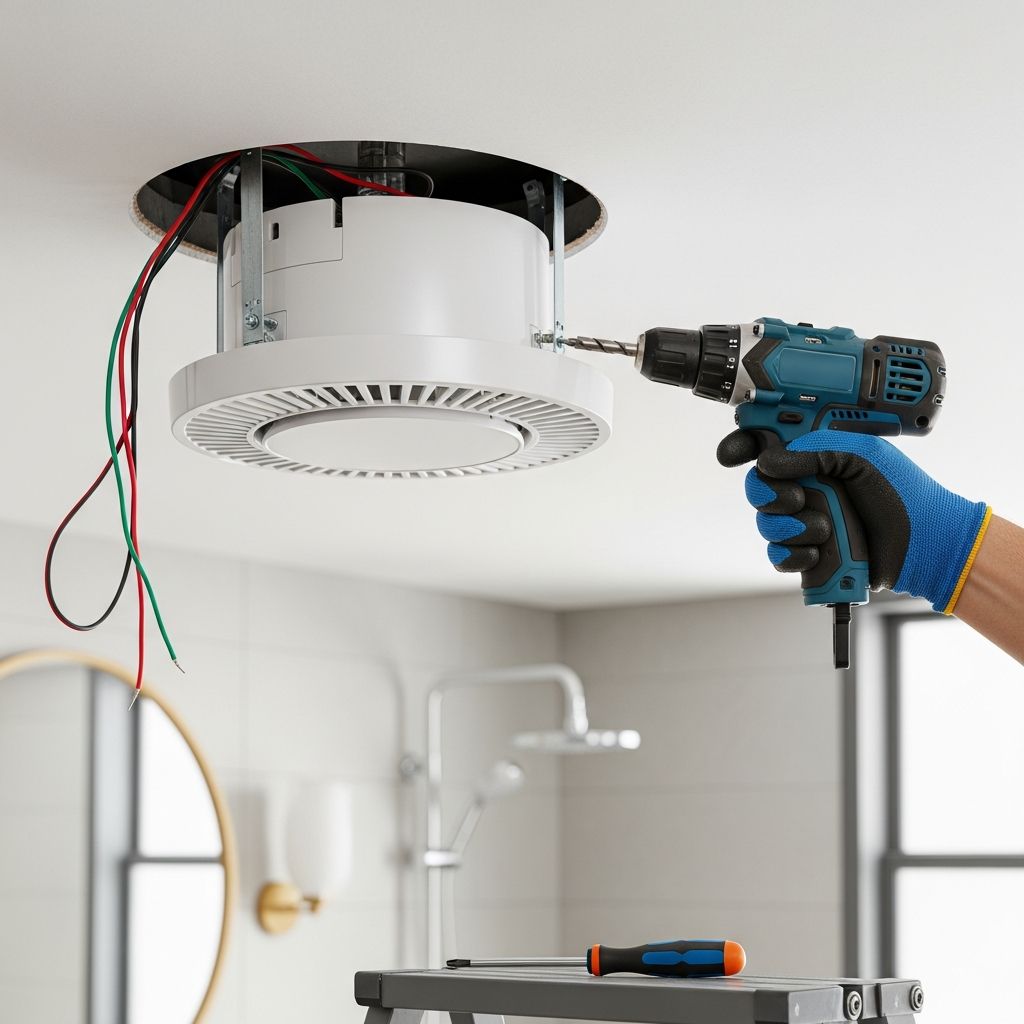
Bathroom heater fans require specific wiring. Run a dedicated hot (black), neutral (white), ground (green/bare), and often a load wire for fan/light/heater controls. Strip ½-inch insulation, connect using push-in or wire nut terminals: blacks to black leads, whites together, grounds to green screw. For multi-function units, cap unused heater wires if on a single switch. Tug wires to confirm secure clamps. Use junction box if supplied; otherwise, access through housing knockouts.
Wiring Configurations:
- Single Switch: Power to unit, then to switch.
- Three-Way: Separate neutrals for fan, heat, light.
- GFCI Protected: Required near water; test post-install.
Step 4: Mounting the Housing Securely
Slide housing into the opening, aligning hanger bars. Secure with screws into joists—two per side minimum. Add blocking (2×6 lumber) between joists for extra support if spans exceed 24 inches. Tighten acorn nuts on bars hand-tight plus ¼ turn. Pre-drill to prevent splitting. Ensure the blower wheel spins freely before finalizing.
Step 5: Installing the Blower, Heater, and Light
Snap the blower assembly onto housing tabs. Plug the motor into the receptacle or wire directly. For heaters, align heating element and secure with clips or screws. Install LED bulb (max 100W equivalent) or provided light kit, twisting into socket. Attach lens cover with torsion springs or clips—press into slots until locked.
Step 6: Finishing and Sealing
Caulk gaps between flange and ceiling to stop air leaks. Restore power, then test: fan should exhaust paper scraps, heater warm within 30 seconds, light illuminate brightly. Balance dampers if noisy. Paintable grilles allow seamless blending.
Common Challenges and Fixes
Joist Interference: Use offset brackets or cut notches (code-compliant).
Wiring Shortage: Fish new NM cable through walls.
Noisy Operation: Straighten duct, seal joints.
Insufficient Heat: Verify 20A circuit; insulate ducts.
Maintenance for Longevity
Clean grille monthly; vacuum blower annually. Replace heater element every 5-7 years. Check duct for lint buildup biannually. Proper upkeep extends life to 10+ years.
Frequently Asked Questions (FAQs)
Can I install on an existing fan circuit?
Usually no—heaters draw 10-15A; upgrade to 20A GFCI breaker.
How far can duct run?
Max 50 feet with few elbows; shorter is quieter.
Is attic insulation okay nearby?
Zero clearance to housing; reroute if touching.
What if no attic access?
Choose surface-mount or remodel boxes venting through walls.
Cost of DIY vs. Pro?
Unit $150-300; DIY saves $500+ labor.
Advanced Tips for Optimal Performance
Orient heater louvers toward users. Pair with humidity sensors for auto-operation. For larger baths, daisy-chain multiple units. ENERGY STAR models cut power 30%. Monitor CFM rating: 50-80 for 100 sq ft rooms.
References
- Installation Guide – 765HL Ventilation Fan with Heater & Light — Broan-NuTone. 2023. https://broan-nutone.com/getmedia/b540f9dc-1536-463e-915e-e1f1a88ee4d5/Installation-Guide-765HL.pdf?ext=.pdf
- Broan Heater Bathroom Vent Fan Installation — YouTube (Broan-NuTone Demo). 2022-10-15. https://www.youtube.com/watch?v=NSsAB5arTAg
- DIY Utilitec Bathroom Vent Fan Heater w/Light Install — YouTube (DIY Technician). 2023-05-20. https://www.youtube.com/watch?v=bPSR3dscE54
- Bath Fan Installation Instructions — Lowe’s Product Manual. 2024. http://pdf.lowes.com/productdocuments/1c349d38-1c7d-4abe-9cdf-e3065e8ef259/40741940.pdf
- How to Replace and Install a Bathroom Exhaust Fan — Lowe’s YouTube Guide. 2023. https://www.youtube.com/watch?v=Igim_iXOJMQ
Similar Articles




Read full bio of medha deb