Complete Guide to Installing Bathroom Sink Drain and P-Trap
Master the essential steps to install your bathroom sink drain and P-trap system
Installing a bathroom sink drain and P-trap system is a manageable home improvement project that many homeowners can accomplish without hiring a professional plumber. Understanding the proper installation process ensures your drainage system functions reliably and prevents water damage under your sink. This comprehensive guide walks you through every step of the installation process, from preparation to testing.
Understanding Your Drainage System Components
Before beginning any installation work, it helps to understand the various parts that make up your bathroom sink drainage system. Each component plays a critical role in moving water from your sink to the main drain line while preventing sewer gases from entering your home.
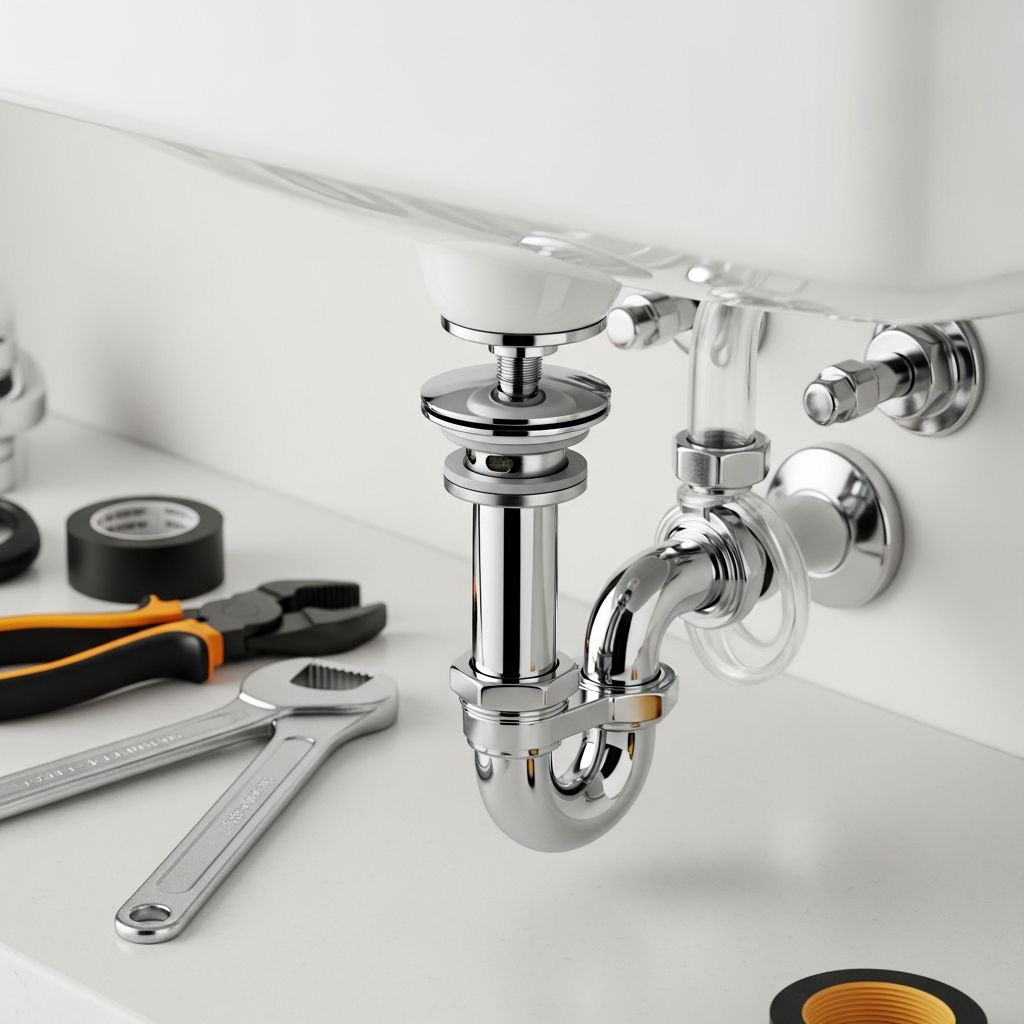
The drain flange is the visible ring that sits on top of your sink basin. This component creates the seal between your sink and the drain opening beneath it. The tailpiece is the straight vertical pipe that extends downward from the drain body, connecting your sink to the trap assembly below. The P-trap, which gets its name from its distinctive shape, is the curved pipe section that holds water. This standing water creates a seal that prevents odors and gases from rising through your plumbing system.
The wall tube or drainpipe connects your P-trap to the main waste line in your wall. Slip nuts and washers create watertight connections between these components. Understanding how these parts work together helps you recognize when something isn’t aligned correctly during installation.
Essential Tools and Materials for Installation
Gathering the right tools and materials before you begin makes the installation process smoother and more efficient. Here’s what you’ll need:
Tools Required
- Adjustable wrench or slip-joint pliers for tightening connections
- Basin wrench for accessing nuts under the sink
- Pipe cutter or hacksaw for trimming pipes to proper length
- Bucket or container for catching residual water
- Marker or pencil for marking cut lines
- Damp cloth for cleaning excess putty and debris
- Measuring tape for accurate measurements
Materials Needed
- P-trap kit (typically 1¼ inches for bathroom sinks)
- Plumber’s putty for creating watertight seals
- Rubber gasket and washer (usually included in kits)
- Slip joint washers for all connections
- Plumber’s tape for threaded connections if applicable
Preparing Your Work Area and Shutting Off Water
Proper preparation prevents water damage and makes the installation process safer. Start by locating the shutoff valves under your sink. These valves control water supply to your bathroom sink and should be easily accessible. Turn both the hot and cold water shutoff valves clockwise until they stop, ensuring no water flows to your sink.
Open your faucet to release any remaining water pressure in the lines. This step confirms that the shutoff valves are working correctly and prevents unexpected water spray when you disconnect components.
Place a bucket or towel under the area where you’ll be working. Even though you’ve shut off the water, the existing trap may contain standing water that will spill when you remove it. Having containment ready prevents water from spreading across your cabinet floor and damaging stored items.
Removing Your Old Drain Assembly
If you’re replacing an existing drain system, you’ll need to carefully remove the old components. Start from the top and work downward. Use your slip-joint pliers to loosen the locknut that secures the drain body underneath the sink. This nut connects the drain flange to the drain body and may show signs of rust or corrosion.
Once the locknut is loose, you can carefully remove the drain flange from the top of the sink. Clean away any old putty or debris from the drain opening using a cloth or soft scraper. A clean opening ensures your new drain flange will seat properly.
Next, locate and loosen the slip nuts connecting your old P-trap. These nuts have a characteristic hexagonal shape and connect the trap sections together. Position your bucket underneath before loosening to catch any standing water inside the trap. Once the nuts are loose, carefully disconnect the trap sections and set them aside.
Preparing the Drain Opening
With the old drain removed, take time to properly prepare your sink’s drain opening. Feel the edges around the hole—they should be smooth and free of burrs or rough spots. If you notice any rough edges, gently smooth them using fine-grit sandpaper.
Place your new drain flange over the opening to test the fit. The flange should sit flat against the sink surface without rocking or moving. A gap between the flange and sink indicates the opening may need adjustment or the sink surface needs cleaning.
Installing the Drain Flange and Creating a Watertight Seal
With the opening prepared, you’re ready to install your new drain flange. Roll a small amount of plumber’s putty between your hands to create a thin rope-like strand. This putty will seal the gap between the flange and sink.
Press the putty rope around the underside of the drain flange’s rim. Position your flange into the drain opening from above and press firmly downward. You’ll see excess putty squeeze out around the edges, which is normal and necessary for a complete seal.
From underneath the sink, thread the rubber gasket onto the drain body, followed by the washer and locknut. Hand-tighten the locknut first to ensure the gasket sits evenly. Then use your basin wrench or pliers to turn the nut an additional quarter-turn clockwise. Avoid over-tightening, as this can crack the porcelain or warp the gasket, creating leaks instead of preventing them.
Wipe away the excess putty with a damp cloth while it’s still soft. This creates a neat appearance and ensures the seal is clean and tight.
Measuring and Cutting Pipes for Your P-Trap System
Accurate measurements are crucial for a properly functioning drain system. With the drain flange installed, you need to determine the correct lengths for your tailpiece and wall tube.
Position the J-bend portion of your P-trap at the level where it will connect to both your drain body and the wall tube. You can temporarily hold it in place or have someone assist you. Mark where the wall tube intersects with the J-bend’s connection point.
Remove the old wall tube and measure from where it enters the wall to your marked connection point. Use a pipe cutter or hacksaw to trim the wall tube to this exact length. Remember to measure twice before cutting—mistakes at this stage require starting over with a new pipe section.
Similarly, ensure your tailpiece length is appropriate. It should extend from the drain body opening down to meet the J-bend without creating excessive slack or tension in the connections.
Assembling Your New P-Trap System
Begin assembly by positioning slip nuts and washers on both your tailpiece and wall tube before connecting anything. This dry-fit approach ensures all components align properly without forcing connections.
Slide the tailpiece into the opening at the bottom of your drain body. Position a slip joint washer so it faces the tailpiece nut, then thread the nut clockwise by hand until it’s snug. Don’t use pliers yet—hand-tightening lets you feel if the connection is aligning properly.
Position your J-bend so it connects both the tailpiece above and the wall tube below. The washer should be positioned to face the nut in each direction. Hand-tighten all nuts first, then use your pliers for a final quarter-turn on each connection. The key is achieving a snug fit without using excessive force.
Finally, insert the wall tube into the waste connector opening in your wall. Position the washer to face the nut and tighten it securely. Check that your entire assembly is level and straight—the connections should not appear bent or strained.
Testing Your Installation for Leaks
Before considering your project complete, you must test the system thoroughly. Turn the water shutoff valves back to the open position slowly and carefully. Allow water to run from the faucet for several seconds to clear any air from the lines.
Fill the sink completely with water, observing all connection points for any drips or moisture. Watch the drain flange where it meets the sink surface, the tailpiece where it connects to the J-bend, and the wall tube connection. Let the water drain fully while continuing to observe these areas.
Repeat this filling and draining process at least twice. Moisture sometimes takes a moment to appear, so patient observation is important. If you notice any drips, use your pliers to tighten that particular connection slightly—typically just an eighth to quarter turn clockwise.
Troubleshooting Common Installation Issues
Leaks at Connection Points
If water drips from where two pipes connect, the slip nut may not be tight enough. Use your pliers to carefully tighten the nut. If tightening doesn’t solve the problem, you may need to disconnect that joint, inspect the washer for damage, and reassemble.
Water Pooling Under the Sink
Standing water that isn’t coming from an obvious drip typically indicates the drain flange isn’t sealing properly. You may need to remove and reinstall the flange with fresh plumber’s putty.
Slow Drainage
If water drains slowly despite no visible leaks, your pipes may not slope properly toward the wall outlet. The J-bend and tailpiece should have a slight downward angle. Adjust the assembly to correct the slope.
Odors Rising from the Drain
Unpleasant smells indicate the water seal in your P-trap may be insufficient. Run water through the drain regularly to maintain the trap seal, or ensure the trap is properly filled with water.
Maintenance Tips for Long-Term Performance
Regular maintenance keeps your drain system functioning properly. Run hot water through your drain weekly to prevent buildup. Once monthly, flush the drain with a mixture of baking soda and vinegar to maintain clarity.
Inspect under your sink periodically for any signs of moisture or corrosion. Catching problems early prevents extensive water damage. Clean the area around your connections and wipe away any dust or mineral deposits that accumulate over time.
When to Call a Professional Plumber
While this project is manageable for many homeowners, some situations warrant professional help. If your wall pipes don’t align with standard connections, if you encounter unusual plumbing configurations, or if you’re uncomfortable working with your specific setup, professional assistance ensures proper installation. Additionally, if you’ve completed the installation but persistent leaks continue after multiple adjustment attempts, a plumber can diagnose underlying issues you may not be able to see.
Frequently Asked Questions
Can I install a P-trap without the tailpiece?
No. The tailpiece is essential as it connects your sink drain to the P-trap below. Without it, connections remain loose and leaks develop immediately. The tailpiece also establishes the proper height and alignment for water flow. Always ensure your tailpiece diameter matches your trap size.
What size P-trap should I use for my bathroom sink?
Most bathroom sinks use 1¼-inch diameter P-traps. Kitchen sinks typically require 1½-inch traps. Check your old trap or verify your sink’s specifications before purchasing replacement parts.
How tight should I make the slip nuts?
Hand-tighten first, then use pliers to turn each nut an additional quarter-turn clockwise. Over-tightening can damage the washers and create leaks. Under-tightening leaves gaps that also leak. The connection should feel firm but not require excessive force to achieve.
Why is my drain still leaking after installation?
Check each connection point systematically. Verify that washers are positioned correctly on both sides of each nut. Ensure the drain flange’s plumber’s putty seal is complete. If connections appear tight but leaking continues, remove and reinspect each washer for damage or wear.
Can I extend my drainpipe if it’s too short?
Yes. Use a slip joint extension that matches your pipe diameter. Position it between the tailpiece and trap, ensuring the slope toward the wall outlet remains downward. Tighten the compression rings evenly on both joints and test with a full sink before considering it complete.
References
- How to Replace a Sink Trap: A Complete Step-by-Step Guide — Ruvati. https://www.ruvati.com/how-to-replace-a-sink-trap/
- Bathroom Sink Drain Installation Guide — TN Standard. https://www.tnstandard.com/how-install-bathroom-sink-drain/
- How to Install a P-Trap — Oatey. https://www.oatey.com/resources/project-guides/how-install-p-trap
- How to Replace a Sink Trap — The Home Depot. https://www.homedepot.com/c/ah/how-to-replace-a-sink-trap/9ba683603be9fa5395fab9073a2f1a5
Similar Articles


Read full bio of medha deb