Beginner’s Guide to Common Woodworking Materials
Understand the wood, sheets, and composites that bring your projects to life
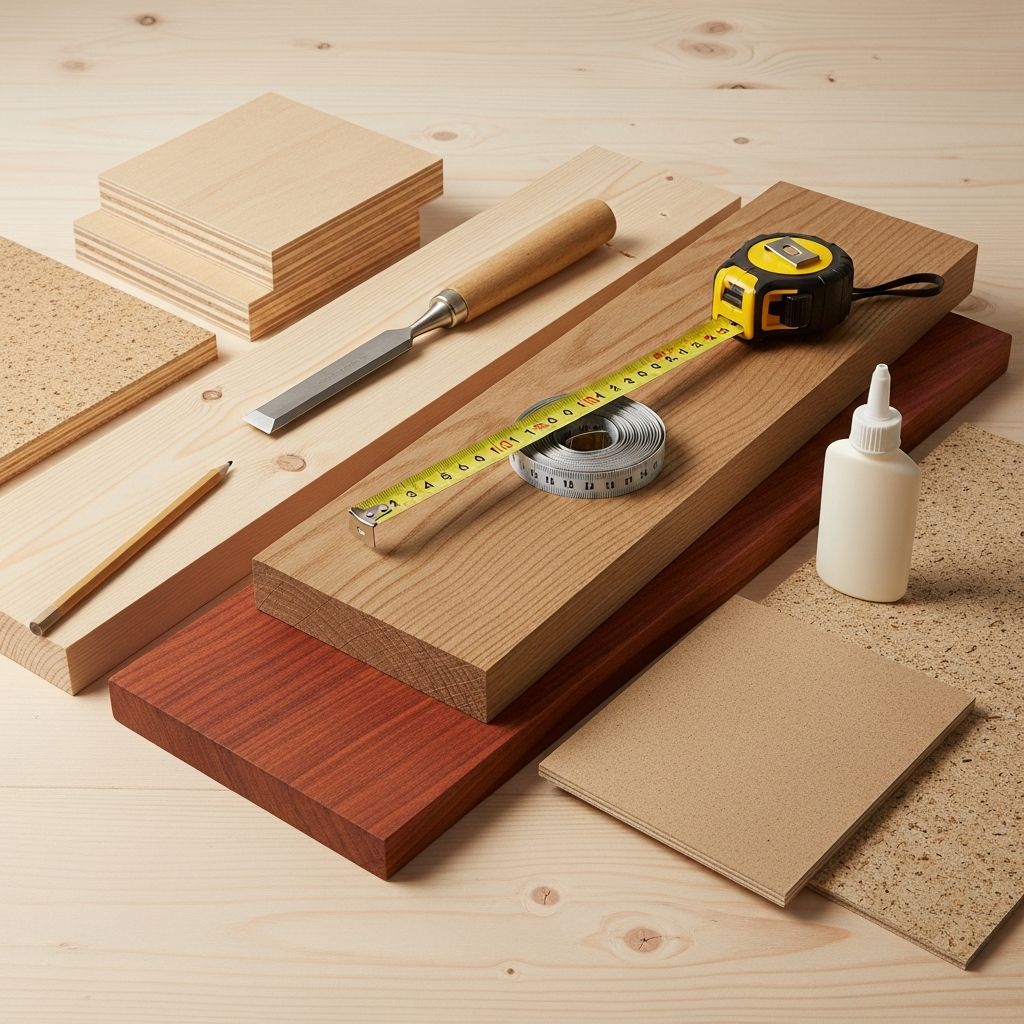
Choosing the right material is one of the most important decisions in any woodworking project. The board or sheet you pick affects how easy the project is to build, how strong it will be, and how good it looks years down the road. This guide walks through the most common woodworking materials so you can match each project with the material that fits it best.
How Woodworking Materials Are Classified
Woodworking materials fall into a few big categories: solid wood, sheet goods, and engineered composites. Each group behaves differently when you cut it, join it, and finish it, so it helps to understand the basic families before looking at specific products.
- Solid wood: Boards sawn directly from logs. Grain patterns, natural beauty, and long-term durability make these ideal for furniture and high-end work.
- Sheet goods: Large panels such as plywood and MDF that are stable, relatively flat, and efficient for cabinets, shelving, and built-ins.
- Engineered composites: Products that mix wood fiber or particles with resins or veneers, designed to offer predictable strength, stability, or cost advantages.
Solid Wood: The Foundation of Fine Woodworking
Solid wood remains the gold standard for furniture and visible surfaces. It offers character, strength, and the ability to be refinished or repaired many times over its life. The two main groups you will see at the lumberyard are hardwoods and softwoods.
Hardwoods for Furniture and Trim
Hardwoods come from deciduous trees and are commonly used for furniture, flooring, and high-end trim. While some are genuinely hard and heavy, others work surprisingly easily with both hand and power tools.
- Common uses: Tables, chairs, cabinets, doors, window trim, and stair parts.
- Key advantages: Attractive grain, good wear resistance, and excellent long-term durability when properly finished.
- Typical challenges: Higher cost, greater weight, and more demanding machining in some species.
| Species | Typical Color | Workability | Common Projects |
|---|---|---|---|
| Oak | Light to medium brown with prominent grain | Machines well; open grain needs pore filling for glass-smooth finishes | Dining tables, cabinets, flooring, interior trim |
| Maple | Creamy white to light tan | Dense and hard; can burn with dull bits or aggressive routing | Kitchen cabinets, workbenches, cutting boards |
| Cherry | Light pink when new, deepens to rich reddish brown | Easy to plane and sand; can blotch without pre-stain treatment | Fine furniture, built-in bookcases, paneling |
| Walnut | Chocolate brown heartwood with lighter sapwood | Generally easy to work; accepts oil finishes beautifully | Statement furniture, mantels, high-end trim |
Softwoods for Framing and Projects on a Budget
Softwoods come from coniferous trees and are widely available in home centers. While often associated with framing lumber, some softwoods work very well for furniture, shelving, and outdoor projects when properly selected and finished.
- Common uses: Wall framing, outdoor structures, budget furniture, shop fixtures.
- Key advantages: Lower price, lighter weight, and generally easier cutting and sanding.
- Typical challenges: More knots, more pronounced movement with humidity changes, and softer surfaces that dent easily.
Understanding Lumber Dimensions and Grades
Before diving into sheet goods and composites, it helps to decode how solid lumber is labeled on the rack. Board dimensions and grading systems can be confusing if you are new to the craft.
- Nominal vs. actual sizes: A “2×4” does not actually measure 2 inches by 4 inches. Modern planning and drying reduce the final size, so it typically ends up closer to 1 1/2 inches by 3 1/2 inches.
- Surfacing designations: Hardwoods are often sold as rough-sawn or surfaced on one or two faces. Rough boards are thicker but need jointing and planing before use.
- Grades: Construction lumber is graded for structural strength and appearance, while hardwoods are graded for clear cutting yield. For visible furniture parts, look for higher appearance grades with fewer knots and defects.
Sheet Goods: Plywood, MDF, and Beyond
Sheet goods excel wherever you need large, flat surfaces: cabinet boxes, shelving, built-ins, and many shop projects. Their stability and efficient use of trees make them essential in modern woodworking.
Plywood: Strong and Versatile Panels
Plywood is made by gluing thin layers of veneer together with the grain direction alternating between layers. This cross-lamination produces a panel that resists warping and splitting better than a solid board of the same size.
- Strength: Excellent for shelves, cabinet sides, and structural applications where screw holding and stiffness matter.
- Face veneers: Available with hardwood faces such as oak, maple, or birch, which can be stained or clear-finished to match solid wood components.
- Core types: Traditional veneer cores offer strength and screw-holding, while MDF or particleboard cores provide ultra-smooth faces for painting.
MDF: Smooth and Ideal for Paint
Medium-density fiberboard (MDF) is made from fine wood fibers and resin, pressed into dense, uniform panels. The lack of grain makes it excellent for painted projects and detailed profiling with a router.
- Best uses: Painted cabinet doors, trim, shelving, and built-ins that will not be exposed to heavy moisture.
- Advantages: Very smooth surfaces, consistent thickness, and crisp routed edges that take paint well.
- Limitations: Heavy, prone to sagging on long spans, and vulnerable to swelling or crumbling when exposed to water.
Particleboard and Other Composite Panels
Particleboard uses small wood particles and resin pressed into sheets. It is often hidden under laminates or thin veneers and chosen mainly for cost-sensitive projects or interior components that will not see much wear.
- Common uses: Flat-pack furniture, countertop substrates, and cabinet interiors where the surface will be covered.
- Pros: Low cost and reasonable stability in dry, indoor environments.
- Cons: Weak screw-holding, poor performance when wet, and edges that require sealing or banding.
Choosing Materials for Different Project Types
Not every project needs premium hardwood or furniture-grade plywood. Matching the material to the demands of the project—strength, appearance, budget, and environment—leads to better results and fewer surprises.
| Project Type | Primary Material | Alternative Options |
|---|---|---|
| Shop furniture and jigs | Construction-grade softwood and plywood | MDF for flat surfaces that will be painted |
| Built-in cabinets and shelving | Cabinet-grade plywood | MDF for painted doors and face frames |
| Dining and coffee tables | Solid hardwood tops with hardwood or softwood bases | Plywood core with hardwood veneer and solid edging |
| Outdoor furniture and structures | Decay-resistant softwoods like cedar or treated lumber (where appropriate) | Engineered exterior-grade panels where allowed by design |
| Budget bookcases | Plywood for shelves and sides | MDF shelves with solid wood or edge banding |
Moisture, Movement, and Stability
Wood is a natural, hygroscopic material, which means it gains or loses moisture with changes in humidity. As moisture content changes, boards expand and contract across the grain. Sheet goods and composites reduce, but do not completely eliminate, these movements.
- Solid wood: Moves noticeably across the grain. Design table tops, panels, and wide parts so they can expand and contract without cracking or warping.
- Plywood: Resists movement better than solid wood of the same width, but can still cup or twist if stored or supported improperly.
- MDF and particleboard: Dimensionally consistent in stable indoor conditions but particularly sensitive to liquid water and high humidity.
Surface Quality and Finishing Considerations
Your choice of material affects how stain, paint, and clear finishes behave. Some woods emphasize deep, warm color under clear finish, while others shine brightest under opaque paint.
- Hardwoods with character grain: Species like oak and walnut respond well to clear finishes that highlight their natural beauty.
- Close-grained woods: Maple and birch can appear blotchy with stain; using a pre-stain conditioner or dye-based system often produces better results.
- Man-made panels: MDF is ideal for high-quality paint jobs, while plywood face veneers look best under clear or lightly tinted coats.
Cost, Waste, and Sustainability
Budget and environmental impact both come into play when selecting materials. Premium hardwood is attractive but expensive, and it can be wasteful for hidden or structural components that never see the light of day.
- Use solid wood where it shows: Reserve your best boards for table tops, door frames, drawer fronts, and other visible areas.
- Rely on sheet goods for structure: Cabinet boxes, shelves, and interior partitions often perform better and cost less when built from plywood or other panels.
- Plan cuts carefully: Sketch cutting diagrams for sheet goods, and choose lumber widths and lengths that minimize offcuts.
Beginner Tips for Buying and Handling Wood
Material quality varies widely, even within the same species or product type. A little care at the store and in your shop will save time and frustration later.
- Inspect each board or sheet: Sight down the length to check for bow, twist, and cup, and avoid pieces with large defects in critical areas.
- Acclimate before building: Store wood in the room or shop where you will build for several days so moisture levels stabilize.
- Support sheet goods: Use a cutting table, sacrificial foam, or multiple supports when breaking down panels to prevent binding and tear-out.
FAQs About Common Woodworking Materials
Is plywood stronger than solid wood?
Plywood often performs better than solid wood when used as large panels because its cross-laminated layers resist splitting and warping. A properly supported plywood shelf, for example, can be stiffer and more stable than an equally wide shelf made from a single solid board.
When should I use MDF instead of plywood?
MDF is usually the better choice when the project will be painted and you need very smooth surfaces and crisp routed profiles, such as on cabinet doors or decorative trim. For shelves or structures that must carry more weight or hold screws firmly, plywood is generally a safer option.
Can softwood be used for furniture?
Softwood can produce excellent furniture if you work within its limitations and protect it with a durable finish. It is more prone to dents and dings than many hardwoods, but for casual furniture, rustic pieces, or painted projects, it can be an economical and attractive choice.
What is the best material for outdoor projects?
For outdoor furniture and structures, look for naturally decay-resistant softwoods or materials that have been treated for ground contact or exterior use. Always pair the right material with an exterior-grade finish or preservative, and design for drainage and air flow so water does not linger on surfaces.
How do I reduce warping and cupping?
Start with straight, properly dried lumber and store it flat with adequate support and airflow. In finished projects, allow for seasonal movement, avoid forcing boards into place, and seal all sides of panels or tops as evenly as possible to limit uneven moisture gain or loss.
Similar Articles







Read full bio of Sneha Tete