Bicycle Light Battery Replacement: Step-By-Step Guide
Step-by-step instructions for safely replacing batteries in your bike lights.
Bicycle Light Battery Replacement: A Comprehensive Maintenance Guide
Bicycle lights are essential safety components that improve visibility during low-light conditions and increase your presence to other road users. Like all battery-powered devices, bike lights require periodic battery replacement to maintain optimal brightness and reliability. Understanding how to replace these batteries correctly ensures your lights remain functional while extending the lifespan of your lighting system.
Understanding Your Bicycle Light System
Before attempting battery replacement, it’s important to identify what type of bicycle light you own. Different manufacturers design their lights with varying access points and battery configurations. Some lights use standard watch batteries such as CR2032 models, while others may accommodate multiple AA or AAA batteries. Clip-on lights, fixed headlights, and tail lights each present unique access mechanisms that require specific approaches.
The most common bicycle lights on the market utilize either button-cell batteries or conventional cylindrical batteries. Understanding which category your light falls into will significantly streamline the replacement process and prevent potential damage to the light fixture itself.
Identifying Battery Types and Specifications
Battery selection plays a crucial role in the performance and longevity of your bicycle lights. Standard watch batteries like the CR2032 are frequently used in compact clip-on lights due to their small form factor and reliable power output. Other lights may require rechargeable lithium-ion batteries, which offer extended operating times but demand careful handling during replacement.
Before purchasing replacement batteries, always consult your light’s instruction manual or the manufacturer’s specifications. Using incorrect battery types can result in improper power delivery, reduced brightness, or potential damage to the light’s internal circuitry. Additionally, ensure that replacement batteries match the voltage and amperage ratings recommended by the manufacturer.
Essential Tools and Materials for Battery Replacement
Successful battery replacement requires minimal tools, most of which are likely already in your home or toolbox. Here are the essentials:
- A flathead screwdriver or coin (for unscrewing battery compartments)
- A soft cloth or paper towel (for cleaning terminals)
- Replacement batteries matching your light’s specifications
- Needle-nose pliers (optional, for adjusting internal contact springs)
- A poking stick or small wooden dowel (useful for navigating tight spaces)
Having these items readily available before beginning the replacement process prevents unnecessary interruptions and ensures a smooth, efficient workflow.
Pre-Replacement Inspection and Preparation
Taking time to inspect your bicycle light before replacement prevents mistakes and identifies potential issues. Examine the exterior casing for cracks, corrosion, or water damage. Check whether the light still powers on with the existing batteries, as this confirms the light mechanism functions properly. If the light fails to activate even with fresh batteries later, internal damage may be present.
Clean the exterior of your light with a dry cloth to remove dust and debris. This prevents particles from entering the battery compartment during the replacement process. If you notice significant corrosion or moisture inside the battery chamber, allow the light to dry completely before inserting new batteries. Some manufacturers recommend leaving the battery compartment open for several hours in a warm, dry environment to ensure complete moisture evaporation.
Opening the Battery Compartment Safely
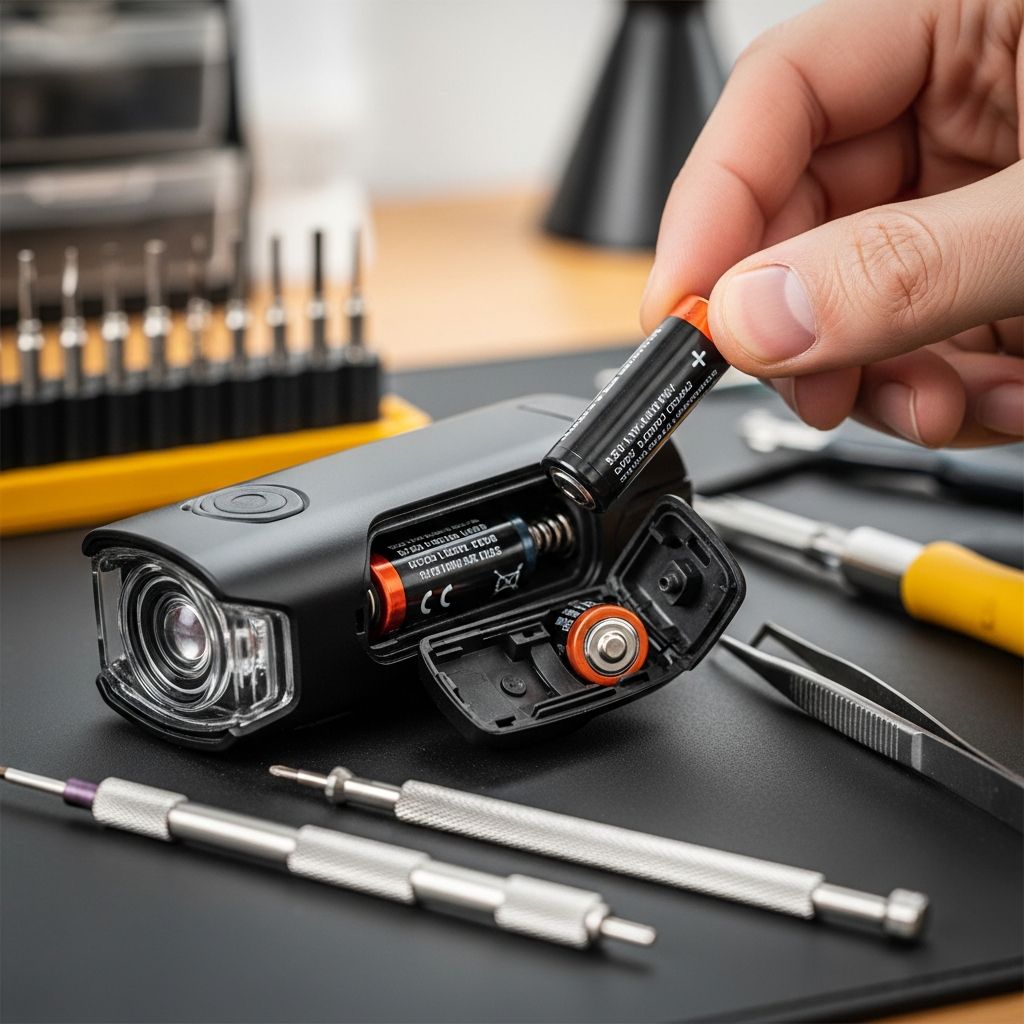
Different light designs require different opening techniques. Most clip-on lights feature a small groove or slot on the casing where you can insert a coin or flathead screwdriver. Locate this groove on either side of the light housing, then gently twist the tool counterclockwise until the casing loosens. Apply steady, even pressure rather than sudden force, as excessive torque can crack the plastic housing or strip the threads.
For lights with a rubber strap casing, pull down the front portion gently to reveal a small latch button underneath. Press this button with your finger to pop open the compartment. Some lights require you to twist a lock cap counterclockwise to access the battery chamber. Identify the opening mechanism specific to your light model before applying any tools or force.
Once the compartment opens, observe how the existing batteries sit within the chamber. Note the orientation of the positive and negative terminals, as you’ll need to replicate this arrangement with fresh batteries. Take a photograph with your phone if you’re uncertain about the correct orientation, as this provides a reference while installing new batteries.
Removing Old Batteries Properly
Extracting worn batteries requires gentle care to avoid damaging the internal contacts and springs that ensure proper electrical connection. If batteries have corroded or are stuck, use a flathead screwdriver to create gentle leverage between the battery edge and the contact point. Insert the screwdriver into the space between the battery and the negative terminal, then carefully pry the battery upward. Work slowly and deliberately rather than forcing the battery out quickly.
Once the first battery dislodges, grasp it carefully and remove it completely from the chamber. Repeat this process for any additional batteries in your light. Some lights contain spring-loaded contacts that may shift when you remove batteries, so move slowly to avoid accidentally bending these components out of alignment.
After removing all old batteries, inspect the interior chamber for corrosion, debris, or damaged contacts. If you notice white or green corrosion buildup around the terminals, gently rub these areas with a dry cloth or paper towel to restore electrical conductivity. Avoid using liquid cleaners, as moisture can compromise the light’s waterproofing and damage internal components.
Installing Fresh Batteries Correctly
Before inserting new batteries, verify that the positive and negative terminals align with your light’s internal configuration. Most lights display plus and minus symbols inside the battery chamber to guide correct installation. The positive terminal (marked with a plus sign) should face toward the contact spring, while the negative terminal (marked with a minus sign) should align with the flat contact plate.
Slide or press the first battery into position, ensuring the positive terminal makes firm contact with the spring mechanism. If the spring feels loose or fails to press firmly against the battery terminal, your light may not activate. Some lights feature slightly worn springs that require minor adjustment. Carefully use needle-nose pliers to gently stretch the spring outward, allowing it to apply greater pressure against the battery terminal. Add layers of masking tape to the back of the battery if spring adjustment isn’t possible or if you prefer a non-invasive solution.
Insert any remaining batteries following the same orientation guidelines. Verify that all batteries sit flush against their contact points before closing the compartment. Loose or improperly positioned batteries will result in intermittent light operation or complete failure to illuminate.
Sealing and Testing Your Light
Before fully closing the battery compartment, check whether your light contains a rubber gasket or seal. This component prevents water penetration and maintains the light’s waterproof rating. Ensure the gasket sits flat and properly positioned in its groove. A misaligned gasket compromises your light’s water resistance, potentially allowing moisture to damage internal electronics.
Once you’ve verified gasket placement, close the battery compartment by twisting the lock cap clockwise or pressing the casing until it clicks into place. Ensure the compartment closes fully and securely before testing the light.
Activate your bicycle light and confirm that it illuminates at full brightness. If the light fails to turn on despite correct battery installation, verify that batteries are fully charged. New batteries sometimes arrive in a depleted state and may require charging or activation before providing reliable power. If the light remains dark after confirming battery charge, try adjusting the internal contact springs or adding masking tape to increase contact pressure.
Troubleshooting Common Battery Replacement Issues
Several problems can prevent lights from functioning properly after battery replacement. If your light flickers intermittently, ensure batteries make full contact with the contact points. Check whether the battery compartment closes completely and securely, as gaps allow internal movement that disrupts electrical connection.
Dim illumination despite fresh batteries often indicates weak contact springs or insufficient pressure. Gently stretching the springs with needle-nose pliers usually resolves this issue. If stretching isn’t possible, layering masking tape on the back of the battery cartridge increases contact pressure and restores brightness.
Water infiltration represents another potential issue, particularly for lights used in wet conditions. Verify that the rubber gasket is properly positioned and that the battery compartment closes completely. If moisture appears inside the chamber, remove batteries, open the compartment fully, and allow the light to dry thoroughly before reassembling.
Maintenance Tips for Extended Light Performance
Proper maintenance extends the interval between battery replacements and keeps your lights functioning reliably. Store your bicycle and lights in a dry location when not in use, as moisture accelerates battery corrosion. Check your lights periodically to ensure they activate promptly and maintain consistent brightness.
Remove batteries from lights you won’t use for extended periods, as this prevents corrosion from leaking battery acid. When preparing for seasonal riding, test all lights before your first ride to confirm they operate properly. Replace batteries at the beginning of each riding season or whenever you notice dimming brightness.
Clean the exterior of your lights regularly with a dry cloth to prevent dust accumulation. Avoid using harsh chemicals or submerging lights in water unless the manufacturer specifically rates them for complete submersion.
When to Seek Professional Assistance
Most bicycle light battery replacements are straightforward tasks that require minimal technical expertise. However, certain situations warrant professional service. If your light fails to activate despite correct battery installation and contact adjustment, internal circuitry damage may be present. If water repeatedly infiltrates the battery compartment despite proper gasket placement, the light’s waterproof seal may be compromised.
Additionally, if you’re uncomfortable handling electronic components or your light requires soldering or complex internal repairs, a qualified bicycle technician can assist you. Many bike shops offer battery replacement services at reasonable rates and can address underlying mechanical issues simultaneously.
References
- FORTIFIED: Bike Light Battery Replacement — Instructables. 2024. https://www.instructables.com/FORTIFIED-Bike-Light-Battery-Replacement/
- Planet Bike Spok Light Battery Replacement Tutorial — Planet Bike. https://www.youtube.com/watch?v=piN_g_l29B4
- Clip on Bicycle Light Battery Replacement — YouTube. https://www.youtube.com/watch?v=G8m8_ggnVjo
- Planet Bike Blinky 3 Battery Replacement Tutorial — Planet Bike. https://www.youtube.com/watch?v=cRa4yqqc06w
Similar Articles



Read full bio of medha deb