Bifold Door Track Repair: Step-By-Step Guide
Master the essential techniques to restore smooth operation to your bifold doors.
Bifold Closet Door Track Repair and Maintenance
Bifold closet doors are a practical storage solution found in many homes, but like any mechanical system, they require periodic maintenance and occasional repairs. When these doors malfunction, the problem often lies within the track system. Understanding how to diagnose and address track-related issues can save you money on professional repairs and restore functionality to your closet doors. This comprehensive guide walks you through the most common track problems and provides practical solutions for each scenario.
Recognizing Track Problems Before They Worsen
The first step in addressing bifold door issues is identifying whether the problem originates from the track itself or from related hardware components. Bifold doors that consistently fall out of alignment, fail to slide smoothly, or refuse to stay in place during operation all point to potential track complications. A door that detaches from the track entirely indicates a more serious problem requiring immediate attention.
Before assuming the track needs replacement, examine several other factors that might be causing the malfunction. Debris accumulation inside the track represents one of the most common culprits behind sluggish door movement. Dust, dirt, and small particles can impede the wheels and prevent smooth operation. Similarly, misaligned guides inside the track can cause doors to bind or derail. Loose or worn hinges and pivot brackets also contribute to doors sliding off track, even when the track itself remains intact.
Initial Diagnosis and Inspection Methods
A thorough inspection precedes any repair work. Begin by visually examining the track for obvious signs of damage such as bends, dents, or warping. Run your hand along the entire length of both the upper and lower tracks to detect irregular surfaces or obstacles that might impede door movement. Look for rust or corrosion, particularly in areas exposed to moisture.
Next, assess the alignment of the guide that runs inside the track. This component keeps the door centered and prevents wobbling. The guide should align flush with the edge of the door frame, ensuring doors move in a straight path. Misalignment here often causes doors to stick or jump the track.
Check all fastening hardware, including pivot brackets and attachment bolts. Use a Phillips head screwdriver to verify that mounting screws remain tight. Loose bolts allow the track to shift position slightly, disrupting the precise geometry required for smooth operation. Tightening these fasteners frequently resolves what appears to be a track problem but actually stems from hardware movement.
Clearing and Cleaning Track Systems
Many track difficulties resolve through simple cleaning. Vacuum the track thoroughly to remove dust and debris that accumulate over months of use. A stiff brush works well for dislodging stubborn particles embedded in track crevices. Wipe the track interior with a damp cloth to remove remaining dust, then dry completely to prevent rust formation.
Once the track is clean, apply a silicone-based lubricant or dry lubricant specifically designed for door tracks. Avoid oil-based products, which attract dust and create sticky buildup over time. Proper lubrication allows wheels to roll freely and reduces the friction that causes doors to stick or bind.
Addressing Hardware Tightness and Adjustment
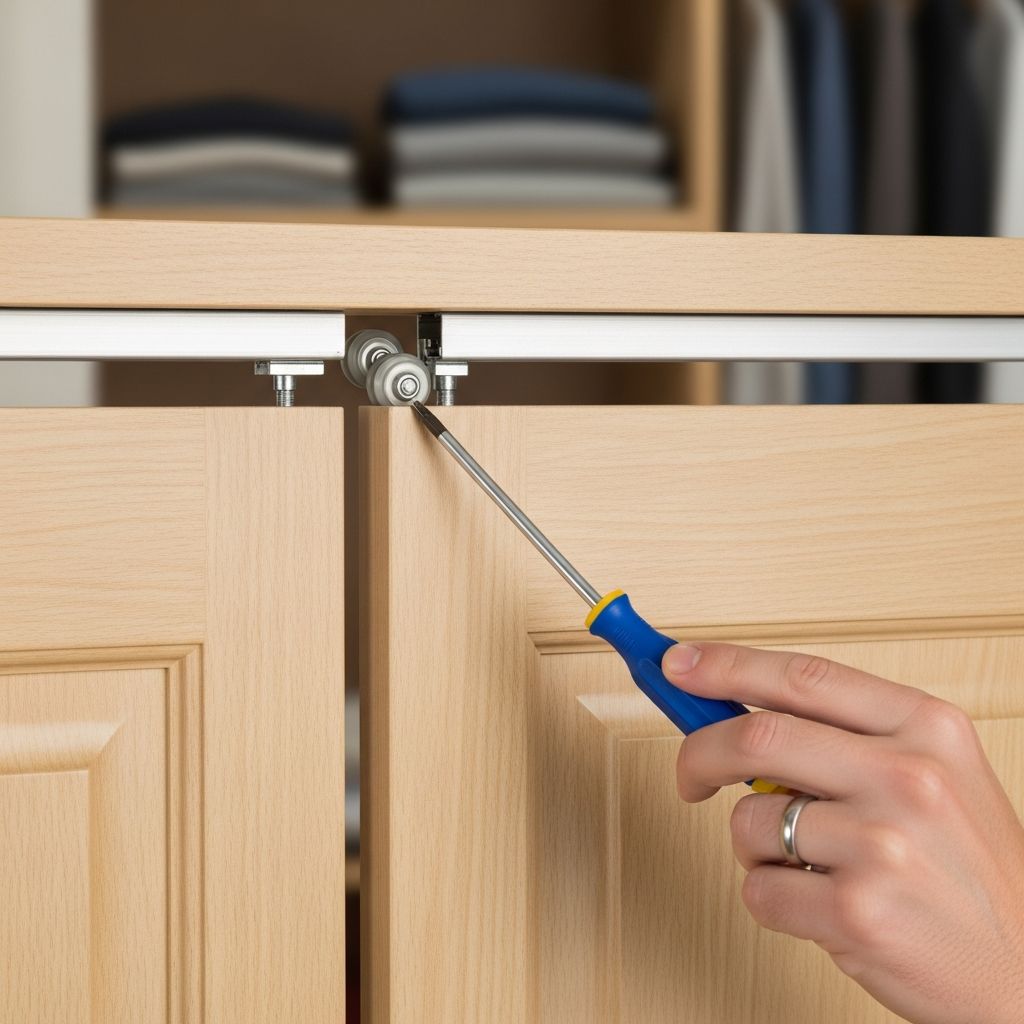
The bracket that holds the upper pivot rod to the upper track requires particular attention, as this connection frequently loosens with regular door use. Access the tightening screw inside the track using a Phillips head screwdriver or impact driver. Tighten this screw firmly to pull the bracket pieces together, securing them against the track. Test door movement through several open and close cycles to confirm the fix resolved the problem.
When a door continues sliding off track despite tight fasteners, the track material may be worn and unable to maintain proper grip. In such cases, using a larger diameter washer under the fastening bolt can help distribute pressure more evenly across the worn track surface, improving grip. Ensure the washer has a hole large enough for the bolt to pass through freely.
Replacing Damaged or Warped Tracks
Some track damage cannot be repaired through tightening or adjustment. Severely bent, dented, or warped tracks must be replaced to restore proper door function. Complete track replacement kits are available at hardware stores and online retailers, typically costing under thirty dollars for a basic installation.
Begin track replacement by removing both door panels. Push down on the wheel assembly at the bottom of each door and pull the door away from the track to release the wheel. Then push downward on the main pivot point at the bottom of the door and pull the entire door toward you to remove the pivot from its seating.
With doors removed, unbolt the old track from the header using appropriate wrenches or screwdrivers. If the new track kit includes two separate pieces rather than one continuous piece, you may need to cut the new track to proper length using a hacksaw. Measure your closet opening and find the exact center point where the new track should sit, marking this position with pencil before installation.
Mount the new track to the header using the provided fastening hardware. Ensure the track sits perfectly centered in the header with equal spacing on both sides of the closet opening. Use a tape measure to verify measurements before fully tightening all bolts.
Reinstalling Doors After Track Repair
Once the new track is securely mounted, reinstall the doors in reverse order from their removal. Begin with the first panel by pushing down the main pivot point and angling it into the track until it seats properly. Release the pivot to lock the door in position.
Bring the second door panel toward the track. When the door meets the track, push down on the wheel assembly and insert it into the track slot. Release the wheel to lock it in place. Both panels should now move smoothly along the track without binding or resistance.
Replacing Slider Guide Components
The slider guide that keeps doors properly aligned sometimes breaks or wears out, causing doors to swing improperly or refuse to close correctly. If your doors exhibit these symptoms despite a clean, properly functioning track, the slider guide likely needs replacement.
To remove the old slider guide, first take the door off track as described previously. Locate the small slits on each side of the slider guide. Insert long-handled pliers into these openings and press gently while pulling downward. The slider guide should disengage from its seating.
Install the new slider guide by inserting one end first, then pushing the other end into place with your fingers until it clicks and locks. The door should now slide properly without binding. Reinsert the door pin through the middle of the guide to complete the reinstallation.
Preventing Future Track Issues
Regular maintenance prevents many track problems from developing. Clean the track quarterly or more frequently in dusty environments. Periodically check all fastening bolts and tightening screws to catch loosening before it causes problems. Lubricate tracks annually or whenever door movement becomes noticeably sluggish.
Avoid forcing doors that resist movement, as this strains hardware and can cause permanent damage. Instead, stop and investigate the cause of resistance before proceeding. Gentle, smooth operation preserves the integrity of all track components and extends the lifespan of your bifold door system.
When Professional Help Becomes Necessary
Most bifold door track problems yield to DIY repairs using basic tools and replacement parts. However, situations involving extensive frame damage, severely bent tracks that cannot be straightened, or complex structural issues may require professional assessment. Additionally, if doors continue malfunctioning after completing all troubleshooting steps, consulting a professional ensures proper diagnosis and prevents further damage.
Frequently Asked Questions
How much does it cost to replace bifold door tracks?
Basic track replacement kits typically cost between fifteen and thirty dollars. Labor costs for professional installation vary by location and complexity but generally range from one hundred to three hundred dollars. Many homeowners save significantly by handling straightforward replacements themselves.
Can a bent track be straightened rather than replaced?
Minor bends might be carefully straightened using a rubber mallet and wooden block to distribute force evenly. However, severely bent tracks should be replaced rather than straightened, as straightening may only temporarily solve the problem and compromise the structural integrity of the track.
What tools do I need for track repair and replacement?
Basic tools include screwdrivers (Phillips and flathead), wrenches, a tape measure, pliers, and a rubber mallet for minor adjustments. Track replacement may require a hacksaw to cut new tracks to proper length. Silicone lubricant and a brush for cleaning complete the essential toolkit.
How often should bifold door tracks be cleaned and lubricated?
Clean tracks quarterly or whenever you notice sluggish door movement. Apply lubricant during cleaning or at minimum once annually. Homes in dusty environments or areas with high humidity may require more frequent maintenance.
Why do bifold doors keep falling out of track?
Common causes include loose fastening bolts, debris inside the track, worn or misaligned guides, and damaged track sections. Address simple issues like tightening bolts and cleaning the track first before assuming the track itself requires replacement.
References
- Bi-Fold Door Track Replacement — iFixit Repair Guides. https://www.ifixit.com/Guide/Bi-Fold+Door+Track+Replacement/167256
- Bifold Door Keeps Falling Out Of The Track — YouTube. https://www.youtube.com/watch?v=2dOTbvq90Vc
- How to Replace & Install Bi-fold Door Slider Guide on a Closet Track — YouTube. https://www.youtube.com/watch?v=5nKcji5kvhs
- How to Replace Hardware / Track for a Sliding Bifold Door — YouTube (Mainely DIY Mom). December 27, 2022. https://www.youtube.com/watch?v=7jqv0fwQPSs
- Fix A Bi-Fold Door That Falls Out Of Track — YouTube. https://www.youtube.com/watch?v=2DIytF-4EdM
Similar Articles







Read full bio of medha deb