Bird’s Nest Fern Care: Essential Guide For Healthy Growth
Master the essentials of growing Bird's Nest Fern indoors with expert tips on light, water, soil, and troubleshooting for lush, vibrant fronds.
Bird’s Nest Fern Care Guide
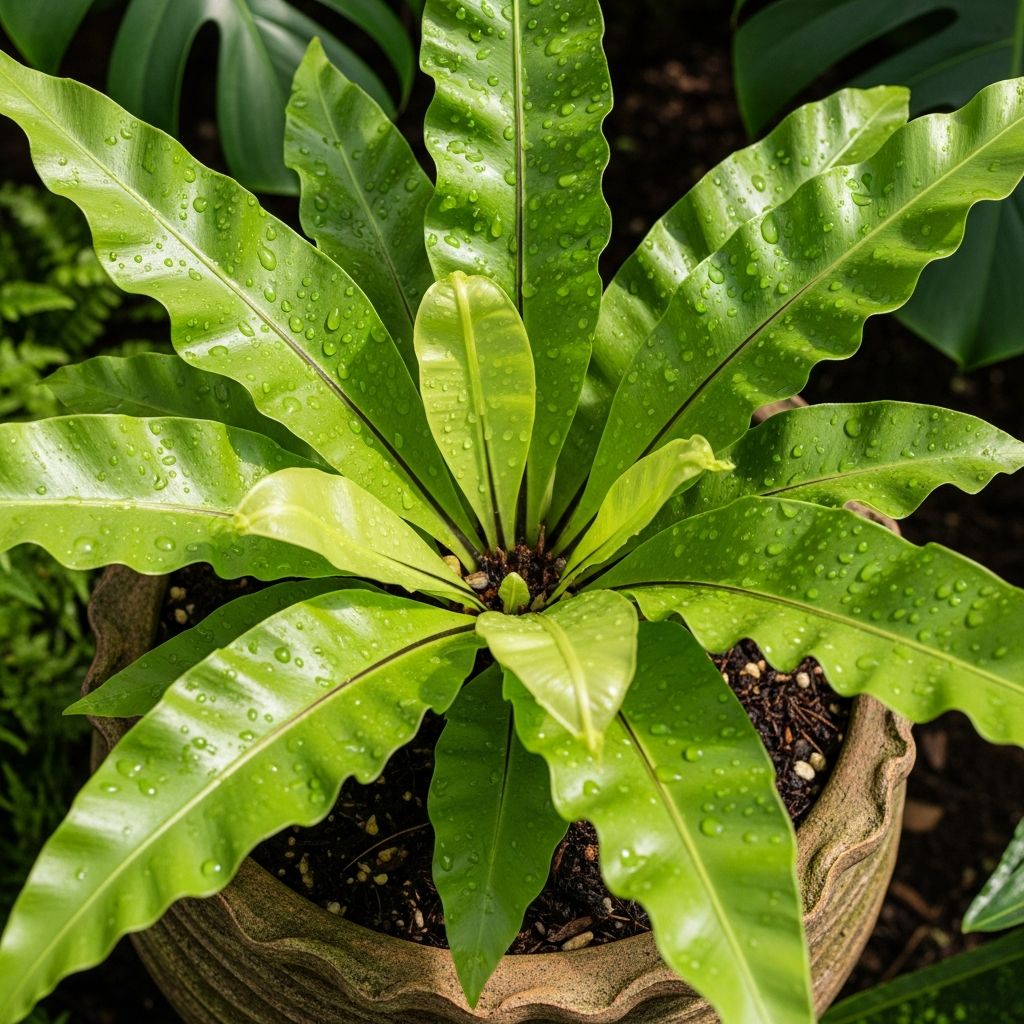
The Bird’s Nest Fern (Asplenium nidus), with its striking rosette of bright green fronds resembling a bird’s nest, brings a touch of tropical elegance to any indoor space. Native to Southeast Asia’s humid forests, this epiphytic fern thrives as a houseplant when provided with conditions mimicking its natural habitat: indirect light, consistent moisture, and high humidity. Unlike flowering plants, it reproduces via spores on frond undersides, growing up to 2-4 feet tall and wide over time.
Understanding the Bird’s Nest Fern
This fern forms a central “nest” from which undivided, wavy-edged fronds unfurl, featuring a prominent dark midrib. It prefers partial shade outdoors in USDA zones 9-11 but excels indoors year-round. Its epiphytic roots absorb moisture from air and surfaces, making it ideal for terrariums or mounted displays. Varieties like ‘Chrissie’ or ‘Austral Gem’ offer slight adaptations in light tolerance, but core care remains consistent.
Optimal Light Conditions
Bird’s Nest Ferns flourish in
medium to bright indirect light
, avoiding direct sun that scorches sensitive fronds. Place near east-facing windows or filter intense rays with sheer curtains. Low filtered light suits shadier spots, while brighter indirect exposure promotes fuller growth. Outdoors, morning sun with afternoon shade prevents yellowing. Insufficient light causes leggy fronds; excess leads to crispy burns.- Ideal spots: Near north- or east-facing windows indoors.
- Avoid: South/west windows without filtration or drafty areas.
- Pro tip: Rotate quarterly for even growth.
Watering Best Practices
Maintain
evenly moist soil
without sogginess—water when the top 1-2 inches dry out, roughly every 1-2 weeks depending on light and humidity. Saturate soil fully, allowing excess to drain. Crucially,never water the central nest
, as standing water causes rot; direct to soil base only. Overwatering yellows and droops fronds; underwatering crisps tips.| Symptom | Cause | Solution |
|---|---|---|
| Pale green, dry soil | Underwatering | Water thoroughly; increase frequency. |
| Yellow, droopy fronds | Overwatering | Let soil dry halfway; improve drainage. |
| Brown tips | Low humidity/underwatering | Mist daily; use humidifier. |
Humidity and Temperature Needs
High humidity (50-70%) is essential, as this fern hails from misty tropics. Average home levels suffice short-term, but boost with pebble trays, grouping plants, or humidifiers. Misting fronds daily mimics rain forest dew. Keep temperatures at
65-75°F (18-24°C)
; protect from drafts, vents, or below-60°F chills, which brown edges.Soil and Potting Essentials
Use a
loose, well-draining mix
for epiphytic roots: combine peat, perlite, vermiculite, sand, or orchid bark to prevent compaction and retain moisture. Terrariums or slabs suit naturally; pots need drainage holes. Repot in spring if rootbound or top-heavy, upsizing minimally to avoid stress.Fertilization Schedule
Apply
balanced liquid houseplant fertilizer (e.g., 10-10-10)
at half strength monthly from spring to early fall (April-September). Drench soil only, skipping fronds or crown. Withhold in winter dormancy to prevent buildup. Over-fertilizing burns tips; underfeeding stunts growth.Pruning and Maintenance
Minimal pruning keeps it tidy: snip yellowed or damaged lower fronds at the base with sterilized shears. Remove debris from the nest center to deter rot. Groom quarterly for airflow.
Common Pests and Diseases
Vigilance prevents issues. Watch for
spider mites
(webs),mealybugs
(white residue),scale
, orfoliar nematodes
. Rinse fronds with cold water; apply neem oil sprays.Bacterial blight
shows as purple spots along veins—prune affected parts immediately; discard severe cases. Slugs/snails outdoors require baits.- Prevention: Inspect weekly; quarantine new plants.
- Treatment: Isolate, rinse, neem oil weekly until clear.
Propagation Techniques
Propagate via
spores
for true clones. Collect mature underside spores in a bag over days, sow on damp sphagnum moss, mist daily. Germination takes 2-3 weeks; transplant seedlings after. Division risks crown damage; avoid unless expert.Seasonal Care Calendar
Adapt routines yearly for success.
Spring
- Water top 1-2″ dry.
- Fertilize monthly (half-strength).
- Repot if needed.
Summer
- Increase watering in heat.
- Fertilize monthly.
- Monitor humidity.
Fall
- Reduce fertilizer.
- Maintain moisture.
Winter
- Water sparingly.
- No fertilizer.
- Avoid cold drafts.
Troubleshooting Guide
Address issues promptly:
- Brown center (crown rot): From nest watering; improve drainage, dry center.
- Yellow fronds: Over/underwatering; adjust and check drainage.
- Crisp edges: Low humidity/light imbalance; mist/humidify.
- No growth: Insufficient light; relocate brighter.
Creative Display Ideas
Elevate your fern: Mount on bark slabs with moss for epiphytic vibe, cluster in terrariums, or hang in macrame. Pair with pothos or philodendrons for lush vignettes. Outdoors in shade, wire to trees.
Benefits of Growing Bird’s Nest Fern
Beyond beauty, it purifies air, adds humidity, and is low-maintenance. Non-toxic to pets, forgiving of minor neglect if nest stays dry.
Frequently Asked Questions (FAQs)
Can Bird’s Nest Fern survive low light?
Yes, it tolerates low indirect light but grows best in medium-bright setups.
How often should I mist it?
Daily in dry homes; use humidifier for consistency.
Is it pet-safe?
Generally non-toxic, but fronds may irritate if chewed.
Why are my fronds dropping?
Usually overwatering; let soil dry halfway.
Can I grow it outside?
In zones 9-11, partial shade; protect from freezes.
With attentive care, your Bird’s Nest Fern will reward with enduring tropical charm. Monitor closely first months for fine-tuning.
References
- Bird’s Nest Fern Care (Asplenium Nidus) — White Flower Farm. 2023. https://www.whiteflowerfarm.com/birds-nest-fern-care
- How to care for a Bird’s Nest Fern | Plants 101 — The Sill. 2023. https://www.thesill.com/blogs/plants-101/how-to-care-for-birds-nest-fern-asplenium-nidus
- Birds Nest Fern — University of Florida IFAS Extension (.edu). 2024-02-05. https://gardeningsolutions.ifas.ufl.edu/plants/ornamentals/birds-nest-fern/
- Bird’s Nest Fern Care Troubleshooting — YouTube (Costa Farms channel). 2023. https://www.youtube.com/watch?v=jLYJg5-LEZM
Similar Articles








Read full bio of medha deb