Blending Red and Yellow in Living Room Design
Master the art of combining red and yellow for a vibrant, balanced living room that radiates warmth and energy without overwhelming the space.
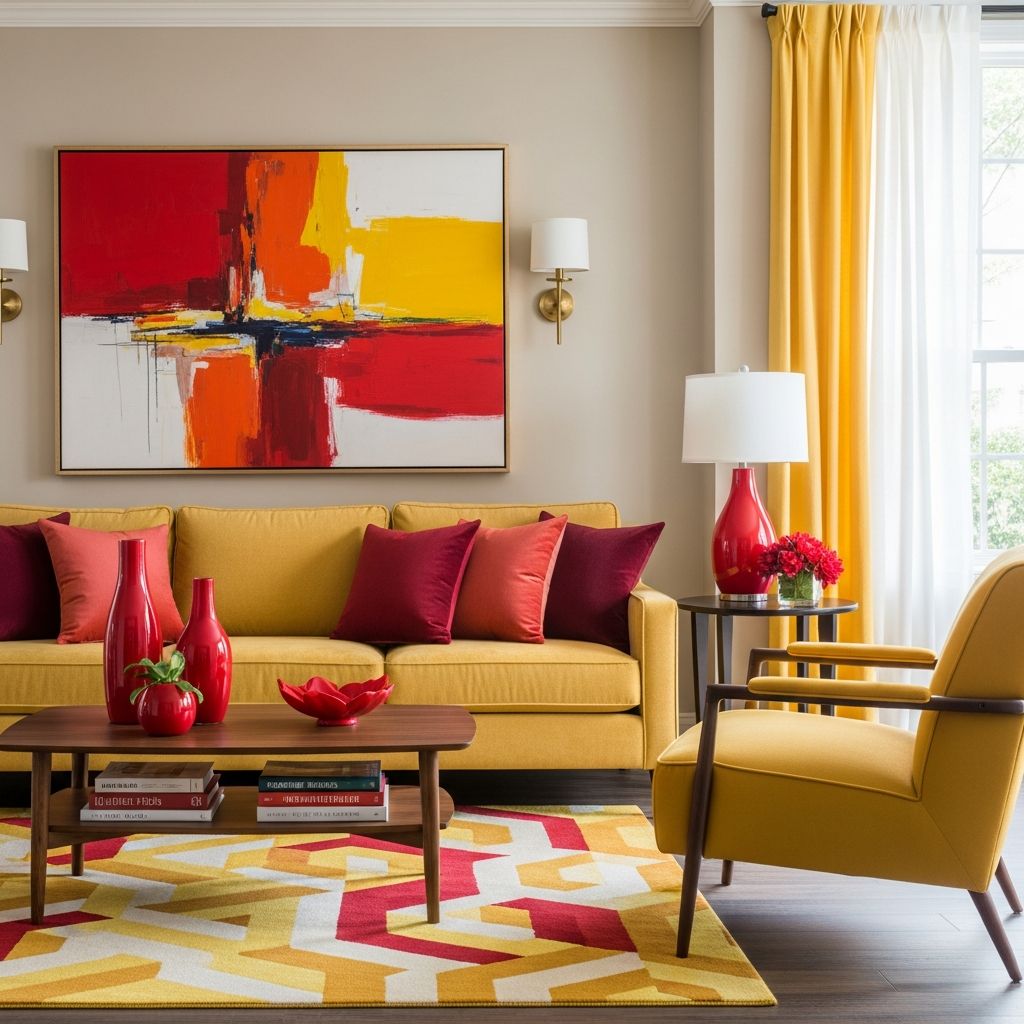
Red and yellow form a powerful duo in living room interiors, evoking warmth, energy, and joy when combined thoughtfully. These primary colors, adjacent on the color wheel, naturally complement each other to create spaces that feel alive and welcoming.
Understanding the Psychology of Red and Yellow
Red symbolizes passion, energy, and grounding, while yellow brings light, optimism, and levity. Together, they balance intensity with uplift, making them ideal for social hubs like living rooms. Designers note that this pairing draws from natural inspirations, such as sunsets or autumn foliage, fostering a sense of comfort and nostalgia.
In color theory, their proximity on the wheel ensures visual harmony, but success hinges on proportion and tone. Overuse can lead to chaos, yet balanced application yields sophisticated results reminiscent of European bistros or sunlit courtyards.
Selecting the Right Shades for Harmony
Choose tones based on desired mood: vibrant primaries for high-energy spaces or muted earthies for coziness. Pair deep reds with soft yellows to avoid overwhelming the eye.
- Bright Reds and Lemons: Ideal for playful, sunlit rooms; use sparingly on accents.
- Earthy Terracottas and Ochres: Create moody, intimate atmospheres perfect for evenings.
- Muted Clays with Butters: Offer subtle warmth without boldness.
For balance, designers recommend one dominant color—often yellow on walls—with the other as accents. Saturation matters: high for drama, low for serenity.
Layering Colors Strategically
Start with walls as the canvas. Paint in the lighter shade, like pale yellow, then introduce red via furniture or art. This prevents competition between hues.
Proportions Guide:
| Element | Dominant Color (60%) | Secondary (30%) | Accent (10%) |
|---|---|---|---|
| Walls/Floors | Yellow | Neutrals | Red details |
| Furniture | Red sofa | Yellow cushions | Wood tones |
| Accessories | Yellow vases | Red rugs | Metallics |
Textures enhance depth: velvet reds against matte yellow walls, or glossy yellow cabinets with matte red textiles.
Practical Application in Living Rooms
Dominating with Yellow Walls: Apply ochre yellow to walls for an uplifting base. Accent with a red sofa and striped cushions to inject playfulness without solidity. This setup, as in London sitting rooms, feels enveloping yet energizing.
Red as the Star: Bold red walls pair with soft yellow trim or ceilings for contrast. Add yellow in lamps or artwork to lift the palette.
High-Energy Zones: In open living areas, vibrant reds and zesty yellows on high-traffic spots like entryways spark dynamism, grounded by grays.
Incorporating Furniture and Textiles
Furniture choices amplify the scheme. A butter yellow sofa with brick red pillows creates cozy contrast, grounded by burl wood tables.
- Red velvet armchairs against yellow walls.
- Yellow curtains framing red rugs.
- Aged brass hardware tying tones together.
Textiles like striped fabrics distribute color playfully, avoiding large blocks. Rugs in geometric red-yellow patterns anchor the room.
Balancing with Neutrals and Textures
Neutrals prevent overload: soft grays, warm woods, or creams temper boldness. Textures differentiate shades—ceramic yellow vs. leather red.
For example, pair with Benjamin Moore’s Swiss Coffee whites or subtle greys like Little Greene’s Scree. Woods in walnut or oak warm the palette further.
Lighting’s Role in Color Perception
Natural light amplifies vibrancy; yellow glows, red deepens. Evenings call for warm LEDs to maintain coziness. Layer ambient, task, and accent lights: yellow lampshades soften red tones.
Real-World Inspirations and Examples
Designers showcase success: Otta Design’s ochre sitting room with red stripes feels moody yet bold. HÁM Interiors’ kitchen-living hybrid uses pale lemon woodwork against soft red for soothing flow. Zoë Feldman’s powder rooms spotlight yellow floors with red fixtures.
These prove red-yellow transcends trends, aligning with 2025 warm palettes.
Common Pitfalls and Fixes
Avoid equal measures; let one lead. Equal bold shades clash—opt for tonal similarity. Test samples in situ, as lighting alters perception.
- Pitfall: Over-Saturation Fix: Mute one hue.
- Pitfall: No Neutrals Fix: Add grays/woods.
- Pitfall: Flat Textures Fix: Mix velvets, mattes.
Frequently Asked Questions
What mood does red and yellow create in living rooms?
Warm, energetic, and inviting—perfect for social spaces, balancing passion with optimism.
Should red or yellow dominate?
Typically yellow for walls (60%), red for accents (30-40%) to avoid overwhelm.
Best neutrals to pair?
Soft grays, creams, warm woods like oak for grounding.
Does this work in small rooms?
Yes, with lighter tones and accents to expand visually.
How to test the scheme?
Paint large swatches; observe in morning/evening light.
Advanced Tips for Timeless Appeal
Evolve seasonally: brighter summers, deeper winters. Integrate patterns like florals or geometrics. For sustainability, choose low-VOC paints. This duo’s versatility ensures enduring style.
Experiment confidently—red and yellow, curated well, transform living rooms into vibrant sanctuaries.
References
- Why red and yellow is the unique color combination that deserves a place in your home — Homes & Gardens. 2024-12-01. https://www.homesandgardens.com/interior-design/paint/red-and-yellow-color-combination
- Do Red and Yellow Go Together? Here’s How to Make It Work — Livingetc. 2024-11-15. https://www.livingetc.com/advice/do-red-and-yellow-go-together
- The Best 15 Yellow Red Color Palette Combinations — Piktochart. 2024-10-20. https://piktochart.com/tips/yellow-red-color-palette
Similar Articles








Read full bio of medha deb