Bone Meal for Plants: Complete Growing Guide
Master bone meal application for stronger roots, vibrant blooms, and healthier plants.
Bone Meal for Plants: A Complete Growing Guide
Bone meal is one of the most valuable organic fertilizers available to gardeners seeking natural ways to enhance plant health and vitality. This time-tested soil amendment has been used by gardeners for generations to promote robust root systems, encourage abundant flowering, and support overall plant vigor. Whether you’re growing ornamental plants, vegetables, or fruit-bearing crops, understanding how to properly use bone meal can significantly improve your gardening results.
Made from steamed and ground animal bones—typically from cattle or fish sources—bone meal provides essential nutrients that plants need to thrive. Its slow-release formula means plants receive steady nutrition over an extended period, making it an excellent choice for long-term soil enrichment. This guide will help you master the use of bone meal and maximize its benefits for your garden.
What Is Bone Meal and How Does It Work?
Bone meal is a finely powdered organic fertilizer derived from animal bones that have been steamed and ground into a granular form. The primary sources are beef and fish bones, though bones from any food-source animals can be used. This natural product stands out in the gardening world because of its unique nutrient profile and slow-release mechanism.
When applied to soil, bone meal gradually breaks down over several weeks to months, releasing phosphorus and calcium in a steady manner. This slow-release action prevents nutrient shock and allows plants to absorb nutrients gradually as they need them, promoting consistent growth rather than rapid spurts followed by depletion. The phosphorus content makes it particularly valuable for plants that require support during critical growth phases.
Key Nutrients Found in Bone Meal
Understanding the nutrient composition of bone meal helps you determine when and where to use it most effectively in your garden.
Primary Macronutrients
Phosphorus is the standout nutrient in bone meal, making up a significant portion of its N-P-K ratio. Phosphorus plays multiple vital roles in plant development, including supporting photosynthesis, promoting robust root formation, enhancing flower production, and facilitating seed development. Plants experiencing phosphorus deficiency often struggle with flowering, fruiting, and seed production—problems that bone meal can effectively address.
Nitrogen is present in bone meal, though in moderate amounts. Nitrogen is essential for photosynthesis and forms a critical component of chlorophyll, the pigment that gives plants their green color and enables them to convert sunlight into energy. This nitrogen content contributes to overall plant health and vigor throughout the growing season.
Calcium is another significant component of bone meal that often gets overlooked. This secondary macronutrient helps plants build strong cell walls and develop robust root systems. Calcium also plays a crucial role in preventing blossom end rot—a common problem in tomatoes and peppers—making bone meal an excellent choice for these crops.
Secondary Nutrients and Micronutrients
Beyond the primary nutrients, bone meal contains valuable secondary minerals. Zinc supports chlorophyll production and overall metabolic functions, while magnesium enhances photosynthesis efficiency. These micronutrients, though needed in smaller quantities than macronutrients, contribute significantly to plant health and productivity.
Best Uses for Bone Meal in Your Garden
Root Vegetables and Crops
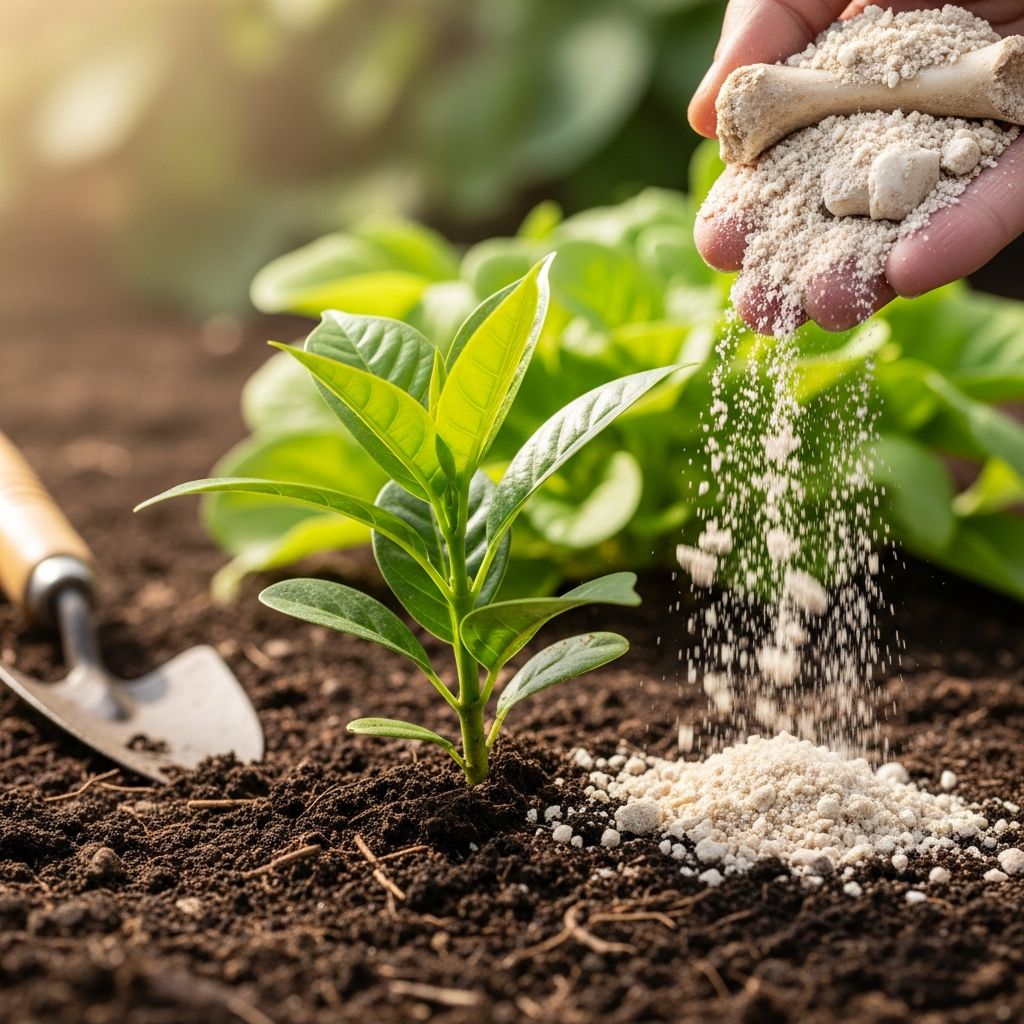
Bone meal excels when used for root vegetables that require strong calcium and phosphorus support. Excellent candidates include carrots, onions, garlic, beets, and potatoes. The calcium content strengthens root structure, while phosphorus promotes healthy development. Apply bone meal at planting time by working it into the soil around the base of each plant or mixing it into planting holes.
Flowering Plants and Ornamentals
The phosphorus in bone meal makes it ideal for flowering annuals and perennials including roses, marigolds, peonies, and other blooming plants. Applying bone meal before the flowering season encourages more abundant and vibrant blooms. Use it as a top dressing around established plants in spring or work it into the soil before planting new specimens.
Fruiting Vegetables
Tomatoes and peppers benefit tremendously from bone meal application. The phosphorus supports fruit development, while calcium prevents blossom end rot—a physiological disorder that creates dark, sunken spots on developing fruit. Apply bone meal at planting time and again mid-season if needed.
Trees and Shrubs
Young trees and shrubs developing strong root systems benefit from bone meal application. The phosphorus and calcium support extensive root development, helping establish plants become stronger and more resilient. Apply bone meal in the planting hole when transplanting woody plants, or as a top dressing around the base of new plantings.
Transplanting and Establishment
Bone meal is particularly valuable when transplanting because a small amount added to each planting hole helps new plants establish faster. The nutrients are available right where new roots are developing, giving transplants a strong nutritional start in their new location.
How to Apply Bone Meal
Application Timing
Apply bone meal in spring and fall for optimal results. Spring application provides nutrients as plants enter their primary growth phase, while fall application supports root development during cooler months when root growth continues. For established plants, use bone meal as a top dressing in early spring before growth begins.
Application Amounts
Start with a soil test to determine your garden’s specific nutrient needs before applying bone meal. General guidelines suggest using approximately one tablespoon of bone meal per planting hole when establishing new plants. For established beds or plants, apply to 100 square feet of garden space and work it into the top inch or two of soil.
Blending into Soil
Mix bone meal thoroughly into soil rather than leaving it on the surface. Work it into the planting hole when transplanting, or incorporate it into the top few inches of soil around established plants. Proper incorporation allows soil microorganisms to break down the bone meal more efficiently, releasing nutrients where roots can access them.
Alternative Application Methods
Liquid bone meal offers faster nutrient availability for plants that need immediate phosphorus support. This concentrated form is absorbed quickly by plant roots, providing faster results than powdered bone meal. Choose powdered bone meal for long-term soil amendment and liquid bone meal when you need quicker nutrient delivery.
Combining Bone Meal With Other Fertilizers
While bone meal is effective as a standalone amendment, combining it with other organic fertilizers can create more balanced nutrition for specific gardening situations. Mixing bone meal with blood meal creates a more balanced fertilizer, as blood meal’s nitrogen complements bone meal’s phosphorus. This combination is particularly effective for indoor plants and situations where you need both macronutrients.
Bone meal can also be mixed with manure or guano to create customized fertilizer blends tailored to your specific plants and soil conditions. The exact combination depends on your soil’s initial quality and the plants you’re growing. Conducting a soil test helps guide these decisions, ensuring you’re providing exactly what your garden needs.
Important Considerations
Bone meal’s phosphorus content requires soil with a pH below 7 for optimal availability. In alkaline soils, phosphorus may become locked up and unavailable to plants. If your soil is alkaline, combining bone meal with blood meal can help lower pH and improve phosphorus availability.
Remember that applying fertilizer unnecessarily can do more harm than good. Plants growing in healthy soil may not need supplemental fertilization. Conduct a soil test to determine actual nutrient deficiencies before applying bone meal or any fertilizer.
Frequently Asked Questions
Q: How long does bone meal take to work?
A: Bone meal is a slow-release fertilizer that gradually breaks down over several weeks to months. Most applications release nutrients for approximately four months, providing consistent long-term nutrition rather than immediate results. For faster nutrient delivery, use liquid bone meal instead.
Q: Can I use bone meal on all types of plants?
A: Bone meal works best for specific plants, particularly those requiring phosphorus and calcium. It’s excellent for flowering plants, root vegetables, fruiting crops, and young trees and shrubs. However, it may not be necessary for all plants, and excessive application can create nutrient imbalances. Always conduct a soil test first.
Q: Is bone meal safe for organic gardening?
A: Yes, bone meal is approved for organic gardening and is considered an organic soil amendment. It’s a natural product made from animal bones with no synthetic additives, making it an excellent choice for gardeners practicing organic methods.
Q: How does bone meal differ from blood meal?
A: Bone meal is high in phosphorus and calcium, making it ideal for root and flower development. Blood meal is high in nitrogen, making it better for promoting leafy growth and green foliage. They complement each other and can be combined for more balanced nutrition.
Q: Can I apply bone meal year-round?
A: While bone meal can be applied throughout the year, spring and fall are optimal times. Spring application supports active growth, while fall application benefits root development during cooler months. Avoid excessive applications that might create nutrient imbalances.
Q: What’s the difference between powdered and liquid bone meal?
A: Powdered bone meal is a granular form that breaks down slowly over weeks and months, making it ideal for long-term soil amendment. Liquid bone meal is absorbed quickly by roots, providing faster nutrient availability. Choose powdered for soil amendment and liquid for quick nutrient delivery.
Conclusion
Bone meal is a trusted, time-tested organic fertilizer that deserves a place in every gardener’s toolkit. By supplying calcium and phosphorus through a slow-release mechanism, it helps plants form strong roots, produce vibrant flowers, and develop abundant fruit. Whether you’re growing ornamental flowers, root vegetables, or fruiting crops, bone meal provides the nutritional support plants need for optimal development.
To achieve the best results, start with a soil test to determine your garden’s specific nutrient needs. Apply bone meal in the appropriate amounts at optimal times, blend it thoroughly into soil, and consider combining it with other organic fertilizers for more balanced nutrition. With proper use, bone meal will enhance your garden’s productivity and help your plants reach their full potential for many growing seasons to come.
References
- How to Use Fertilizers: Bone Meal — Grow Organic. 2025. https://www.groworganic.com/blogs/articles/how-to-use-fertilizers-bone-meal
- Bone Meal is a powerhouse provider of phosphorus and nitrogen — True Organic. 2025. https://trueorganic.earth/using-bone-meal-in-your-garden/
- Bonemeal: main uses — BBC Gardeners’ World Magazine. 2025. https://www.gardenersworld.com/how-to/grow-plants/bonemeal-main-uses/
- Benefits of Bone Meal and Blood Meal for Plants — The Tie Dye Iguana. 2025. https://thetyedyediguana.com/blog/-benefits-of-bone-meal-and-blood-meal-for-plants/
Similar Articles








Read full bio of medha deb