Boost Home Energy Savings with Smart Insulation
Discover top insulation strategies to slash heating and cooling bills by up to 50% while enhancing comfort and efficiency in your home.
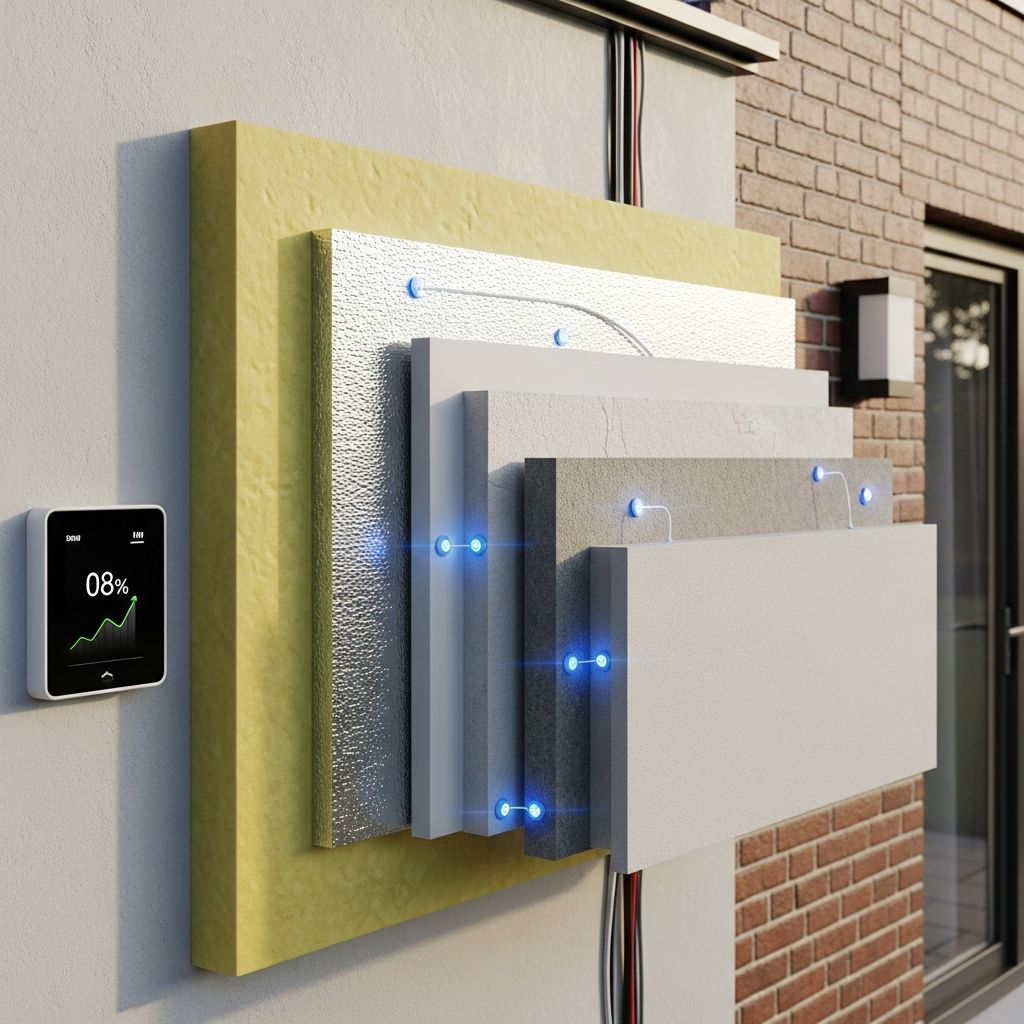
Installing the right insulation transforms your home into an energy-efficient sanctuary, potentially cutting heating and cooling expenses by 15-50%. This guide delves into proven insulation materials, their performance metrics, optimal applications, and practical steps for DIY or professional upgrades to maximize returns on investment.
Understanding Insulation Fundamentals
Insulation works by resisting heat flow, measured via
R-value
—the higher the value per inch, the better the thermal barrier. Beyond R-value, effective systems seal air leaks, manage moisture, and prevent thermal bridging where heat escapes through studs or frames. The U.S. Department of Energy notes that most American homes lack sufficient insulation, with 9 out of 10 under-insulated, leading to wasted energy.Combining air sealing with insulation yields optimal results: EPA models show 15% savings on heating/cooling (11% total energy) in typical homes. Focus on attics, walls, floors over crawl spaces, and basements for biggest impacts.
Top-Performing Insulation Materials Ranked
Selecting insulation hinges on climate, budget, and site specifics. Here’s a breakdown of leading options based on efficiency, backed by performance data.
| Material | R-Value per Inch | Best Uses | Pros | Cons | Cost per Sq Ft |
|---|---|---|---|---|---|
| Closed-Cell Spray Foam | 6.0-7.0 | Attics, walls, rim joists | Airtight seal, moisture barrier, high efficiency | Higher cost, pro install needed | $1.50-$5.00 |
| Rigid Foam (Polyiso/Polyurethane) | 5.0-6.5 | Exterior walls, basements, roofs | Reduces thermal bridging, durable | Requires precise cutting | $0.50-$2.00 |
| Open-Cell Spray Foam | 3.5-4.0 | Interior walls, soundproofing | Flexible, expands to fill gaps | Less moisture resistant | $0.50-$3.00 |
| Cellulose (Loose-Fill) | 3.2-3.8 | Attics, walls (dense-pack) | Eco-friendly, settles into voids | Settling possible, needs equipment | $0.60-$1.50 |
| Fiberglass Batts/Blown-In | 2.9-3.8 | Attics, accessible cavities | Affordable, widely available | Irritant, poor air sealing if gaps | $0.30-$1.20 |
Closed-cell spray foam leads for overall efficiency, offering the fastest payback (5-8 years) via superior sealing and R-value. Rigid foam excels in continuous applications, doubling resistance compared to fibrous types of equal thickness.
Ideal Locations for Insulation Upgrades
- Attics: Easiest and highest ROI spot; blown-in or batts add R-30+ to save up to 30% on bills.[10] Use radiant barriers in hot climates.
- Walls: Spray foam fills cavities perfectly; rigid boards for exteriors prevent stud conduction.
- Floors/Crawl Spaces: Rigid foam or closed-cell foam blocks ground moisture and cold infiltration.
- Basements/Rim Joists: Foam boards create thermal breaks; seal first for max savings.
Prioritize unsealed areas: attics often yield quickest wins due to accessibility.
DIY vs. Professional Installation: What to Choose
DIY suits batts, rigid foam, or blown-in with rental machines (e.g., AttiCat for fiberglass). Prep involves safety gear, air sealing cracks with caulk/foam, and measuring depths for correct R-values per climate zone (e.g., R-49 attics in cold areas).
Professionals handle spray foam, ensuring even expansion and codes compliance. Costs vary: $1-2/sq ft DIY vs. $2-5 pro. Weigh skills—poor installs waste money via gaps or compression.
Step-by-Step DIY Attic Insulation Guide
- Inspect and seal leaks (chimney, vents, wires) with fire-rated sealant.
- Clear debris; lay vapor barriers if needed.
- Blow or roll material to recommended depth (e.g., 16″ for R-49 cellulose).
- Install baffles for ventilation; cover with plywood if walking needed.
- Ventilate during install; monitor for moisture.
Tools: respirator, gloves, knee pads, blower machine.
Cost Analysis and Long-Term Savings
Upfront costs range $0.30-$5/sq ft, but savings recoup in 3-10 years. Example: 1,000 sq ft attic upgrade at $1.50/sq ft ($1,500) saves $225/year (15% of $1,500 bills), paying off in ~7 years.
- Fiberglass: Cheapest entry, 20-30% savings.
- Spray Foam: Premium, 40-50% savings, plus durability.
- Incentives: Check ENERGY STAR rebates, tax credits up to $1,200.
Total ownership favors high-R materials in extreme climates.
Climate-Specific Recommendations
Cold Climates: Prioritize closed-cell foam (R-5+) in attics/walls for air/moisture control.
Hot/Humid: Rigid foam exteriors + radiant barriers; open-cell inside for breathability.
Mixed: Cellulose or fiberglass with sealing for balanced performance.
U.S. zones dictate minimums: Zone 5 needs R-20 walls, R-49 ceilings.
Common Pitfalls and How to Avoid Them
- Gaps/Compression: Measure precisely; use expanding foams.
- Moisture Trapping: Vent attics; choose vapor-permeable in humid areas.
- Fire Safety: Use rated materials; no loose storage near flues.
- Health Hazards: Wear PPE for fiberglass/cellulose; off-gas free foams best.
Post-install: Test air tightness with blower door if possible.
Frequently Asked Questions (FAQs)
What is the most energy-efficient insulation?
Closed-cell spray foam, with R-6-7/inch and airtight sealing, tops rankings for 2025.
How much can insulation save on bills?
15% average on heating/cooling via sealing + insulation; up to 50% with premium materials.
Can I install insulation myself?
Yes for attics/batts; spray foam requires pros. Rent blowers for loose-fill.
What’s the best attic insulation?
Blown-in cellulose or fiberglass for even coverage; aim R-38-60 by zone.
Does insulation expire?
Quality installs last 20-50+ years; fiberglass/cellulose maintain R-value over time.
Advanced Options: SIPs and Radiant Barriers
Structural Insulated Panels (SIPs) integrate foam cores in prefab walls/roofs, saving 12-14% energy via uniformity and airtightness. Ideal for new builds.
Radiant barriers reflect heat in attics, boosting efficiency 10-20% in sunny climates when paired with other insulation.
For retrofits, consider hybrid: rigid foam + batts for walls.
Sustainable and Eco-Friendly Choices
Cellulose from recycled paper resists mold/insects, offering green performance. Mineral wool provides fire resistance. Avoid settling issues with dense-pack installs.
Life-cycle: High-efficiency foams reduce emissions long-term despite production impacts.
References
- Most Energy Efficient Insulation: Complete 2025 Guide & Rankings — SolarTechOnline. 2025. https://solartechonline.com/blog/most-energy-efficient-insulation-guide/
- Energy Savings by Insulation — Energy Efficiency in Buildings, ASU. 2023-07-11. https://eec.asu.edu/2023/07/11/energy-savings-by-insulation/
- Types of Insulation — Department of Energy. Accessed 2026. https://www.energy.gov/energysaver/types-insulation
- Types of Insulation: Which is Most Energy Efficient? — BKV Energy. Accessed 2026. https://bkvenergy.com/blog/types-of-insulation/
- Three Types of Insulation, Which Is Best for Your Home? — Focus on Energy. Accessed 2026. https://focusonenergy.com/blog/three-types-of-insulation-which-is-best-for-your-home
- Methodology for Estimated Energy Savings — ENERGY STAR. Accessed 2026. https://www.energystar.gov/saveathome/seal_insulate/methodology
Similar Articles



Read full bio of medha deb