Brad Nailer vs Finish Nailer: Complete Nail Gun Guide
Master the differences between nail gun types to choose the right tool for your project.
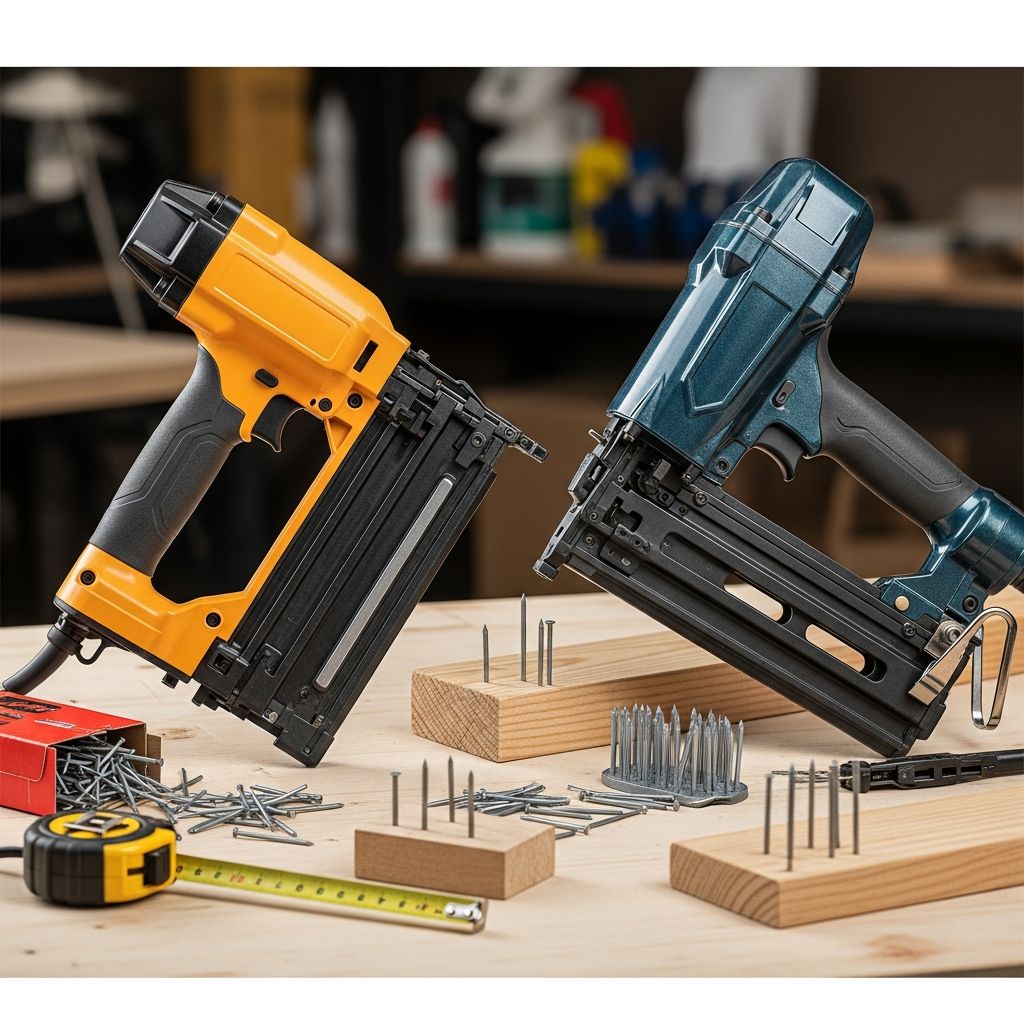
Brad Nailer vs Finish Nailer and Other Types of Nail Guns
When it comes to home improvement and woodworking projects, selecting the right fastening tool can make the difference between a professional-looking result and a frustrating experience. Nail guns have revolutionized how both DIY enthusiasts and professional contractors complete their work, offering speed, precision, and consistency that hand-nailing simply cannot match. However, with numerous nail gun types available on the market, understanding the distinctions between them is crucial for project success.
The confusion often begins with popular options like brad nailers and finish nailers, which are frequently mistaken for one another despite having distinct applications and capabilities. This comprehensive guide breaks down the differences between brad nailers, finish nailers, and other essential nail gun types, helping you make informed decisions for your next project.
Understanding Nail Gun Basics
Before diving into specific types, it’s essential to understand how nail guns function and what factors differentiate them. Nail guns operate using various power sources including pneumatic (air-powered), cordless electric, gas-powered, and manual mechanisms. The type of power source affects portability, driving force, and sustained operation capabilities.
The primary distinguishing factor among nail guns is the gauge and length of nails they accommodate. Gauge refers to the thickness of the nail, with lower numbers indicating thicker nails capable of greater holding power. The length of nails determines the depth of penetration and the types of materials suitable for each nailer.
Brad Nailers: Precision for Delicate Work
Brad nailers represent one of the most versatile tools for finishing work and detail projects. These specialized nail guns use 18-gauge nails, which are considerably thinner than those used in other nailer types. The thinness of brad nails means they create minimal surface damage, making them ideal for applications where appearance matters significantly.
Primary Uses for Brad Nailers:
– Attaching decorative trim and moulding- Installing cabinet doors and panels- Fastening thin veneer and delicate wood pieces- Applying quarter-round and shoe moulding- Securing lightweight architectural details- Working with MDF and composite materials
The 18-gauge nails used in brad nailers typically range from 5/8 inch to 2 inches in length, though most common applications use nails between 1 and 1-1/2 inches. Because these nails are so thin, they leave virtually invisible holes that rarely require wood filler, making them excellent for visible woodwork where aesthetics are paramount.
Brad nailers are available in both pneumatic and cordless electric models. Pneumatic brad nailers require an air compressor and hose but provide consistent power without battery concerns. Cordless models offer superior mobility and convenience for homeowners, though they may have slightly less driving force than their pneumatic counterparts.
Finish Nailers: Power and Holding Strength
Finish nailers occupy the middle ground between delicate brad nailers and heavy-duty framing nailers. These tools use 15 or 16-gauge nails, which are noticeably thicker than brad nails and provide substantially greater holding power. This increased thickness and strength make finish nailers suitable for more demanding applications that require secure fastening.
Ideal Applications for Finish Nailers:
– Installing door casings and window frames- Fastening baseboards and crown moulding- Securing plywood sheets and subfloors- Attaching hardwood trim and wainscoting- Installing cabinet frames- General finish carpentry work
Finish nails typically range from 1-1/4 inches to 2-1/2 inches in length, accommodating various material thicknesses and depths. The 15 or 16-gauge nails create slightly larger holes than brad nails but still small enough to be inconspicuous in most applications. When fastening into hardwood or engineered materials, finish nailers provide the holding power necessary to prevent movement or separation over time.
Like brad nailers, finish nailers come in pneumatic and cordless electric versions. Many professionals prefer finish nailers for production work because the 16-gauge option provides an excellent balance between holding power and aesthetic appearance.
Brad Nailer vs Finish Nailer: Key Differences
Understanding the specific differences between brad and finish nailers helps you select the appropriate tool for each task:
| Feature | Brad Nailer | Finish Nailer |
|---|---|---|
| Nail Gauge | 18-gauge | 15 or 16-gauge |
| Nail Length | 5/8" to 2" | 1-1/4" to 2-1/2" |
| Holding Power | Minimal, for light materials | Strong, for demanding applications |
| Hole Size | Nearly invisible | Small, requires minimal filling |
| Best For | Delicate trim, moulding, veneer | Baseboards, casings, cabinetry |
| Material Compatibility | Thin wood, MDF, composites | Hardwood, plywood, dense materials |
The fundamental distinction is that brad nailers prioritize invisibility and are designed for materials that require minimal fastening force, while finish nailers prioritize holding power for applications where structural integrity matters more than hole visibility.
Framing Nailers: Heavy-Duty Construction Power
Framing nailers represent the heavyweight category of nail gun technology, designed for serious construction work and industrial applications. These tools accommodate 2 to 3-1/2 inch nails in 10 or 12-gauge configurations, delivering tremendous driving force suitable for timber framing, deck construction, and structural work.
Primary Applications for Framing Nailers:
– Building wall frames and structural components- Constructing decks and outdoor structures- Installing flooring and subflooring- Fencing projects and crate building- Heavy-duty carpentry work- Roofing and sheathing installation
Framing nailers fire in either coil or strip configurations, with coil nailers holding more fasteners and fitting into tighter spaces. These tools are significantly heavier than finish or brad nailers, reflecting their robust construction and powerful driving mechanisms. Most framing nailers use coil-fed systems that automatically advance nails, enabling rapid-fire driving for high-volume applications.
Other Essential Nail Gun Types
Roofing Nailers
Specifically engineered for shingle installation, roofing nailers use 1 to 2-inch coil nails with round heads designed to prevent shingle tearing. These nailers feature lightweight designs to minimize user fatigue during extended overhead work. The round-head nails sit flush against shingles without puncturing or splitting them, a critical feature for weather protection and longevity.
Flooring Nailers
Flooring nailers employ L-shaped cleat nails that drive into the tongue of hardwood flooring planks, hiding fasteners completely within the floor structure. Most pneumatic flooring nailers use a mallet-activated mechanism that drives one nail at a time with precise control, preventing damage to expensive hardwood materials.
Pin Nailers
Even more delicate than brad nailers, pin nailers use 23-gauge headless pins approximately the thickness of a sewing needle. These nailers are perfect for furniture repair, upholstery work, and ultra-delicate trim where any visible fastener would be unacceptable. The nail holes are nearly invisible to the naked eye.
Palm Nailers
Designed for tight spaces where conventional nail guns won’t fit, palm nailers feature compact designs that fit comfortably in the palm of your hand. These single-shot nailers work in confined corners, narrow crevices, and between existing structures where standard nailers cannot reach. They accommodate various nail sizes and are indispensable for retrofit work and repairs.
Staple Guns
While technically different from nail guns, staple guns serve similar fastening purposes for upholstery, screening, and flooring applications. Strip-fed staple guns offer reliability and quick reloading for high-volume stapling tasks, from furniture restoration to weatherproofing projects.
Nail Gun Power Sources and Technology
Pneumatic Nail Guns
Air-powered pneumatic nailers have long been the industry standard, offering consistent power, minimal maintenance, and reliable performance. These tools require an air compressor and hose connection but deliver uniform driving force shot after shot. Pneumatic models typically cost less than cordless alternatives and provide excellent sustained operation for professional use.
Cordless Electric Nail Guns
Modern cordless nailers use lithium-ion battery technology to provide portability without sacrificing power. These tools eliminate hose management and compressor requirements, making them ideal for homeowners and situations where mobility is essential. Battery-powered nailers typically deliver sufficient force for finish and trim work, though they may lack the raw power of pneumatic framing nailers for the most demanding applications.
Gas-Powered Nail Guns
Gas-powered nailers use combustion from disposable fuel cartridges to generate driving force, combining portability with substantial power delivery. These professional-grade tools excel in situations requiring the power of pneumatic systems without compressor limitations, though fuel cartridge costs and maintenance requirements make them less popular for casual users.
Nail Gun Angles and Magazine Configurations
Beyond nail gauge and length, nail gun design includes magazine angle and loading configuration considerations. Angled nailers feature magazines positioned at 15 to 30 degrees, allowing access to tight corners and confined spaces where straight nailers cannot reach. A 30-degree angle provides maximum access to corner applications, making angled nailers particularly valuable for finish carpentry and cabinet installation.
Loading configurations include coil-fed systems that hold more fasteners in flexible, wire-bound rings, and strip-fed systems that use rigid strips of nails. Coil-fed nailers offer greater capacity and more compact designs, while strip-fed options may offer slightly better visibility and control in some applications.
Choosing the Right Nail Gun for Your Project
Project selection requires considering multiple factors beyond just nail gun type. Material thickness and hardness should guide your gauge selection, with thicker materials requiring lower gauge numbers. Application purpose—whether structural or decorative—determines holding power requirements. Work environment accessibility affects whether you need angled nailers or specialized tools for confined spaces.
Budget considerations also factor into power source selection. Homeowners with limited tool collections often benefit from cordless electric models offering versatility and low maintenance. Professional contractors might invest in pneumatic systems for their superior power and lower per-use costs despite higher initial investment.
Frequently Asked Questions
Q: Can I use a brad nailer for baseboards?
A: Brad nailers can work for lightweight baseboards, but finish nailers with 16-gauge nails are the better choice for standard baseboard installation, as they provide superior holding power and less visible fastening.
Q: What’s the difference between 16-gauge and 18-gauge nail guns?
A: The lower gauge number indicates thicker, stronger nails. 16-gauge nails provide greater holding power suitable for baseboards and casings, while 18-gauge brad nails create nearly invisible holes ideal for delicate trim work.
Q: Are cordless nail guns as powerful as pneumatic models?
A: Cordless models work excellently for finish and trim applications but may not match pneumatic framing nailers’ raw power for heavy-duty structural work. However, advancements continue improving cordless performance.
Q: Which nail gun is best for hardwood flooring?
A: Specialized flooring nailers with mallet-activated mechanisms and L-shaped cleat nails are designed specifically for hardwood flooring installation, protecting the wood while providing secure fastening.
Q: Do I need both brad and finish nailers?
A: For comprehensive home improvement capability, having both tools is valuable. Brad nailers excel at delicate work while finish nailers handle demanding applications, though many projects can be completed with one or the other.
Q: What gauge nails work best for cabinet installation?
A: For cabinetry, 16-gauge finish nails provide excellent holding power without splitting hardwood materials. Brad nailers work for backing and interior components where appearance matters less.
References
- Best Nail Guns – Lowe’s Buying Guide — Lowe’s Companies, Inc. 2025. https://www.lowes.com/n/buying-guide/nail-gun-buying-guide
- Complete Guide to the 9 Main Types of Nail Guns — Staple Headquarters. 2025. https://www.stapleheadquarters.com/the-main-types-of-nail-guns
- How to Research and Purchase a Nailer That’s Right For You — Senco. 2025. https://www.senco.com/senco-blogs/how-to-research-and-purchase-a-nailer-thats-right-for-you/
Similar Articles




Read full bio of Sneha Tete