Designing and Building Brick and Stone Garden Paths
A complete DIY guide to planning, building, and maintaining durable brick and stone walkways in your yard.
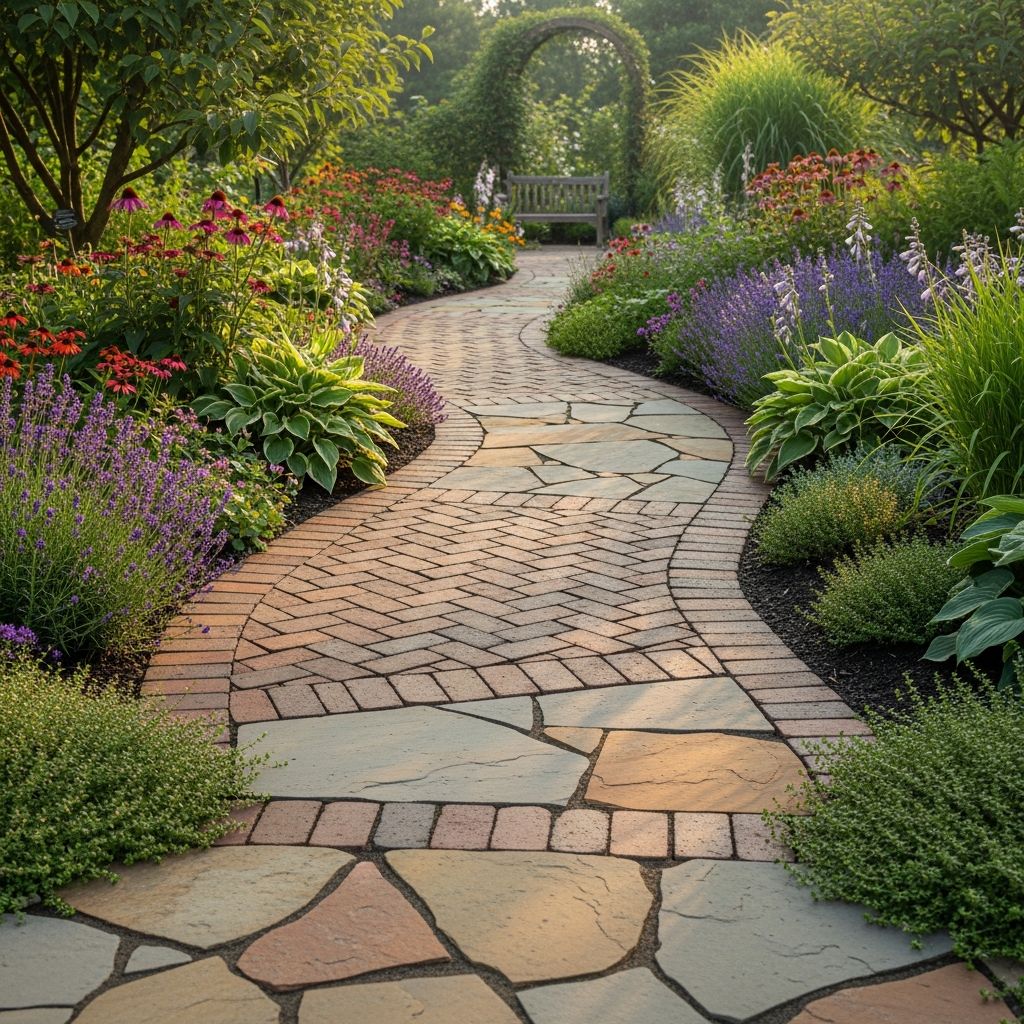
Brick and Stone Garden Paths: A Complete DIY Guide
Brick and stone pathways do more than keep shoes out of the mud. They connect outdoor spaces, frame planting beds, and add a permanent sense of structure to your yard. With thoughtful planning and careful groundwork, a homeowner with basic tools can build a path that looks professional and lasts for decades.
Why Add a Hardscape Path?
A well-built path improves both the function and appearance of your landscape. Instead of worn strips of lawn or scattered stepping stones, a defined walkway directs traffic, protects grass and plants, and makes outdoor areas usable in all kinds of weather.
- Provides a dry, stable surface for everyday foot traffic.
- Reduces erosion and soil compaction in high-use areas.
- Frames garden beds and patios and boosts curb appeal.
- Can be tailored to almost any style, from rustic to formal.
Planning Your Path Layout
Good planning prevents expensive changes later. Before buying materials, decide exactly where the path starts, where it ends, and how it will feel to walk along. Think about how people naturally move through the space instead of forcing a walkway into an awkward route.
- Trace natural traffic lines: Watch where family and guests already walk. That worn line through the grass is often the most practical place for a permanent path.
- Consider path width: For a single person, 24–30 inches is usually enough. For two people to walk side by side, plan 36–48 inches.
- Match the style to the house: Straight, symmetrical paths suit formal homes, while gentle curves work better for relaxed cottage or woodland gardens.
- Work with slopes: Avoid steep grades. Use short steps, switchbacks, or terracing where the ground drops quickly.
Sketching a Simple Site Plan
A quick scale drawing helps you estimate materials accurately and catch layout problems before you dig. It does not need to be fancy. A pencil, graph paper, and a tape measure are enough for most yards.
- Measure the distance between the planned start and end points and note any curves.
- Draw nearby fixed features such as decks, trees, fences, and existing patios.
- Mark the path width on the plan, using the same scale throughout.
- Use your drawing to calculate the square footage and total length of edging.
Choosing Materials: Brick, Stone, or a Mix
Many different materials can be used for paths, but brick and stone are among the most durable and attractive. You can use only one type or combine materials for contrast and interest. Each option has its own character, weight, and installation quirks.
| Material Type | Appearance | Best Uses | Pros | Cons |
|---|---|---|---|---|
| Clay brick pavers | Uniform size, rich color, classic look | Formal walks, front entries, geometric designs | Easy to pattern, strong, relatively simple to cut | Can become slick if mossy, color choices more limited |
| Concrete pavers | Consistent size, many colors and textures | Curved paths, modern yards, budget projects | Durable, widely available, often less expensive | Color can fade over time, looks more manufactured |
| Natural stone (flagstone, slate, etc.) | Irregular shapes, natural grain and variation | Garden paths, informal patios, rustic landscapes | Unique appearance, blends with plantings | Heavier, harder to level, more cutting and fitting |
| Combination (brick + stone) | Mixed textures, defined edges with natural centers | Feature paths, transitions between areas | Visually rich, allows creative patterns | More layout planning, multiple material deliveries |
Selecting Colors and Patterns
Color and pattern shape how a path feels. Light-colored paths brighten shady corners, while darker tones can anchor a wide open space. Repeating colors that already exist in your roof, trim, or stone veneer helps tie everything together.
- Use cool gray or blue stone to complement modern or minimalist designs.
- Choose warm red or tan brick to echo traditional brick facades.
- Combine a simple running pattern in the center with a contrasting border to visually frame the path.
Tools and Materials Checklist
Gather everything before you start digging. Stopping mid-project to hunt down a missing tool wastes time and may leave an open trench exposed to weather. Many tool rental centers offer compactors, masonry saws, and other heavy equipment by the day.
Common Tools
- Measuring tape, stakes, and string line.
- Shovel, spade, and digging fork.
- Wheelbarrow and garden rake.
- Hand tamper and, ideally, a plate compactor.
- Level, straight 2×4, and rubber mallet.
- Masonry saw, angle grinder with a diamond blade, or brick chisel and hammer.
- Safety glasses, hearing protection, dust mask, and work gloves.
Typical Materials
- Brick pavers or stone slabs.
- Crushed stone or gravel base (often labeled as paver base).
- Coarse sand for bedding and joint filling.
- Edging material: plastic, metal, concrete, or brick borders.
- Landscape fabric for weed control (optional but helpful).
Marking and Excavating the Path
Once your layout is final, transfer it from paper to the ground. Take your time at this stage. A carefully marked path makes excavation more accurate and helps you preserve surrounding lawn and plantings.
- Outline the path with garden hose or string to visualize curves.
- Use marking paint or powdered chalk to define edges.
- Check the route for sprinkler lines, buried cables, and tree roots.
How Deep to Dig
The depth of the trench depends on your climate, soil, and the thickness of the pavers. The goal is to create a solid base that will resist frost heave and settling. A typical walkway uses a combination of compacted gravel and bedding sand beneath the visible brick or stone.
- Measure the thickness of your paver or stone.
- Add 3–4 inches for compacted gravel and 1 inch for bedding sand.
- Dig the trench to this total depth, keeping the bottom as even as possible.
- Maintain a slight slope (about 1/4 inch per foot) away from buildings to shed water.
Preparing a Stable Base
Most path failures come from poor base preparation, not from the visible surface. A solid base prevents the walkway from sinking, tilting, or buckling when the soil beneath it swells and contracts. Resist the urge to skimp on this part of the work.
Installing Gravel and Sand
Start by compacting the exposed soil in the bottom of the trench. This gives the base stone something firm to rest on. Adding gravel in thin layers and compacting each layer builds a dense foundation for the path.
- Spread 2 inches of crushed stone, then compact it thoroughly.
- Add another 1–2 inches of stone and compact again.
- Check the slope with a level resting on a straight board.
- Lay landscape fabric on top of the gravel if weeds are a concern.
- Spread about 1 inch of coarse sand and screed it level using a straight board riding on temporary guides.
Adding Edging for Strength
Edging keeps pavers from spreading sideways under load. Without some form of edge restraint, the bricks or stones at the sides will slowly tilt and the path will loosen. Edging can be nearly invisible or a deliberate design feature, depending on the material you select.
- Plastic or metal edging held with spikes is quick to install and easy to curve.
- Brick or stone borders create a strong visual frame but require more precise layout and cutting.
- Concrete curbs form a permanent edge but demand extra digging and forming.
Timing Edging Installation
Some pathways use edging installed before pavers are set, while others use the pavers themselves to position the edging. For straight, formal walks, it often works best to establish the edge first. For curved designs, you may prefer to lay a short section of pavers to guide the edging into a smooth bend.
Laying Brick or Stone on the Base
Once the base and edging are in place, the path finally starts to look like a finished project. Set pavers gently on the sand instead of forcing them, and avoid walking directly on the sand bed as much as possible. Work carefully to keep the surface flat and even.
Choosing a Laying Pattern
The pattern affects both the appearance and strength of a brick or paver pathway. Simple patterns are easier to install, particularly on a first project. More complex layouts often require more cutting and fine adjustments.
- Running bond: Bricks are staggered like a traditional brick wall. Easy to install and wastes less material.
- Stack bond: Bricks line up in a simple grid. Clean and modern, but not as strong for vehicle loads.
- Herringbone: Bricks interlock at angles, creating a very strong surface and a distinctive visual rhythm.
- Random stone: Irregular pieces fitted like a puzzle for a more natural look.
Setting the Pavers
Start laying pavers from a straight, visible edge such as a doorway, stoop, or driveway. This helps minor irregularities disappear in less noticeable areas. Use a level frequently to keep the surface even and to maintain the slight drainage slope.
- Place the first row carefully, checking for straight lines and correct spacing.
- Tap each brick or stone gently into the sand with a rubber mallet.
- Use spacers or consistent eye measurement to keep joints narrow and uniform.
- Continue working outward from the starting edge, completing full rows before moving on.
Cutting and Fitting Edge Pieces
Very few pathways line up perfectly with full-sized pavers. Cutting bricks or stones around curves, corners, and borders creates a professional look. Plan for some breakage and always wear proper safety gear when cutting masonry.
- Use a masonry saw or angle grinder with a diamond blade for the cleanest cuts.
- Mark each cut clearly with a pencil or chalk before moving to the saw.
- For rustic stone paths, splitting pieces along natural lines may look better than perfectly straight cuts.
- Dry-fit cut pieces in place before tapping them into the sand bed.
Locking the Surface: Sand and Compaction
Dry joints filled with sand allow the path to move slightly with temperature changes while staying tight. Compacting the surface settles the pavers into the sand bed and helps lock them against one another. This final step can dramatically improve the finished look.
- Sweep dry sand across the surface, allowing it to fall into all joints.
- Run a plate compactor over the path, using a protective pad for delicate stone.
- Repeat with another round of sand, sweeping and compacting until the joints remain full.
- Lightly mist the path with water to help the sand settle, then top up any low joints after it dries.
Drainage and Slope Considerations
Water is the enemy of any hardscape that does not drain properly. Pooling water will stain surfaces, grow moss, and eventually find its way into the base. Building in a gentle slope and considering nearby drainage routes keeps the path dry and safe.
- Always pitch the path slightly away from structures, especially foundations.
- Avoid creating low spots that trap water; adjust the base elevation as needed.
- In heavy clay soils, consider adding a shallow gravel trench or French drain alongside the path.
Safety and Comfort Tips
A beautiful path should also be safe and comfortable to use. Think about how it will feel in different seasons and at different times of day. Small design choices can make a big difference in long-term satisfaction.
- Choose textured pavers or lightly rough stone to prevent slippery surfaces.
- Avoid very narrow or winding sections that force people to step off the path.
- Plan for landscape lighting near stairs, transitions, and intersections.
- Round or ease any sharp corners where bare feet or pet paws might travel.
Long-Term Care and Maintenance
Well-built brick and stone paths need less maintenance than wooden decks or gravel walks, but they do benefit from occasional attention. A little routine care keeps the surface clean, joints filled, and weeds under control.
- Brush or blow leaves and debris off the surface regularly.
- Pull young weeds promptly before roots reach the base layers.
- Top up joint sand when gaps appear, especially after heavy rains.
- Clean stains with mild detergent and a stiff brush rather than harsh chemicals.
- In freezing climates, avoid using metal shovels that can chip pavers.
Optional Enhancements and Design Ideas
Once the main path is complete, you can personalize it with small upgrades. These details often cost little but add a lot of character. They can also make the path more useful and easier to navigate.
- Inset accent stones or contrasting bricks at regular intervals.
- Add small planting pockets along the edges for low-growing groundcovers.
- Run low-voltage lighting along borders or integrate solar lights into the design.
- Create wider landings near doors, gates, or seating areas to invite people to pause.
Frequently Asked Questions
How long does a brick or stone path last?
With a properly compacted base and routine maintenance, a brick or stone walkway can last several decades. Individual pieces may crack or settle, but they can often be reset or replaced without rebuilding the entire path.
Can a beginner handle this project?
Yes, a careful beginner can build a simple path. The work is physical and time-consuming, but the skills involved are straightforward: measuring, digging, compacting, and setting pavers level. Starting with a short, straight section helps build confidence.
Do I need to pour concrete under the path?
Most garden walkways do not require a concrete slab. A compacted gravel base with a sand bedding layer is flexible, drains well, and is generally easier to repair than a rigid concrete foundation.
How do I keep weeds from growing between the pavers?
Good base preparation and tightly packed joints are the first defense against weeds. Adding landscape fabric beneath the base, using polymeric joint sand, and removing stray seedlings early all help keep the path mostly weed-free.
Is sealing the surface necessary?
Sealing is optional. A quality sealer can enhance color, reduce staining, and make cleaning easier, especially on concrete pavers. However, it adds cost and must be reapplied periodically, so many homeowners choose to leave natural materials unsealed.
By combining patient groundwork with thoughtful design, you can build a brick or stone pathway that feels like a natural extension of your home. The finished walk will guide every step through your landscape and quietly reward the effort you put into each shovel of soil and carefully set paver.
Similar Articles







Read full bio of Sneha Tete