Build Concrete Steps: Step-By-Step DIY Guide
Master the art of constructing durable concrete steps with this comprehensive DIY tutorial, covering design, forms, pouring, and finishing for lasting results.
Build Concrete Steps DIY Guide
Constructing concrete steps enhances accessibility and adds a professional touch to any home entrance or interior space. This detailed guide provides everything needed for a successful project, ensuring steps that are safe, durable, and visually appealing.
Essential Planning for Sturdy Stairs
Proper planning forms the foundation of successful concrete step construction. Begin by assessing the total rise—the vertical distance from the ground to the landing surface—and the desired run, or horizontal span. Standard comfortable dimensions include risers around 7 inches high and treads about 11 inches deep to promote safe footing.
Determine the number of steps by dividing the total rise by the chosen riser height, aiming for uniformity. For instance, a 36-inch rise divided by 7 inches yields approximately five steps. Adjust slightly for even divisions while maintaining consistency across all risers and treads. Wider steps, at least 36 inches, accommodate traffic better, and landings should measure at least 36 inches deep for stability.
Consult local building codes, especially for exterior stairs, as they dictate minimum widths, maximum riser heights, and handrail requirements. Interior steps offer more flexibility but should prioritize ergonomics to prevent accidents.
Gathering Materials and Tools
A well-stocked toolkit ensures smooth progress. Key materials include plywood or lumber for forms, wooden stakes for bracing, rebar for reinforcement, gravel or sand for base layers, and concrete mix—either bagged for small projects or bulk for larger ones.
- Concrete mix: Pre-mixed bags like Quikrete for consistency and ease.
- Formwork supplies: 2×12 lumber, screws, and release oil.
- Reinforcement: #4 rebar spaced 12 inches apart.
- Base materials: 4-6 inches of compacted gravel.
Tools encompass tape measures, levels, circular saws, shovels, wheelbarrows, trowels, floats, screed boards, and optionally a concrete vibrator to eliminate air pockets. Safety gear such as gloves, goggles, and dust masks is non-negotiable.
Preparing the Construction Site
Site preparation prevents settling and ensures longevity. Excavate the area to a depth of 6-8 inches beyond the footprint of the steps, removing grass, roots, and debris. Compact the soil firmly using a plate compactor or hand tamper.
Add a 4-inch layer of gravel or crushed stone, then compact it thoroughly to create a stable sub-base. This drainage layer mitigates frost heave in colder climates. For added protection, lay a geotextile fabric over the soil before gravel to prevent mixing. Verify levelness with a long board and level, making adjustments as needed.
In frost-prone areas, extend footings below the frost line—typically 36-48 inches deep depending on location—to avoid upheaval. A continuous footing poured monolithically with the steps provides optimal support.
Designing and Erecting Forms
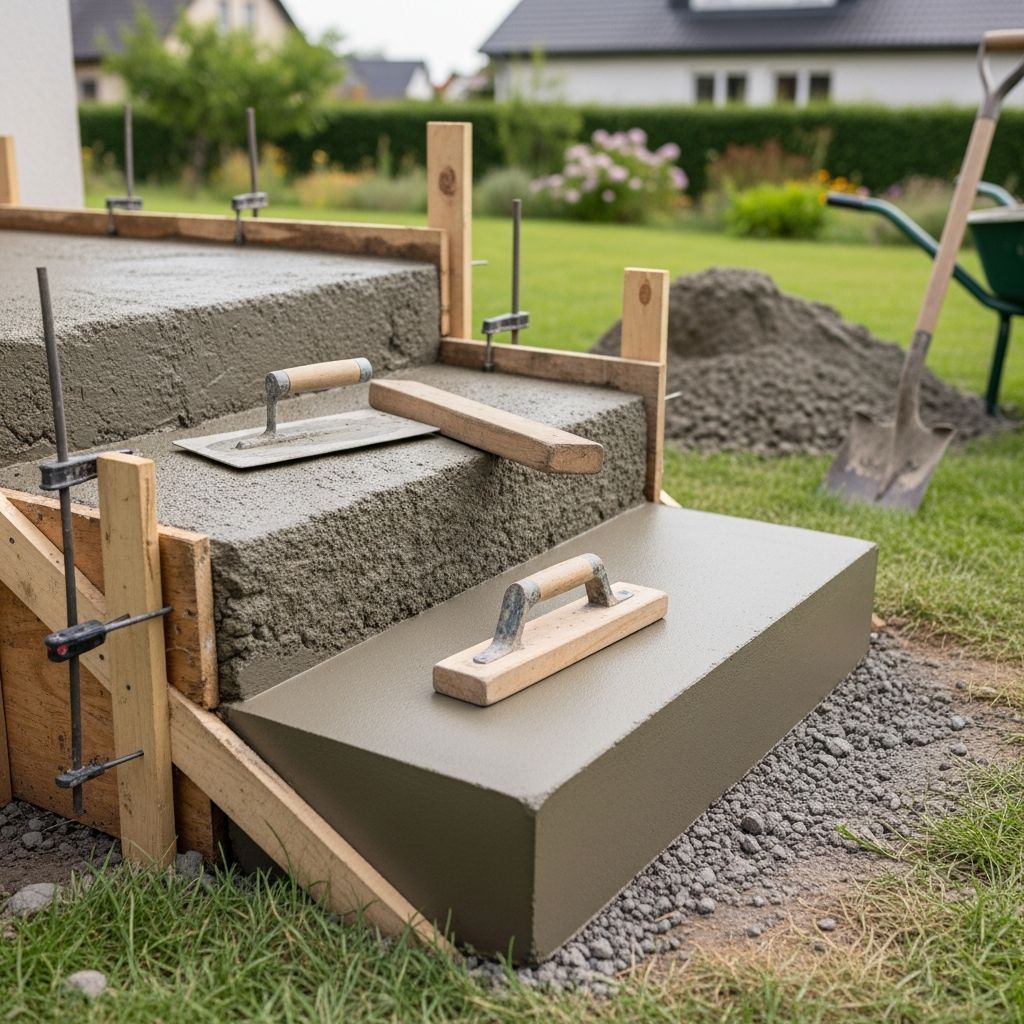
Forms define the precise shape and must withstand concrete pressure. Cut side forms from 2×12 boards to match the total rise and run, securing them to stakes driven every 2 feet along the exterior.
Attach riser boards perpendicular to side forms, ensuring plumb alignment with a level. Double bracing at corners and mid-spans counters outward forces. Coat all interior surfaces with form oil or grease for easy removal post-cure.
Embed rebar grids in the base of each tread, extending into risers for structural integrity. Minimum tread thickness is 4 inches, increasing for heavier loads. Check forms meticulously: treads level side-to-side, risers plumb front-to-back.
Mixing Concrete for Optimal Strength
Achieve a strong mix with the right proportions. For DIY batches, combine one part cement, two parts sand, and three parts gravel, adding water gradually to a workable consistency—about 6 gallons per 94-pound cement bag. Less water yields higher strength; avoid soupy mixtures.
Pre-mixed bags simplify the process: empty into a mixer or wheelbarrow, add water per instructions, and blend until uniform. Portable electric mixers ensure even distribution without back strain. Test slump by forming a peak; it should hold shape but spread easily.
| Mix Type | Ratio (Cement:Sand:Gravel) | Water per Cement Bag | Best For |
|---|---|---|---|
| Standard | 1:2:3 | 6 gallons | General steps |
| High-Strength | 1:1.5:2.5 | 5 gallons | Heavy use |
| Pre-Mixed | Manufacturer spec | Per bag | DIY beginners |
Pouring Concrete Step-by-Step
Timing is critical; pour on a mild day with forecasts avoiding extremes. Start at the bottom step, filling forms completely before advancing upward. Distribute concrete evenly with a shovel or rake, tapping sides to release trapped air.
Embed rebar midway into each layer. Screed treads using a straight 2×4 board dragged in a sawing motion to level surfaces. Work one step at a time for control, overlapping pours slightly into the next riser.
Use a vibrator or rod to consolidate around corners and rebar, preventing voids that weaken structure. Minimum 4-inch thickness ensures durability under foot traffic.
Finishing Techniques for Professional Results
Smooth finishes enhance safety and aesthetics. After screeding, wait for water sheen to dissipate, then float with a magnesium or wood tool in overlapping arcs to embed aggregate.
Trowel for a hard, dense surface: steel for finest polish, followed by edging rounded corners to reduce chipping. Broom finish provides slip resistance—drag a soft broom perpendicular to the rise.
Cover with plastic sheeting or damp burlap immediately, maintaining moisture for 7 days. Mist periodically to slow curing, maximizing strength. Remove forms after 48 hours, continuing cure protection.
Curing and Maintenance Best Practices
Curing develops full compressive strength—over 4,000 psi possible with proper methods. Keep surfaces damp for one week minimum; accelerated drying causes cracks. In hot weather, shade and fog spray; in cold, insulate.
Seal after 28 days with a silane-siloxane penetrating sealer to repel water and salts. Reseal every 3-5 years. Inspect annually for cracks, repairing with concrete patch before widening.
Common Mistakes and Troubleshooting
Avoid pitfalls for flawless steps. Uneven risers cause tripping—double-check measurements. Weak forms bow under pressure; over-brace generously. Overwatering weakens mix; aim for stiff consistency.
Honeycombing from poor vibration compromises integrity—use tools aggressively. Rushing finishing traps bleed water, leading to scaling. Patience yields superior outcomes.
FAQs
How deep should footings be for concrete steps?
Footing depth varies by climate; extend below frost line, often 36-48 inches in cold regions, for stability.
Can I build concrete steps without rebar?
Rebar reinforcement is recommended for tensile strength, especially outdoors, preventing cracks from movement.
How long before using new concrete steps?
Light foot traffic after 3 days; full load after 28 days for peak strength.
What’s the ideal concrete thickness for steps?
Minimum 4 inches for treads, thicker for wider or steeper designs.
Do I need a permit for DIY steps?
Check local codes; exterior steps often require permits and inspections.
References
- Build Concrete Steps – Step by Step Guide — Paddy Engineering Blog. 2015-01-01. https://paddyengineering.blogspot.com/2015/01/build-concrete-steps-step-by-step-guide.html
- How to Build Concrete Stairs | Step-by-Step DIY Guide — MudMixer. N/A. https://mudmixer.com/blogs/news/how-to-build-concrete-stairs-diy-guide
- How to Construct Steps — Unilock. N/A. https://unilock.com/construction/how-to-construct-steps/
- Footing for concrete steps? — Fine Homebuilding Forum. N/A. https://www.finehomebuilding.com/forum/footing-for-concrete-steps
Similar Articles








Read full bio of medha deb