Constructing Decks Without Digging Foundations
Master the art of deck building without digging holes using innovative blocks, anchors, and floating designs for quick, sturdy outdoor spaces.
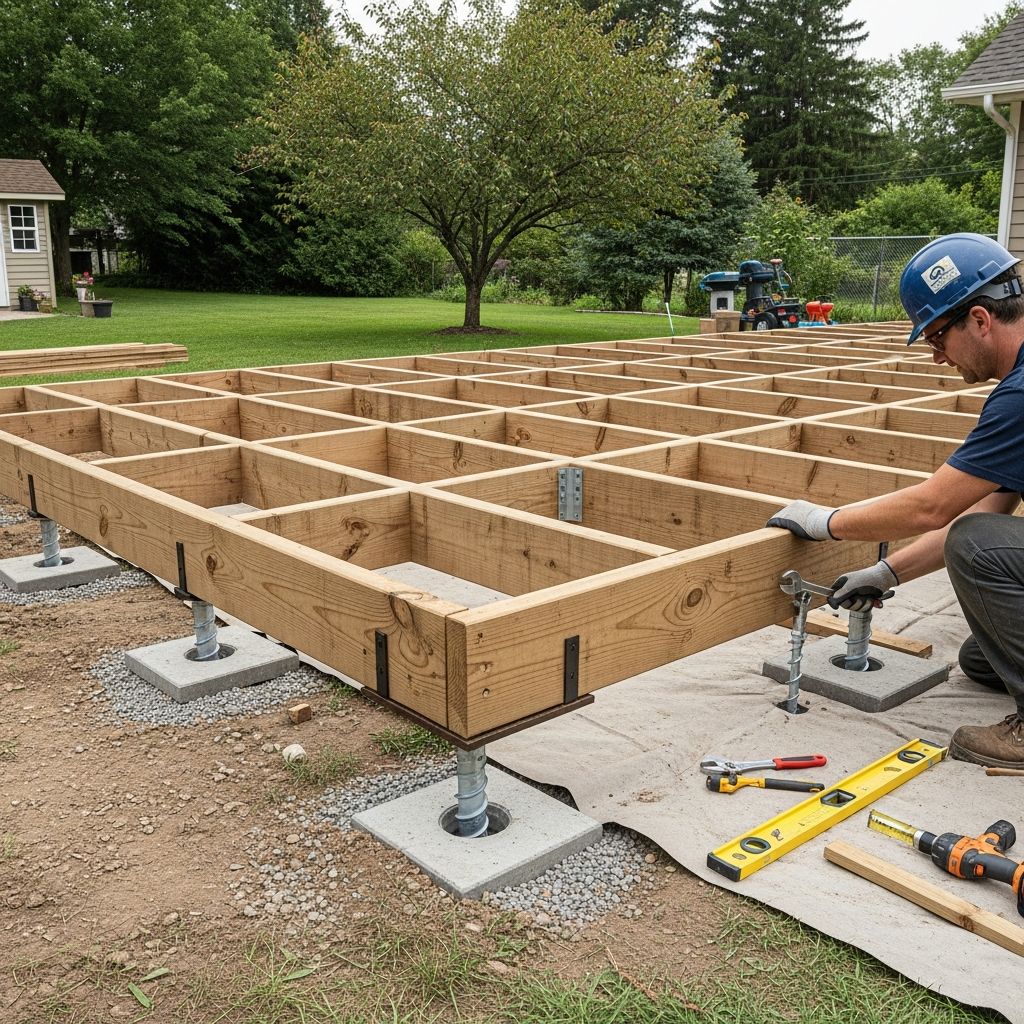
Building a deck enhances your home’s outdoor living area without the hassle of digging deep post holes, which can be labor-intensive and risky in areas with utilities or rocky soil. Modern foundation alternatives like precast blocks, ground anchors, and floating frames allow for quick assembly while maintaining structural integrity, suitable for decks up to 8 feet high.
Why Skip Traditional Digging Methods?
Conventional deck construction demands excavating footings below the frost line to prevent heaving, often requiring concrete pours and heavy equipment. This process is time-consuming, costly, and problematic in sloped yards or regions with underground lines. No-dig options rest on or minimally penetrate the surface, reducing preparation to simple leveling and compaction, making them ideal for ground-level or low-elevation platforms.
These methods shine for freestanding structures, avoiding ledger attachments to houses that demand permits and inspections. They minimize environmental disruption and enable builds in tight spaces or rental properties where permanent alterations are restricted.
Essential Foundation Alternatives
Several proven systems eliminate digging, each tailored to deck size, height, and soil conditions. Here’s a breakdown:
- Precast Deck Blocks: These concrete units sit directly on graded soil, featuring slots for posts or beams. Ideal for low decks under 6 feet, they resist frost by not being buried.
- Post Base Anchors: Metal plates with spikes driven into compacted earth secure posts firmly. Jackhammer-driven anchors provide superior stability for taller structures up to 8 feet.
- Floating Frames: Surface-laid joists on gravel beds or blocks create seamless, low-profile decks without vertical supports, perfect for patios extending existing slabs.
Planning Your No-Dig Deck Project
Start with site assessment: measure dimensions, check for slopes (up to 10% manageable without major grading), and verify local codes—many jurisdictions exempt freestanding decks under 30 inches high from permits. Sketch a layout with posts spaced 6-8 feet apart for 4×4 supports, ensuring even load distribution.
Materials Checklist:
| Component | Quantity Example (10×12 ft Deck) | Purpose |
|---|---|---|
| Deck Blocks or Anchors | 9-12 units | Foundation support |
| 4×4 Pressure-Treated Posts | 9 pieces (8-10 ft lengths) | Vertical framing |
| 2×8 or 2×10 Joists | 15-20 pieces (12 ft) | Subfloor structure |
| 5/4×6 Deck Boards | 30-35 pieces | Surface planking |
| Galvanized Hardware | Joist hangers, screws, anchors | Connections |
Budget: Expect $15-25 per sq ft, totaling $1,800-$3,600 for a 120 sq ft deck, excluding labor.
Step-by-Step: Deck Blocks Method
This beginner-friendly approach suits flat yards and low decks.
- Prepare the Site: Clear vegetation, level soil within 2 inches using a tamper. Lay landscape fabric and 4 inches of gravel for drainage.
- Mark Layout: Use stakes and string for a perfect square (3-4-5 rule for corners). Space blocks 6 ft on-center.
- Position Blocks: Place blocks, checking plumb with a level. Fill post slots with gravel for stability.
- Install Posts: Cut posts to height (e.g., 4 ft for 30-inch deck), secure in blocks with brackets.
- Frame the Deck: Attach rim joists, then interior joists at 16-inch centers using hangers.
- Lay Decking: Screw boards with 1/8-inch gaps for expansion, starting from edges.
Pro Tip: On slopes, vary post heights or stack blocks—no more than two high.
Advanced Technique: Post Anchors for Taller Builds
For elevated decks, anchors provide anchorage without concrete.
Drive galvanized anchors through base plates using a jackhammer: Position at layout points, pound until plate contacts soil, then compact 30 seconds more for load-bearing soil compression. Insert posts, fasten with structural screws. This method supports heavier loads and wind resistance better than blocks, capping at 8 feet elevation for freestanding use.
Building a Floating Deck on Grade
Perfect for seamless yard integration, floating decks hover 1-4 inches above ground using joist framing on blocks or gravel.
- Level a 4-inch gravel base, compact thoroughly.
- Assemble frame on sawhorses: double rim joists with blocking every 4-6 ft.
- Lower frame onto spacers (concrete pavers), adjust level.
- Secure with stakes if needed, then plank directly.
No-saw hacks: Use pre-cut lumber and pocket screws for invisible joins, keeping costs under $400 for small 8×16 ft units.
Safety, Durability, and Maintenance
Ensure 36-inch walkways, rounded edges, and no gaps over 4 inches near edges. Use pressure-treated lumber rated for ground contact (AWPA UC4B) and galvanized fasteners to combat rot. Annual inspections for shifting or loose hardware extend life to 20+ years; re-stain every 2-3 years.
Frost zones: Elevate blocks 6+ inches; anchors mitigate heaving via soil grip.
Frequently Asked Questions
Can I build a no-dig deck on a slope?
Yes, adjust post heights or use stepped blocks; limit to 10-15% grade without retaining walls.
Do no-dig decks require permits?
Often not for heights under 30 inches and freestanding designs—check local building codes.
How much weight can deck blocks support?
Typically 1,800 lbs each; space properly for 50-60 psf live loads standard for residential decks.
Are floating decks stable in wind?
Yes, if weighted with gravel ballast and perimeter blocking; avoid attachments to homes.
What’s the cheapest no-dig option?
Floating frames on gravel: $10-15/sq ft vs. $20+ for anchored systems.
Customization Ideas for Your Deck
Enhance with built-in benches (using 2×12 framing), planters from rim joist extensions, or lighting via solar posts. Multi-level designs combine methods: blocks for low sections, anchors for raised.
For larger spans, hybrid systems like TuffBlocks slot joists directly, simplifying sloped installs.
References
- Build a Deck Without Digging Holes Using a Deck Post Base and Post Anchor — OZCO Building Products. 2023-05-15. https://ozcobp.com/build-deck-without-digging-holes-using-deck-post-base-post-anchor/
- Building 2 Ground Level Decks Without Digging (Pro Build) — YouTube (Tony’s Deck Builds). 2022-08-10. https://www.youtube.com/watch?v=G417s8w6JLs
- I built a FLOATING DECK with NO SAW, NO PERMITS, NO DIGGING — YouTube (Never Skip Brunch). 2023-06-20. https://www.youtube.com/watch?v=1NeQyjM5v_w
- How to Build a Deck Without Postholes | No Digging Deck — YouTube (My DIY Builds). 2020-07-06. https://www.youtube.com/watch?v=0pxAyNZ25zQ
- Build a Floating Deck — Instructables. 2021-04-12. https://www.instructables.com/Build-a-Floating-Deck/
- How to Build a Floating Deck — Decks.com. 2024-02-28. https://www.decks.com/resource-index/decking/how-to-build-a-floating-deck/
Similar Articles





Read full bio of medha deb