Building a Fold-Down Murphy Bar for Your Space
Master the art of constructing a space-saving Murphy bar with this comprehensive building guide.
Creating Your Own Fold-Down Entertaining Station
A fold-down bar represents an innovative solution for homeowners and entertainers seeking to maximize their available space while maintaining the ability to host gatherings. This ingenious furniture piece combines functionality with space efficiency, allowing you to transform an ordinary wall into a fully operational beverage service station. Whether you’re planning to install this in a patio, deck, shed exterior, or even an interior room, understanding the construction process empowers you to create a customized entertaining space that perfectly suits your lifestyle.
Understanding the Murphy Bar Concept
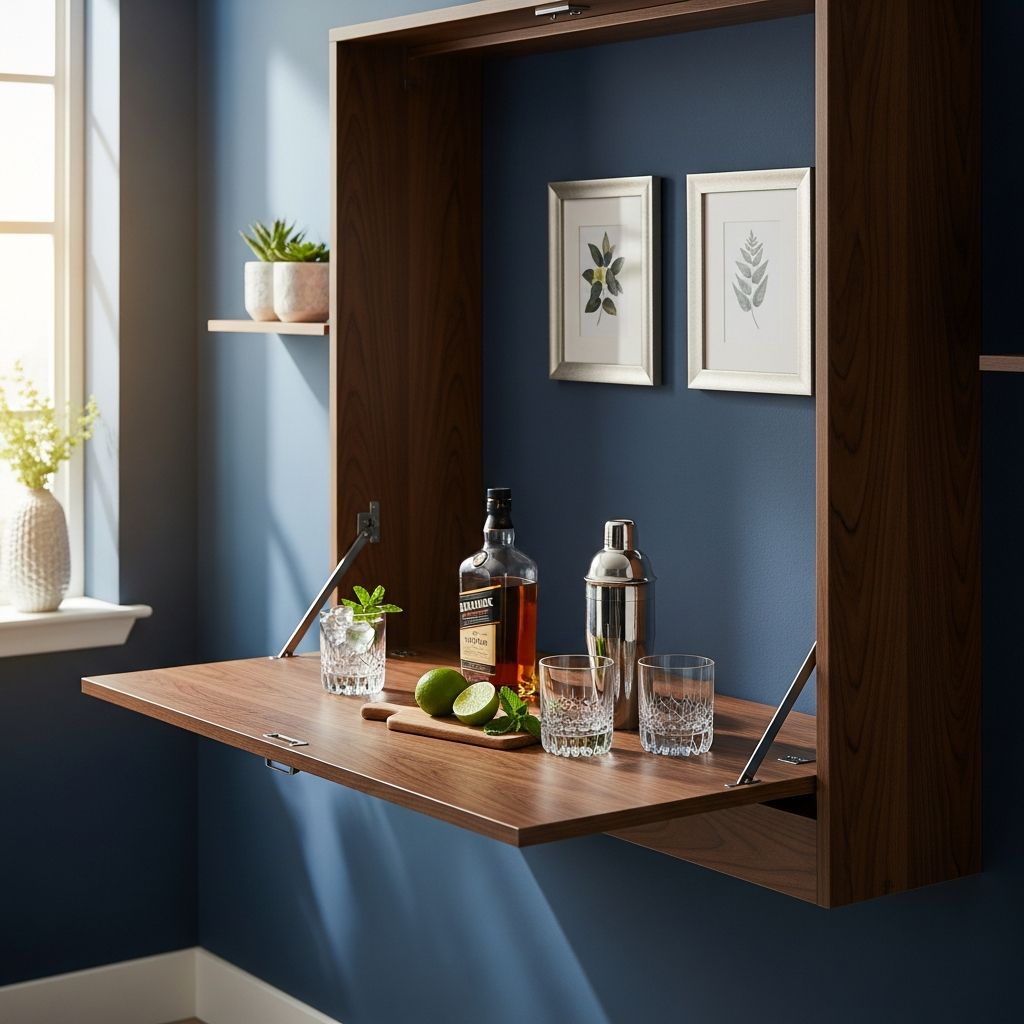
The Murphy bar operates on a hinge mechanism that permits the entire unit to fold upward against a wall when not in use, freeing up valuable floor space. When opened, the structure unfolds to reveal an expansive surface for serving drinks and entertaining guests, supported by sturdy legs that lock into position at a ninety-degree angle. This design philosophy originated from the same space-saving principles that inspired Murphy beds, adapting the concept for recreational and entertaining purposes.
The primary advantage of this design lies in its dual functionality. During regular days, the closed unit presents a neat, compact appearance against your wall. When you’re ready to entertain, the transformation takes merely seconds, instantly creating a sophisticated bar setup complete with shelving, storage, and serving surfaces. This makes it particularly valuable for those with limited outdoor or indoor entertaining areas.
Assembling Your Materials and Tools
Before beginning construction, gathering all necessary materials ensures a smooth building process without interruptions. The material list includes various lumber dimensions, hardware components, and finishing supplies that work together to create a durable, attractive final product.
Essential Building Materials:
- 1×4 lumber boards for structural support and framing components
- 1×6 lumber boards for connecting elements and support structures
- 1×8 lumber boards forming the primary box construction
- 1×10 lumber boards for the serving surface and table extension
- 3/4-inch plywood sheets for backing and reinforcement
- Wood glue for joining components
- 1 1/4-inch pocket hole screws for secure fastening
- 2 1/2-inch pocket hole screws for deeper joints
- Acrylic panels (18×24 inches approximately) for decorative backing
- 3-inch hinges for leg mechanisms
- Lid support hardware for locking legs in place
- Exterior paint or wood stain for finishing
- Clear epoxy sealant for panel installation
Required Tools for Construction:
- Miter saw for accurate angled cuts
- Circular saw for rip cuts and straight edges
- Table saw for precision cuts on larger boards
- Drill or drill-driver for fastening and hole creation
- Router with rabbet bit for creating panel lips
- Jigsaw for cutting decorative elements and wine glass holders
- Pocket hole jig for efficient joint assembly
- Hand chisels for squaring router-cut corners
- 120-grit and 220-grit sandpaper for smoothing surfaces
- Paint roller and brushes for finishing application
Constructing the Primary Box Structure
The foundation of your Murphy bar begins with creating a rectangular box that serves as the main frame. This structure holds all shelving, storage elements, and the decorative acrylic backing that distinguishes a finished bar from a simple wooden box. Begin by cutting four 1×8 boards to your desired dimensions using a miter saw, ensuring precise angles for seamless joining.
Once your boards are cut to length, establish pocket holes at the board ends using a pocket hole jig calibrated for 3/4-inch stock thickness. This joinery method, preferred by modern woodworkers, creates invisible connections while providing exceptional strength. Apply wood glue to each joint before inserting 2 1/2-inch pocket hole screws, creating a rigid, square box that forms the cabinet’s body.
After assembling the primary frame, reinforce the back with 3/4-inch plywood sheets. This backing accomplishes multiple purposes: it strengthens the entire structure, provides a surface for mounting shelving components, and creates a finished appearance. You can either cover the entire back or use a partial plywood system with a strategically positioned cleat that mounts against your wall. The partial system approach allows flexibility in wall mounting while maintaining structural integrity.
Integrating Shelving and Storage Solutions
Interior organization distinguishes a functional bar from an attractive but impractical decoration. Design your interior layout considering the types of items you’ll store—glassware, bottles, mixers, and bar tools all require different spacing and support systems. Begin by determining exact placement for any specialty holders, such as wine glass racks or bottle storage slots.
For wine glass holders, mark precise positions on your interior panels, then use appropriate drill bits paired with a jigsaw to create perfectly sized slots. These should be deep enough to securely hold glass stems without allowing them to slip or rotate. Space multiple slots at consistent intervals to accommodate your anticipated glassware collection.
Install shelves at varying heights to accommodate different item sizes. Standard bottle heights typically require eight to ten inches of vertical clearance, while shot glass collections might need only four inches. Using a pocket hole system identical to the primary box assembly, attach shelves securely to the interior sides, creating a customized storage solution that reflects your entertaining style and inventory needs.
Engineering the Fold-Down Table Mechanism
The serving surface represents the most critical functional component, requiring careful construction to ensure stability and longevity. Construct the table face using 1×8 and 1×10 boards arranged around the perimeter, creating a substantial working surface. When selecting lumber, prioritize boards with minimal warping or twisting, as these imperfections will be amplified once the table begins supporting weight during serving.
Attach perimeter boards using wood glue and 1 1/4-inch nails, creating a strong, rigid frame. Consider ripping the longer side boards to a width of 2 1/2 inches, creating visual proportion that complements the overall design. This serving surface should be large enough to accommodate multiple beverages, glasses, and serving items while remaining manageable when folding.
The leg assembly, constructed from 1×4 boards, connects the table to the hinged mechanism that permits folding and unfolding. Create legs by joining 1×4 pieces at the top and bottom with 1×6 boards, forming an A-frame or X-frame configuration depending on your aesthetic preference. Attach 3-inch hinges to the top of each leg, connecting them to the table assembly with precision to ensure proper alignment.
Lid support hardware represents perhaps the trickiest component to install correctly. These supports lock the legs at exactly ninety degrees when the table is in use, preventing unexpected collapse and ensuring safe operation. Install one support on each side of the table, taking time to adjust and test repeatedly until the legs remain firmly locked in the open position and close smoothly when lowering the unit.
Adding the Decorative Acrylic Backing Panel
The acrylic panel creates visual interest and protects the wooden backing from weathering and damage. Using a router equipped with a rabbet bit, create a recessed lip around the interior perimeter where your acrylic panel will sit. This lip depth should precisely match your panel thickness, creating a flush, professional appearance once installation is complete.
After routing, use a hand chisel to square up each corner, as router bits naturally leave slightly rounded edges. Test fit your acrylic panel before any finishing work, ensuring it seats smoothly in the routed rabbet. You might add spacers to the back of the panel if your mounting surface is textured siding or if you plan to hide LED lighting behind the panel. These spacers maintain consistent panel depth while creating concealed wiring channels.
Preparing Surfaces for Finishing
Proper surface preparation determines the quality of your final finish. Sand all wooden surfaces thoroughly using 120-grit sandpaper initially, working methodically across grain lines to remove rough spots and mill marks. Progress to 220-grit sandpaper for the final smoothing, creating a silky surface that accepts finish beautifully. After sanding, wipe all surfaces with a damp cloth to remove dust particles that might otherwise become trapped under paint or stain.
Pay special attention to edge grain, which absorbs finish at different rates than flat grain. Light sanding of edges prevents dark streaks and color variation in your final appearance. This preparation phase requires patience but dramatically improves the professional quality of your completed project.
Applying Protective Finishes
The finish you select depends on your installation location and personal aesthetic preferences. Indoor bars might feature bold colors or decorative stains, while exterior installations demand weatherproofing protection that maintains the wood’s structural integrity through seasonal changes.
If selecting paint, choose outdoor-rated formulations specifically engineered to withstand UV exposure and moisture. Apply three thin coats rather than fewer thick coats, sanding lightly between applications to promote adhesion. Always work in well-ventilated areas and wear appropriate respiratory protection, as paint fumes present health hazards without proper precautions.
For natural wood finishes, polyurethane coatings with satin or semi-gloss sheens balance protection with appearance. Exterior polyurethane provides superior weatherproofing, creating a barrier against moisture penetration while maintaining the wood’s natural beauty. Plan to recoat annually if leaving the bar permanently mounted outdoors, as UV and moisture exposure gradually degrade even quality finishes.
Installation and Wall Mounting
Proper mounting ensures your Murphy bar functions reliably and safely throughout its lifespan. Create a 45-degree cleat system for wall mounting, with the angled cleat positioned at the correct height so that when the table unfolds, the legs contact the floor at precisely ninety degrees. This angle prevents unwanted sliding or wobbling during service.
Mount the cleat securely to your wall structure or siding using appropriate fasteners rated for your specific wall type. Vinyl siding requires backing plates to distribute load across larger areas, preventing localized stress points. Masonry and concrete walls demand concrete anchors or specialized fasteners designed for those materials.
Lift your assembled bar carefully, aligning the back-mounted receivers with the wall cleat, then secure with a few additional screws to prevent accidental movement. Test the fold-down and fold-up actions repeatedly before inviting guests to use it, ensuring all mechanisms operate smoothly and the lid supports lock securely.
Adding Finishing Touches and Accessories
Transform your functional bar into a show-stopping entertaining centerpiece through thoughtful accessorization. Install hardware such as handles that make opening and closing effortless, bottle openers mounted directly to the frame, and cap catchers for organizing bottle caps. Wall-mounted hooks hold bar tools within arm’s reach, while small shelves accommodate specialty items.
LED lighting dramatically enhances the bar’s appeal, particularly for evening entertaining. Rechargeable battery-powered strips offer installation flexibility without requiring permanent electrical work. Position lights to illuminate the serving surface and highlight the acrylic backing panel, creating an inviting ambiance that encourages gathering and conversation.
Consider the mounting location’s backdrop when planning decoration. Bright murals or architectural features should influence your finish selection. A simple stain might complement existing landscape art, while bold paint colors work better against neutral walls.
Customization Options and Variations
The fundamental Murphy bar design permits extensive customization reflecting your space and entertaining style. Adjust shelf heights to accommodate your specific glassware collection. Modify board widths to create different proportions. Incorporate specialized storage for your preferred beverage selection, whether that means wine racks, beer bottle slots, or spirits shelving.
The serving surface size can be expanded or contracted based on available wall space and entertaining frequency. Those with limited spaces might opt for a narrower surface that still provides functional work area, while generous patios accommodate larger tables that serve multiple guests simultaneously.
Material selection offers numerous possibilities beyond standard lumber. Cedar construction provides natural rot resistance for exterior installations, while pine offers economy and ease of finishing. Hardwoods like oak or walnut create sophisticated appearances for interior spaces.
Common Questions About Murphy Bar Construction
Q: How much weight can a properly constructed Murphy bar support?
A: A well-built Murphy bar using the recommended materials and construction methods safely supports 100-150 pounds distributed across the serving surface. Avoid concentrated loads exceeding fifty pounds in any single location.
Q: Can I install a Murphy bar on vinyl siding?
A: Yes, but use backing plates and appropriate fasteners that distribute load across a wider area. Many builders add cedar fencing boards behind the installation to create visual interest while providing a solid mounting surface.
Q: What’s the ideal height for mounting a Murphy bar?
A: Mount the cleat system so that when fully extended, the serving surface reaches 36-38 inches high, allowing comfortable access for most users while maintaining proper proportions with surrounding furniture.
Q: How long does a typical Murphy bar project require?
A: Most builders complete this project in 20-30 hours spread over 2-4 weekends, allowing adequate drying time between finishing coats and hardware installation.
Q: Can I modify the dimensions from standard plans?
A: Absolutely. The fundamental principles remain constant regardless of dimensions. Adjust board lengths, shelf spacing, and surface size to match your specific space and requirements.
Q: What maintenance does an outdoor Murphy bar require?
A: Annual refinishing protects exterior installations from UV and moisture damage. Inspect hardware yearly for rust or loosening, tightening fasteners as needed. Indoor bars require only occasional dusting and the same care as other furniture.
References
- DIY Murphy Bar with Plans — DIY Projects with Pete. 2024. https://www.diypete.com/diy-murphy-bar-with-plans/
- Murphy Bar Project — Krylon Spray Paint Official. 2024. https://www.krylon.com/en/projects/wood-and-laminate/murphy-bar
- How to Build an Outdoor Murphy Bar — Shades of Blue Interiors. 2024. https://www.shadesofblueinteriors.com/how-to-build-an-outdoor-murphy-bar/
- DIY Workshop: Outdoor Murphy Bar — Tuff Shed. 2021. https://www.youtube.com/watch?v=Bn3PcGWH7Xc
Similar Articles








Read full bio of medha deb