Build Your Own Folding Wooden Table Legs
Master the art of crafting sturdy, space-saving folding legs for wooden tables with this comprehensive DIY guide.
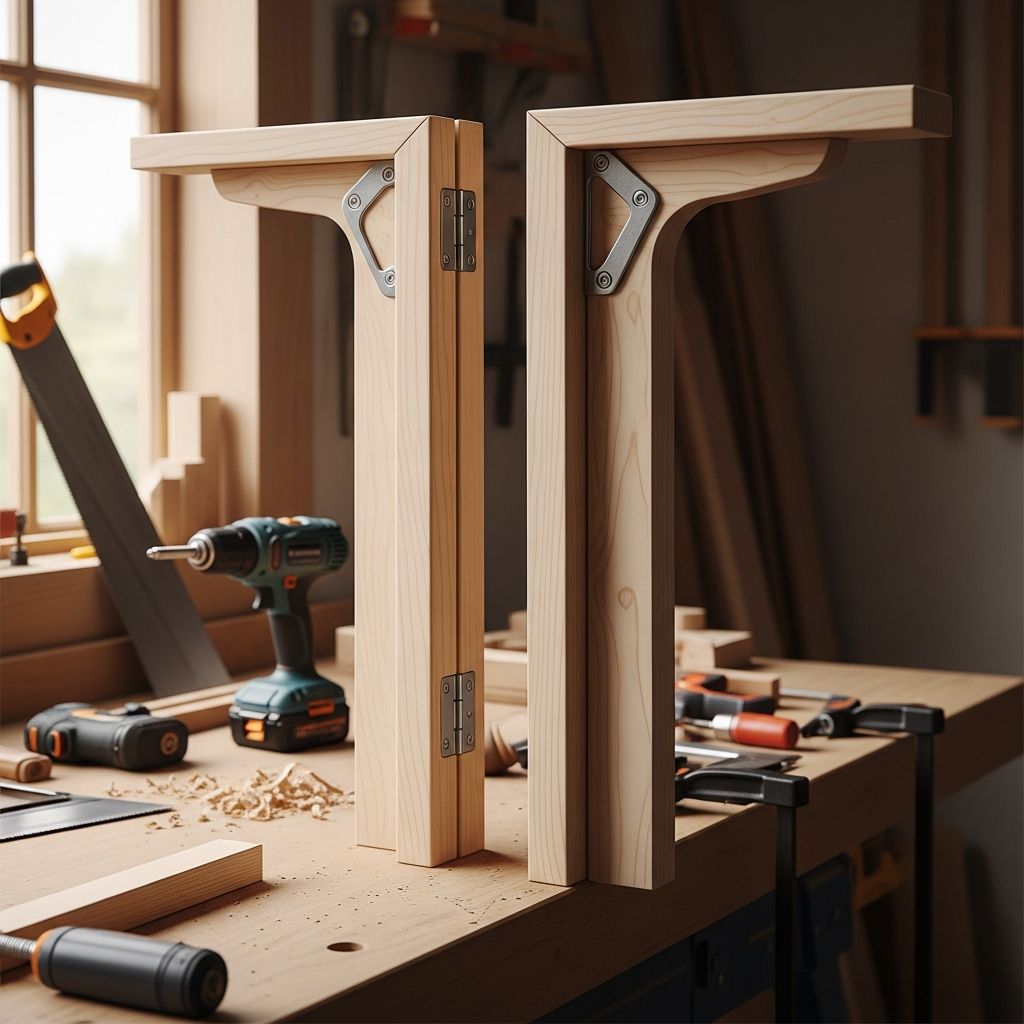
Creating folding wooden table legs transforms ordinary tables into versatile pieces that save space and enhance functionality. These designs allow legs to tuck neatly underneath the tabletop, making them ideal for apartments, workshops, or events where storage is limited. With common lumber like 4×4 posts and 2×4 braces, along with specialized hardware, anyone with basic woodworking skills can assemble a robust set of legs that support everyday use.
Why Choose Folding Legs for Your Table?
Folding mechanisms offer practical benefits beyond compactness. They provide easy transport, quick setup, and adaptability for various activities like dining, crafting, or gaming. Unlike fixed legs, folding versions reduce injury risks in tight spaces and facilitate cleaning under the table. Sturdy construction ensures they withstand repeated folding without wobbling, often achieving heights around 30 inches for standard comfort.
- Space Efficiency: Legs fold flat, reducing table footprint by up to 80%.
- Durability: Proper materials like treated lumber resist wear from frequent use.
- Customization: Adjust leg length and style to match any tabletop size or aesthetic.
Gathering Materials and Tools
Start with quality lumber to ensure longevity. For a typical 30-inch high table, select straight 4×4 boards for main legs and 2x4s for cross-bracing. Self-locking folding brackets are essential for secure deployment; these auto-lock when extended and release via a lever. Additional items include wood glue, screws, and optional latches for folded storage.
| Material | Quantity | Dimensions | Purpose |
|---|---|---|---|
| 4×4 Lumber | 4 pieces | 27.5 inches long | Main legs |
| 2×4 Lumber | 2 pieces | Fit tabletop width | Cross braces |
| Folding Brackets | 8 units | Heavy-duty, self-locking | Leg pivots |
| Wood Screws | Assorted | 2-3 inches | Assembly |
| Wood Glue | 1 bottle | – | Joints |
Tools required include a miter saw for precise cuts, drill for pilot holes, clamps for secure gluing, sander for smooth finishes, and measuring tape. Safety gear like goggles and gloves is non-negotiable.
Designing Your Table Dimensions
Plan dimensions based on intended use. A standard tabletop might measure 48×30 inches, with legs spaced to allow 90-degree folding. Calculate total height: leg length plus brace thickness plus tabletop (e.g., 27.5″ + 1.5″ + 1″ = 30″). Sketch a full-scale layout on paper or plywood to visualize folding clearance, ensuring braces don’t interfere with leg swing.
- Measure tabletop underside for brace placement.
- Account for 1-2 inches clearance between legs and edges.
- Test fold angles to prevent binding.
Step-by-Step Leg Construction
1. Cutting the Leg Components
Measure and mark four 4×4 boards at 27.5 inches, then cut with a miter saw for clean ends. For two 2×4 braces, cut to span inside the tabletop frame minus 2 inches for play. Optional: taper leg bottoms from 3.5×3.5 inches to 2×2 inches using a tapering jig on a table saw for elegance and stability. Sand all cuts to remove splinters.
2. Assembling Leg Pairs
Position two 4×4 legs parallel, 14-18 inches apart. Align a 2×4 brace centered between them, 1.5 inches from the top. Drill pilot holes to prevent splitting, apply wood glue, and secure with 3-inch screws from the brace face into legs. Repeat for the second pair. This creates rigid H-shaped leg assemblies ready for folding hardware.
3. Installing Folding Brackets
Folding brackets mount to the brace and tabletop underside. Position legs under the table, ensuring even spacing. Attach two brackets per leg assembly: one pair to the brace, the opposing pair to the tabletop apron or supports. Use provided screws, pre-drilling for metal brackets. Test the lock-release mechanism before final tightening.
4. Adding Tabletop Supports
Before full assembly, install 2×4 braces or cleats on the tabletop underside. Space them to align with leg brackets, leaving gaps for folding. Screw securely, using countersunk holes for flush surfaces. These prevent sagging and provide mounting points.
5. Fine-Tuning and Testing
Fully extend legs and check levelness with a carpenter’s square. Adjust bracket positions if needed. Add felt pads to feet for floor protection and a latch or bungee for folded retention during transport.
Advanced Customizations for Enhanced Functionality
Elevate your design with wheels for mobility: attach locking casters to outer legs, flipping them out for stability. For workshop use, incorporate dowel stops or 1-inch dowels as pivots in thinner lumber builds. Taper legs with a hand plane for a premium look, chamfering edges with a router’s roundover bit.
- Wheels Integration: Use 3-inch casters rated for 100+ lbs each.
- Tapered Legs: Draw taper lines, plane progressively from bottom up.
- Locking Mechanisms: Add barrel bolts between legs for unfolded rigidity.
Sanding, Finishing, and Maintenance
Sand legs progressively from 80 to 220 grit for buttery smoothness. Wipe clean, then apply polyurethane or Danish oil for protection against spills and scratches. Multiple coats build durability; lightly sand between applications. Maintain by tightening screws annually and re-oiling as needed.
| Finish Type | Pros | Cons | Best For |
|---|---|---|---|
| Polyurethane | Durable, waterproof | Yellows over time | High-traffic areas |
| Danish Oil | Natural feel, easy touch-up | Less protective | Indoor use |
| Paint | Custom colors | Chips easily | Decorative pieces |
Common Mistakes and Troubleshooting
Avoid misalignment by dry-fitting all parts. If legs bind, check bracket orientation or enlarge clearance gaps. Wobbly tables indicate loose screws—use thread locker. Uneven heights result from imprecise cuts; shim as a last resort.
- Misaligned brackets cause folding issues.
- Oversized braces block leg swing.
- Skipping pilot holes splits wood.
Applications and Project Variations
These legs suit dining tables, workbenches, picnic setups, or TV trays. Scale down for kids’ furniture or up for banquet tables. Pair with plywood tops edge-banded for seamless looks or glue-ups from planks for rustic charm.
FAQ
What wood is best for folding table legs?
Hardwoods like oak or maple offer strength; softwoods like pine are budget-friendly for light use.
How much weight can folding legs support?
With 4×4 legs and quality brackets, expect 200-500 lbs capacity depending on design.
Are special tools needed for tapering?
A table saw jig or hand plane suffices; no advanced machinery required.
Can I add wheels to folding legs?
Yes, mount on feet for rolling storage, ensuring locks for safety.
How long does construction take?
4-6 hours for beginners, including drying time.
This project empowers DIYers to craft functional furniture tailored to their needs. Experiment with designs to perfect your ideal folding table.
References
- DIY Wooden Folding Table — Hamilton Park Home. 2024-11-01. https://hamiltonparkhome.com/2024/11/diy-wooden-folding-table/
- Folding Table: 10 Steps (with Pictures) — Instructables. 2023-05-15. https://www.instructables.com/Folding-Table-1/
- PROJECT: Folding Table — Woodworkers Journal. 2022-08-10. https://www.woodworkersjournal.com/project-folding-table/
- #299 Folding Table Top Project — FineWoodworking. 2021-12-20. https://www.finewoodworking.com/forum/299-folding-table-top-project
Similar Articles







Read full bio of medha deb