All-Season Porch: Complete DIY Guide For Year-Round Comfort
Transform your outdoor space into a year-round retreat with expert guidance on planning, constructing, and finishing a durable all-season porch addition.
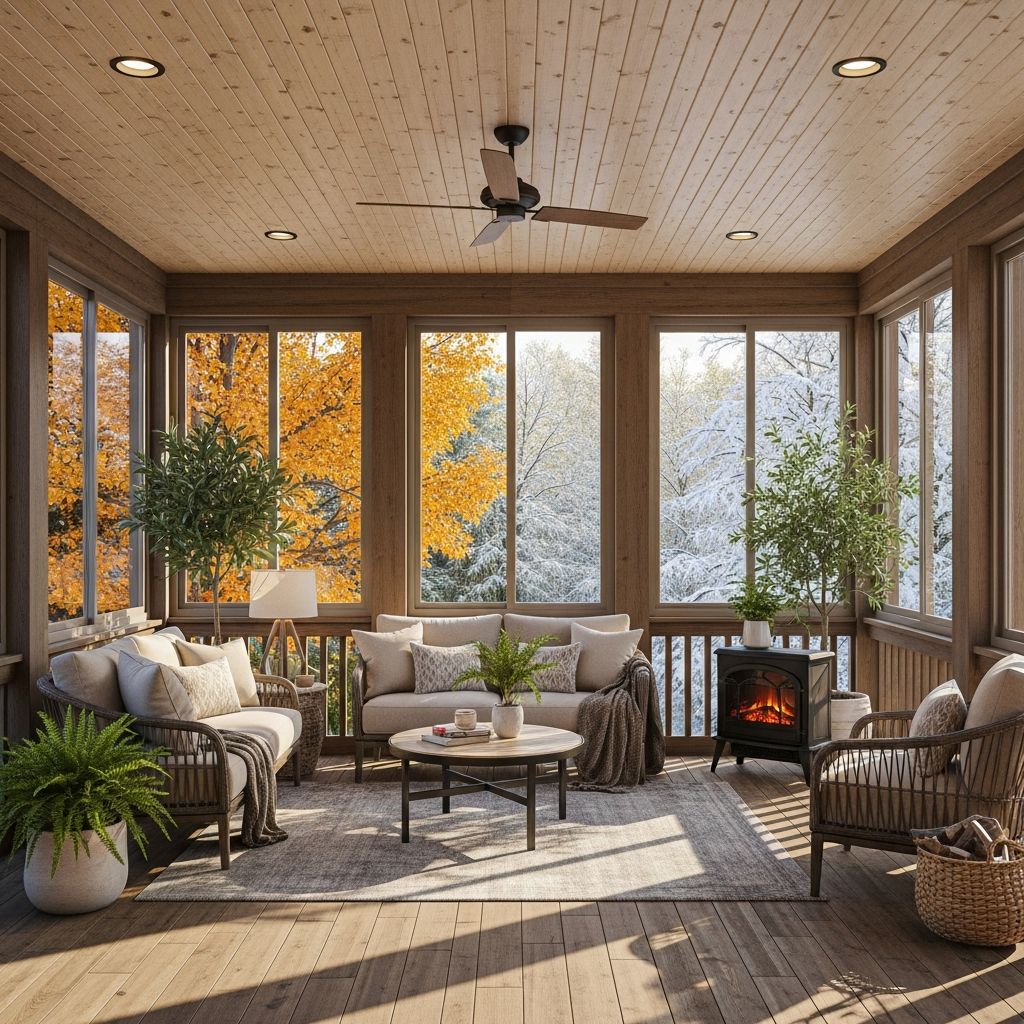
Build Your All-Season Porch: A Complete DIY Guide
Creating an
all-season porch
extends your living space beyond the traditional home interior, offering a versatile area for relaxation, entertaining, or family gatherings regardless of the weather. This addition requires careful attention to structural integrity, energy efficiency, and local regulations to ensure longevity and comfort.Assessing Your Project Feasibility
Before breaking ground, evaluate your property’s suitability for an all-season porch. Consider the existing deck or patio as a potential base, checking its load-bearing capacity for added weight from walls, roof, and insulation. In colder regions, footings must extend below the frost line, typically 42 inches, to prevent shifting.
Determine the room’s purpose: a cozy reading nook, dining extension, or play area. Measure available space, noting setbacks from property lines to comply with zoning laws. Existing structures may need reinforcement if converting a screened porch, as decks often require upgrades for live loads of at least 40 pounds per square foot.
- Inspect current foundation for stability.
- Calculate square footage based on family needs.
- Review sunlight patterns for optimal window placement.
Navigating Permits and Codes
Secure building permits early to avoid delays. Submit detailed plans including floor layouts, joist sizes (e.g., spaced at 16 or 24 inches), rafter specifications, footing depths, and elevation views. Local codes mandate guardrails over 30 inches high, uniform stair treads, and decay-resistant materials for exposed framing.
Consult municipal guidelines for energy codes, especially for heated spaces. Four-season enclosures often need insulation meeting R-value standards, tempered glass for large windows, and proper flashing at roof-wall junctions to prevent leaks.
| Document Required | Details to Include |
|---|---|
| Floor Plan | Joist size/spacing, decking thickness, post locations |
| Cross-Section | Footing depth, beam plies, ceiling height, sheathing |
| Elevations | Structure height, header sizes, roof pitch |
Designing for Year-Round Comfort
A true all-season porch demands robust climate control. Opt for energy-efficient windows with low-E coatings to minimize heat loss. Roof designs should include proper pitch for shedding snow and rain, with options like rafters or engineered trusses.
Integrate HVAC early: mini-split systems offer zoned heating and cooling without ductwork, ideal for additions. For floors, radiant heating pairs well with durable surfaces like tile or luxury vinyl plank, handling temperature swings effectively.
Strengthening the Base Structure
If building on an existing deck, reinforce it to support enclosed walls. Pressure-treated lumber for sills and bottom plates resists moisture. Raise low decks if needed for headroom and drainage, installing gutters and grading to divert water.
Dig footings below frost depth, using concrete piers or a full slab. For attached porches, tie into the home’s rim joist securely. Ensure floor joists handle 40 psf live load plus 10 psf dead load; balconies need 60 psf.
Framing the Enclosure
Construct walls using 2×4 or 2×6 studs at 16-inch centers for insulation space. Pressure-treated base plates anchor to the deck floor, secured with expanding foam for airtight seals. Plumb studs meticulously, end-nailing tops and toe-nailing bottoms.
Frame the roof with rafters matching your pitch—common slopes prevent ponding. Collar ties or ridge beams stabilize open designs. Sheath exteriors with plywood, applying house wrap before siding.
- Use treated wood for ground contact.
- Install headers over large openings for windows/doors.
- Flash intersections to block water infiltration.
Insulating for Efficiency
Insulation is crucial for four-season use. Fill 2×4 walls with R-13 fiberglass or R-15 for better performance; upgrade to 2×6 for R-19/R-21. Spray foam seals gaps in ceilings and rims. Insulate floors if elevated, especially over unheated crawlspaces.
Air-seal cracks with high-quality tape during framing. Vapor barriers prevent condensation in humid climates. These measures ensure the space maintains comfortable temperatures year-round.
Windows, Doors, and Glazing
Select double- or triple-pane windows with argon fill for superior insulation. Tempered or laminated glass is required for doors and large panels per code. Sliding glass doors maximize views while providing easy access.
Position windows for cross-ventilation in milder months, with screens optional for bug-free airflow. Energy-efficient choices reduce HVAC demands significantly.
Electrical and Plumbing Integration
Run wiring before insulation: outlets every 6 feet, dedicated circuits for heaters or fans. Hire licensed electricians for code compliance. For plumbing, consider a wet bar or half-bath, routing lines through insulated chases.
Inspection sequence: footings first, then framing/rough-in, insulation, electrical final, and building final.[10]
Choosing and Installing Flooring
Durable flooring withstands moisture and thermal expansion. Options include:
| Material | Pros | Cons |
|---|---|---|
| Porcelain Tile | Waterproof, radiant-compatible | Cold underfoot without heating |
| Luxury Vinyl Plank | Affordable, mimics wood | Less premium feel |
| Engineered Hardwood | Warm aesthetic | Requires acclimation |
Subfloor prep ensures level installation; 5/4-inch minimum decking for 16-inch joists.
Roofing and Exterior Finishes
Match home siding and roofing for cohesion—shingles, metal, or membranes work well. Install step flashing at wall-roof junctions and kickout flashers at valleys. Gutters manage runoff, protecting foundations.
Interior Finishing Touches
Apply drywall after mechanicals, taping seams with progressive compound coats. Paint with moisture-resistant formulas. Add trim, crown molding, and recessed lighting for polish. Built-ins like benches or cabinets maximize utility.
Climate Control Systems
Beyond insulation, equip with efficient HVAC. Mini-splits provide heating to -15°F and cooling. Electric baseboards supplement in mild setups; gas fireplaces add ambiance. Ceiling fans enhance air circulation.
Project Timeline and Costs
Expect 4-12 weeks, weather permitting. Spring/fall ideal. Budget $200-$400 per square foot, factoring materials, labor, and permits. DIY framing saves but pros handle electrical/HVAC.
Maintenance for Longevity
Annual checks: reseal windows, clean gutters, inspect flashing. HVAC servicing prevents efficiency loss.
Frequently Asked Questions
Can I convert a three-season porch to four-season?
Yes, but verify foundation strength, add insulation, and upgrade HVAC. Significant framing mods often needed.
What R-value for walls?
R-13 minimum for 2×4; higher for colder climates.
Do I need a separate thermostat?
Recommended for zoned control with mini-splits.
How much does it cost to heat?
Varies by size/insulation; efficient designs cut bills 30-50%.
References
- Screened Porch, 3 & 4 Season Porch Building Guidelines — City of Inver Grove Heights, MN. Accessed 2026. https://www.ighmn.gov/DocumentCenter/View/14747/Screened-Porch-3-and-4-Season-Porch-Handout
- How to Build a Four-Season Room on a Deck — Northwest Decks. Accessed 2026. https://www.northwestdecks.com/how-to-build-a-four-season-room-on-a-deck/
- 3-4 Season Porches — Clarkfield Building Department. Accessed 2026. https://www.clarkfield.org/building/files/3-4-season-porches
- Four Season Porch PDF – Building Guidelines — Scribd (municipal reference). Accessed 2026. https://es.scribd.com/document/849668569/Four-Season-Porch-PDF
- Guide to Four-Season Room Designs — Atlanta Porch and Patio. Accessed 2026. https://www.atlantaporchandpatio.com/guide-to-four-season-room-designs/
Similar Articles








Read full bio of medha deb