Build Your Own Balcony: Complete DIY Guide For Safety And Value
Transform your home with a stunning balcony using this detailed DIY guide covering planning, construction, and safety essentials for lasting results.
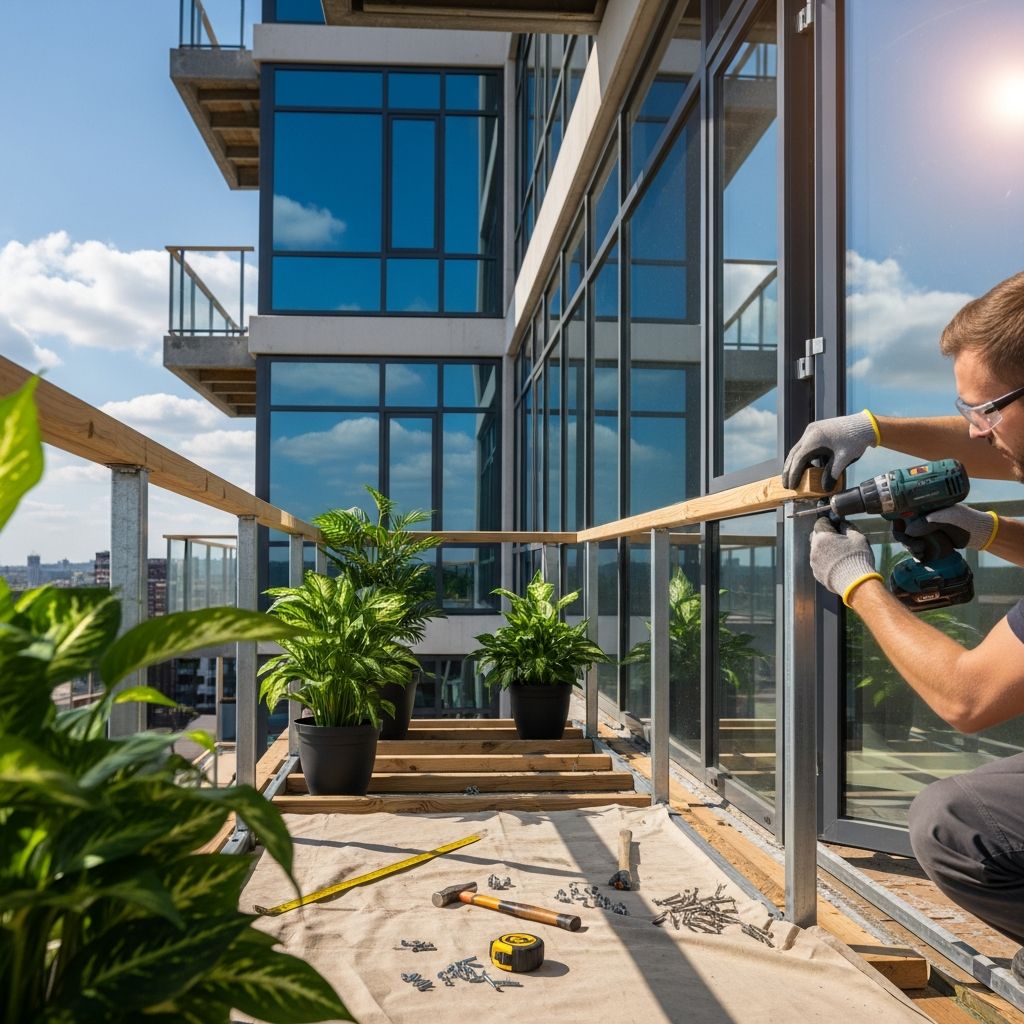
Build Your Own Balcony: DIY Guide
Constructing a balcony adds valuable outdoor space to your home, boosting both functionality and property value. This guide provides a complete roadmap for DIY enthusiasts, emphasizing safety, structural integrity, and weather resistance based on proven techniques.
Essential Planning and Preparation
Before any construction begins, thorough planning prevents costly errors and ensures compliance with regulations. Start by assessing your home’s structure to determine if it can support a balcony. Upper-level additions require evaluating load-bearing capacity, typically handled by consulting local building codes.
- Measure the desired balcony dimensions, considering access points like doors or windows.
- Sketch a basic design, factoring in shape (rectangular, cantilevered, or post-supported) and size limits set by zoning laws.
- Calculate material needs: estimate lumber, concrete, and hardware based on square footage.
Obtaining permits is non-negotiable. Contact your local building department to submit plans, which often include structural drawings and engineering stamps for elevated structures. Expect inspections at foundation, framing, and final stages. Budget 4-6 weeks for approvals.
Site preparation involves clearing the area below the balcony. Remove vegetation, debris, and uneven soil to create a level work zone. Use stakes and string lines to outline the footprint accurately, ensuring alignment with the house rim joist.
Selecting the Right Materials
Choose durable, weather-resistant materials to withstand exposure. Pressure-treated lumber resists rot and insects, ideal for framing. Cedar or redwood offers natural durability for visible surfaces.
| Material | Use | Pros | Cons |
|---|---|---|---|
| Pressure-Treated Pine | Posts, Joists | Affordable, Strong | Requires Sealing |
| Cedar | Flooring, Railings | Beautiful Grain, Rot-Resistant | Higher Cost |
| Composite Decking | Floorboards | Low Maintenance | Expensive Upfront |
| Concrete Mix | Post Footings | Stable Base | Heavy, Labor-Intensive |
For hardware, opt for galvanized lag screws, joist hangers, and corner brackets rated for outdoor use. Waterproofing membranes and flashing prevent moisture intrusion.
Foundation and Support Installation
A solid foundation anchors the balcony. For ground-supported posts, dig holes three times the post diameter, typically 3-4 feet deep per local frost line requirements. Insert 4×4 or 6×6 posts, plumb them with levels, and pour quick-set concrete. Add rebar in wet climates for reinforcement.
Attach a ledger board to the house rim joist first. Strip siding for direct wood-to-wood contact, then secure with 1/2-inch lag screws every 16 inches into studs. Position the ledger snug against the house, installing Z-flashing above to divert water. Caulk seams for airtight seal.
Frame the outer rim using double 2×8 or 2×10 beams for strength. Align with house studs where possible, securing with brackets and screws. Connect beams to posts using post caps and through-bolts for maximum stability.
Framing the Deck Structure
Install joists perpendicular to the ledger, spacing them 12-16 inches on center. Use 2×8 or 2×10 lumber, hung with metal joist hangers. Crown joists upward for proper drainage. For cantilevered designs, extend joists beyond the rim but limit overhang to code maximums (often one-third of joist span).
Double rim joists on exposed sides provide nailing surfaces for decking and railings. Brace the frame temporarily with diagonal 2x4s until concrete sets. Verify level and square using a 3-4-5 triangle method at corners.
Flooring and Surface Finishing
Lay deck boards perpendicular to joists, starting from the house outward. Space boards 1/8-inch for drainage, using hidden fasteners or face screws. Pre-drill to avoid splitting. For sloped drainage, position inner boards slightly higher, creating a 1/8-inch per foot pitch away from the house.
Apply waterproofing under flooring: self-adhesive bitumen sheets over metal edging, overlapping seams. Paint or stain boards before installation for protection. Composite options snap together, reducing screws.
Installing Railings and Safety Features
Railings are critical for safety, required above 30 inches high. Build with 4×4 posts every 6-8 feet, pocketed into rim joists or surface-mounted. Top rails at 36-42 inches; balusters spaced under 4 inches apart to prevent child passage.
- Wood: Match deck material for cohesion.
- Metal Kits: Quick install, $60-100 per 6 feet.
- Glass Panels: Modern look, higher cost.
Secure with lag screws into frames. Add kickboards at base for stability.
Waterproofing and Weatherproofing Essentials
Prevent rot with comprehensive sealing. Install drip edges along exposed edges. Membrane waterproofing over the entire deck surface directs water outward. Seal ledger-house joint with flexible caulk.
Incorporate drainage: slope framing subtly, add scuppers if enclosed. Ventilate underside to dry moisture quickly.
Finishing Touches and Maintenance
Sand surfaces smooth, apply UV-protectant stain or paint. Add lighting, planters, or furniture for usability. Inspect annually: tighten hardware, reseal wood, check for cracks.
| Issue | Solution |
|---|---|
| Loose Boards | Replace Screws |
| Water Pooling | Re-slope Surface |
| Rusted Hardware | Galvanized Replacements |
Common Mistakes to Avoid
- Ignoring permits: Leads to fines or demolition.
- Poor ledger attachment: Causes collapse.
- Inadequate drainage: Promotes rot.
- Skipping inspections: Misses code violations.
Cost Breakdown and Timeline
Expect $20-50 per square foot. A 100 sq ft balcony: $2,000-5,000 materials. Timeline: 1-2 weekends for experienced builders, plus permit wait.
FAQs
Do I need a permit to build a balcony?
Yes, always check local codes; most require permits for structural additions.
What size posts for balcony support?
4×4 for small; 6×6 for larger or heavy loads.
How deep should footings be?
Below frost line, often 36-48 inches; verify locally.
Can I build a cantilever balcony?
Yes, but limit extension and engineer if over 2 feet.
Best wood for balcony flooring?
Pressure-treated or cedar for durability.
References
- How to Build a Balcony: A Complete 6-Step Guide — Angi. 2023. https://www.angi.com/articles/how-to-build-balcony.htm
- Building a Balcony. The Full Process Of Work. DIY — Dmitry Lukin, YouTube. 2025-11-03. https://www.youtube.com/watch?v=WwYYQHBj_dI
- The Ultimate DIY Guide to Building a Balcony — D&C Fence. 2024. https://www.dcfence.com/the-ultimate-diy-guide-to-building-a-balcony/
Similar Articles






Read full bio of Sneha Tete