Build Your Own Chair: Complete Guide With Tools & Costs
Master woodworking by crafting a sturdy, custom chair from scratch with essential tools and step-by-step techniques for beginners and pros alike.
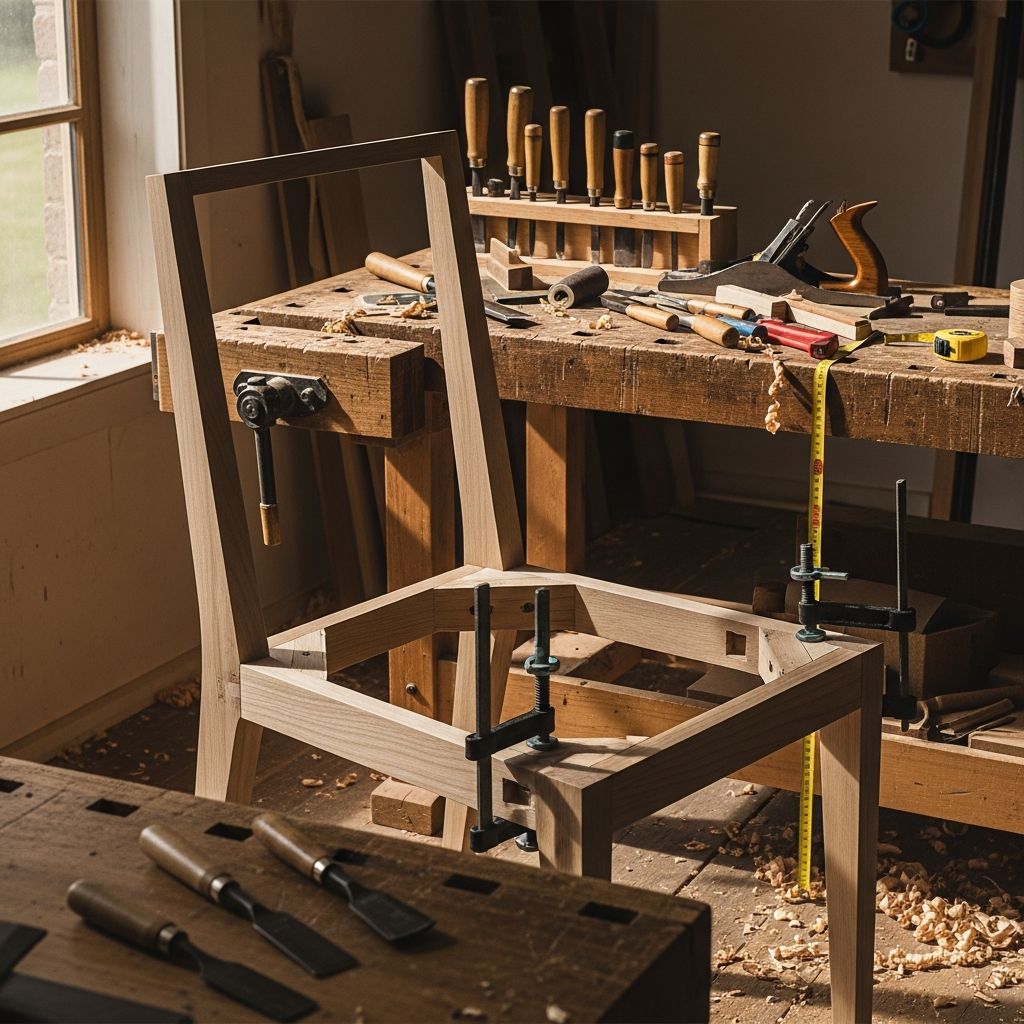
Build Your Own Chair: Complete Guide
Constructing a chair from raw materials offers a rewarding way to blend creativity with practical skills. This process involves selecting quality lumber, gathering specialized tools, and following precise steps to ensure stability and comfort. Whether aiming for a simple stool or an intricate armchair, understanding the fundamentals leads to professional-grade results.
Why Craft a Chair at Home?
Making furniture yourself saves money while providing customizable designs tailored to your space. Home-crafted chairs often outlast mass-produced versions due to the use of solid wood and tight joinery. Beginners gain confidence through manageable projects, while experienced makers experiment with curves and angles for unique pieces.
- Cost-effective compared to store-bought options.
- Personalization in size, style, and finish.
- Satisfaction from functional handmade items.
- Skill-building in measuring, cutting, and joining.
Essential Materials for Chair Construction
Choose hardwoods like oak, ash, or maple for durability. Green wood works well for traditional methods, as it shapes easily before drying. Key components include seat blanks (typically 18-20 inches wide), legs (1-1.5 inches thick), spindles, stretchers, and backrest elements.
| Component | Recommended Wood | Dimensions | Quantity |
|---|---|---|---|
| Seat | Oak or Ash | 18x18x2 inches | 1 |
| Legs | Maple | 1.25×1.25×18 inches | 4 |
| Spindles | Ash | 0.75×0.75×24 inches | 8-10 |
| Stretchers | Oak | 1x1x20 inches | 4 |
Source straight-grained pieces free of knots for strength. Air-dry green wood for weeks to prevent warping.
Core Tools Every Chairmaker Needs
A focused toolkit handles most tasks efficiently. Prioritize sharp, quality items to avoid frustration.
- Drawknife: For rough-shaping legs and spindles on a shavehorse.
- Spokeshave: Ideal for smoothing curves; opt for curved-bottom models like Lie-Nielsen.
- Chisels: Bench sizes (3/8-1 inch) for mortises and tenons; include gouges for decorative elements.
- Saws: Backsaw for precise cuts, flush-cut for clean joints.
- Planes: Scrub plane for seat flattening, block plane for fine adjustments.
- Drill Bits: Brad-point bits (5/8-inch) for mortises; cordless drill for assembly.
- Measuring Tools: Dividers, T-bevel, and protractor for angles.
- Sharpening Supplies: Stones and slips to maintain edges.
Specialized items like tenon cutters (11/16-inch for legs) and rasps enhance precision.
Preparing Your Workspace
Set up a stable bench or shavehorse for secure workholding. Good lighting and ventilation are crucial, especially during finishing. Organize tools to minimize movement, and keep a mallet or dead-blow hammer nearby for assembly.
Step-by-Step Chair Building Process
1. Design and Layout
Sketch your chair, noting seat angle (typically 5-10 degrees rearward) and leg splay (5-7 degrees). Use dividers to mark consistent dimensions on wood blanks. A bevel board helps transfer angles accurately.
2. Shaping the Seat
Start with a thick blank. Use a drawknife or scorp to hollow the center, aiming for a dished profile (1-2 inches deep). Follow with a travisher or scraper for smoothness. Traditional saddling tools like those with brass plates excel here.
3. Crafting Legs and Stretchers
Rive or saw legs from logs, then octagon them with a drawknife. Taper ends using a spokeshave, creating 6-degree angles for tenons. Cut mortises in the seat at compound angles; a 5/8-inch brad-point bit prevents tear-out. Stretchers join legs with tenons for stability.
4. Forming Spindles and Back
Steam-bend or turn spindles for graceful curves. Use a 1/2-inch tenon cutter for ends. For backs, shape posts and weave or slot in spindles. Gouges handle volutes and knuckles.
5. Assembly Techniques
Dry-fit all joints. Apply glue to tenons, then tap into mortises with a mallet. Clamps hold pieces overnight. Compound angles require practice; use a shavehorse for alignment.
Safety Practices in Chairmaking
Sharp tools reduce accidents—hone regularly. Wear gloves when handling green wood splinters, and eye protection for chipping. Secure workpieces firmly to prevent slips. Work methodically to avoid fatigue-induced errors.
- Inspect tools for damage before use.
- Maintain firm grip and body positioning.
- Keep workspace clear of obstacles.
Finishing for Longevity
Sand surfaces progressively (80-220 grit). Apply oil (linseed or Danish) for a natural sheen, or milk paint for color. Multiple coats with drying time between build durability. Use a 1.5-inch sash brush for even coverage.
Troubleshooting Common Issues
| Problem | Cause | Solution |
|---|---|---|
| Loose Joints | Poor tenon fit | Re-cut tenons tighter; use wedges. |
| Warped Seat | Uneven drying | Balance moisture; brace during glue-up. |
| Rocky Chair | Uneven legs | Plane bottoms level on a jig. |
| Tear-Out | Dull tools | Sharpen and adjust grain direction. |
Advanced Variations and Customizations
Once basics are mastered, try rocking chairs with curved rockers or armchairs with turned posts. Experiment with woods like hickory for flexibility in bending. Lathe work adds elegance to balusters.
Cost Breakdown for a Basic Chair
| Item | Estimated Cost |
|---|---|
| Wood | $50-100 |
| Tools (essentials) | $200-500 |
| Finish/Glue | $20 |
| Total | $270-620 |
Frequently Asked Questions
What wood is best for beginners?
Ash or oak; they machine well and are affordable.
Do I need a full shop setup?
No, a shavehorse and basic hand tools suffice for many designs.
How long does it take?
20-40 hours for a first chair, less with experience.
Can I use power tools?
Yes, but hand tools build essential skills.
Is steam bending necessary?
For curved backs, yes; otherwise, straight components work.
References
- Chairmaking Tool List — Elia Bizzarri, Hand Tool Woodworking. Accessed 2026. https://handtoolwoodworking.com/tool-list/
- Tools for Traditional Chair Making. Starting from scratch. — Rex Krueger, YouTube. 2020. https://www.youtube.com/watch?v=MH2_-je9U5Q
- Build a Handsome Chair with Limited Tools — FineWoodworking. 2021-10-06. https://www.finewoodworking.com/2021/10/06/build-a-handsome-chair-with-limited-tools
- Saddling Tools for Beginning Chairmakers — Never Sponsored. Accessed 2026. https://neversponsored.substack.com/p/saddling-tools-for-beginning-chairmakers
Similar Articles








Read full bio of medha deb