Build Your Own Cowboy Pool: Easy Weekend DIY
Transform a simple stock tank into a refreshing backyard oasis with this complete DIY guide for cowboy pools.
Build Your Own Cowboy Pool
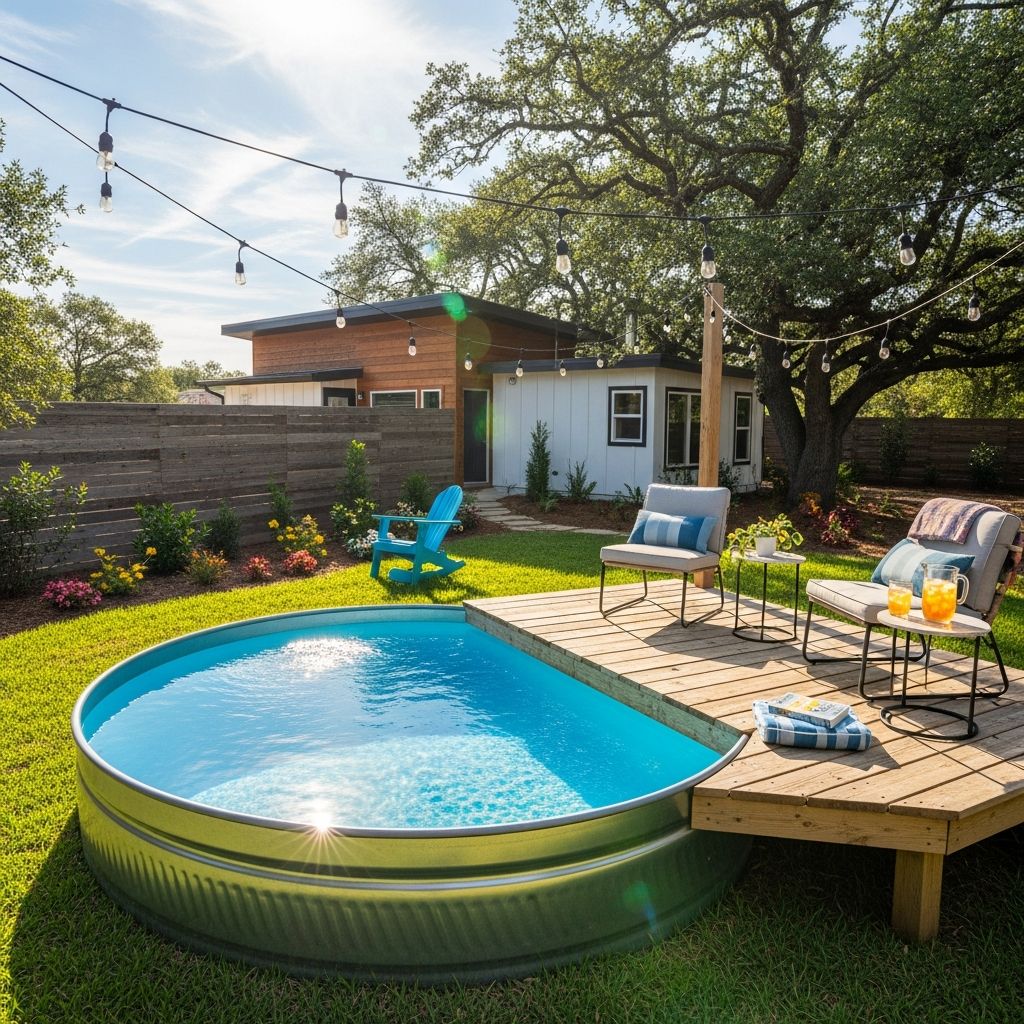
Creating a cowboy pool, also known as a stock tank pool, offers an inexpensive way to add a cooling feature to your backyard. These pools use sturdy galvanized metal tanks originally designed for livestock watering, repurposed into shallow plunge pools ideal for hot days. With basic tools and materials, you can assemble one over a weekend, enjoying water depths typically around 2 feet for safe soaking.
Why Choose a Cowboy Pool for Your Yard?
Cowboy pools stand out for their simplicity and low cost, often under $1,000 total when sourcing tanks locally from farm supply stores. They require minimal space, fitting in small patios or grassy areas, and provide quick setup without digging or concrete work. Unlike traditional inground pools, these above-ground options drain easily for winter storage, making them versatile for seasonal use. Homeowners appreciate the rustic aesthetic that blends with rural or modern farmhouse designs, turning functional tanks into stylish focal points.
These pools excel in hot climates, offering immediate relief without the complexity of full-sized swimming setups. Maintenance remains straightforward, with small volumes of water treating easily using standard pool chemicals. Many users report years of reliable service from well-built installations, proving their durability despite the modest investment.
Selecting the Perfect Stock Tank
Start by choosing a tank size suited to your needs. Common diameters range from 6 to 8 feet, holding 800 to 1,500 gallons. Opt for galvanized steel at least 12-gauge thick to withstand water pressure and weather exposure. Check for a flat bottom to ensure stability on level ground; avoid tanks with heavy rust or dents that could compromise seals.
Capacity matters for family use: a 6-foot tank suits couples or solo soakers, while larger 8-foot models accommodate kids and guests. Source from agricultural suppliers or online marketplaces, verifying shipping feasibility for heavier units. Consider oval shapes for elongated lounging spaces if round options feel restrictive.
| Tank Size | Diameter | Height | Approx. Capacity | Best For |
|---|---|---|---|---|
| Small | 6 ft | 2 ft | 800 gal | 1-2 people |
| Medium | 7 ft | 2 ft | 1,100 gal | Families |
| Large | 8 ft | 2 ft | 1,500 gal | Groups |
Essential Tools and Materials List
Gather these items before starting to avoid delays. Focus on quality for plumbing fittings to prevent leaks.
- Power drill with variable speed and high torque
- 3-inch hole saw bit with arbor for clean cuts
- Waterproof silicone sealant or plumber’s putty
- Pool pump and filter kit (1/2 HP recommended for small tanks)
- Plunger valves, strainer, and jet fittings
- Hoses and clamps sized for your pump
- Safety gear: glasses, gloves, ear protection
- Level ground tools: shovel, sand, pavers
- Optional: tank paint, solar cover, ladder
Purchase pump kits designed for stock tanks, including pre-threaded connectors for easy installation. Budget $200-400 for core plumbing components.
Preparing the Ideal Installation Site
Location impacts longevity and safety. Select a spot receiving partial shade to minimize algae growth and water evaporation. Ensure at least 10 feet clearance from structures or electrical lines. Soil should drain well; avoid low-lying flood-prone areas.
Clear vegetation and mark the tank’s footprint plus a 3-foot surround for access. Excavate 4-6 inches deep, removing roots and rocks. Fill with 2 inches of compacted sand for a stable base, using a long board and level to screed flat. Add pavers or gravel around the perimeter to prevent erosion and mud tracking.
Test levelness by placing the tank temporarily and adjusting with shims if needed. A perfectly even base prevents stress cracks in the metal over time.
Drilling Precision Holes for Plumbing
Mark two holes on the tank’s side before drilling. Position the lower one 3-6 inches from the bottom for the strainer intake, pulling water for filtration. Place the upper hole 12-18 inches higher or level for the return jet, ensuring even circulation.
Secure the tank on blocks to elevate the work area. Wear safety gear, attach the hole saw, and drill slowly with steady pressure to avoid wandering bits. Metal shavings will fly, so cover nearby surfaces. Clean burrs with a file for smooth fitting insertion.
Installing the Pump and Filtration System
Apply generous silicone or putty around holes. Insert threaded connectors from inside, securing with washers and nuts outside. Tighten firmly while adding extra sealant for watertight bonds. Attach strainer basket to the intake and directional jet to the return.
Connect plunger valves to exposed threads, keeping them open initially. Run hoses from valves to pump ports per manufacturer diagrams—intake to filter input, output to jet. Prime the pump, test for leaks, and run for 30 minutes to confirm flow.
For optimal performance, position the pump nearby on a stable platform, elevated to avoid backflow. Use hose clamps to secure all connections against vibration loosening.
Filling and Balancing the Water Chemistry
Fill slowly with a garden hose, monitoring for leaks. Aim for 4-6 inches below the upper fitting to prevent overflow. Shock the water with chlorine, then test pH (7.2-7.6 ideal), alkalinity, and sanitizer levels using strips or a kit.
Add stabilizer for UV protection and algaecide for clarity. Run the pump 6-8 hours daily initially. Brush walls weekly to prevent scaling on galvanized surfaces.
Enhancements for Comfort and Style
Paint the interior with pool-safe epoxy for rust inhibition and color customization—light shades reflect heat. Install a solar cover to retain warmth and reduce chemicals. Add LED lights or a teak bench for luxury touches.
Surround with decking or composite pads for a finished look. Integrate landscaping like potted plants or privacy screens to elevate the rustic vibe.
Seasonal Maintenance and Winterizing
Weekly tasks include skimming debris, vacuuming sediment, and balancing chemicals. Monthly, inspect fittings for wear. Drain fully in fall: disconnect plumbing, tip the tank to empty, and store inverted in a dry spot.
Clean with vinegar solution to remove mineral buildup. Reapply sealant annually for longevity. Expect 5-10 years of use with diligent care.
Safety Considerations for Family Use
Supervise children at all times; shallow depth reduces but doesn’t eliminate drowning risk. Install non-slip ladders and surround with fencing if possible. Ground all electrical components via GFCI outlets. Test water quality regularly to avoid skin or eye irritation.
Secure the site against unauthorized access, especially overnight. Emergency drain plugs allow quick emptying in severe weather.
Frequently Asked Questions
Can I use a cowboy pool year-round?
In mild climates, yes, with a heater. Most users limit to summer due to freezing risks.
How much does it cost to build?
$500-1,500, depending on tank size and accessories.
Will the metal rust over time?
Galvanized tanks resist rust; interior coatings extend life further.
Do I need a permit?
Check local codes; small above-ground pools often exempt.
How do I heat the water?
Solar covers or small electric heaters work best for shallow volumes.
References
- Stock Tank Pool DIY Tutorial — The Joshua Tree House. 2024-05-20. https://www.thejoshuatreehouse.com/2024/05/20/stock-tank-pool-diy/
- How to A Backyard Stock Tank Pool – DIY Guide + Video Tutorial — Maker Gray. 2023-06-15. https://www.makergray.com/concrete/stocktankpool
- Video Tutorial – Cowboy Pools — Cowboy Pools. 2024-01-10. https://www.cowboypools.com/pages/video-tutorial
- DIY Cowboy Pool Kit Video Tutorials — Cowboy Pools. 2024-02-05. https://www.cowboypools.com/pages/diy-cowboy-pool-kit-video-tutorials
- Pool Safety Guidelines — Centers for Disease Control and Prevention (CDC). 2023-07-12. https://www.cdc.gov/healthywater/swimming/safety/index.html
Similar Articles


Read full bio of Sneha Tete