Build Your Own Exterior Door Jamb: Step-By-Step Guide
Master the art of crafting a durable exterior door jamb with this detailed DIY guide for perfect fit and weatherproofing.
Build Your Own Exterior Door Jamb
Constructing a custom exterior door jamb allows homeowners to achieve a precise fit tailored to their door opening, enhancing security, energy efficiency, and curb appeal. This comprehensive guide provides everything needed to create a robust frame that withstands weather exposure while integrating seamlessly with existing structures.
Understanding Door Jamb Essentials
A door jamb forms the foundational framework around an entry door, consisting of the vertical sides (side jambs), horizontal top (head jamb), and bottom threshold area. For exterior applications, jambs must resist moisture, temperature fluctuations, and structural stress. Typical jambs measure 4-9/16 inches thick for standard walls, but custom builds accommodate thicker walls via extensions.
Key components include rabbets for hinges and locks, stops for door closure, and provisions for weatherstripping. Proper design prevents warping and air infiltration, critical for energy savings.
Gathering Materials and Tools
Select pressure-treated pine or finger-jointed pine for rot resistance; avoid untreated wood outdoors. A standard kit might include 4-9/16-inch jamb stock and 2-inch extensions. Additional supplies: exterior-grade screws (2-3 inches), shims, caulk, and paint.
- Wood: Jamb legs (80 inches long), head jamb (matching width), threshold if needed.
- Hardware: Hinges, strike plate, weatherstrip.
- Fasteners: Galvanized nails, screws.
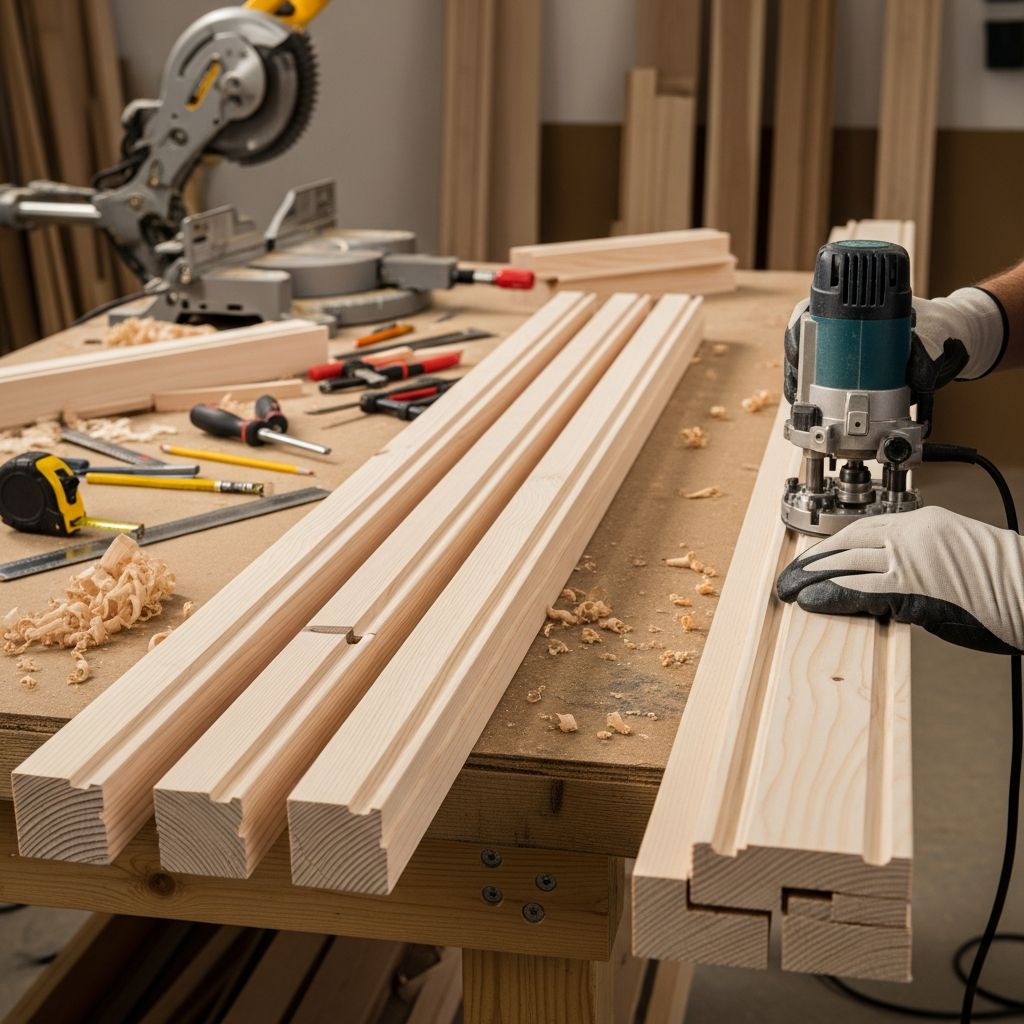
Essential tools ensure accuracy:
| Tool | Purpose |
|---|---|
| Miter saw | Precise angled cuts |
| Router with bits | Hinge mortises, rabbets |
| Circular saw | Rough cuts, extensions |
| Level (4-ft and 6-ft) | Plumb and square checks |
| Chisel set | Fine-tuning mortises |
| Drill and bits | Pilot holes, screwing |
| Oscillating tool | Demolition, tight cuts |
Protective gear like eyewear and gloves is mandatory.
Precise Measurements for Perfect Fit
Accurate measuring prevents costly errors. Start with the door slab dimensions: add 3/16-inch clearance per side for width (total ~3/8-inch) and 1/2-inch to height for sweep and threshold clearance.
Measure the rough opening: width at top, middle, bottom; height on both sides. Jamb depth equals wall thickness from interior drywall to exterior sheathing. Check squareness with a carpenter’s square; note variations for shimming.
- Record door width/height.
- Measure opening in three heights.
- Depth from finish floor to header.
- Casing width/height separately.
For non-square openings, plane jambs or use adjustable extensions.
Preparing the Rough Opening
Before building, ensure the opening is ready. Remove old jambs with a pry bar and oscillating tool. Inspect framing: studs should be plumb, header level. Install sill pan with back dam for water drainage—essential for exterior doors.
Fill gaps with insulation; verify 1/2-inch reveal for shims. For new construction, frame to 2 inches wider/taller than door unit.
Cutting and Shaping Jamb Components
Rip lumber to width on a table saw or bandsaw for clear stock. Cut side jambs to height minus threshold; head jamb to opening width minus jamb thickness x2.
Create rabbets: 1/2-inch deep x 3/4-inch wide on interior edge for door stop. Route hinge mortises (4.5 x 3.5 inches standard) using a jig or template. For custom, add 1/8-inch top clearance, 3/8-inch bottom.
Plane edges square; bevel exterior for casing fit. Laminate extensions if needed, gluing and clamping.
Assembling the Jamb Frame
Dry-fit pieces. Notch head jamb ends to fit over side jambs (miter or butt joint). Secure with glue and screws; reinforce corners with blocks.
Attach stops (1/2 x 3/4-inch strips) with nails. Install weatherstrip channels. For extensions, rabbet and glue to main jamb, flush with finishes.
Pre-drill strike plate hole; test-fit door for clearances: 1/8-inch top/sides, 3/8-inch bottom.
Installing the Custom Jamb
Position jamb in opening, plumb hinge side first with shims at hinge locations (top, middle, bottom). Secure with 3-inch screws into studs, avoiding brickmould initially.
Level head jamb; shim lock side for even 3/8-1/2-inch reveal. Dollar bill test: resistance along weatherstrip. Fasten fully, add insulation above head jamb.
Hang door: mortise hinges, screw in place. Adjust strike plate for latch alignment.
Finishing for Durability and Aesthetics
Prime and paint all surfaces before install; caulk gaps exteriorly. Install casing: miter corners, nail every 12 inches.
For storm doors, pre-drill brickmould. Fill screw holes with putty; seal threshold with backer rod and caulk.
Common Challenges and Solutions
- Out-of-Plumb Walls: Oversize jambs, shim selectively.
- Moisture Issues: Use sill pans, flashing.
- Hinge Misalignment: Router jig for consistency.
- Warping: Kiln-dried wood, proper storage.
Double-check reveals post-install; adjust sweeps for tight seal.
Advanced Tips for Professional Results
Incorporate adjustable thresholds for uneven floors. For double doors, align astragals and add center shims. Use T-Astragal for inactive leaf security.
Test operation: swing, lock, weatherstrip compression. Insulate cavity for R-value boost.
Frequently Asked Questions
What wood is best for exterior jambs?
Pressure-treated or primed finger-jointed pine resists rot; oak for premium durability.
How thick should an exterior jamb be?
4-9/16 inches standard; add extensions for 2×6 walls.
Can I build without a router?
Yes, use chisel and plane, but router ensures precision mortises.
How do I handle uneven floors?
Taper shims under threshold; adjustable sills compensate.
Is a sill pan always necessary?
Yes, for water management and code compliance.
This process yields a jamb lasting decades with proper maintenance. Regular caulking and painting prevent degradation.
References
- Exterior Door Jamb Complete Build – Part 1 — Mainely DIY Mom (YouTube). 2022-11-15. https://www.youtube.com/watch?v=fY0YCrZMklI
- How to install a door on a new construction project — Therma-Tru Project Center. Accessed 2026. https://projectcenter.thermatru.com/knowledge/full_door_installation
- How to Measure a Door Jamb: A Guide — Grand Entry Doors. Accessed 2026. https://grandentrydoors.com/blog/how-to-measure-a-door-jamb/
- How to Build a Custom Door Jamb — Fouch-o-matic Workshop (YouTube). Accessed 2026. https://www.youtube.com/watch?v=ro18C5xoU3Y
- Entry door jamb build and installation — Mike Farrington (YouTube). Accessed 2026. https://www.youtube.com/watch?v=fBUR8MufHb4
- How to Install a New Door Jamb in an Old Doorway — Fine Homebuilding. Accessed 2026. https://www.finehomebuilding.com/project-guides/windows-doors/replace-an-old-entry-door
Similar Articles






Read full bio of Sneha Tete