Build Your Own Platform Deck: Step-By-Step DIY Guide
Master the art of constructing a sturdy, low-level platform deck with our detailed DIY guide, perfect for backyard gatherings and relaxation.
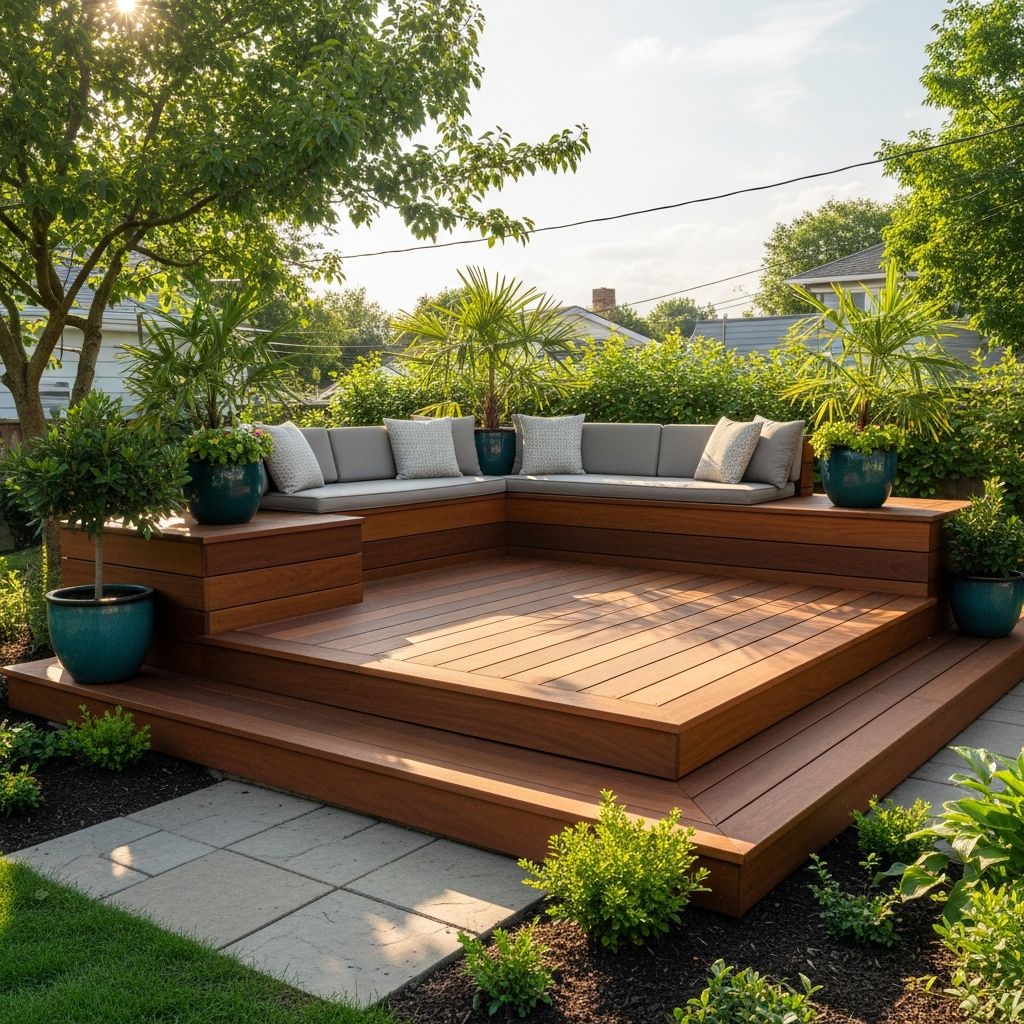
Build Your Own Platform Deck
A platform deck offers a simple yet effective way to expand your outdoor living area without the complexity of elevated structures. These low-profile decks sit close to the ground, making them ideal for patios, hot tubs, or casual lounging spots. This comprehensive guide walks you through every phase of construction, emphasizing precision, safety, and longevity.
Planning Your Deck Project
Successful deck building starts with thorough planning. Assess your yard’s layout to choose an optimal location that maximizes sunlight, views, and accessibility. Consider the deck’s purpose—whether for dining, entertaining, or relaxation—to determine its size and shape. A typical platform deck measures 8×10 feet or larger, but scale it to your needs.
Check local building codes early, as some areas require permits for decks over a certain size or height. Sketch a basic design including dimensions, post locations, and material lists. Calculate quantities: for an 8×8-foot deck, you’ll need about 20 linear feet of rim joists, 15 joists at 16-inch spacing, and roughly 200 square feet of decking boards.
- Measure the space twice to confirm square footage.
- Factor in a 1-2% slope for water drainage away from your home.
- Budget for materials: pressure-treated lumber for framing, composite or cedar for surfacing.
Gathering Essential Tools and Materials
Equip yourself with the right tools to streamline the build. Basic requirements include a circular saw, drill, level, tape measure, post hole digger, and safety gear like gloves and goggles.
| Category | Items | Purpose |
|---|---|---|
| Power Tools | Circular saw, reciprocating saw, drill/driver | Cutting and fastening |
| Hand Tools | Hammer, level, square, string line | Measuring and leveling |
| Fasteners | Deck screws (3-inch), joist hangers, carriage bolts | Secure connections |
| Materials | 4×4 posts, 2×8 rim joists, 2×6 joists, concrete for footings | Structural support |
Opt for pressure-treated wood rated for ground contact to resist rot and insects. Composites offer low maintenance but higher upfront costs.
Preparing the Construction Site
Clear the area of grass, rocks, and debris. Level the ground roughly, removing at least 4 inches of topsoil for stability. Use batter boards—simple frames of stakes and string—to outline the deck footprint. Position them just outside the corners and stretch mason’s line between them to form perfect squares.
Verify squareness by measuring diagonals; they must be equal. Mark post locations: typically four corners and one center for spans up to 12 feet. Spray paint or stake these spots for digging.
Installing Footings and Posts
Dig holes 8-12 inches wide to your local frost line depth, often 24-48 inches. Pour concrete footings, embedding post anchors or brackets. For floating decks, precast blocks suffice if codes allow.
Cut 4×4 or 6×6 posts to height, allowing 2-4 inches above ground for airflow. Secure posts in anchors with bolts. Use a string line and level to ensure all tops are even, marking and trimming as needed with a reciprocating saw.
- Space posts no more than 8 feet apart for stability.
- Plumb each post in two directions before final tightening.
- Let concrete cure 24-48 hours before loading.
Assembling the Deck Frame
Attach rim joists—2×8 or 2×10 lumber—to post tops using galvanized hangers and carriage bolts. Form the perimeter: two long sides and two short ends. Double up center beams spanning from rim to center post.
Install joists at 16 inches on-center, starting from one end. Use joist hangers for secure attachment. Add blocking between joists for extra rigidity, especially at mid-spans. Check level frequently with a 4-foot level and adjust with shims if needed.
Framing Details for Strength
Reinforce corners with metal brackets. For wider decks, add intermediate beams. Toe-nail or hurricane-tie fillers at edges to support deck board ends. Ensure all framing sits 1.5-2 inches above ground to prevent moisture wicking.
A well-framed deck distributes weight evenly, handling 40-50 psf live loads per code standards.
Laying the Decking Surface
Select decking material: wood, PVC, or composite. Dry-lay boards to check fit, maintaining 1/8 to 1/4-inch gaps for expansion. Start from the house side or a visible edge, working outward.
Fasten with two screws per joist intersection, 3/4-inch from edges and 1/2-inch from ends. Pre-drill to prevent splitting in hardwoods. For patterns like picture-frame borders, miter edges at 45 degrees.
- Use hidden fasteners for a clean look on composites.
- Cut rips to fit the field, hiding them at the back.
- Stagger butt joints over joists.
Adding Finishing Touches
Install fascia boards around the perimeter to hide framing ends, mitering corners for a polished appearance. Add railings if height exceeds 30 inches, using pressure-treated balusters spaced under 4 inches apart.
Seal wood with weatherproof stain; composites need minimal upkeep. Sweep off debris and inspect for loose fasteners.
Safety Considerations Throughout the Build
Prioritize safety: wear eye protection, secure loose materials, and work with a partner for heavy lifts. Follow OSHA guidelines for ladders and scaffolding if elevating tools. Ensure footings resist uplift in windy areas.
Common Mistakes to Avoid
- Skipping permits, risking fines or insurance issues.
- Poor leveling, leading to pooling water and rot.
- Overspacing joists, causing bouncy surfaces.
- Ignoring drainage, promoting mold growth.
Cost Breakdown and Time Estimate
| Component | Estimated Cost (8×10 ft) | Time |
|---|---|---|
| Materials | $1,500-$3,000 | 2-3 days |
| Tools (if buying) | $200-$500 | N/A |
| Labor (DIY) | $0 | 20-30 hours |
Costs vary by material; wood is cheapest, exotics pricier.
Maintenance for Longevity
Inspect annually for loose boards, cracks, or insect damage. Reseal wood every 2-3 years. Composites clean with soap and water. Proper care extends life to 20-30 years.
Frequently Asked Questions
What is the difference between a platform deck and a floating deck?
Platform decks use concrete footings for permanence; floating decks rest on blocks for easier relocation.
Do I need a permit for a ground-level deck?
Check local codes; many require permits over 200 sq ft or with railings.
Can I build on uneven ground?
Yes, adjust post heights and grade properly for level framing.
What spacing for joists?
16 inches on-center for most decking; 12 inches for heavy loads.
How deep should footings be?
To frost line: 36-48 inches in cold climates.
References
- How To Build a Platform Deck: Costs, Plans, and Inspiration — TimberTech. 2023. https://shop.timbertech.com/ideas/platform-deck/
- Crafting Your Own Platform Deck: A Step-by-Step Guide — Oreate AI. 2024. https://www.oreateai.com/blog/crafting-your-own-platform-deck-a-stepbystep-guide/74fdcfc05cb989d152ac88952a1b7741
- How to Build a Platform Deck — Lowe’s. 2024. https://www.lowes.com/n/how-to/platform-deck
- Building a New Deck — Funky Junk Interiors. 2023. https://www.funkyjunkinteriors.net/building-a-new-deck/
- Build a Floating Deck — Instructables. 2024. https://www.instructables.com/Build-a-Floating-Deck/
Similar Articles








Read full bio of Sneha Tete