Bonus Room Over Garage: Complete Guide, Costs & Tips
Unlock hidden potential above your garage with this comprehensive guide to creating a functional living space that boosts home value and comfort.
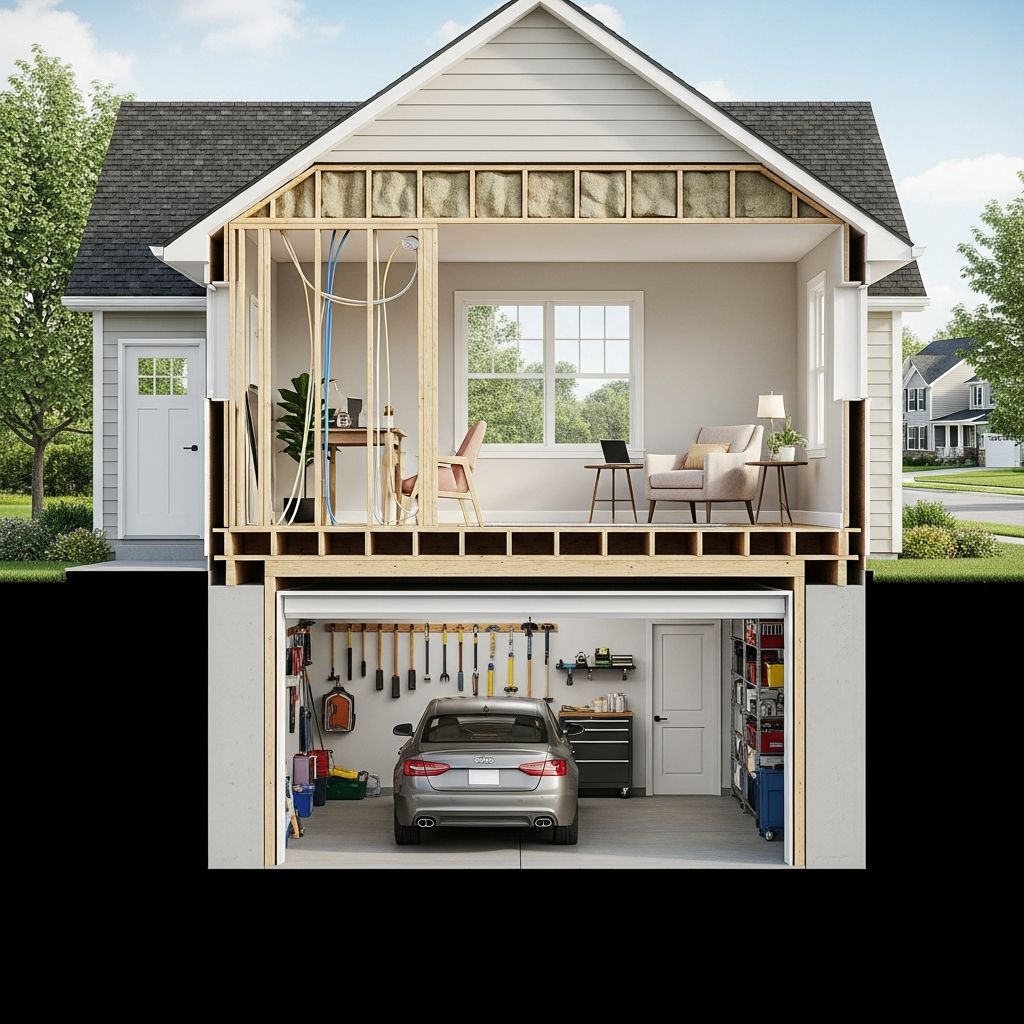
Building a Bonus Room Over Your Garage
Expanding your living area without extending your home’s footprint is achievable by developing the space above the garage. This approach maximizes vertical real estate, offering a practical solution for growing families or remote workers needing dedicated offices. With proper planning, this project can yield a fully functional room compliant with local codes and tailored to your needs.
Assessing Feasibility and Planning Essentials
Before committing resources, evaluate the garage’s structural integrity. Examine ceiling joists for size, spacing, and condition—typically 2×6 or larger spaced 16-24 inches apart support light storage but may require reinforcement for habitation. Consult local building authorities early, as permits are mandatory for habitable conversions. Factor in roof pitch; steeper angles provide more headroom, ideally at least 7 feet in the center.
Budgeting is crucial. Basic conversions range from $10,000-$50,000 depending on scope, with structural upgrades being the largest expense. Create a detailed plan including layout, HVAC needs, and egress requirements like windows for emergency exits.
- Site Inspection: Check for roof leaks, pest damage, and existing wiring/plumbing.
- Design Software: Use free tools to sketch floor plans ensuring code-compliant dimensions.
- Professional Input: Hire a structural engineer if joists appear undersized.
Strengthening the Foundation: Joist and Floor Upgrades
The garage ceiling forms the floor of your new room, demanding robust support. If existing joists can’t bear live loads (40 psf per codes), sister them with additional lumber or install steel beams. For subflooring, construct risers using 2×4 or 2×6 perpendicular to joists, spaced 16 inches on center, to accommodate insulation and plywood decking.
| Component | Material Recommendation | Estimated Cost Range |
|---|---|---|
| Floor Joists Reinforcement | 2×10 Douglas Fir or LVL beams | $1,000 – $10,000 |
| Subfloor Plywood | 3/4-inch tongue-and-groove | $500 – $800 |
| Risers | 2×4 pressure-treated | $200 – $500 |
Secure plywood with screws every 6-8 inches along edges, avoiding wiring. This grid system minimizes vibration transfer to the garage below.
Access Solutions: Stairs and Entry Points
Safe access is non-negotiable. Pull-down ladders suit storage but fail for living spaces; opt for fixed or folding stairs meeting 36-inch width and 7.75-inch max riser height. Custom stairwells may require cutting into the garage ceiling, reinforcing openings with headers.
- Space-saving spiral stairs for tight spots.
- Full-width straight runs for comfort.
- Ensure handrails and landings comply with IRC standards.
Exterior access via a new door or balcony adds flexibility but increases complexity.
Insulation and Climate Control Mastery
Maintain comfort with comprehensive insulation. Use R-49 batts or blown-in cellulose on the roof deck, R-21 walls, and R-30 floors. Vapor barriers face the conditioned space to prevent moisture buildup. In hot climates, add radiant barriers under roofing.
HVAC extension involves ductwork from the main system or ductless mini-splits ($1,000-$5,000). Ventilation via gable fans or ridge vents prevents condensation, critical over unconditioned garages.
Proper insulation not only regulates temperature but enhances energy efficiency, reducing bills by sealing heat loss pathways.
Framing Walls and Creating Boundaries
Frame interior walls with 2×4 studs at 16-inch centers, tying into roof trusses where possible. For sloped ceilings, use knee walls to maximize headroom. Acoustic wool between studs dampens garage noise. Sheathe with 1/2-inch plywood before drywall.
Electrical rough-in precedes framing closure: plan for 20-amp circuits, GFCI outlets, and LED lighting. Plumbing, if needed, routes through walls for half-baths.
Finishing Interiors: Drywall, Flooring, and Fixtures
Hang 5/8-inch fire-rated drywall on ceilings for code compliance, tapering joints with mesh tape. Mud, sand, and prime for a smooth finish. Lighter paints reflect scant natural light.
Flooring options include luxury vinyl plank for durability or carpet for warmth. Sheet vinyl offers budget-friendly waterproofing. Add windows or dormers for light and ventilation.
Cost Breakdown and Savings Strategies
| Project Element | Low-End Cost | High-End Cost |
|---|---|---|
| Structural/Floor | $2,000 | $15,000 |
| Insulation & Drywall | $2,700 | $4,700 |
| Electrical & HVAC | $1,500 | $8,000 |
| Finishes & Stairs | $3,000 | $10,000 |
| Total | $9,200 | $37,700 |
DIY elements like painting and subflooring cut costs by 30-50%. Skip luxury finishes initially for phased completion.
Common Challenges and Pro Tips
- Noise Reduction: Double drywall layers or resilient channels on ceilings.
- Moisture Control: Install dehumidifiers and vapor barriers.
- Lighting: Recessed cans and skylights combat dimness.
- Work in off-seasons for contractor discounts.
Legal and Safety Imperatives
Secure permits before starting to avoid fines. Inspections at foundation, framing, electrical, and final stages ensure safety. Egress windows must be 5.7 sq ft operable area.
Real-World Transformations
Homeowners report 10-20% property value increases post-conversion. Kids’ playrooms, home gyms, or rentals yield high ROI.
FAQ
Do I need a permit to add a room above the garage?
Yes, building permits are required for habitable space conversions, plus potential zoning reviews.
How much weight can garage ceiling joists hold?
Standard joists support 10-20 psf dead load; reinforce for 40 psf live load habitation.
What’s the ROI on a garage attic room?
Expect 50-70% recouped at resale, higher with multi-use designs.
Can I DIY the entire project?
Basic structural and finishing yes, but electrical/HVAC demand licensed pros.
How do I insulate for soundproofing?
Combine mass-loaded vinyl, double studs, and insulation.
References
- How to Finish an Attic — Budget Dumpster. 2023. https://www.budgetdumpster.com/blog/attic-room-conversion
- Reclaiming Attic Space for Storage – Save Money on … — YouTube. 2015-10-20. https://www.youtube.com/watch?v=1rSfI20I-98
- Garage Attic Makeover REVEAL!!! — Not Just A Housewife. 2020. https://www.notjustahousewife.net/garage-attic-makeover/
- Smart Garage Attic Storage: 5 Ways to Maximize Space Above — Inventive Garage. 2024. https://inventivegarage.com/blogs/guide/smart-garage-attic-storage
- Garage Conversions: The Ultimate How To Guide — Permagard. 2023. https://permagard.co.uk/advice/garage-conversion-guide
- Convert unused garage attic space to storage — Copewood. 2022. https://copewood.com/convert-unused-garage-attic-space-storage/
- Converting Attics, Basements and Garages to Living Space Brochure 9 — Portland.gov. 2023. https://www.portland.gov/ppd/documents/converting-attics-basements-and-garages-living-space-brochure-9/download
Similar Articles







Read full bio of Sneha Tete