Burning Pellets in Wood Stoves: Complete Guide
Discover safe, efficient methods to adapt wood stoves for pellet fuel, boosting heat output while cutting costs.
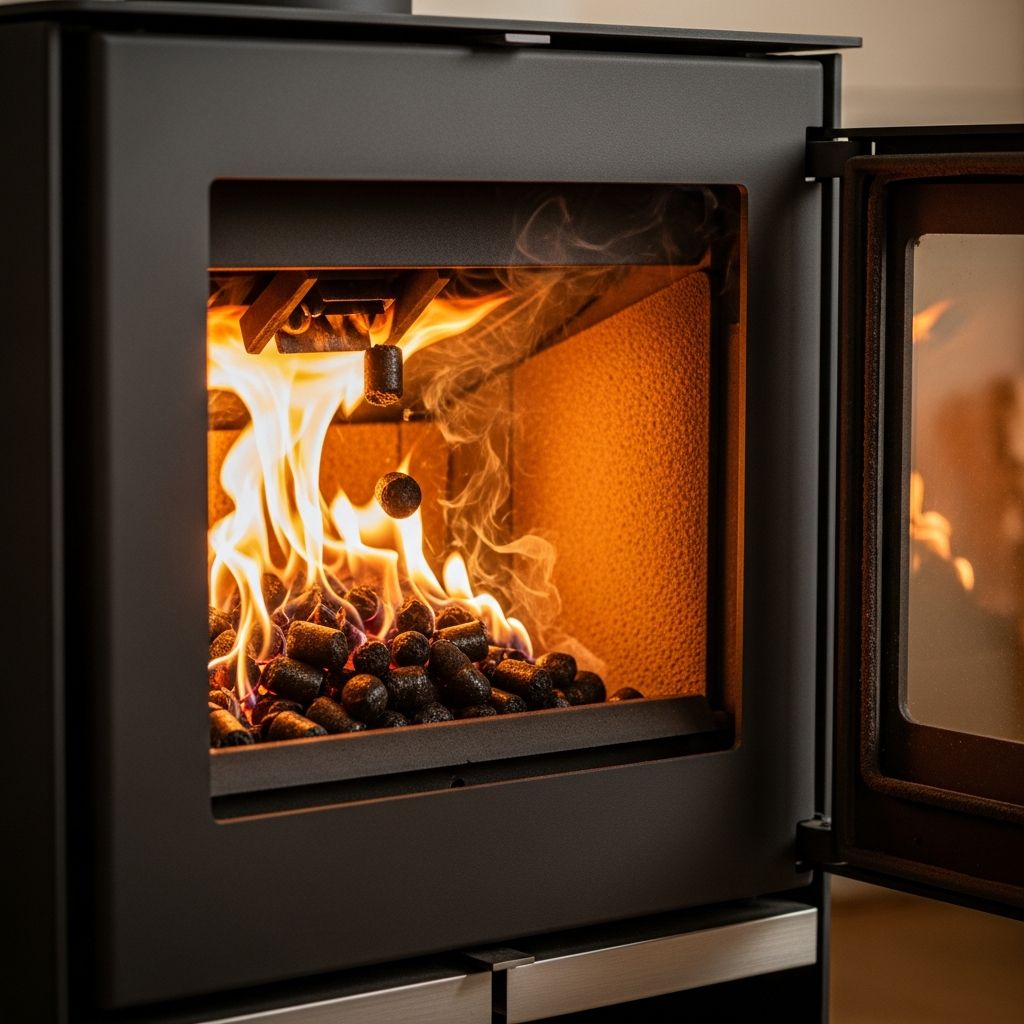
Pellet fuel offers a cleaner, more efficient alternative to traditional cordwood for heating homes, even in standard wood stoves with some adaptations. This guide details compatibility checks, setup modifications, safe operation, and upkeep to maximize benefits like reduced ash and consistent heat.
Understanding Pellet Fuel Advantages
Pellets are compressed sawdust or biomass, typically 1/4 to 3/8 inches long, burning hotter and cleaner than logs due to low moisture content under 10%. In wood stoves, they produce steady flames without frequent reloading, cutting labor while minimizing creosote buildup compared to green wood.
Key benefits include:
- Higher efficiency: Up to 80-90% burn rate versus 60-70% for cordwood.
- Lower emissions: Reduced particulate matter for better air quality.
- Cost savings: Often cheaper per BTU than firewood in bulk buys.
- Storage ease: Compact bags fit small spaces unlike bulky logs.
However, not all wood stoves suit pellets without risks like incomplete combustion or damage. EPA-certified stoves handle modifications best, per manufacturer specs.
Assessing Your Wood Stove for Pellet Use
Before switching fuels, evaluate your stove’s design. Cast iron or steel models with good draft control excel; avoid antiques lacking air regulation. Check firebox size—pellets need space for a burn pot or tray.
| Stove Feature | Ideal for Pellets | Potential Issues |
|---|---|---|
| Air Intake Control | Adjustable vents for precise oxygen | Fixed dampers cause overfiring |
| Firebox Depth | 12+ inches for burn pot | Shallow boxes spill ash |
| Grate Design | Removable for pellet tray | Solid grates block airflow |
| Chimney Height | 15+ feet for strong draw | Short stacks lead to backdraft |
Consult your manual or a certified technician. Local codes may require inspections for fuel changes.
Essential Modifications for Safe Pellet Burning
Transform your wood stove into a pellet burner with targeted upgrades. Start with a pellet burn pot—a perforated stainless steel basket holding 5-10 lbs of fuel, elevated for ash drop-through.
- Install burn pot: Secure in firebox center using heat-resistant brackets. Ensure 2-inch clearance from walls.
- Add forced air fan: Electric blower (120V) mounts externally, pushing combustion air for sustained burn without chimney pull.
- Fabricate ash pan: Slide-out tray below grate catches fine residue for easy emptying.
- Upgrade vent pipe: Use 3-4 inch pellet-specific exhaust, sealed with high-temp silicone, terminating 3 feet above roof per codes.
Total cost: $200-500 for DIY parts. Professional install ensures code compliance, vital for insurance.
Selecting Premium Pellet Fuel
Quality dictates performance. Opt for PFI-certified (Pellet Fuels Institute) Grade 1 pellets: under 1% ash, no binders. Avoid softwood if your stove smokes conifers poorly.
- Hardwood blends: Oak/maple for long burns.
- Storage tips: Cool, dry area; use 40-lb bags rotated FIFO.
- Quantity guide: 1 ton seasons a 2,000 sq ft home in cold climates.
Inspect for dust—fines clog augers in adapted setups.
Step-by-Step Startup Procedure
Prime your modified stove safely:
- Clean firebox, verify seals.
- Load hopper or tray with 2-3 lbs pellets.
- Open primary air fully, ignite with torch or paper wad (no accelerants).
- Once glowing, adjust to low feed; monitor for 30 mins.
- Set thermostat or manual dial for desired heat.
Burn 4-8 hours per load. Never leave unattended first runs.
Daily Operation and Heat Management
Maintain even temperatures by:
- Feed control: Dial down at night to embers.
- Ash removal: Weekly, when 1/2 inch deep.
- Draft check: Slight whistle indicates good pull.
Output: 20,000-40,000 BTU/hr, heating 1,000-2,000 sq ft. Combine with zoning for efficiency.
Safety Protocols and Precautions
Pellets burn hotter (up to 1,600°F), risking chimney fires if neglected.
- Install CO detector near stove.
- Clearances: 18″ sides, 36″ front.
- Annual pro sweep removes fly ash.
- Shut down: Rake coals, close dampers gradually.
Children/pets: Supervise; surfaces exceed 200°F.
Troubleshooting Common Problems
| Issue | Symptom | Solution |
|---|---|---|
| Weak fire | Smoldering pellets | Clean vents, check fan power |
| Excess smoke | Backpuffing | Prime better, upgrade chimney |
| Clinkers | Hard ash lumps | Switch to low-ash pellets |
| Overheat | Glowing exterior | Reduce feed immediately |
Log issues for patterns.
Seasonal Maintenance Routine
Keep peak:
- Daily: Rake ashes.
- Weekly: Vacuum hopper.
- Monthly: Inspect gaskets, wiring.
- Off-season: Empty, cover in dry spot.
Expect 5-10 year lifespan with care.
Cost Analysis and ROI
Initial mods: $300-800. Pellets: $250/ton vs. $400 cordwood. Savings: $500/year for average home. Payback: 1-2 seasons.
Environmental and Efficiency Gains
Pellets from waste wood renewably sourced, 75% less CO2 than oil. Adapted stoves hit 85% efficiency, per EPA benchmarks.
Frequently Asked Questions
Can any wood stove burn pellets?
No, only those with air control and mod space. Check manual.
How much ash from pellets?
1% per bag; less than wood.
Is electricity required?
Often for fans; gravity-feed options exist.
Legal in all areas?
Verify emissions codes.
Longer burns than logs?
Yes, overnight possible.
References
- How to Install a Pellet Stove — This Old House. 2023-01-01. https://www.thisoldhouse.com/heating-cooling/how-to-install-a-pellet-stove
- Installation and Operating Manual — Woodstoves.net (Wise Way). 2013-04-01. https://woodstoves.net/documents/Wise%20Way/gw-1949-pellet-stove-manual-Apr13.pdf
- Installation Manual — Hearth & Home Technologies. 2022-01-01. https://downloads.hearthnhome.com/installmanuals/xxv_i.pdf
- Installation Instructions – PelletVent Pro — DuraVent. 2017-07-10. https://duravent.com/instructions/L550_820003167_Install-Instructions_PelletVent-Pro_07-10-17_V2.pdf
- How to Install a Pellet Stove — This Old House (YouTube). 2023-01-01. https://www.youtube.com/watch?v=Da4kJGuSzNI
Similar Articles


Read full bio of medha deb