Calculating Cabinet Square Footage: A Complete Guide
Master the art of measuring cabinet square footage for accurate pricing, replacements, and renovations in kitchens and beyond.
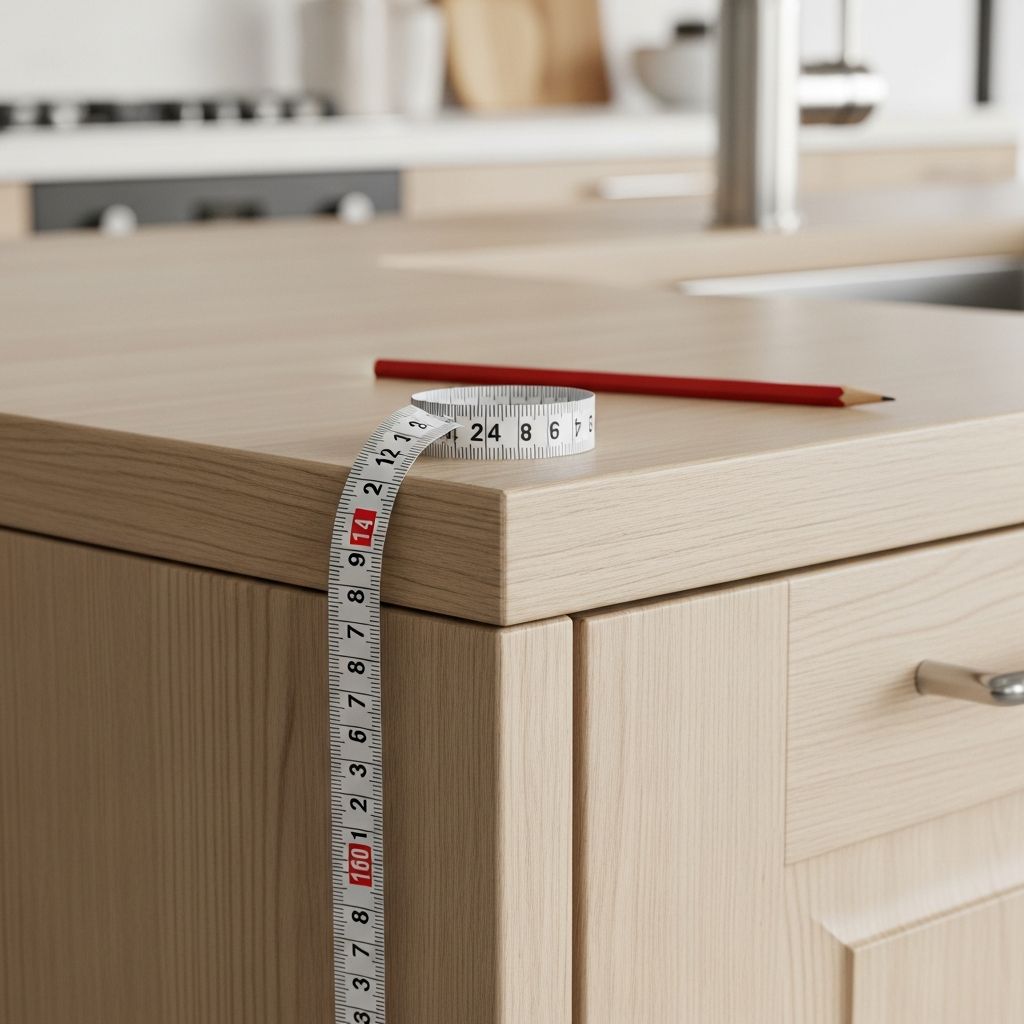
Determining the square footage of cabinets is essential for homeowners planning kitchen remodels, bathroom updates, or custom storage solutions. This measurement helps estimate material costs, order replacement doors or panels accurately, and ensure seamless installations. By multiplying width and height dimensions in inches and dividing by 144, you convert area into square feet—a standard used by manufacturers and suppliers.
Essential Tools for Accurate Cabinet Measurements
Before diving into measurements, assemble the right equipment to guarantee precision. A reliable tape measure that locks in place is non-negotiable, as flexible ones can lead to errors. Pair it with a notepad or digital app for recording data, graph paper for sketching layouts, and a laser measurer for hard-to-reach spots. A level checks for wall irregularities, while a smartphone captures photos with taped-on notes for reference.
- Tape measure (25-30 ft): Core tool for linear dimensions.
- Laser distance measurer: Ideal for quick, accurate long spans.
- Graph paper and pencil: For scaled floor plans.
- Level and plumb line: Detects uneven surfaces.
- Camera: Documents spots with measurements labeled.
Using inches exclusively simplifies calculations, as cabinets are sized this way industry-wide.
Step-by-Step Process to Measure Kitchen Layouts
Start with a bird’s-eye view of the space. Sketch a rough floor plan on graph paper, noting walls, doors, and windows. Label walls sequentially, beginning from a corner and moving clockwise. This organizes data for square footage computations later.
Horizontal Dimensions: Wall Lengths
Measure each wall’s length at counter height (about 36 inches up) from corner to corner, bypassing obstacles like windows temporarily. Record three heights per wall—floor level, mid-wall, and top—to account for bows or settling. Use the shortest figure as your baseline for conservative planning.
For example, a 10-foot wall might measure 120 inches at the bottom, 119.5 midway, and 121 at the top; note all and plan around 119.5 inches.
Vertical Dimensions: Heights and Clearances
Ceiling height varies, so measure in three spots per wall. Standard base cabinets reach 34.5 inches, wall cabinets 30-42 inches, leaving room for countertops and uppers. Note soffits, beams, or sloped ceilings that limit upper cabinet placement.
Mapping Obstacles and Fixtures
Precisely locate windows, doors, vents, and pipes by measuring from reference corners. For a window, record distances from left/right edges to walls and its height from floor/counter. Appliances like refrigerators need full dimensions including handles—often 36 inches wide by 70 inches tall.
| Fixture Type | Typical Measurements (inches) | Notes |
|---|---|---|
| Standard Refrigerator | Width: 30-36, Height: 65-70, Depth: 30-34 | Include handle protrusion |
| Range Hood | Width: 30-36, Height: 24-30 | Measure vent clearance |
| Window | Varies | From sill to cabinet base |
| Sink Base | Width: 30-36 | Note plumbing offsets |
Measuring Individual Cabinets for Square Footage
Whether replacing doors or full units, measure each cabinet separately. For existing setups, open doors to assess internal frames versus exterior faces.
Base Cabinet Sizing
Base cabinets sit on the floor, typically 24 inches deep and 34.5 inches high. Measure width across the front face, height from toe-kick top to countertop notch, and depth from back wall to front edge. Toe-kicks add 4-6 inches below.
Upper and Tall Cabinet Dimensions
Wall cabinets are shallower (12 inches) and heights range 30-42 inches. Tall cabinets for pantries hit 84-96 inches. Always measure both sides for depth/width, as settling can skew uniformity.
- Width: Front edge, side-to-side.
- Height: Top to bottom, excluding trim.
- Depth: Back to front, noting protrusions.
Computing Square Footage: The Formula Explained
Square footage targets the visible face area, crucial for door pricing or resurfacing. Formula: (Width in inches × Height in inches) ÷ 144 = Square Feet.
Example Calculation: A base cabinet door 18 inches wide by 30 inches tall: 18 × 30 = 540; 540 ÷ 144 = 3.75 sq ft. Round to two decimals for quotes.
For multi-door cabinets, sum individual faces. Exclude interiors unless specified. Digital calculators from suppliers automate this, but manual verification prevents errors.
| Cabinet Type | Standard Width Range (in) | Standard Height (in) | Example Sq Ft (per door) |
|---|---|---|---|
| Base | 9-42 | 34.5 | 3.2 (18×34.5) |
| Wall | 12-36 | 30 | 2.5 (15×30) |
| Tall | 18-36 | 84 | 10.5 (18×84) |
A full kitchen run of 20 linear feet with uppers and bases might total 150-200 sq ft, varying by layout.
Advanced Tips for Out-of-Square Walls and Custom Fits
Older homes often have uneven walls; use the 3-4-5 rule for corners: Mark 3 ft on one wall, 4 ft on adjacent, diagonal should be 5 ft if square. Scribe cabinets to fit bows. Allow 1-2 inches clearance for doors/drawers. For islands, measure diagonals to confirm squareness.
Pro tip: Measure twice, cut once—photograph everything with dimensions taped in place.
Common Mistakes and How to Avoid Them
Avoid pitfalls like forgetting appliance handles, using feet instead of inches, or ignoring reveals (gaps in inset doors). Always measure existing cabinets externally and internally for replacements. Double-check totals before ordering to dodge costly redo’s.
- Forget rounding: Use two decimals.
- Overlook toe-kicks: They affect base heights.
- Assume perfection: Note all variances.
Applying Measurements to Pricing and Ordering
Suppliers price doors per sq ft (e.g., $5-15 depending on material). Total your faces, add 10% waste, multiply by rate. For full cabinets, linear footage pairs with sq ft for quotes. Submit sketches with measurements for custom fab.
Frequently Asked Questions
Why measure cabinets in square footage?
Square footage determines face area for doors, panels, and pricing, ensuring exact material needs without excess.
Do I include cabinet sides in square footage?
Typically no—focus on front faces for doors. Sides are priced separately if exposed.
How accurate must measurements be?
Within 1/8 inch; variances cause fit issues. Use smallest dimensions for safety.
What’s the standard depth for base cabinets?
24 inches, but confirm space from wall to front edge.
Should I measure for appliances too?
Yes, full dimensions including protrusions to plan clearances.
Final Thoughts on Precision Planning
Mastering cabinet square footage calculations empowers confident renovations. Combine detailed measurements, sketches, and formulas for pro-level results, saving time and money.
References
- How To Measure Kitchen Cabinets Perfectly in 7 Steps — Kitchen Cabinet Kings. 2023. https://kitchencabinetkings.com/guides/how-to-measure-kitchen-cabinets
- Calculating Square Footage FAQ — Decore.com. 2024. https://www.decore.com/learn/pricing-learn/calculating-square-footage-faq
- How to Measure Kitchen Cabinets Like a Pro — iCabinetryDirect. 2024. https://icabinetrydirect.com/how-to-measure-kitchen-cabinets-like-a-pro-step-by-step-guide/
- How to Measure Your Space for Cabinets — Cloud9 Cabinetry. 2023. https://cloud9cabinetry.com/how-to-measure-for-cabinets-ready-to-install/
- Measure Up: How to Measure a Room for Cabinets — Aristokraft. 2024. https://www.aristokraft.com/get-started/plan-your-project/measure-up
- Measuring Your Space Guide — Woodmark Cabinetry. 2022. https://woodmarkcabinetry.com/content/dam/sites/woodmark-site/documents/catalogs-guides-and-planning-documents/AW_Complete%20Kitchen%20Measure%20Guide_Hi-Res.pdf.coredownload.pdf
Similar Articles





Read full bio of medha deb