Calm the Chaos: A Fresh Guide to Organizing Your Kitchen Cabinets
Transform cluttered cupboards into a calm, efficient cooking zone.
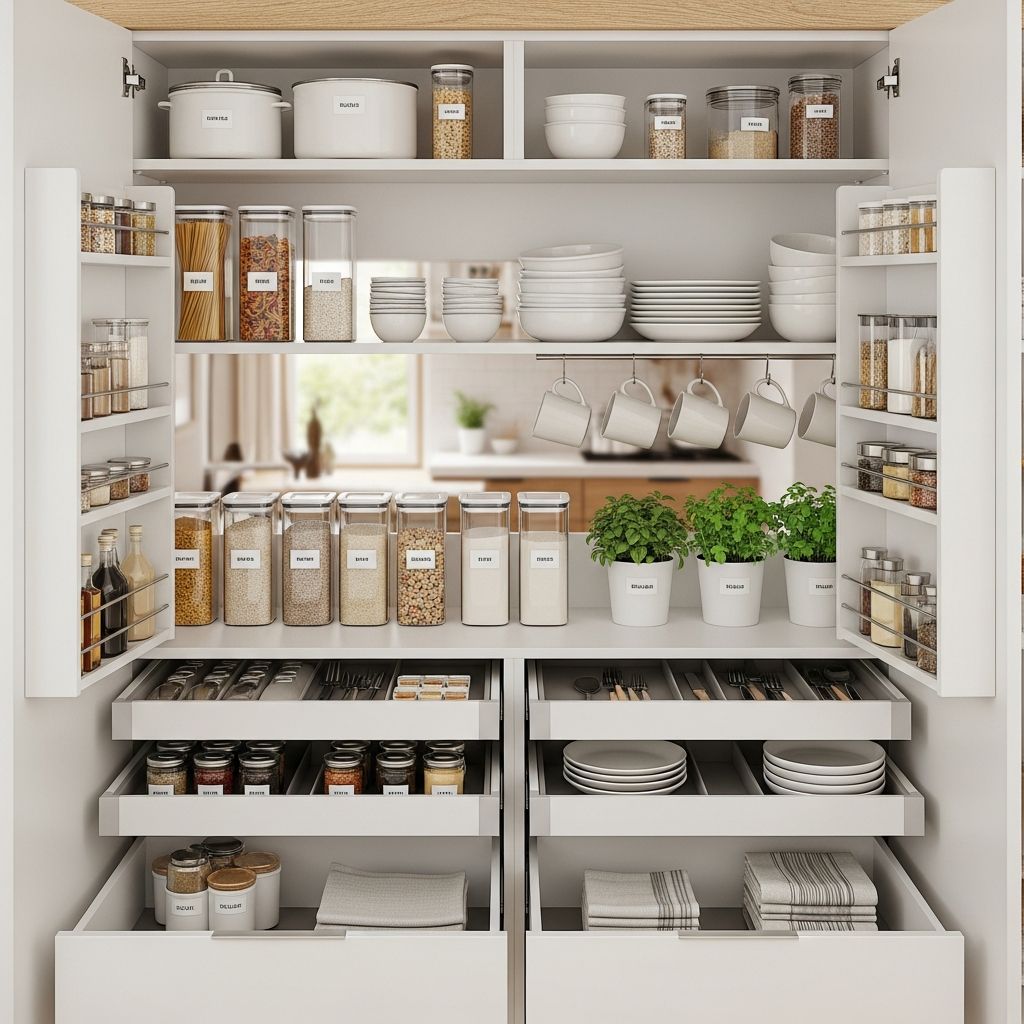
Organized kitchen cabinets do more than look pretty; they cut stress, save time, and make everyday cooking easier. This guide walks you through rethinking your cabinets from the inside out, with practical steps, layout strategies, and storage ideas you can adapt to any size kitchen.
Rethink Your Cabinets Like a Mini Store
Instead of seeing cabinets as random boxes on the wall, think of them as departments in a small, well-run store. Each door should open to a clear category of items that supports one main task, such as prepping, cooking, baking, or serving.
- Group items by purpose first (baking, beverages, lunch prep) rather than by where they happen to fit.
- Keep the most-used “departments” in the easiest-to-reach cabinets between shoulder and hip height.
- Reserve high and low spaces for lighter or rarely used items like party platters or holiday dishes.
Step One: Empty, Edit, and Clean
A successful cabinet overhaul starts by pulling everything out. Seeing all your dishes, gadgets, and food at once reveals duplicates, forgotten items, and expired foods that quietly steal space.
- Empty each cabinet completely. Work one zone at a time so your entire kitchen is not upside down at once.
- Sort into four piles: keep, relocate, donate/sell, and discard/recycle.
- Check dates. Toss expired food, stale snacks, and spices that have lost their scent.
- Wipe every surface. Clean shelves, hinges, and handles before anything goes back.
Use this step to be honest about what you truly use. Single-purpose gadgets, chipped dishes, and mystery containers rarely earn prime cabinet space.
Design Your Cabinet Zones
Once you know what is staying, design simple “zones” based on the way you actually cook and move through the kitchen. The goal is to minimize steps and reach for most tasks.
Core Zones to Consider
- Prep zone: Cutting boards, mixing bowls, knives, colanders, and measuring tools near your main counter workspace.
- Cooking zone: Pots, pans, lids, oils, salt, pepper, and frequently used spices near the stove.
- Baking zone: Mixing bowls, baking pans, cooling racks, rolling pin, and core baking ingredients near an open counter.
- Coffee or beverage zone: Mugs, teas, coffee, filters, and sweeteners close to the coffee maker or kettle.
- Snack and lunch zone: Containers, wraps, snack bins, and lunch boxes near the fridge or a clear counter area.
Keep each zone as compact as possible. The fewer steps between reaching for a tool and using it, the more natural and sustainable your system will feel.
Match Items to the Right Height
Storing items at the right height is one of the fastest ways to make cabinets feel more user-friendly. Instead of hiding everyday dishes on the top shelf, prioritize eye-level spots for what you touch daily.
| Cabinet Level | Best For | Examples |
|---|---|---|
| Eye level (most accessible) | Daily essentials | Everyday plates, bowls, glasses, mugs, basic spices |
| Mid-level (waist to chest) | Frequently used but heavier items | Mixing bowls, serving bowls, baking dishes, storage containers |
| Lower cabinets | Heavy or bulky items | Pots, pans, Dutch ovens, small appliances |
| Uppermost shelves | Rarely used or seasonal items | Holiday platters, specialty glassware, backup paper goods |
Think about who needs to reach what. If children help set the table or grab snacks, dedicate a low shelf or shallow basket where they can safely access what they need.
Use Vertical Space and Cabinet Depth Wisely
Most cabinets have wasted air space between shelves and under-stacked items. Simple organizers help capture this unused volume without requiring a remodel.
- Add shelf risers. Use them to double-stack dishes, mugs, and pantry goods without unstable piles.
- Stand things upright. Store cutting boards, baking sheets, and lids vertically using dividers instead of stacking them in awkward piles.
- Harness cabinet doors. Mount slim racks or hooks inside doors for wraps, spices, measuring spoons, or pot holders.
- Use pull-out trays or sliding baskets. These bring the back of deep cabinets forward so items don’t get lost.
When deciding where to use extra organizers, target the cabinets you fight with the most—typically under-sink spaces, corner cabinets, and the one overloaded with baking pans.
Smart Solutions for Pots, Pans, and Lids
Cookware can quickly become a clanging avalanche. To tame it, store pots and pans in a way that protects them and lets you grab what you need in one motion.
- Nest by size, limit the stack. Stack only two or three pieces together so you are not unbuilding a tower to reach the pan you need.
- Separate lids from pots. Use a rack or vertical organizer for lids so each one has a visible slot.
- Add a pull-out tray. A sliding shelf or wire basket turns a deep cabinet into an easy-access drawer.
- Use a corner wisely. Lazy Susans or corner pull-outs make odd corner spaces much more practical.
If you rarely use specialty pans, relocate them to a higher shelf or a storage area outside the main cooking zone to keep prime space open.
Streamlined Food Storage Containers
Food containers are infamous for missing lids, stained bottoms, and overflowing drawers. A few rules can turn this chaos into an orderly, easy-to-maintain system.
- Commit to one or two shapes. Choose mainly square or rectangular containers so they stack neatly and use less space than a jumble of shapes.
- Store lids and bases separately but together. Keep lids in a divided bin and nest bases by size, all within the same cabinet or drawer.
- Set a boundary. Limit containers to a single drawer or shelf. When it is full, that is the cue to declutter extras.
- Keep glass and plastic separate. This prevents unstable stacks and makes it easier to find what you want.
Always pair containers with their lids before putting them away. If a lid or base has no match, recycle or donate instead of saving it “just in case.”
Tidy Upper Cabinets for Dishes and Glassware
Upper cabinets work best for lighter items like dishes and glasses, but small daily decisions about where things live make a big difference in how your kitchen feels.
- Keep daily dishes together. Store breakfast and dinner plates, bowls, and everyday glasses in one or two adjacent cabinets.
- Separate special-occasion pieces. Place delicate glassware and serving platters on higher shelves so they are safe yet accessible when needed.
- Use risers for mugs and bowls. Layer them without creating precarious stacks.
- Align with the dishwasher. Whenever possible, keep your main dish cabinets close to the dishwasher to speed up unloading.
Consider open shelves or glass-front cabinets for the items you use and love most. This encourages you to maintain neat stacks and gives your kitchen a lighter, more curated look.
Under-Sink Order Without the Drips
The area under the sink is easy to ignore, but when organized well, it becomes valuable storage for cleaning supplies and backups. Moisture, pipes, and awkward shapes make planning important here.
- Protect the base. Add a waterproof mat or liner to catch small leaks and make cleaning easier.
- Use tiered organizers. Short stacking drawers, caddies, or risers let you store more without losing track of what is behind the pipes.
- Hang bottles. A simple tension rod can hold spray bottles by their triggers, freeing shelf space.
- Limit categories. Keep only one or two of each type of cleaner and move extras to a separate storage area.
A labeled caddy for everyday cleaning supplies makes it easy to grab what you need for quick wipe-downs and then slide it back into the cabinet.
Creating a Kid-Friendly Cabinet
If children share the kitchen, a dedicated cabinet for them builds independence and reduces interruptions while you cook. It also keeps fragile items safely out of reach.
- Reserve a low cabinet or drawer. Stock it with kid-safe plates, bowls, cups, and utensils.
- Add a snack bin. Use a small, easy-to-pull basket for approved snacks or lunch items.
- Label with pictures and words. Simple labels help young children learn where items belong.
- Skip heavy doors. If possible, choose a drawer or lighter door so kids can open and close it independently.
When children know exactly where their items live, they can help set the table, put away clean dishes, and build lasting organizing habits.
Use Labels and Clear Containers for Visual Calm
Labels serve as quiet instructions to everyone who uses the kitchen, reducing guesswork and preventing clutter from creeping back in. Clear containers keep contents visible while giving cabinets a more uniform look.
- Label shelves and bins, not each item. Simple tags like “Grains,” “Snacks,” or “Baking” are enough.
- Choose see-through bins. Transparent containers prevent forgotten food and make inventory checks quick.
- Use removable labels. Chalk markers or clip-on tags allow easy changes as your habits evolve.
Visual clarity reduces decision fatigue. When everyone can see where items belong, it takes less effort to put things away correctly.
Keep It Organized: Simple Maintenance Habits
An organized kitchen is not a one-time project; it is a set of small habits that keep clutter from building back up. The key is to design systems so simple that even on busy days, they still work.
- Practice a one-in, one-out rule. When you buy a new mug, pan, or container set, let an old one go.
- Do a five-minute reset each night. Return stray items to their zones and close cabinet doors with intention.
- Schedule seasonal mini-audits. Every few months, quickly scan for rarely used items you can donate.
- Adjust zones as life changes. New hobbies, kids, or appliances might require moving items to keep your layout efficient.
A few consistent habits prevent the need for another overwhelming, start-from-scratch overhaul later.
Frequently Asked Questions About Kitchen Cabinet Organization
How do I start organizing a very cluttered kitchen?
Start with one cabinet or drawer, not the whole room. Empty it completely, sort items into keep, donate, and discard piles, and only return what you use and love, placing it in a clearly defined zone. Repeat cabinet by cabinet so the task feels manageable.
Is it better to store dishes near the sink or the stove?
In most kitchens, dishes belong closer to the dishwasher or sink to make unloading faster. If your layout is unusual, prioritize the path you use most often—for example, from dishwasher to table—and place your main dish cabinet along that path.
Should I decant pantry items into matching containers?
Decanting can look beautiful and make contents easier to see, but it is not mandatory. If you cook often and go through staples quickly, clear containers can simplify storage; if refilling feels like a chore, use bins to group original packages instead.
How do I organize a small kitchen with very few cabinets?
In a small kitchen, use every dimension: add wall shelves or rails, mount hooks under cabinets, and use the backs of doors for storage. Be extremely selective, keeping only what you truly need and favoring multi-purpose tools over single-use gadgets.
How often should I reorganize my kitchen cabinets?
Light maintenance every week and a quick review every few months is usually enough. If your cooking habits or household size changes, revisit your zones and adjust them so that your cabinets match how you actually live now.
When cabinets are arranged around real-life routines instead of random habits, cooking becomes smoother, cleanup faster, and your kitchen a calmer place to gather. Start small, stay consistent, and let your cabinets quietly support the way you want your home to feel.
Similar Articles



Read full bio of medha deb