Can Alexa Be Hacked? Security Risks & Protection
Discover Alexa security vulnerabilities, hacking methods, and practical protection strategies.
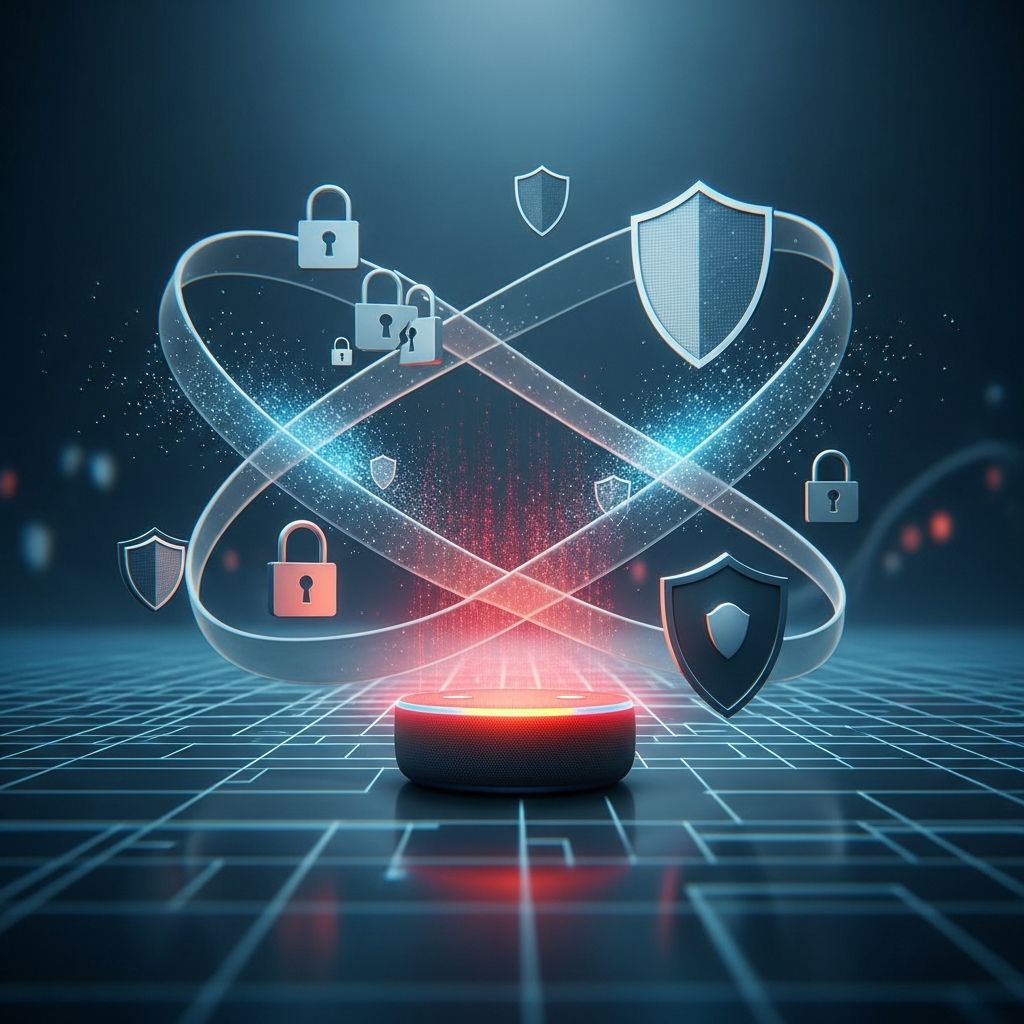
Can Alexa Be Hacked? Understanding Smart Speaker Vulnerabilities
Amazon’s Alexa smart speakers have become integral to millions of households, offering convenience through voice commands and smart home integration. However, as with any connected device, security concerns are legitimate. The question “Can Alexa be hacked?” has become increasingly relevant as researchers continue to discover new vulnerabilities. Understanding these risks and implementing proper security measures is essential for protecting your privacy and home.
How Alexa Devices Are Vulnerable to Attacks
Amazon Echo devices, despite their sophisticated design, face several security challenges that could allow attackers to gain unauthorized access. The primary vulnerability stems from the always-listening nature of these devices and their connection to numerous smart home systems and personal accounts. When an attacker gains access to an Alexa device, they can potentially control connected smart home devices, make unauthorized purchases, access personal information, and eavesdrop on conversations.
The “Alexa Versus Alexa” Attack
One of the most innovative hacking methods discovered involves what researchers call the “Alexa versus Alexa” (AvA) attack. In this sophisticated exploit, researchers from Royal Holloway University in London and the University of Catania in Italy identified a method where attackers can make an Echo device issue commands to itself. Rather than trying to speak commands directly to the device, the attacker takes control of the Echo’s speaker and commands it to say malicious instructions out loud, which the device then interprets and executes.
This attack works because Echo devices are designed to interpret voice commands accurately, even when they originate from the device’s own speaker. The attack bypasses many of the device’s built-in security features and can accomplish several malicious tasks:
- Unauthorized purchases from Amazon using the account holder’s credentials
- Turning smart home devices on or off, including lights, locks, and thermostats
- Making phone calls to attacker-controlled numbers
- Extracting personal information through compromised skills
- Recording and analyzing user behavior patterns
Even when Echo devices request verbal confirmation for sensitive commands, researchers discovered this safeguard could be trivially bypassed by making the device say “yes” approximately six seconds after issuing the command.
The Full Volume Vulnerability
By default, Amazon Echo devices reduce their volume when they detect their wake word, which typically prevents longer commands from being executed. However, researchers discovered a vulnerability called the “Full Volume Vulnerability” that allows attackers to bypass this limitation. Using this exploit, an attacker could successfully deliver extended commands such as “Set the microwave oven at 200 degrees Celsius,” which would normally be too long to register before the device reduces volume.
Laser Pointer Attacks on Smart Speakers
Perhaps one of the most unusual vulnerabilities discovered involves using laser pointers to hack smart speakers. Researchers from the University of Michigan and the University of Electro-Communications in Tokyo found that Amazon Echo devices, along with Google Home and other smart speakers, can be compromised by shining a laser pointer directly at their microphones.
This vulnerability, dubbed “Light Commands,” allows attackers to inject voice commands into smart speakers from considerable distances. Researchers demonstrated the attack working effectively over a 110-meter hallway, through glass windows, and using telephoto camera lenses and tripods for precise targeting. The implications of this discovery are significant because attackers could potentially:
- Unlock smart locks and garage doors from outside a home
- Unlock and start vehicles connected to the smart home system
- Make unauthorized purchases through Amazon
- Make phone calls and send messages using Google Assistant
- Control various connected IoT devices
Fortunately, many of the most serious applications of this attack, such as unlocking doors, require the attacker to also know the victim’s personal identification number (PIN). However, researchers noted that PINs could potentially be brute-forced, though this would require significant time and effort.
Malicious Skills and Man-in-the-Middle Attacks
Amazon Echo devices operate through a skills ecosystem, where third-party developers create applications similar to smartphone apps. This creates a potential security vulnerability because not all skills undergo the same rigorous security scrutiny as Amazon’s core Alexa platform.
Researchers have demonstrated how attackers can create malicious skills that essentially perform man-in-the-middle attacks. These rogue skills can “pretend not to be running” while actually intercepting all voice commands directed to Alexa. Once in control, the attacker can return false information to users. For example, if a user asks Alexa to “calculate 10 plus 11,” the malicious skill could return the false answer “77.”
This type of attack is particularly insidious because users have little way of detecting that their commands are being intercepted and manipulated. The skill operates invisibly while maintaining the appearance of normal Alexa functionality.
Common Attack Prerequisites
While these vulnerabilities are concerning, it’s important to understand that successfully executing most attacks requires certain conditions to be met. For an attack to be successful, the Echo device typically needs to be prepared in advance through one of these methods:
- The device must have downloaded and executed a malicious skill
- An attacker must be in close physical proximity to the device
- The device must be paired with an attacker’s Bluetooth-enabled device
- The device must be tuned to a malicious internet radio station
The proximity requirement for many attacks means that random hackers on the internet cannot typically compromise your device without physical access or prior installation of malicious software.
Data Privacy and Access Concerns
Beyond hacking vulnerabilities, privacy concerns have surfaced regarding how Amazon handles data collected through Alexa devices. Researchers have documented several incidents where personal information was at risk or mishandled. In August 2020, security researchers from Check Point identified a flaw that could have allowed unauthorized access to personal information and conversation history, though Amazon promptly fixed the issue. Additionally, the company has faced scrutiny over employee access to voice recordings, with thousands of employees having access to both voice and text transcripts of Alexa interactions for training and quality assurance purposes.
Essential Security Measures for Alexa Protection
Enable Voice Matching
One of the most effective protection measures available is enabling Alexa’s voice match system. This feature ensures that your Echo device only responds to recognized voices, making it significantly more difficult for attackers to issue commands even if they gain physical proximity to the device. Voice matching essentially requires the attacker to impersonate your voice, adding an additional layer of security.
Set Up Purchase Protections
Enable PIN protection for purchases through your Alexa device. While PINs can theoretically be brute-forced, they significantly raise the barrier to entry for attackers attempting unauthorized purchases. Many attacks specifically target the purchase vulnerability, so adding this protection is crucial.
Manage Connected Devices
Review which smart home devices are connected to your Alexa ecosystem and consider whether all connections are necessary. The more devices connected, the greater the potential impact if Alexa is compromised. Additionally, ensure that important devices like smart locks have their own security measures independent of Alexa control.
Be Cautious with Skills
Only download skills from trusted developers and regularly review which skills you have installed. Remove any skills you no longer use, as unused skills can present unnecessary security risks. Before installing new skills, check reviews and verify the developer’s credentials.
Secure Your WiFi Network
Ensure that your home WiFi network is protected with a strong password and uses current encryption standards. Your Alexa device is only as secure as your network, so network security is foundational to overall device security.
Physical Security Measures
Consider physically blocking your device’s microphones or positioning it away from windows to protect against laser-based attacks. While this may seem extreme, it represents the most straightforward way to prevent light-injection attacks.
Update Your Device Regularly
Ensure your Echo device receives regular security updates. Amazon patches vulnerabilities as they are discovered, so keeping your device current is essential for protection against known exploits.
What Amazon Is Doing to Improve Security
Amazon has taken several steps to address discovered vulnerabilities. The company has patched specific attack vectors, such as the malicious internet radio station exploitation method mentioned in the AvA research. Security researchers have suggested that Amazon could further improve protection by implementing multi-microphone verification, where the device only acts on commands heard by at least two microphones, or by adding light-filtering components to protect microphone sensors.
Should You Be Concerned?
While these vulnerabilities are real, it’s important to contextualize the actual risk. Most documented hacking methods require either physical proximity to your device, prior installation of malicious software, or specific knowledge of your account credentials. Random internet hackers cannot typically compromise your Alexa device remotely. However, individuals with physical access to your device or those specifically targeting you could pose a real threat.
The best approach is to implement reasonable security measures while understanding that perfect security is impossible. By enabling available protections, staying informed about vulnerabilities, and maintaining healthy skepticism about new skills and features, you can significantly reduce your risk profile.
Frequently Asked Questions
Q: Can someone hack my Alexa remotely without touching my device?
A: Most documented attacks require either physical proximity to your device or prior installation of malicious software. However, vulnerabilities in Amazon’s infrastructure could theoretically allow remote compromise, though this is less common than proximity-based attacks.
Q: What’s the most common way Alexa devices get hacked?
A: The most common attack vector involves malicious skills that users unknowingly install. These skills can intercept commands and return false information while remaining invisible to the user.
Q: Is it safe to use Alexa for making purchases?
A: Yes, but you should enable PIN protection for purchases. This significantly increases security by requiring a PIN for any transaction, preventing unauthorized purchases even if an attacker gains access to your device.
Q: Can Alexa record my conversations when not activated?
A: Alexa devices continuously listen for their wake word but should not record conversations before activation. However, concerns about false activations exist, and users can review and delete their voice history through Alexa settings.
Q: What should I do if I suspect my Alexa has been hacked?
A: Change your Amazon account password immediately, review connected devices and installed skills, enable voice matching if not already active, check your purchase history for unauthorized transactions, and consider factory resetting your device if you cannot identify the issue.
Q: Are some Echo devices more secure than others?
A: All Echo devices share the same core vulnerabilities and security features. Newer models may receive security patches faster and include updated hardware protections, but all devices are susceptible to the documented attack methods.
References
- “Alexa, hack yourself” – researchers describe new exploit that turns smart speakers against themselves — Bitdefender. 2024. https://www.bitdefender.com/en-us/blog/hotforsecurity/alexa-hack-yourself-researchers-describe-new-exploit-that-turns-smart-speakers-against-themselves
- Amazon and Google smart speakers hijacked by laser pointer — GearBrain. 2024. https://www.gearbrain.com/smart-speaker-light-command-vulnerability-2641223032.html
- Security flaw affecting Amazon Echo devices warning — Trend Micro. 2024. https://helpcenter.trendmicro.com/en-us/article/tmka-10969
- Security Analysis of the Amazon Echo Dot — International Association for Computer Information Systems (IACIS). 2021. https://iacis.org/iis/2021/4_iis_2021_224-237.pdf
- Amazon Echo Studio | Privacy & security guide — Mozilla Foundation. 2024. https://www.mozillafoundation.org/en/privacynotincluded/amazon-echo-studio/
Similar Articles






Read full bio of medha deb