Why Does My Car Start on the Second Try? 6 Reasons
Discover why your car needs a second attempt to start and learn how to fix it.
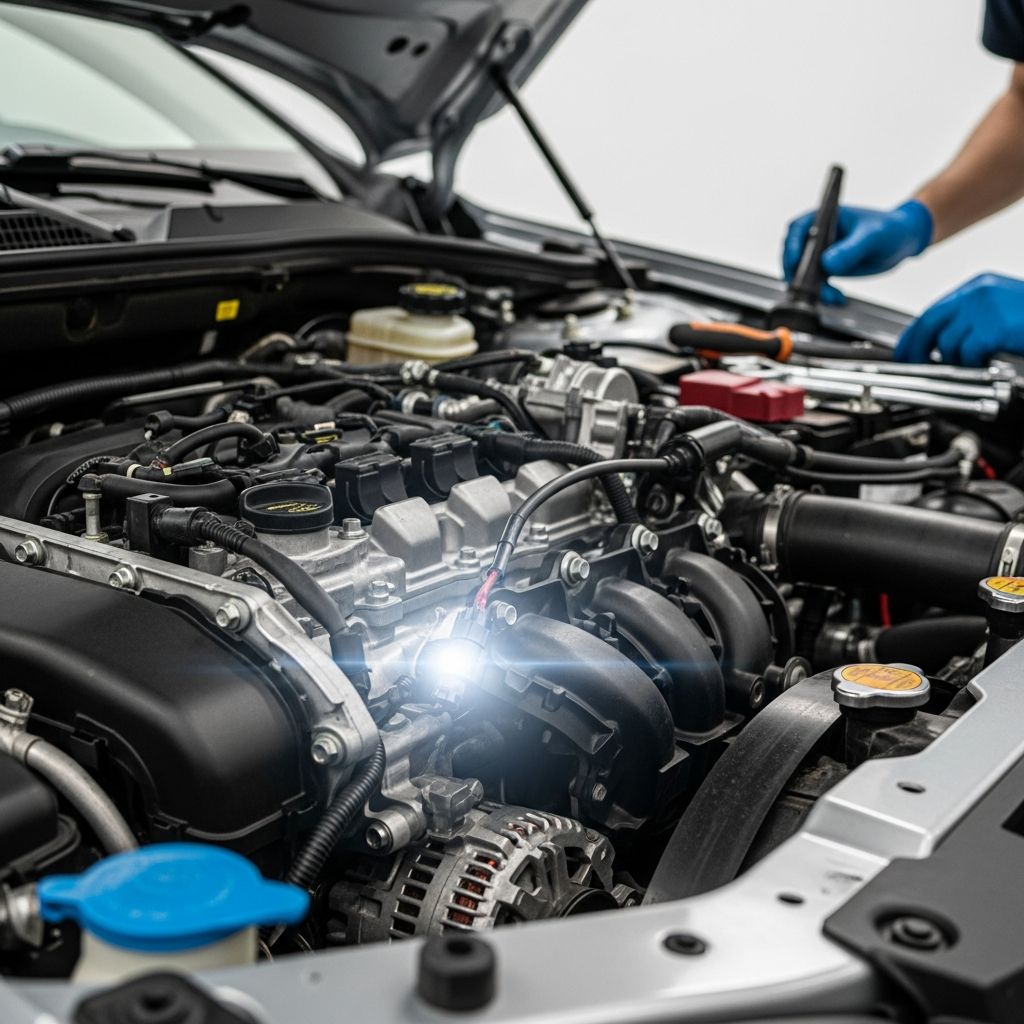
If your vehicle consistently requires more than one attempt to start, you’re experiencing a common automotive frustration. A car that hesitates to turn over on the first try can indicate underlying mechanical or electrical issues that deserve attention. While occasional hard starts might seem minor, they can signal problems that worsen over time if left unaddressed. Understanding the root causes of delayed starting helps you identify whether the issue is serious or simply a maintenance reminder.
This comprehensive guide explores six primary reasons why your car might require a second try to start and provides practical solutions to restore reliable engine ignition.
Understanding Engine Starting Problems
Modern vehicles rely on a complex interaction between the battery, starter motor, fuel system, and ignition components to start successfully. When any component in this chain underperforms, the engine may not turn over immediately. Hard starting problems can range from minor inconveniences to serious mechanical failures requiring professional repair. Early diagnosis prevents more costly repairs down the road.
Reason 1: Weak or Dying Battery
A weak battery ranks among the most common culprits behind delayed car starting. Your vehicle’s battery supplies electrical power to the starter motor, which cranks the engine. When battery voltage drops below optimal levels, the starter may struggle to turn the engine over efficiently.
Signs of battery weakness include:
- Dimmed interior lights when attempting to start
- Slow cranking sounds
- Clicking noises without engine turnover
- Dashboard warning lights flickering
Batteries typically last three to five years depending on climate and driving habits. Cold weather accelerates battery decline since chemical reactions inside the battery slow in low temperatures. If your car starts more reliably after sitting in warm sunlight or after the engine warms up slightly, battery weakness is likely responsible.
Solution: Test your battery voltage using a multimeter. A healthy battery maintains approximately 12.6 volts at rest. Have your battery tested at an auto parts store or by a mechanic. If the battery is more than three years old or tests below 12 volts, replacement is warranted.
Reason 2: Faulty Starter Motor
The starter motor converts electrical energy from the battery into mechanical rotation to crank the engine. A failing starter may struggle to engage immediately, requiring a second attempt before successfully turning the engine over.
Symptoms of starter problems include:
- Grinding noises when starting
- Whirring sounds without engine engagement
- Starter remains engaged after engine starts
- Intermittent starting failures
Starter motors contain internal electrical brushes and solenoids that wear over time. Additionally, excessive heat exposure or electrical overload can damage starter components prematurely. The starter may function partially on the first attempt but require a cooling period before engaging properly on the second try.
Solution: Have a technician inspect the starter motor if you experience grinding noises or the engine refuses to turn over despite a responsive battery. Starter replacement typically costs between $300 and $800 depending on vehicle make and model.
Reason 3: Defective Alternator
While the battery provides starting power, the alternator recharges the battery while the engine runs. A failing alternator cannot adequately replenish battery charge, leaving the battery depleted when you attempt to start the car again.
Warning signs of alternator failure include:
- Dimmed or flickering headlights during acceleration
- Dashboard battery warning light illumination
- Whining noise from the engine bay
- Burning smell near the alternator
- Electrical system malfunctions
Your engine charging system must maintain battery voltage between 13.5 and 14.5 volts while running. If the alternator fails to meet this requirement, the battery gradually loses charge. This explains why your car might start fine after charging overnight but struggles the next day after driving.
Solution: Have an auto technician perform a charging system test. A multimeter reading of less than 13.5 volts at idle indicates alternator problems. Alternator replacement costs between $400 and $900 for most vehicles.
Reason 4: Dirty Fuel Injectors
Fuel injectors atomize gasoline into a fine mist inside the combustion chamber for proper ignition. Dirty or clogged injectors prevent adequate fuel delivery, making the engine difficult to start. The engine may turn over several times before enough fuel reaches the cylinders for combustion.
Indicators of fuel injector problems include:
- Difficulty starting, especially when cold
- Rough idling after starting
- Reduced fuel economy
- Engine hesitation during acceleration
- Check engine light activation
Over time, fuel deposits accumulate inside injectors, restricting flow. Modern fuels contain detergents to prevent buildup, but older vehicles or those using lower-quality fuel experience more injector fouling. The problem worsens in cold weather when fuel flows less freely.
Solution: Use fuel injector cleaning products designed for your fuel system. Alternatively, have a technician perform professional fuel injector cleaning services costing $50 to $100 per injector. In severe cases, injector replacement may be necessary.
Reason 5: Failing Spark Plugs
Spark plugs ignite the compressed fuel-air mixture in each cylinder, initiating combustion. Worn or fouled spark plugs create weak sparks that may not reliably ignite fuel, causing extended cranking before successful starting.
Signs of spark plug deterioration include:
- Difficulty starting, especially in cold conditions
- Rough idle
- Reduced acceleration
- Visible carbon deposits on plugs
- Engine misfiring
Most spark plugs should be replaced every 30,000 to 100,000 miles depending on type. Platinum and iridium plugs last longer than copper varieties. Driving habits, fuel quality, and engine condition all influence spark plug longevity. Failed plugs may still fire intermittently, explaining why the engine starts on the second or third attempt after warming slightly.
Solution: Inspect spark plugs and replace if heavily fouled or worn. Spark plug replacement costs $8 to $15 per plug for most vehicles, making this an affordable maintenance item. Professional replacement labor typically ranges from $50 to $150.
Reason 6: Faulty Ignition Switch
The ignition switch controls electrical power to the starter and ignition system. A failing switch may provide inconsistent electrical contact, requiring the key turned a second time before the starter engages properly.
Symptoms of ignition switch problems include:
- Inconsistent starting behavior
- Engine stalling while driving
- Dashboard lights flickering intermittently
- Steering wheel locks while driving
- Key stuck in the ignition
Ignition switches contain internal contacts that wear from repeated use. Corrosion from moisture or excessive debris buildup can also cause poor electrical contact. This explains why starting problems appear intermittently rather than consistently—the switch functions until internal components shift slightly, then fails until jostled back into position.
Solution: Have a technician test the ignition switch using a multimeter to confirm continuity. A faulty switch requires replacement, costing $75 to $300 depending on vehicle complexity and whether the steering column must be partially disassembled.
Diagnostic Steps for Starting Problems
Before pursuing expensive repairs, follow these systematic troubleshooting steps:
- Note the exact symptoms: grinding noises, slow cranking, clicking sounds, or complete silence
- Observe environmental factors: does the problem worsen in cold weather or after the car sits overnight?
- Check for patterns: does the problem occur randomly or consistently?
- Inspect the battery and cable connections for corrosion or loose terminals
- Have the battery tested at an auto parts store
- Consult the check engine light codes using a diagnostic scanner
Systematic diagnosis prevents unnecessary repairs and identifies the actual problem more efficiently than random component replacement.
Preventive Maintenance for Reliable Starting
Regular maintenance prevents many starting issues:
- Replace the battery every three to five years before failure
- Inspect battery cable connections monthly for corrosion
- Change spark plugs according to manufacturer recommendations
- Use quality fuel and change fuel filters regularly
- Keep the engine well-serviced with proper oil changes
- Have the charging system tested during regular maintenance
Following your vehicle’s maintenance schedule documented in the owner’s manual prevents most starting problems before they develop.
Frequently Asked Questions
Q: Why does my car start fine when warm but struggles in cold weather?
A: Cold weather thickens engine oil, making it harder to crank. Additionally, battery chemical reactions slow in cold temperatures, reducing available starting power. Fuel also flows less freely. These combined factors make cold starts more challenging. If the problem significantly worsens in freezing temperatures, battery weakness is likely present.
Q: How much does it cost to repair hard starting problems?
A: Costs vary widely depending on the underlying cause. Battery replacement averages $100 to $200, spark plug replacement $50 to $150, fuel injector cleaning $50 to $100 per injector, alternator replacement $400 to $900, and starter replacement $300 to $800. Diagnostic testing typically costs $50 to $100. Most common issues resolve with affordable repairs under $300.
Q: Can jump-starting my car temporarily fix starting problems?
A: Jump-starting works temporarily if battery weakness causes the problem. However, if the underlying issue is an alternator failure, the battery depletes again shortly after driving. Similarly, a faulty starter or ignition switch won’t be corrected by jump-starting. Jump-starting buys time to reach a repair facility but doesn’t address root causes.
Q: Should I be concerned if my car requires a second attempt to start occasionally?
A: Occasional hard starts may indicate developing problems worth investigating. Consistent second-attempt starting definitely warrants diagnosis before the vehicle fails to start entirely. Early intervention prevents the frustration of complete starting failure and often results in less expensive repairs than delaying treatment.
Q: Can I test my battery at home to determine if it’s weak?
A: Yes. Purchase an inexpensive multimeter and set it to DC volts. Connect the red probe to the positive battery terminal and black probe to the negative terminal. A reading of 12.6 volts indicates a healthy battery at rest. Less than 12 volts suggests weakness. Most auto parts stores test batteries for free if you prefer professional confirmation.
Q: How can I prevent starting problems in the future?
A: Maintain your vehicle according to manufacturer recommendations, replace batteries every three to five years proactively, keep battery terminals clean and corrosion-free, use quality fuel, change spark plugs at recommended intervals, and have the charging system tested annually. Regular maintenance prevents most starting issues from developing.
References
- Battery Maintenance and Testing Guide — AAA (American Automobile Association). 2024. https://www.aaa.com/automotive/battery-care
- Engine Starting System Diagnosis — National Institute for Automotive Service Excellence (ASE). 2024. https://www.asecert.org
- Fuel Injector Maintenance and Service — Society of Automotive Engineers (SAE). 2024. https://www.sae.org
- Spark Plug Replacement Guide — Consumer Reports. 2024. https://www.consumerreports.org/cars
- Cold Weather Vehicle Maintenance — U.S. Department of Energy. 2024. https://www.fueleconomy.gov
Similar Articles






Read full bio of Sneha Tete