Car Won’t Start: Troubleshooting Tips and Solutions
Complete guide to diagnosing and fixing car starting problems with expert troubleshooting steps.
Few things are more frustrating than turning your car key and hearing nothing but silence or a clicking sound. A car that won’t start can derail your entire day, leaving you stranded and wondering what went wrong. The good news is that most car starting problems can be diagnosed and fixed without expensive trips to the mechanic. This comprehensive guide will walk you through the most common causes of starting issues and provide you with practical troubleshooting steps to get your vehicle running again.
Understanding Why Your Car Won’t Start
Before you panic, it’s important to understand that a car’s starting system involves several interconnected components working in harmony. When any one of these components fails or malfunctions, your entire vehicle comes to a halt. The most common culprits behind a no-start condition include a dead or weak battery, faulty starter motor, defective alternator, ignition switch problems, fuel system issues, and security system malfunctions. By systematically checking each component, you can pinpoint the exact cause and determine whether you need professional assistance or if it’s a problem you can solve yourself.
Step 1: Check the Battery First
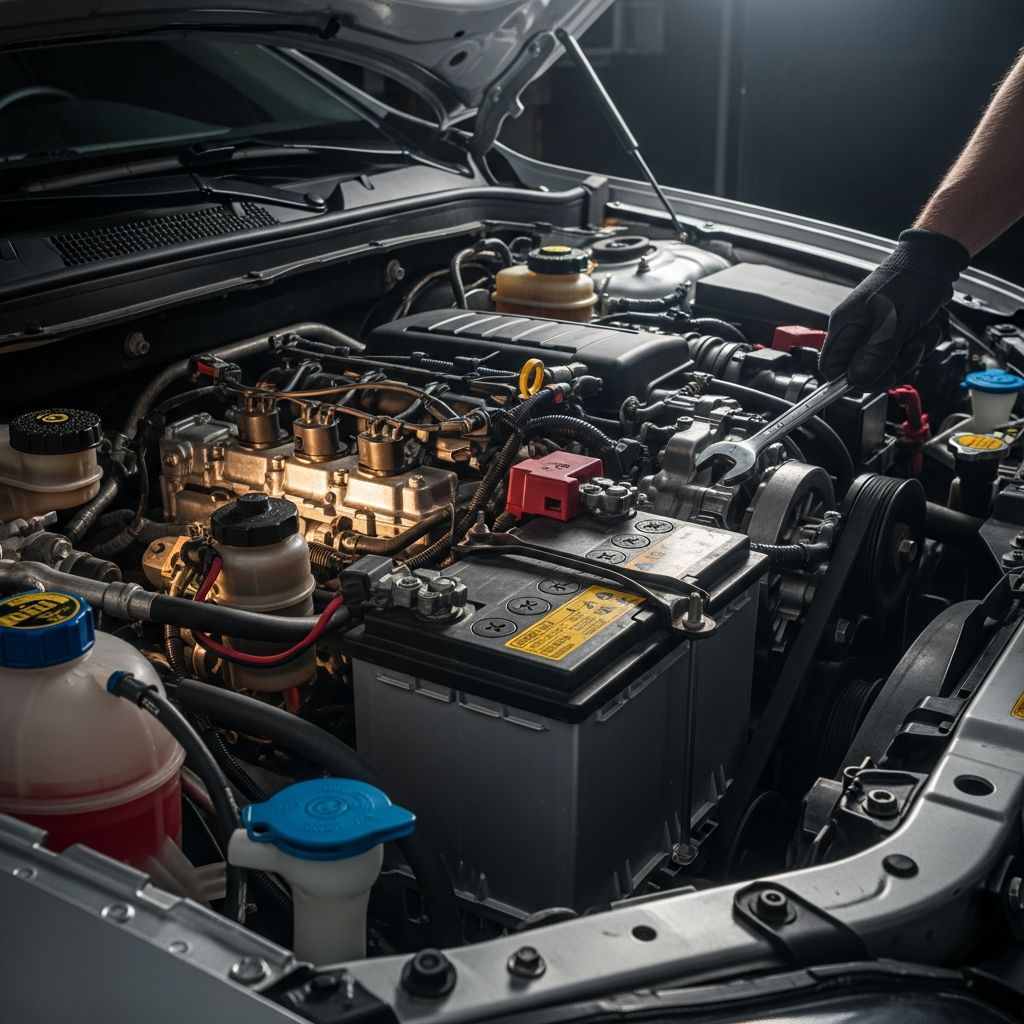
The battery is almost always the first component you should inspect when your car won’t start. A dead or weak battery is the most common reason vehicles fail to start, and fortunately, it’s often the easiest problem to solve. Batteries can lose their charge from leaving electrical systems running for extended periods, such as headlights, radio, or climate control. Additionally, old batteries naturally lose their ability to hold a charge over time.
Identifying Battery Problems
To determine if your battery is the issue, observe what happens when you turn the key:
– Complete silence: No sounds, no lights, no clicks—this strongly suggests a completely dead battery.- Dim dashboard lights: Lights that appear very faint or flicker indicate low battery power.- Clicking sounds: Rapid clicking when you turn the key typically points to a weak battery unable to engage the starter motor properly.- Engine cranks slowly: If the engine turns over but sounds sluggish, battery weakness is likely the cause.
Cleaning Battery Terminals
Before assuming your battery needs replacement, inspect the battery terminals for corrosion. Corroded or loose connections can prevent the battery from delivering adequate power to the starter motor. White, blue, or green crusty deposits on the terminals indicate corrosion that disrupts electrical flow. To clean them, mix baking soda with water to create a cleaning solution, and use a wire brush to scrub away corrosion. Ensure both the positive and negative cable connections are tight and make solid contact with the battery terminals. This simple maintenance task can often restore starting functionality without requiring battery replacement.
Step 2: Verify the Fuel Supply
While it seems obvious, one of the most frequently overlooked reasons a car won’t start is simply running out of fuel. Before you investigate complex electrical systems, take a moment to check your fuel gauge. If your tank is empty, no amount of troubleshooting will help—you need fuel first. Even if your gauge shows fuel, listen for a humming sound when you turn the key to the “on” position without attempting to start the engine. This humming indicates the fuel pump is functioning correctly. If you hear no sound, your fuel pump may be faulty and require professional attention.
Fuel System Issues Beyond Empty Tank
Beyond a depleted tank, fuel system problems can prevent starting. A clogged fuel filter restricts fuel flow to the engine, making starting difficult or impossible. Fuel injector problems can also prevent proper fuel delivery. If you suspect fuel system issues, consult your vehicle’s manual to locate the fuel filter and inspect it for debris or clogging. Modern vehicles have complex fuel systems that typically require professional diagnosis and repair.
Step 3: Test the Starter Motor
The starter motor is the electrical component that cranks your engine when you turn the ignition. If your battery is fully charged and has good connections, but you hear nothing when turning the key, a faulty starter motor may be responsible. Different sounds indicate different starter problems and help mechanics diagnose the exact issue.
Recognizing Starter Problems
Pay attention to the specific sounds your car makes when you attempt to start it:
– Single loud click: One pronounced clicking sound suggests the starter solenoid is engaging but failing to turn the engine over. This typically indicates a failed starter motor or severe electrical connection issues.- Rapid clicking: Multiple quick clicks usually point to an undercharged or dead battery rather than a starter problem.- Grinding noise: A grinding or crunching sound when attempting to start suggests the starter’s internal gears are worn out and need replacement.- No sound at all: Complete silence with working dashboard lights indicates either a bad starter, broken ignition switch, or electrical wiring failure.
Temporary Starter Solutions
In some cases, a faulty starter can be temporarily revived by tapping it gently with a wrench or mallet. Locate the starter motor (usually mounted on the engine block), park safely with the emergency brake engaged, and ask someone to turn the ignition while you tap the starter gently. This can sometimes restore electrical contact within the motor, allowing you to start the vehicle. However, this is only a temporary fix. You should have the starter professionally inspected and replaced as soon as possible to ensure reliability.
Step 4: Diagnose Alternator Failure
While a dead battery may seem like the initial problem, the alternator could be the underlying culprit. The alternator is responsible for charging the battery while your engine runs. If it fails to provide adequate charging power, your battery gradually depletes even after starting the vehicle. This creates a cycle where your battery charges during driving but dies when parked for extended periods.
Testing Alternator Function
To determine if your alternator is failing, try jumpstarting your car. If it starts with a jump but dies shortly after, or if your battery repeatedly loses charge between starts, the alternator likely isn’t charging properly. Some modern vehicles have battery monitoring systems that display a warning light on the dashboard when the alternator fails. Have a qualified mechanic test your alternator’s output with specialized equipment to confirm whether replacement is necessary.
Step 5: Check the Ignition Switch
The ignition switch is often overlooked in starting problem diagnostics, yet it’s a critical component that sends power to the starter when you turn the key. A faulty ignition switch can prevent power from reaching the starter motor entirely, making your car unable to start regardless of battery condition.
Diagnosing Ignition Switch Issues
To test if the ignition switch is faulty, begin by checking if your dashboard lights illuminate when you turn the key to the “on” position without attempting to start. If the lights don’t turn on, you likely have an ignition switch problem. Additionally, try jiggling the key in the ignition while turning it. If your car starts intermittently or only when the key is in a particular position, this confirms a faulty ignition switch. In such cases, you’ll need professional help to diagnose and replace the ignition switch.
Step 6: Address Ignition Lock and Steering Lock Issues
Sometimes the problem isn’t your car’s electrical systems but rather a jammed ignition lock or steering lock. If you can’t turn the ignition key at all, the steering lock mechanism may be engaged. This is often caused by a front tire pressed hard against a curb, locking the steering wheel and preventing key rotation.
Freeing a Jammed Ignition Lock
To resolve this issue, turn the steering wheel slightly side to side while carefully turning the ignition key back and forth simultaneously. This gentle rocking motion often frees the lock mechanism, allowing normal key operation. If this doesn’t work after several attempts, avoid forcing the key, as you could break it. Seek professional assistance to avoid damaging your vehicle’s steering and ignition systems.
Step 7: Examine Security System and Immobilizer Problems
Modern vehicles feature security systems and immobilizers that prevent the engine from starting unless they recognize a valid key fob or key. If this system malfunctions, your car won’t start even if everything else is functioning properly.
Immobilizer and Key Fob Issues
If your immobilizer fails to recognize your key, the engine simply won’t start. A common cause is a dead battery in your key fob. If your central locking system also isn’t working, a dead key fob battery is likely. Try replacing the key fob battery as a first step. If this doesn’t resolve the issue, try holding the fob against the start button (or close to the ignition switch on older models) while pressing or turning the ignition. If you have a spare key available, attempt starting with it. If neither key is recognized, your immobilizer system may need reprogramming or professional service through your vehicle’s dealership.
Step 8: Check Spark Plugs and Ignition System
While spark plugs rarely prevent a vehicle from starting completely, worn or damaged spark plugs can cause severe starting difficulty. The ignition system relies on spark plugs to ignite fuel in the engine cylinders. If spark plugs are severely worn or fouled, they may not produce adequate spark for combustion.
Identifying Spark Plug Problems
Common symptoms of spark plug issues include sputtering, misfiring, rough idling, poor acceleration, and hesitation. These symptoms often appear before complete starting failure. A loose connection in the ignition system can also lead to complete engine failure. If you suspect spark plug issues, have them inspected and replaced if necessary by a qualified technician.
Other Potential Causes
Beyond the common issues above, several other components can cause starting failures. A faulty ignition coil, which produces the spark necessary for fuel ignition, can prevent your car from starting entirely. Defective engine sensors in modern vehicles can also prevent starting if they detect problems or fail to send required signals to the engine control module. A jammed steering wheel that engages the steering lock can physically prevent key rotation and starting attempts. Professional diagnosis may be necessary to identify these less common causes.
When to Jumpstart Your Car
If you suspect a weak or dead battery, jumpstarting is an effective temporary solution. To properly jumpstart your vehicle, park both cars close together without touching. Turn off both engines and connect jumper cables in the correct sequence: positive cable to the dead battery’s positive terminal, positive cable to the working battery’s positive terminal, negative cable to the working battery’s negative terminal, and finally the negative cable to an unpainted metal surface on the dead car’s engine. Let the working vehicle charge for several minutes, then attempt to start the disabled vehicle. Once running, disconnect the cables in reverse order. However, if jumpstarting fails, professional towing and service are necessary.
When to Seek Professional Help
While many starting problems can be diagnosed at home, some situations require professional attention. If your car has no electrical power whatsoever, if you hear grinding noises suggesting mechanical failure, if jumpstarting doesn’t resolve the issue, or if your vehicle won’t start after replacing basic components, contact a qualified mechanic. Professional technicians have specialized diagnostic equipment to identify complex electrical and mechanical problems that simple troubleshooting can’t reveal. Attempting to repair complex systems yourself could cause additional damage and cost more in the long run.
Frequently Asked Questions
Q: What’s the most common reason a car won’t start?
A: A dead or weak battery is the most common cause of starting problems. It’s also usually the easiest issue to resolve through battery replacement, terminal cleaning, or jumpstarting.
Q: How long can I drive after jumpstarting my car?
A: After jumpstarting, drive directly to a mechanic or auto repair shop to have the battery and alternator tested. Don’t turn off your engine until you reach your destination, as restarting might not be possible if the battery remains weak.
Q: Can I fix a faulty starter myself?
A: Starter replacement requires mechanical expertise and specialized tools. While experienced DIYers might replace a starter, it’s generally recommended to have a professional handle this repair to ensure proper installation and vehicle safety.
Q: How do I know if my key fob battery is dead?
A: If your key fob battery is dead, your central locking system typically won’t work, and your car’s immobilizer might not recognize the key. Replacing the key fob battery is inexpensive and often resolves starting issues related to security system failures.
Q: What should I do if nothing I try works?
A: If your car still won’t start after checking the battery, fuel, starter, and ignition components, call a professional mechanic or roadside assistance. Your vehicle likely needs professional diagnosis with specialized equipment to identify the underlying problem.
References
- Signs of a Bad Starter — Firestone Complete Auto Care. 2024. https://www.firestonecompleteautocare.com/blog/maintenance/signs-of-a-bad-starter/
- Car Won’t Start: A Troubleshooting Guide — National Roadside Assist. 2024. https://nationalroadsideassist.com.au/troubleshooting-guide-what-to-do-when-your-car-wont-start/
- 5 Quick Diagnostic Tests to Determine Why Your Car Won’t Start — Ron’s Auto RV. 2024. https://ronsautorv.com/blog/5-quick-tests/
- My Car Won’t Start, What Should I Do? — RAC Drive. 2024. https://www.rac.co.uk/drive/advice/know-how/help-my-car-wont-start-what-do-i-do/
- How to Diagnose and Resolve Car Starting Problems — Audio Range Park. 2024. https://www.audiorangepark.com/car-starting-problems-jacksonville-guide.htm
Similar Articles





Read full bio of Sneha Tete