Carpenter Ants vs Black Ants: Key Differences
Learn to identify and eliminate carpenter ants and black ants with expert guidance.
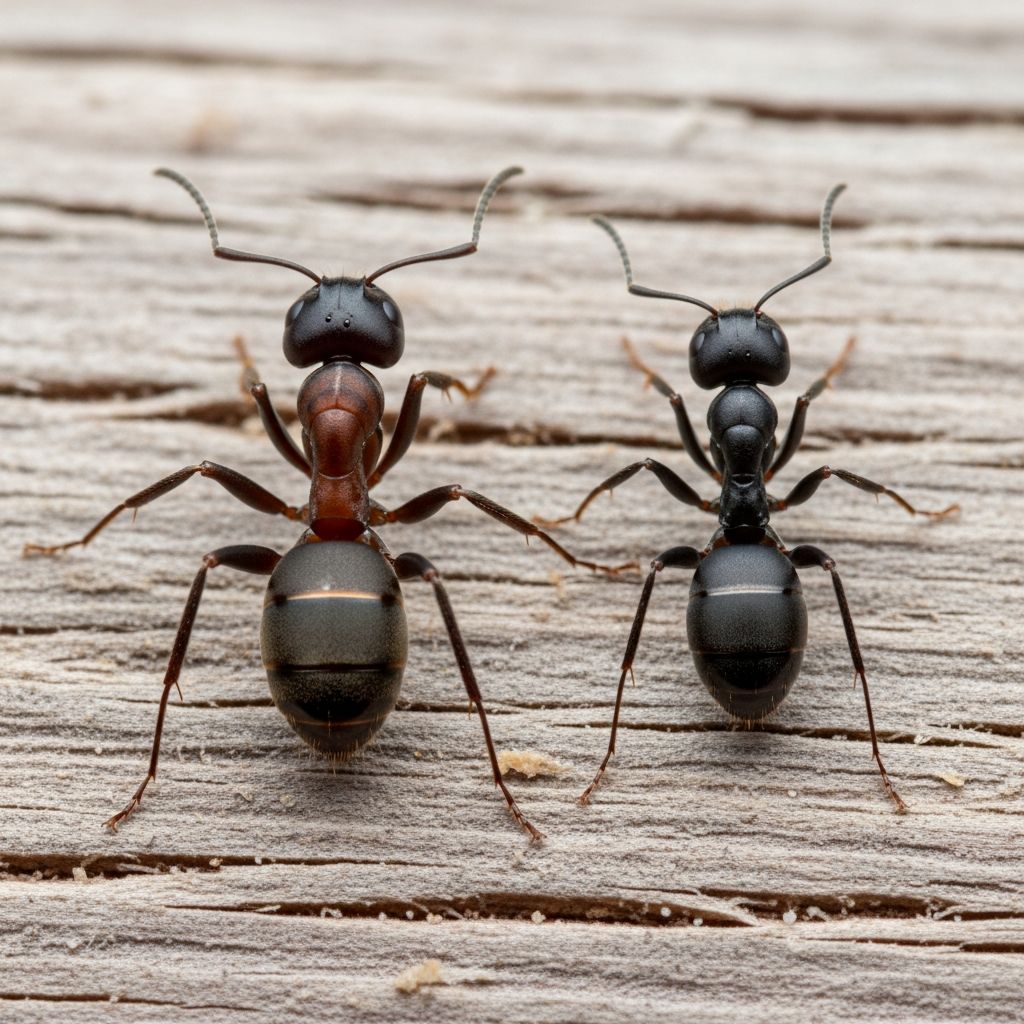
When you discover ants in your home, it’s easy to assume they’re all the same. However, the type of ant invading your space makes a significant difference in how you should respond. Two of the most common household ants are carpenter ants and black ants, and while they may seem similar at first glance, they have distinct characteristics, behaviors, and threats to your home. Understanding these differences is crucial for effective pest management and protecting your property from potential damage.
Carpenter ants are typically larger and pose structural threats by hollowing out wood for nesting purposes. Black ants, conversely, are smaller and primarily create nuisance infestations by contaminating food sources and establishing visible trails throughout your home. This guide will help you identify which pest you’re dealing with and provide actionable strategies for elimination and prevention.
Physical Identification: How to Tell Them Apart
The most reliable way to distinguish between carpenter ants and black ants is through careful physical examination. While both are common household pests, their anatomical differences are quite distinct once you know what to look for.
Size Differences
Size serves as the primary visual identifier between these two ant species. Carpenter ants are among the largest ant species found in North American homes, measuring between ¼ to ½ inch in length. Their robust, elongated bodies make them immediately noticeable. Black ants, also known as little black ants, are considerably smaller, typically measuring only about 1/8 inch in length. This significant size difference becomes particularly apparent when observing ant trails or groups of ants. When carpenter ants and black ants appear side by side, the size variance is unmistakable and provides reliable identification without requiring specialized equipment.
Color Variations
Despite their name, carpenter ants are not always black. They display considerable color variation, ranging from solid black to red, yellow, maroon, or combinations of these colors. Many carpenter ant workers feature a bicolored appearance with a darker head and thorax contrasting against a lighter abdomen. Black ants, as their name suggests, maintain a uniformly jet-black or very dark brown coloration throughout their bodies with a smooth, glossy appearance. This uniform coloring is one of their defining characteristics and differs sharply from the varied pigmentation of carpenter ants.
Body Structure and Anatomy
Beyond size and color, the anatomical structures of these ants reveal important differences. Carpenter ants possess heart-shaped heads with distinctive large mandibles designed specifically for chewing through wood. They have a rounded thorax and a one-segmented petiole, which is the narrow connection between the thorax and abdomen. Their antennae are notably elbowed or angled, which is characteristic of their species.
Black ants have smaller mandibles that are not equipped for wood excavation. Their bodies lack the prominent segmentation visible in carpenter ants, and their waist features a two-segmented petiole, creating a more uniformly shaped appearance. Additionally, black ants lack the obvious antennae features that make carpenter ant antennae so distinctive. Carpenter ants also lack stingers, while some black ant species may possess them.
Nesting Habits and Habitat Preferences
Understanding where these ants choose to build their colonies provides valuable insights into identification and treatment strategies.
Carpenter Ant Nesting Behavior
Carpenter ants have very specific nesting requirements. They prefer moist, decayed wood but can also establish colonies in dry, sound wood if necessary. These ants don’t actually consume wood for nutrition; instead, they excavate it to create tunnels and galleries for their nests. Inside homes, carpenter ants often target areas with moisture issues, including basements, attics, crawl spaces, and areas around sinks, bathtubs, and dishwashers. They frequently enter homes through damaged wood, compromised windows, or cracks in walls and foundations. Once inside, they often establish satellite colonies positioned near moisture sources, allowing the colony to expand and establish multiple operational centers throughout the structure.
Black Ant Nesting Behavior
Black ants demonstrate significantly different nesting preferences. These ants prefer to establish colonies in soil or within hidden spaces inside walls and other cavities within your home. They are far less particular about moisture levels compared to carpenter ants and can adapt to various environmental conditions. Black ants typically nest outdoors and only venture inside when seeking food resources or when outdoor conditions become unfavorable. Their ability to thrive in diverse environments makes them adaptable invaders that can establish populations in nearly any household setting.
Activity Patterns and Behavioral Differences
The behavioral patterns of these two ant species are distinctly different, affecting how you’ll notice their presence and when treatment is most effective.
Carpenter Ant Activity
Carpenter ants are primarily nocturnal, meaning they’re most active during nighttime hours. This nocturnal behavior makes them more difficult to spot during normal household activities. When carpenter ants are active, they create distinctive frass, which is sawdust-like material consisting of excavated wood particles mixed with ant feces. These frass piles often accumulate near entry points and nest locations, providing telltale signs of infestation. The hollow-sounding wood they create as they tunnel can also alert homeowners to their presence when walls or wooden structures are tapped.
Black Ant Activity
Black ants display primarily diurnal behavior, meaning they’re active during daylight hours. This makes them considerably more visible during regular household activities. Black ants establish prominent pheromone-based trails, forming visible lines of workers moving methodically between their nest and food sources. These trails often lead to entry points such as windows, doors, or foundation cracks. Their daytime foraging patterns create predictable behaviors: they form visible trails during daylight, increase activity during warm weather, retreat to nests during nighttime, and respond quickly to discovered food sources, often mobilizing dozens of workers within minutes of detecting a food opportunity.
Diet and Feeding Behavior
The dietary preferences of these ants influence the damage they cause and where infestations occur within your home.
Carpenter Ant Diet
Carpenter ants require substantially more protein than black ants and have a diverse diet. They feed on sugar and protein obtained from nectar, fruits, plant sap, and dead insects. Inside homes, they seek out sweet substances, oils, and protein-rich foods. The misconception that carpenter ants eat wood is false; they eat protein and carbohydrates but excavate wood solely for nesting purposes. Their high protein requirements make them particularly attracted to kitchens, pantries, and areas where pet food or grease accumulates. This dietary preference, combined with their need for protein-rich insects, means their food sources can be challenging to completely eliminate without professional assistance.
Black Ant Diet
Black ants are less selective eaters than carpenter ants. They consume both carbohydrates and proteins, feeding on dead insects, captured live insects, honeydew produced by aphids, and virtually any food substances they encounter. Their less discriminating appetite means they’ll contaminate diverse food sources throughout your home, from sweet items to greasy foods. This broad dietary range makes them particularly adept at finding sustenance in nearly any household environment.
Signs of Infestation
Recognizing the specific signs associated with each ant type helps confirm which pest you’re dealing with.
Carpenter Ant Infestation Signs
Several indicators suggest a carpenter ant infestation:
– Piles of sawdust-like frass near baseboards, wall cavities, or wooden structures- Hollow-sounding wood when tapped with a hammer or screwdriver- Small, smooth tunnels or galleries visible in damaged wood- Occasional sightings of large ants, particularly during nighttime hours- Rustling or crackling sounds inside walls, especially at night- Entry holes in wood with clean, smooth edges- Damp wood showing signs of excavation
Black Ant Infestation Signs
Black ant infestations present different warning signs:
– Visible ant trails between nests and food sources during daytime hours- Large numbers of ants near food storage areas or entry points- Small cracks or gaps in walls and floors with ants moving in and out- Strong, unpleasant odor when ants are crushed (specific to odorous house ants)- Food contamination, particularly of sweet substances and grease- Ants entering through foundation cracks, window frames, or door thresholds- Increased ant activity during warm weather months
Treatment and Prevention Strategies
Effective pest management requires different approaches depending on which ant species you’re addressing.
Carpenter Ant Treatment
Professional treatment of carpenter ants typically involves:
– Targeted liquid sprays applied to galleries and tunnels- Specialized dust treatments that disrupt scent trails and prevent colony communication- Identification and treatment of satellite colonies- Addressing moisture issues that attracted the ants initially- Sealing entry points and cracks in the foundation and walls- Regular monitoring to ensure complete colony elimination
Black Ant Treatment
Black ant management generally focuses on:
– Application of environmentally friendly sprays targeting ants at their source- Prevention treatments that stop ants from returning- Yard treatment with long-lasting granule barriers- Elimination of accessible food sources and spill cleanup- Sealing entry points around doors, windows, and foundation areas- Regular monitoring during warm months when activity increases
Prevention Tips for Both Species
Regardless of which ant species you’re dealing with, these prevention strategies reduce infestation risk:
– Fix moisture problems, leaky pipes, and ensure proper drainage around your foundation- Seal cracks and crevices in walls, foundations, and around windows and doors- Keep kitchen areas clean, wipe up spills immediately, and store food in sealed containers- Remove dead insects and debris that might attract foraging ants- Trim tree branches and vegetation away from your roof and siding- Maintain proper ventilation in attics, basements, and crawl spaces- Store firewood away from the home and off the ground
When to Call Professional Pest Control
While minor ant infestations might be manageable with DIY approaches, professional pest control is recommended when:
– Carpenter ant infestations involve structural damage or large colonies- Infestations persist despite repeated treatment attempts- You suspect multiple satellite colonies exist within your home- Significant moisture problems are contributing to ant activity- You want preventative treatments before an infestation becomes established- The infestation is widespread throughout your home
Professional pest control specialists have access to more powerful treatments, can identify all colony locations, and can address underlying conditions that attracted the ants in the first place.
Comparison Table: Carpenter Ants vs Black Ants
| Characteristic | Carpenter Ants | Black Ants |
|---|---|---|
| Size | ¼ to ½ inch | About 1/8 inch |
| Color | Black, red, yellow, maroon, or bicolored | Uniformly jet black or dark brown |
| Head Shape | Heart-shaped with large mandibles | Rounded, small mandibles |
| Waist Segments | One-segmented petiole | Two-segmented petiole |
| Nesting Location | Wood (moist or dry) | Soil or wall cavities |
| Activity Pattern | Nocturnal (night) | Diurnal (day) |
| Primary Damage | Structural wood damage | Food contamination |
| Diet Focus | Protein-rich foods | Carbs and proteins |
Frequently Asked Questions
How can I tell the difference between carpenter ants and black ants?
The most noticeable difference is size. Carpenter ants measure ¼ to ½ inch long, while black ants are only about 1/8 inch. Carpenter ants may vary in color and have a one-node waist, while black ants are uniformly black with a two-node waist. Carpenter ants also have distinctive heart-shaped heads and large mandibles, whereas black ants have smaller mandibles and more uniform body shapes.
Do carpenter ants really eat wood?
No, carpenter ants do not eat wood. This is a common misconception. They excavate wood to create nesting galleries and tunnels but consume sugar, protein, and insects instead. The wood they remove is discarded as frass, a sawdust-like byproduct.
Can black ants damage my home?
Black ants do not cause structural damage like carpenter ants do. However, they can contaminate food sources and become a significant nuisance. Their presence in large numbers and their visible trails can be annoying, and food contamination poses hygiene concerns.
Why are carpenter ants attracted to my home?
Carpenter ants are primarily attracted to moisture. Leaky pipes, poor drainage, condensation in attics or basements, and damp wood create ideal conditions for carpenter ant colonies. They also seek out protein-rich food sources like dead insects and exposed food.
How can I prevent ant infestations?
Prevention involves eliminating moisture problems, sealing cracks and entry points, keeping your kitchen clean, storing food in sealed containers, trimming vegetation away from your home, and maintaining proper ventilation. For carpenter ants specifically, addressing any water damage or rot in wood structures is crucial.
When should I call a professional exterminator?
Professional help is recommended when infestations persist despite DIY treatment, when structural damage is suspected, when multiple colonies exist, or when preventative treatment is desired. Professionals can locate all nests, apply stronger treatments, and address underlying conditions.
How long does it take to eliminate an ant infestation?
Black ant infestations can sometimes be resolved within days to weeks with proper treatment. Carpenter ant infestations typically require several weeks to months for complete elimination, especially if multiple colonies are involved. Professional treatment may be necessary for complete eradication.
What should I do if I find carpenter ant frass?
If you discover frass, it indicates an active carpenter ant infestation. Document the location, take photographs, and contact a professional pest control service immediately. Do not ignore this sign, as it suggests ongoing wood excavation and potential structural damage.
References
- Carpenter Ants vs Black Ants: How to Tell the Difference — Alta Pest Control. 2024. https://www.altapestcontrol.com/blog/carpenter-ants-vs-black-ants
- Carpenter Ants vs. Black Ants: Key Differences Explained — Hawx Pest Control. 2024. https://hawxpestcontrol.com/carpenter-ants-vs-black-ants-breaking-down-the-differences/
- The Difference Between Black and Carpenter Ants — Truly Nolen Canada. 2024. https://www.trulynolen.ca/vaughan-pest-removal-difference-between-black-and-carpenter-ants/
- Big Black Ants or Carpenter Ants? How to Tell the Difference — Aerex Pest Control. 2022. https://www.aerex.com/blog/2022/march/big-black-ants-or-carpenter-ants-how-to-tell-the/
- Carpenter Ants vs. Black Ants: What’s the Difference? — Native Pest Management. 2024. https://www.nativepestmanagement.com/blog/2024/january/carpenter-ants-vs-black-ants-what-s-the-difference/
Similar Articles








Read full bio of Sneha Tete