Carpet To Laminate Transitions: Complete DIY Guide
Master the art of blending carpet and laminate floors with durable, professional transitions that ensure safety and style in your home.
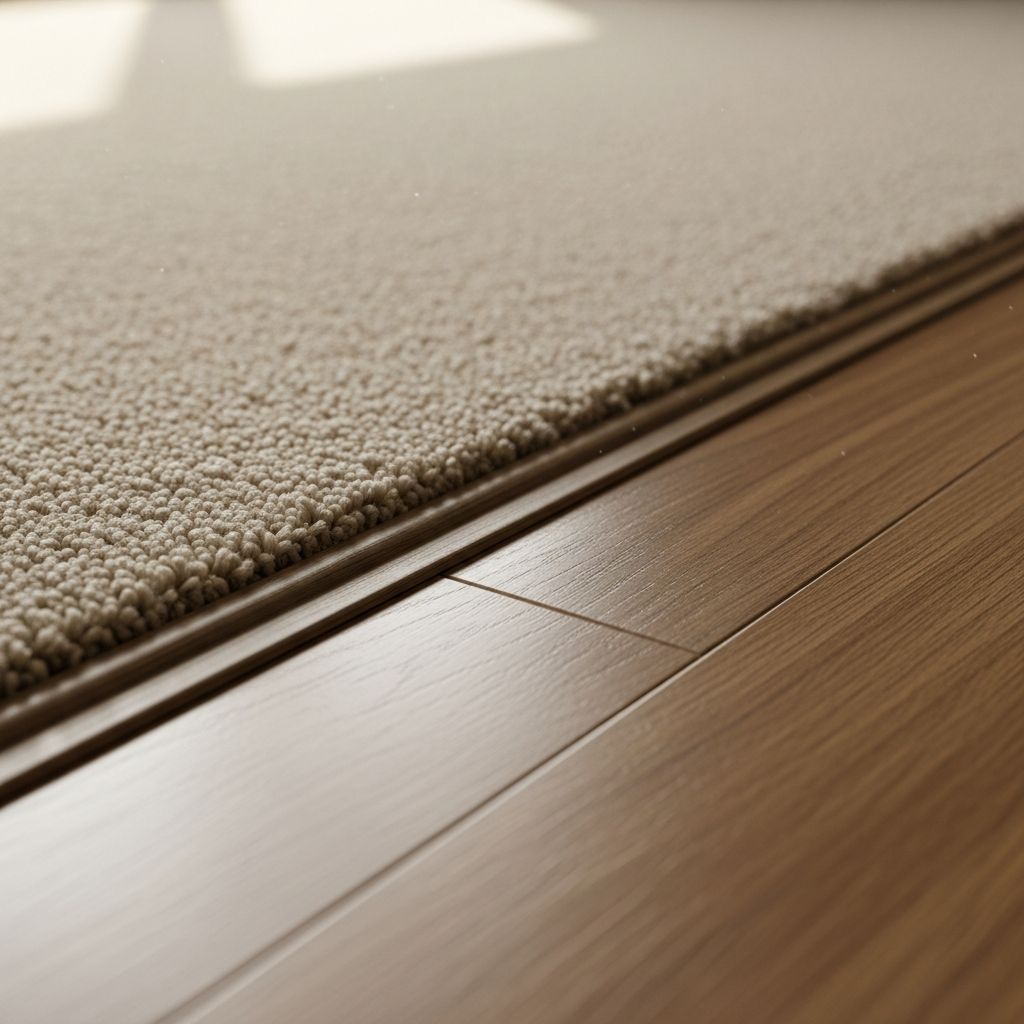
Seamless Carpet to Laminate Transitions: A Complete DIY Guide
Transitioning between carpet and laminate flooring creates a polished look while accommodating height differences and allowing for natural floor expansion. Proper installation prevents tripping hazards, maintains floor integrity, and enhances your home’s aesthetics. This guide explores essential techniques, tools, and best practices drawn from proven methods.
Understanding Floor Transition Basics
Floors like laminate require an expansion gap—typically 1/2 inch (12mm)—to prevent buckling from humidity changes. Carpet, being softer and thicker, often sits higher, necessitating specialized strips. Key goals include bridging height gaps, securing edges, and tucking carpet securely.
- Expansion Space: Always leave 1/2 to 1-3/8 inches (12-35mm) between flooring types.
- Height Matching: Laminate is usually thinner (8-12mm) than carpet plus padding (up to 1 inch).
- Safety First: Smooth ramps reduce trip risks; avoid abrupt edges.
Types of Transition Strips for Carpet to Laminate
Select strips based on height differential and location. Multifunctional 4-in-1 systems offer versatility from one kit.
| Type | Use Case | Height Difference | Installation Method |
|---|---|---|---|
| Carpet Transition (Square Nose/End Cap) | Laminate to carpet; carpet tucks under nose | Minimal to moderate | Track screwed to subfloor; snap-in profile |
| Reducer Strip | Height drop from carpet to laminate | Moderate (up to 1/2 inch) | Adhesive or screws; sloped ramp |
| T-Molding | Equal-height hard surfaces; adapt for carpet with modification | None to slight | Track or adhesive; not ideal for carpet alone |
| Hard Surface Reducer | Laminate drop-off or to lower floors | High differential | Reversible for stairs or edges |
T-Molding suits hard-to-hard joins but can crack without carpet support—use reducers instead for soft-to-hard. Square nose allows carpet tucking for clean edges.
Essential Tools and Materials
Gather these for efficient work:
- Drill with bits for pilot holes
- Tin snips or miter saw for cutting metal tracks/strips
- Carpet kicker or trim hammer for tucking
- Carpet tuck tool and razor blades
- Tape measure, level, rubber mallet
- Construction adhesive, screws (1-1/2 inch), optional stapler
- Safety gear: gloves, knee pads, dust mask
4-in-1 kits include track (Part 1), caps (Parts 2/3), simplifying choices.
Preparing the Transition Area
Success starts with a clean, level base. Poor prep leads to uneven strips and floor damage.
- Remove Old Carpet Edges: Pull back carpet and padding. Extract staples, nails, and glue with pliers or scraper. Vacuum debris.
- Check Subfloor: Ensure flatness; fill low spots with leveling compound. For concrete, grind high areas.
- Measure Gaps: Confirm 1/2-inch expansion from laminate edge. Adjust carpet tack strips if needed.
- Test Fit: Dry-lay strips to verify height and overlap.
For doorways, undercut casing if strip height exceeds. On stairs, cut subfloor to riser edge for flush nosing.
Step-by-Step Installation Process
Installing Track-Based Systems (e.g., 4-in-1 Carpet Transition)
These snap securely without glue.
- Position track midway in gap (1/2-inch from laminate). Pre-drill and screw into subfloor.
- Assemble profile: Hold Part 1 (base) with Part 2 (square nose). Align and snap into track from one end, tapping with mallet if resistant.
- Trim excess with snips for straight fit.
Direct Adhesive or Screw Methods for Reducers
Ideal for custom fits.
- Clean surfaces. Apply adhesive zigzag to strip underside.
- Press firmly over gap, centering ramp. Secure with screws if trackless.
- Allow 24-hour cure; avoid traffic.
Tucking Carpet Securely
Post-strip install:
- Use kicker to stretch carpet toward strip.
- Tuck edges under nose with tool. Staple if loosening occurs.
- Trim excess carpet with razor for flush seal.
Pound track firmly; it self-aligns once engaged.
Handling Special Scenarios
Doorway Transitions
Leave 1-3/8-inch gap for doors. Use floating ramps if heights match; secure loosely.
Stair Nosings and Edges
Reverse reducers to lip over higher steps. Cut subfloor flush; glue nosing atop laminate.
Height Mismatches Over 1/2 Inch
Layer thin underlayment under laminate or use adjustable ramps. Avoid stacking—opt for professional bullnose.
Pro Tips for Long-Lasting Results
- Match Finishes: Choose strips in laminate color for seamless blend.
- Climate Control: Acclimate materials 48 hours; maintain 40-60% humidity.
- Avoid Nail Guns: Pre-drill to prevent splitting.
- Modifications: For wrong strips, adapt T-molds by notching for carpet tuck (non-standard).
- Finishing: No sanding needed on prefinished; caulk gaps if expanding.
Inspect for sharp edges post-install; file smooth.
Common Mistakes and Fixes
| Mistake | Consequence | Fix |
|---|---|---|
| No expansion gap | Buckling floors | Re-cut and reinstall |
| Improper tucking | Loose carpet, trips | Re-kick and staple |
| Track too tight | Hard snapping | Tap evenly with mallet |
| Uneven subfloor | Wobbly strip | Level before install |
Frequently Asked Questions (FAQs)
Can I use T-molding for carpet to laminate?
Standard T-molding lacks carpet support and may crack. Use modified or reducers instead.
How much gap for laminate expansion?
1/2 inch (12mm) minimum; up to 1-3/8 inches (35mm) for tracks.
Do I need to glue transitions?
Track systems use screws; ramps often adhesive. Floating options exist for rentals.
What’s a 4-in-1 molding kit?
One track with interchangeable parts for T, reducer, carpet, or end caps.
How to transition without strips?
Not recommended; risks gaps/damage. Custom cuts possible but pro-level.
Maintenance and Longevity
Sweep transitions weekly; avoid dragging furniture. Re-tighten screws yearly. Expect 10-20 years with proper install.
References
- How to install laminate flooring transitions — SoThatShowYouDoThat.com. Accessed 2026. https://www.sothatshowyoudothat.com/install-laminate-flooring-transitions/
- How to Transition from Carpet to Other Flooring Types — Murnane Floors. Accessed 2026. https://www.murnanefloors.com/blog/articles/how-to-transition-from-carpet-to-other-flooring-types
- How To Install Transitions From Laminate To Carpet — YouTube (Pergo 4-in-1). ca. 2023. https://www.youtube.com/watch?v=GIb6NQMx0pA
- Laminate 4-in-1 Multifunctional Moulding Installation Instructions — Lowe’s (PDF). 2022-10. https://pdf.lowes.com/productdocuments/27c02f7d-9272-4e59-b8e4-7fecc6a7b213/61214357.pdf
Similar Articles







Read full bio of Sneha Tete