Guide to Training Cats for Outdoor Bathroom Use
Master the techniques to transition your indoor cat to outdoor elimination safely
Many cat owners dream of having their pets use outdoor spaces for their bathroom needs rather than relying on indoor litter boxes. This transition can reduce household odors, minimize litter tracking throughout your home, and provide your cat with a more natural elimination experience. However, successfully training a cat to use outdoor bathroom facilities requires patience, strategic planning, and understanding your cat’s natural instincts. Whether you’re bringing an outdoor cat indoors or transitioning an indoor cat to outdoor elimination, this comprehensive guide will walk you through every step of the process.
Understanding Why Cats Resist Outdoor Elimination Indoors
Before implementing training strategies, it’s essential to understand why cats may resist using designated outdoor bathroom areas. Indoor cats accustomed to litter boxes have developed specific bathroom habits and preferences over time. When you introduce an outdoor elimination area, you’re asking your cat to abandon established routines and adapt to unfamiliar substrates, locations, and environmental conditions.
Cats are creatures of habit with strong territorial instincts. They establish bathroom locations based on accessibility, privacy, and substrate preference. An outdoor cat transitioning indoors faces the opposite challenge—they must learn that a litter box serves the same purpose as their previously chosen outdoor spots. Understanding these psychological factors helps you approach training with realistic expectations and appropriate strategies.
Preparing Your Outdoor Space for Success
Creating an appropriate outdoor bathroom environment is the foundation of successful training. Your cat needs a designated area that feels safe, accessible, and suitable for elimination.
Selecting the Right Location
Choose an outdoor spot that offers privacy and protection from weather elements. Cats prefer secluded areas away from heavy foot traffic and loud noises. If possible, select a location partially sheltered by plants, structures, or natural barriers. This privacy encourages your cat to use the space consistently. Additionally, ensure the area is easily accessible to your cat at all times, with a clear path from indoors if you’re using a cat door.
Setting Up the Bathroom Area
Depending on your preference and your cat’s needs, you have several options for outdoor bathroom setup:
- Traditional Litter Box Method: Place a standard litter pan in your chosen outdoor location. Use a weather-resistant container if possible, and position it under a covered area such as a porch overhang or shelter box to protect it from rain.
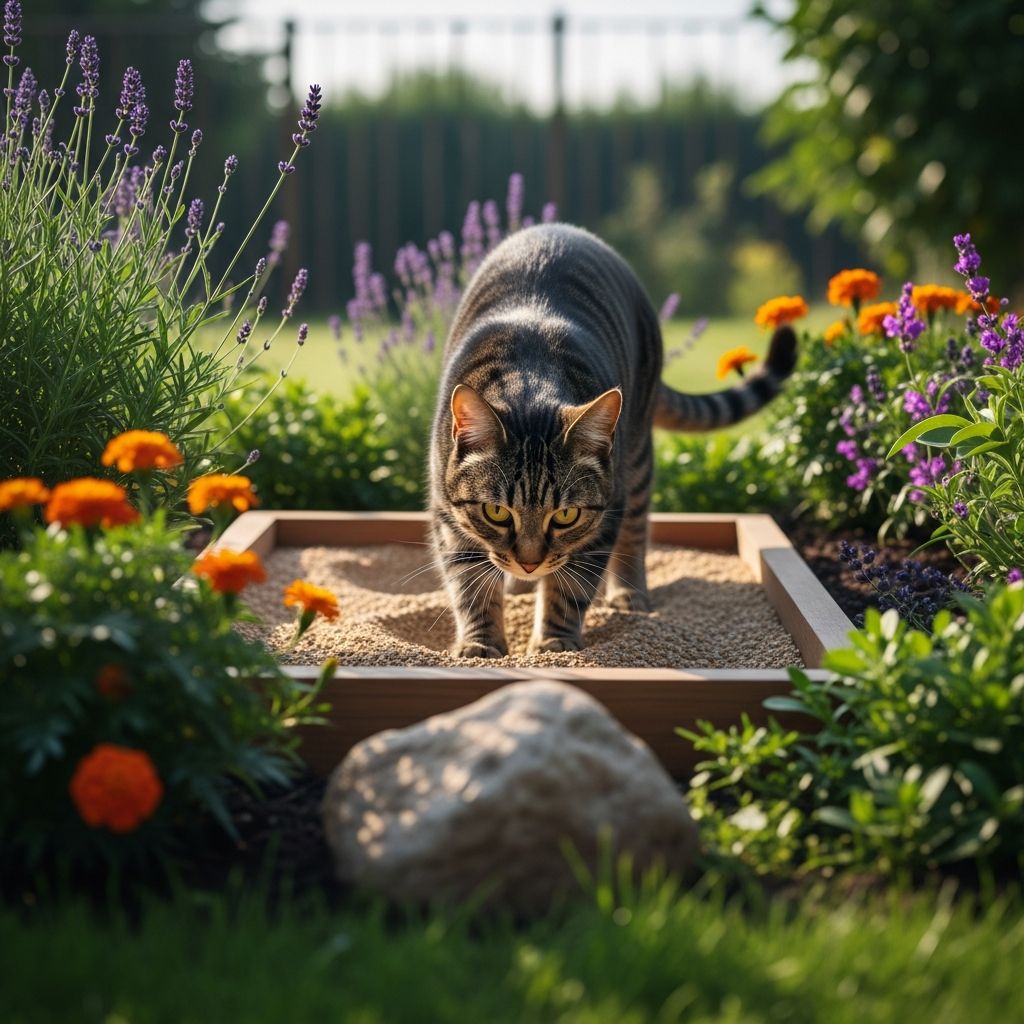
- Sandbox Approach: Create a designated sandbox or sandy area where your cat can naturally eliminate. This method appeals to cats’ instinctive preference for soil-like substrates. You can construct a simple wooden frame approximately 6 inches deep and fill it with sand or fine soil.
- Hybrid System: Combine a litter box with a wooden frame for containment. This prevents litter from spreading across your yard while maintaining your cat’s preferred elimination substrate.
Choosing the Right Substrate and Equipment
Substrate preference varies significantly among cats. Some cats naturally gravitate toward sand, soil, or other outdoor materials, while others have become accustomed to commercial cat litter. Experimenting with different materials helps you identify what your cat prefers.
Testing Substrate Preferences
If transitioning an outdoor cat to an outdoor litter setup, you might use sand or a mixture of sand and commercial litter. Gradually introduce commercial litter by mixing it with the outdoor substrate, slowly increasing the litter proportion over several weeks. This gentle transition helps cats accept the new material without sudden resistance.
For cats accustomed to indoor litter boxes, continue using their preferred litter type in the outdoor location initially. Once they reliably use the outdoor box, you can experiment with transitioning to sand or other substrates if desired. Keep in mind that some cats have strong preferences and may resist change, so proceed gradually.
Litter Depth Considerations
Cats have preferences regarding litter depth. Some prefer shallow litter, while others want deeper material for covering their waste. Observe your cat’s behavior: if they spend considerable time digging or seem frustrated with shallow litter, increase the depth. Conversely, if they appear to step carefully through deep litter, reduce the amount. Consistency matters—once you’ve identified the preferred depth, maintain it to encourage regular use.
The Gradual Transition Process
Rushing the transition from indoor to outdoor elimination is a common mistake that leads to training failure. A gradual process respects your cat’s need to adapt at their own pace.
Phase One: Pre-transition Preparation
Begin by keeping your cat’s existing litter box in its current location while simultaneously setting up the outdoor elimination area. Allow your cat to explore and become familiar with the outdoor space without pressure to use it. This exploration period might last several days or even weeks, depending on your cat’s comfort level and outdoor experience.
Phase Two: Relocation and Distance Adjustment
Gradually move your cat’s indoor litter box closer to the outdoor area. If you have a cat door or accessible exit point, slowly relocate the box toward this opening over a period of several days. Once positioned near the exit, move the box outside while maintaining visibility from the house. Continue moving it incrementally toward the final designated outdoor location. This process typically requires 7 to 10 days but may take longer for anxious or cautious cats.
Phase Three: Outdoor Reliance
Once your cat consistently uses the outdoor box or area, you can remove the indoor box. However, maintain the outdoor setup exactly as your cat has learned it. Any significant changes in location, substrate, or setup may cause regression in training.
Behavioral Training Techniques
Beyond environmental setup, specific behavioral strategies accelerate training success.
Positive Reinforcement Strategies
Reward your cat immediately when they use the outdoor bathroom area. Use rewards your cat genuinely enjoys—this might include favorite treats, interactive play sessions, petting, or other preferred activities. The immediacy of the reward is crucial; your cat must connect the reward directly to the bathroom behavior. Never use punishment or negative reinforcement, as this creates stress and anxiety, potentially driving your cat to eliminate in hidden locations instead.
Timing and Supervision
Observe your cat for signs indicating bathroom need: meowing, digging behavior on carpets, restlessness, or assuming a squatting position. When you notice these signs, gently guide your cat to the outdoor bathroom area. Some cats benefit from being carried directly to the spot during early training stages. Once they eliminate successfully, immediately provide their chosen reward.
Environmental Modification
If your cat has previously eliminated in specific indoor locations, temporarily modify those areas to discourage repeat behavior. Rearrange furniture, place barriers, or introduce items that change the space’s appearance. This prevents your cat from gravitating toward previously established bathroom spots. Additionally, thoroughly clean all previously soiled areas with enzymatic odor-neutralizing products to eliminate scent markers that trigger re-soiling behavior.
Managing Special Circumstances and Challenges
Some cats present unique training challenges requiring modified approaches.
Older Cats and Mobility Issues
Senior cats or those with joint problems may struggle with standard litter box heights or outdoor terrain access. Lower the sides of containers or use shallow boxes to reduce the physical effort required to enter and exit. Ensure the outdoor path to the bathroom area is smooth and obstacle-free, minimizing strain on aging joints.
Extreme Weather Resistance
Cats strongly averse to rain, cold, or snow may refuse outdoor elimination in harsh conditions. Provide adequate shelter such as a covered box structure that protects against precipitation while maintaining easy access. In extreme climates, maintain a backup indoor litter box for use during severe weather, though gradually encouraging outdoor use as weather permits.
Multi-Cat Households
In homes with multiple cats, provide separate outdoor bathroom areas if possible. Cats have territorial instincts and may not feel comfortable sharing bathroom spaces. If separate areas are impractical, create multiple small sections within the same general outdoor location to reduce competition and stress.
Troubleshooting Common Training Obstacles
Cat Refuses Outdoor Bathroom Use
If your cat persistently avoids the outdoor area, evaluate several factors: Is the location sufficiently private? Does your cat have unrestricted access? Have you moved the box too quickly? Consider backing up to the previous training phase and progressing more slowly. Some cats require extended transition periods or simply prefer indoor elimination—respect your cat’s natural preferences while continuing gradual exposure.
Inconsistent Elimination Patterns
Cats may use the outdoor area inconsistently while continuing to eliminate indoors. This often indicates incomplete training rather than failure. Continue close supervision, reward successful outdoor elimination, and maintain thorough cleaning of any indoor accidents. Consistency in your approach eventually produces reliable outdoor use.
Substrate or Location Changes
Resist the urge to significantly modify the outdoor setup once your cat has adapted. Even minor changes can trigger confusion or rejection. If changes are necessary, introduce them gradually over several days rather than suddenly.
Health and Safety Considerations
Before transitioning your cat to outdoor elimination, consult your veterinarian to rule out underlying medical conditions that might complicate training. Urinary tract infections, digestive issues, and other health problems can cause inappropriate elimination. Additionally, ensure your cat is current on vaccinations before spending extended time outdoors, and discuss parasite prevention strategies with your veterinarian.
Monitor your outdoor cat’s bathroom behavior for signs of health issues: straining, bloody urine, excessive elimination frequency, or behavioral changes warrant veterinary evaluation.
Summary of Key Training Principles
| Training Element | Key Consideration | Implementation Timeline |
|---|---|---|
| Location Selection | Private, accessible, weather-protected area | Before training begins |
| Substrate Setup | Match cat’s preferences; test options initially | During Phase One |
| Gradual Relocation | Move box slowly toward outdoor destination | 7-10 days typical duration |
| Positive Reinforcement | Reward immediately upon successful elimination | Ongoing throughout training |
| Supervision | Guide cat to area during critical times | Until consistent outdoor use established |
Frequently Asked Questions
How long does outdoor bathroom training typically take?
Training duration varies widely depending on your cat’s age, previous experience, and personality. Most cats adapt within 2-4 weeks with consistent training. However, some cats require several months, particularly if they’re older or had long indoor-only histories.
Can I train an adult cat to use outdoor areas?
Yes, adult cats can learn to use outdoor bathroom areas, though they may require more patience than kittens. Older cats have established habits and may adapt more slowly, but positive reinforcement and gradual transitions typically succeed eventually.
What if my cat refuses to use the outdoor area in winter?
Provide sheltered, heated structures if possible, or maintain a backup indoor litter box during severe weather. Some cats naturally resist outdoor elimination in extreme cold or snow—respect these preferences while continuing to encourage outdoor use during milder seasons.
Should I eliminate the indoor litter box completely?
Once your cat reliably uses the outdoor area, you can remove the indoor box. However, some owners maintain a backup box for emergencies or extreme weather. Make this decision based on your cat’s comfort and your specific circumstances.
Is outdoor elimination appropriate for all cats?
While most cats can adapt to outdoor elimination, some cats have strong indoor preferences or medical conditions requiring reliable access to litter boxes. Additionally, outdoor cats face increased risks from traffic, predators, and disease. Evaluate your individual cat’s safety and comfort before committing to full outdoor elimination training.
References
- How to Litterbox Train an Outdoor Cat — Vetstreet. June 11, 2024. https://www.vetstreet.com/pet-care/training/how-to-litterbox-train-an-outdoor-cat
- How to Train Your Cat to Use the Bathroom Outside — Chewy Education. https://www.chewy.com/education/cat/training-and-behavior/training-cat-use-bathroom-outside
- Litter Box Training — Longmont Humane Society. https://www.longmonthumane.org/resources/cat-care-tips/litter-box-training/
- Remedial Litter Box Training — Louisiana SPCA. https://www.louisianaspca.org/wp-content/uploads/2020/09/Remedial-Litter-Box-Training.pdf
Similar Articles








Read full bio of medha deb