Ceiling Fan Direction: Clockwise vs Counterclockwise
Master the art of ceiling fan direction to optimize comfort and energy efficiency year-round.
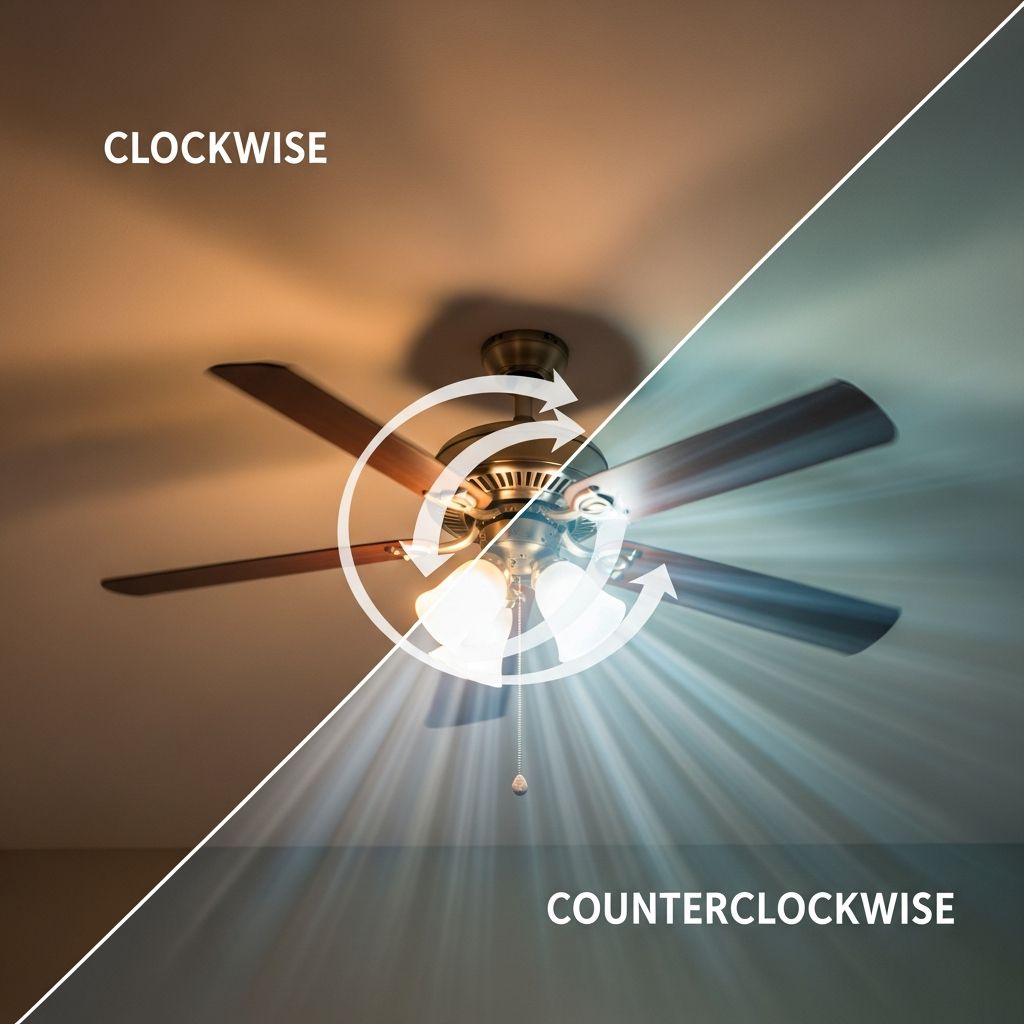
Should a Ceiling Fan Turn Clockwise or Counterclockwise?
Ceiling fans are one of the most versatile and energy-efficient tools in your home, yet many homeowners overlook a critical detail: the direction in which the blades rotate. The answer to whether your ceiling fan should turn clockwise or counterclockwise depends entirely on the season and your specific comfort needs. Understanding this simple adjustment can dramatically impact your home’s comfort level and your monthly energy bills.
The direction of your ceiling fan plays a significant role in how air circulates throughout your living space. With the flick of a switch or the press of a button, you can transform your ceiling fan from a cooling device in summer to a heating assistant in winter. This seasonal adjustment is one of the most underutilized yet effective ways to maintain comfort while minimizing energy consumption.
Understanding Ceiling Fan Blade Angles and Airflow
Before diving into seasonal directions, it’s essential to understand how ceiling fan blades work. Ceiling fan blades are specifically angled to push air in a particular direction based on their rotation. The pitch or angle of the blades determines whether air moves downward or upward, and this mechanical design is crucial to the fan’s effectiveness.
When blades rotate counterclockwise, the angled design forces air downward in a concentrated column. Conversely, when blades spin clockwise, they push air upward toward the ceiling. This fundamental principle is the foundation for understanding seasonal fan direction adjustments.
Summer: Counterclockwise is Your Answer
During the hot summer months, your ceiling fan should rotate counterclockwise. This direction creates a downdraft that pushes cool air straight down into your living space, creating a direct, refreshing breeze. The effect mimics a natural wind and helps cool your body through evaporation.
How Summer Counterclockwise Rotation Works
When your ceiling fan blades move counterclockwise during summer, several beneficial things happen:
- Air is pushed downward in a concentrated column directly beneath the fan
- The moving air creates a wind chill effect that makes you feel cooler without lowering the room temperature
- Perspiration evaporates more efficiently from your skin, enhancing the cooling sensation
- Your air conditioning system can run less frequently, reducing energy consumption and utility costs
The counterclockwise setting is particularly effective when you set the fan to a higher speed. The faster the blades rotate counterclockwise, the more powerful the downward airflow becomes. This enhanced breeze can make you feel several degrees cooler without actually adjusting your thermostat.
Maximizing Summer Comfort
To get the most from your summer ceiling fan usage, stand directly beneath the fan and verify you can feel air movement. If you cannot sense a breeze, your fan may still be set to clockwise rotation. Additionally, keeping your windows open while running the fan on a higher counterclockwise setting can amplify the cooling effect and help maintain consistent room temperatures throughout the day.
Winter: Clockwise Helps Recirculate Warmth
When winter arrives and temperatures drop, your ceiling fan’s job changes dramatically. You should switch the direction to clockwise, but critically, you must run it at a low speed. This combination creates an updraft that recirculates warm air that naturally rises to your ceiling back down into your living space.
The Science Behind Winter Clockwise Rotation
During winter months, warm air naturally rises to your ceiling while cooler air settles near the floor. This creates an uncomfortable temperature gradient and forces your heating system to work harder. By setting your ceiling fan to clockwise rotation at low speed, you accomplish the following:
- The fan draws cool air upward from the floor level
- This cooler air mixes with the warm air trapped near the ceiling
- The blended, more evenly distributed warm air is then pushed outward along the walls and back into your living space
- Room temperature becomes more consistent from floor to ceiling
- Your furnace or heating system doesn’t need to run as frequently
- Overall heating costs decrease noticeably
The key to winter fan operation is maintaining a low speed. If you run your clockwise fan too fast in winter, you’ll actually feel a cool breeze as the upward-moving air reaches you, defeating the purpose of the adjustment.
How to Change Your Ceiling Fan Direction
Changing your ceiling fan direction is a straightforward process. Most modern ceiling fans offer multiple methods for reversing blade rotation:
Remote Control Method
Many contemporary ceiling fans include remote controls with directional buttons. Simply locate the forward and reverse buttons on your remote control. Press the forward button to set your fan to counterclockwise (summer mode), or press the reverse button to set it to clockwise (winter mode).
Wall-Mounted Control
Some ceiling fans have wall-mounted switches with directional options. These work similarly to remote controls but are permanently installed near the fan’s location. Look for buttons or switches labeled with arrows indicating the direction of rotation.
Motor Housing Toggle Switch
If your ceiling fan lacks a remote or wall control, look for a small toggle switch directly on the motor housing, typically located just below the fan blades. This switch is usually quite small and may require you to turn off the fan first before adjusting it. For vertical switches, flip down for summer (downward airflow) or flip up for winter (upward airflow). For horizontal switches, flip left for summer or right for winter.
Smart Fan Technology
Some newer ceiling fans integrate with smart home systems, allowing you to change direction using voice commands or smartphone applications. If your fan supports this technology, consult your fan’s manual for specific instructions.
Identifying the Current Direction of Your Fan
Before making adjustments, you may want to verify which direction your fan is currently rotating. This is particularly useful if you’re unsure about the current setting.
Visual Inspection Method
Stand directly beneath your ceiling fan and look upward at the blade rotation. Watch the pattern carefully:
- Counterclockwise rotation: Blades move from the top left, down to the right, and back to the top
- Clockwise rotation: Blades move from the top right, down to the left, and back to the top
Airflow Sensation Method
The most practical way to identify your fan’s direction is to stand directly beneath it and feel for air movement. If you feel a strong downward breeze, the fan is already set to counterclockwise. If you feel weak or no breeze, or if the air seems to be rising, your fan is set to clockwise.
When to Change Your Ceiling Fan Direction
The ideal times to change your ceiling fan direction align with seasonal transitions. A helpful reminder is to adjust your ceiling fan direction during Daylight Saving Time changes:
- In spring, when clocks move forward, switch your fan to counterclockwise for summer cooling
- In fall, when clocks move back, switch your fan to clockwise for winter heating
However, you don’t need to wait for these specific dates. Any time the weather significantly changes or you find yourself uncomfortable with your current settings, feel free to adjust your fan immediately.
Energy Savings and Cost Benefits
One of the most compelling reasons to adjust your ceiling fan direction seasonally is the potential for significant energy savings. By using your ceiling fan strategically, you can reduce your reliance on air conditioning during summer and heating during winter.
Summer Energy Savings
A counterclockwise ceiling fan allows you to set your thermostat several degrees higher without sacrificing comfort. Since air conditioning is one of the largest energy consumers in most homes, even a few degrees of thermostat adjustment can lead to substantial savings. Many homeowners find they can increase their summer thermostat setting by 3-5 degrees when using a ceiling fan in counterclockwise mode, resulting in energy savings of 5-10% or more.
Winter Energy Savings
Similarly, a clockwise ceiling fan operating at low speed helps redistribute heat throughout your room, allowing you to lower your thermostat slightly. This reduction in heating demand means your furnace cycles less frequently, directly reducing energy consumption and heating costs. The savings are often more noticeable in homes with vaulted or cathedral ceilings, where warm air naturally accumulates near the top and away from living areas.
Ceiling Fan Direction Comparison Chart
| Factor | Summer (Counterclockwise) | Winter (Clockwise) |
|---|---|---|
| Blade Rotation | Counterclockwise | Clockwise |
| Airflow Direction | Downward | Upward |
| Recommended Speed | High | Low |
| Primary Effect | Direct cooling breeze | Heat redistribution |
| Thermostat Adjustment | Increase 3-5 degrees | Decrease 1-3 degrees |
| Energy Impact | Reduces AC usage | Reduces heating usage |
Common Mistakes to Avoid
Many homeowners make predictable mistakes when managing their ceiling fan direction. Understanding these common errors can help you optimize your fan usage:
- Running winter fans too fast: This negates the heating benefits and actually makes you feel cooler
- Forgetting to adjust seasonally: Leaving your fan in summer mode during winter wastes energy and comfort potential
- Assuming the fan arrived in the correct setting: Some fans are shipped in one default direction, not necessarily the optimal summer setting
- Not verifying the change: After pressing the direction button, always verify the direction changed by checking the airflow or blade rotation
- Ignoring room-specific needs: Different rooms may have different optimal settings based on insulation, ceiling height, and heat sources
Frequently Asked Questions
Q: Do all ceiling fans have a reversible direction setting?
A: Most modern ceiling fans include a reversible direction feature, but some older or budget models may not. Check your fan’s manual or look for a toggle switch on the motor housing. If your fan doesn’t have this feature, you may want to consider upgrading to a model that does.
Q: Can I run my ceiling fan year-round without changing direction?
A: Technically yes, but you’ll lose significant energy efficiency and comfort benefits. Running a counterclockwise fan in winter at low speed won’t harm anything, but you won’t get the heat redistribution benefits of a clockwise fan, resulting in higher heating costs.
Q: How often should I change my ceiling fan direction?
A: You should change your ceiling fan direction twice per year, typically during Daylight Saving Time transitions. However, if you experience unusual weather or extended temperature changes, adjust as needed for immediate comfort and efficiency.
Q: Will changing my ceiling fan direction eliminate the need for air conditioning or heating?
A: No, ceiling fans are supplementary tools designed to work alongside your HVAC system. They enhance comfort and help your system run more efficiently, but they cannot completely replace air conditioning or heating systems in most climates.
Q: What if I can’t feel a difference when I change the direction?
A: Several factors could affect noticeable airflow, including fan blade quality, motor power, room size, and ceiling height. Stand directly beneath the fan to feel the strongest airflow. If you still notice no difference, consult your fan’s manual or consider professional inspection.
Q: Is there a “best” time of day to run my ceiling fan?
A: In summer, run your fan whenever you’re in the room to enhance cooling and comfort. In winter, run it during the day when your heating system is active to maximize heat redistribution, and consider turning it off at night to avoid heat loss.
References
- Ceiling Fan Direction for Summer & Winter — American Home Shield. 2025. https://www.ahs.com/home-matters/quick-tips/which-way-should-ceiling-fan-turn/
- Counterclockwise Fan Direction For Cool Summer Savings — Hermitage Property Management. 2025. https://www.gohermitage.com/blog/counterclockwise-fan-direction-for-cool-summer-savings
- Which way should fan spin in summer or winter? — Hunter Fan Company. 2025. https://www.hunterfan.com/blogs/hunter-blog/ceiling-fan-direction-for-summer-and-winter
- How to set your ceiling fan direction for each season — Save on Energy. 2025. https://saveonenergy.ca/en/For-Your-Home/Advice-and-Tips/Seasonal-ceiling-fan-direction
- Fan Direction in Summer vs Winter — Lightology. 2025. https://www.lightology.com/index.php?module=how_to&sub=fan-direction-summer-winter
- Ceiling Fan Direction in Summer and Winter — The Home Depot. 2025. https://www.homedepot.com/c/ah/ceiling-fan-direction-in-summer-and-winter/9ba683603be9fa5395fab9036ab25bf
Similar Articles






Read full bio of Sneha Tete