Installing Ceramic Bullnose: Complete Guide
Master the art of finishing tile edges with professional bullnose installation techniques
Installing Ceramic Bullnose: A Complete Installation Guide
Ceramic bullnose tile represents one of the most elegant and practical solutions for finishing tile edges throughout your home. Whether you’re updating a bathroom, kitchen, or shower space, understanding the proper installation techniques ensures a polished, professional appearance that enhances your overall design. Bullnose trim pieces feature a distinctive rounded edge that creates a smooth transition while protecting the tile edges from damage and providing a refined aesthetic finish.
Understanding Bullnose Tile and Its Applications
Bullnose tile refers to a specialized trimming tile designed to provide finished edges to tile installations. Unlike standard square-edged tiles that leave exposed, potentially sharp edges, bullnose pieces feature a rounded profile that creates visual continuity and safety. This trim tile works particularly well in bathrooms, kitchens, around windows, and along shower surrounds where both aesthetics and functionality matter.
The primary advantage of bullnose installation is the seamless transition it creates between different surfaces. Rather than exposing the rough edge of your field tiles, bullnose trim provides a smooth, finished appearance that suggests professional craftsmanship. Additionally, the rounded design protects against chipping and breaking, extending the longevity of your tile work in high-traffic or moisture-prone areas.
Essential Materials and Tools for Installation
Before beginning your bullnose installation project, gather the following materials and tools to ensure smooth execution:
- Ceramic bullnose trim pieces matching your field tile
- Thin-set mortar (appropriate for your tile type)
- Tile spacers for consistent grout joints
- Notched trowel (typically 1/4-inch for wall applications)
- Flat trowel for applying mortar
- Rubber mallet for adjusting tile position
- Level for ensuring proper alignment
- Wet saw or tile cutter for customizing pieces
- Grout and grouting tools
- Sponges and towels for cleanup
- Blue painter’s tape for temporary securing
- Safety equipment including glasses and dust mask
Preparation and Surface Assessment
Proper preparation forms the foundation of successful bullnose installation. Before applying any trim pieces, remove all temporary spacers and leveling systems from the surrounding field tiles. Use a rubber mallet to gently tap out these components, taking care not to disturb the set mortar underneath.
Inspect the substrate for flatness and stability. Any variations in the wall surface will translate into gaps or inconsistent spacing with your bullnose trim. The mounting surface should be clean, dry, and free from dust or debris that might interfere with mortar adhesion. For shower applications or areas exposed to moisture, ensure proper waterproofing has been applied to the substrate before beginning tile work.
Establish a clear layout plan before cutting or installing any trim pieces. Determine where bullnose pieces will begin and end, accounting for how they’ll integrate with corner pieces and how cuts will affect the overall design balance.
Applying Mortar to Bullnose Pieces
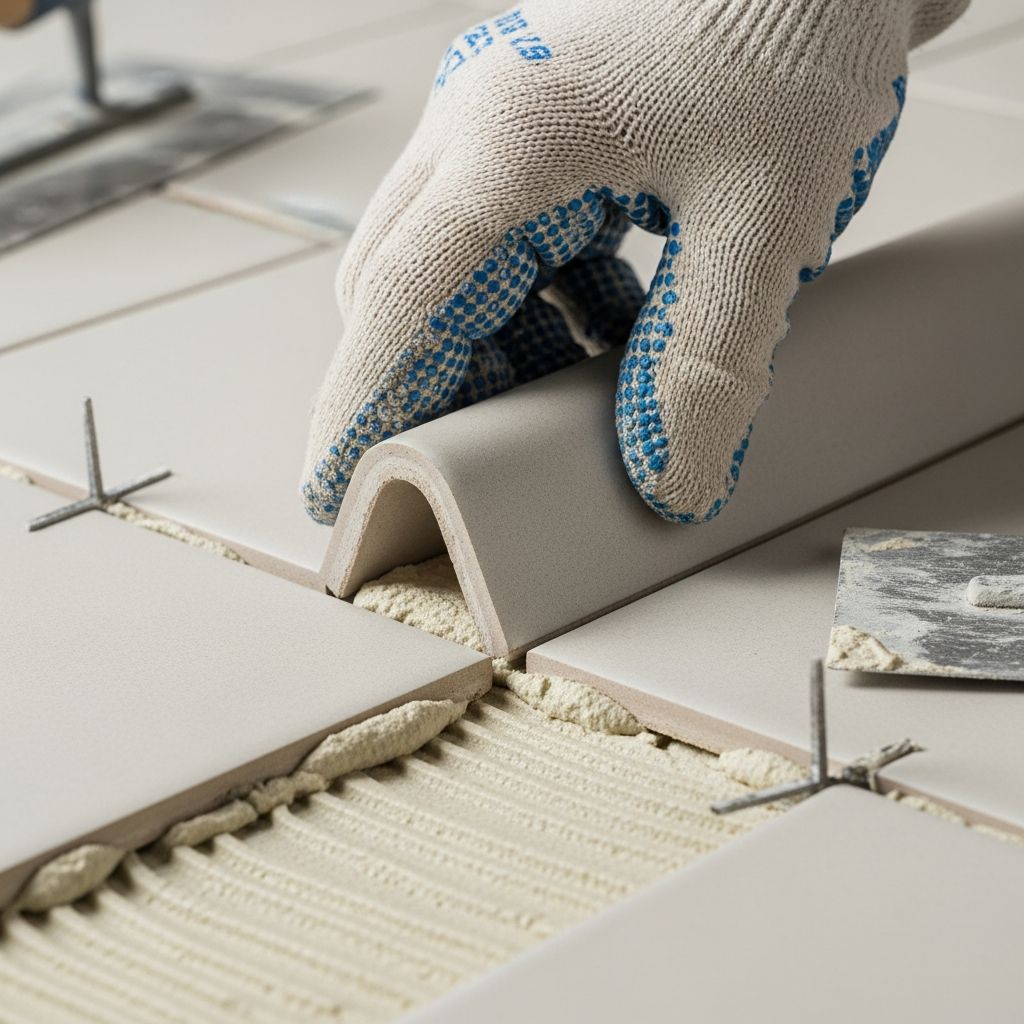
The mortar application technique significantly impacts installation success. Begin by applying a thin-set mortar coat to both the substrate and the back of the bullnose tile. Using the flat side of a notched trowel, create a skim coat—a thin layer that ensures proper contact between tile and wall.
Next, use the notched side of the trowel to create ridges in the mortar. These ridges ensure adequate coverage and allow excess mortar to escape as you press the tile into place. The ridges should run perpendicular to the edge of the wall. For bullnose pieces, many installers apply slightly thicker mortar applications to compensate for the rounded back edge, which doesn’t contact the wall as uniformly as flat-backed tiles.
Apply mortar to both the wall and the tile back for optimal adhesion. This double-notching technique ensures complete coverage and eliminates air pockets that could weaken the installation or allow water penetration in wet areas.
Positioning and Aligning Bullnose Trim
Carefully position each bullnose piece, ensuring it aligns with the grout joints of adjacent field tiles. The grout joint spacing should remain consistent throughout your installation, creating a visual line that guides the eye along the trim. Use tile spacers to maintain uniform joint widths—typically 1/8 inch for most applications, though this varies based on your specific tile dimensions and design preferences.
Press the bullnose firmly into the mortar, using a slight twisting motion to ensure complete contact. A level helps verify that pieces sit properly before the mortar sets. For areas where bullnose meets field tiles at corners, pay special attention to alignment. The rounded edge should transition smoothly without visible gaps or misalignment.
As you progress along the edge, periodically step back to visually assess the alignment. This practice catches any shifting before mortar sets and allows for adjustments using a rubber mallet or by re-pressing the tile into position.
Managing Cuts and Custom Pieces
Most projects require cutting at least some bullnose pieces to fit specific dimensions. Using a wet saw with a diamond blade produces clean, precise cuts while minimizing chipping. Mark your cut lines clearly before beginning work, and make cuts slowly with steady pressure to prevent tile cracking.
When bullnose meets obstacles or transitions to different surfaces, scribing techniques help create perfect fits. Hold the bullnose piece in its final position and use a pencil to mark where cuts need to be made. Transfer these marks to the tile and make cuts before final installation. This approach ensures pieces fit precisely without forcing or gaps.
Temporary Securing and Support Measures
Because bullnose pieces are rounded, they have a natural tendency to shift or slide during mortar curing. To prevent movement, apply blue painter’s tape across the rounded edge, pulling the tape down to provide downward pressure on the tile. This technique holds pieces in position without marring the tile surface. Ensure the tape maintains contact with both the bullnose and the field tile below it.
Leave this temporary support in place until the mortar sets completely—typically 24 hours. Never apply grouting compound or proceed with further work until you’ve confirmed that mortar has fully cured. Disturbing bullnose tiles before curing compromises the adhesive bond and invites future problems.
Cleaning and Mortar Management
As you install bullnose pieces, excess mortar will naturally squeeze out of the joints and appear on tile surfaces. Remove this material promptly before it sets, as thin-set mortar hardens similar to construction adhesive and becomes extremely difficult to remove once cured.
Use a damp sponge or cloth to wipe away excess mortar, working along the grout lines and tile surfaces. This cleanup step serves a dual purpose: it removes unwanted material and allows you to verify that mortar has properly filled all joints. Continue cleaning throughout the installation process rather than waiting until all tiles are set.
Grouting and Finishing Techniques
Once mortar has completely cured, you’re ready to apply grout to fill the joints between bullnose trim and field tiles. Mix grout according to package instructions, achieving a consistency similar to peanut butter—thick enough to hold shape but workable enough to spread easily.
Apply grout using a rubber float or grout blade, pressing the compound into joints at a 45-degree angle. Work diagonally across the tile surface to avoid pulling grout out of the joints. Ensure all gaps, including those between bullnose and field tiles, receive adequate grout coverage.
After the grout firms slightly (typically 15-30 minutes depending on conditions), use a damp sponge to remove excess from tile surfaces. Wipe diagonally across tiles to avoid extracting grout from joints. Rinse and wring out the sponge frequently to prevent grout residue from spreading. Multiple passes ensure clean tile surfaces.
Allow grout to cure for the time specified on its packaging—typically 48-72 hours—before exposing the area to water or heavy use. In shower installations, this curing period is critical to ensure water resistance.
Waterproofing and Caulking Considerations
For shower and bathroom applications, seal vulnerable areas where water might penetrate. Caulk or silicone should be applied anywhere that requires additional water protection, including drain holes, edges near sinks, and transitions between tile and other materials.
This protective layer prevents water from seeping behind tiles where it could damage substrate materials or promote mold growth. Choose caulk products specifically designed for wet environments and tile applications, following manufacturer instructions for application and curing.
Common Challenges and Solutions
| Challenge | Cause | Solution |
|---|---|---|
| Bullnose tiles slipping during installation | Insufficient mortar or improper support | Apply tape support and increase mortar thickness slightly |
| Inconsistent grout joint spacing | Improper spacer use or tile movement | Use consistent spacer sizes and verify alignment frequently |
| Visible gaps between bullnose and field tiles | Substrate irregularities or misalignment | Check substrate flatness and re-level as needed |
| Grout cracking after curing | Inadequate curing time or movement before set | Allow full cure time and avoid water exposure during curing |
| Difficult cuts with chipping | Improper saw technique or dull blade | Use sharp diamond blades and slow, steady cutting pressure |
Professional Tips for Superior Results
- Test cut a practice piece on scrap ceramic to perfect your technique before cutting final pieces
- Maintain consistent mortar application thickness throughout the project for uniform tile heights
- Use a notched trowel size appropriate to your tile dimensions—consult tile manufacturer recommendations
- Install bullnose trim on outside corners before setting interior field tiles when possible for easier alignment
- Keep mortar mixing batches small to prevent premature drying and ensure optimal workability
- Verify grout color selections by viewing samples on your specific tile—lighting affects color perception
- Consider hiring professionals for complex corner installations or extensive shower surrounds
- Document your grout and mortar product names and batch numbers for future repairs or expansions
Design Considerations and Style Options
Bullnose trim comes in numerous materials, colors, and finishes to coordinate with your design preferences. Ceramic bullnose offers versatility, cost-effectiveness, and durability suitable for most residential applications. Glass, natural stone, and porcelain options provide premium aesthetics for contemporary or luxury installations.
Consider how bullnose trim will interact with your overall color scheme and design aesthetic. A contrasting bullnose trim can create visual definition, while matching trim provides seamless integration. In shower applications, selecting trim that complements wall tile color and texture creates a unified, professional appearance.
Maintenance and Long-Term Care
Properly installed ceramic bullnose trim requires minimal maintenance. Regular cleaning with mild soap and water preserves appearance and prevents buildup. In bathrooms and showers, ensure adequate ventilation to minimize moisture accumulation and mold growth on grout lines.
Periodically inspect grout joints for cracks or gaps that might allow water penetration. Small cracks can be sealed with caulk before they expand into larger problems. If grout deteriorates significantly, professional regrouting can restore water resistance and appearance.
Conclusion and Final Recommendations
Installing ceramic bullnose trim transforms simple tile work into a professionally finished project. By following proper preparation, application, and finishing techniques, you’ll create edges that enhance both the aesthetic appeal and functionality of your tiled surfaces. Take time with each step, verify alignment frequently, and maintain patience during the curing process to ensure results that last for years.
References
- How To Tile A Shower Pt. 4 – Install Mosaic Tile And Bullnose Trim — YouTube. 2024. https://www.youtube.com/watch?v=snZ9h6I06Qg
- Everything You Need To Know About Bullnose Tile — Tile Club. 2024. https://www.tileclub.com/blogs/news/everything-you-need-to-know-about-bullnose-tile
- How to Finish Tile Edges – Bullnose, Pencil Trim & Metal Edging — YouTube. 2024. https://www.youtube.com/watch?v=OwJOqGYtpu0
- How To Install Bull Nose Trim Tiles On Outside Corner Of Shower Wall — YouTube. 2017. https://www.youtube.com/watch?v=Ljr3JrlAjrk
- Bullnose Tile: What It Is and How to Use It — RUBI. 2024. https://www.rubi.com/us/blog/bullnose-tile/
- Top Ways To Finish Tile Edges — Tile Shop. 2024. https://www.tileshop.com/resources/how-to/top-ways-to-finish-tile-edges
- Bullnose Tile: A Complete Guide — Mercury Mosaics. 2024. https://mercurymosaics.com/blogs/news/bullnose-tile-a-complete-guide
Similar Articles








Read full bio of medha deb