Check If Home Wiring Is Grounded: 4 Safe Tests For Owners
Learn simple, safe methods to verify if your home's electrical wiring has proper grounding for safety and code compliance.
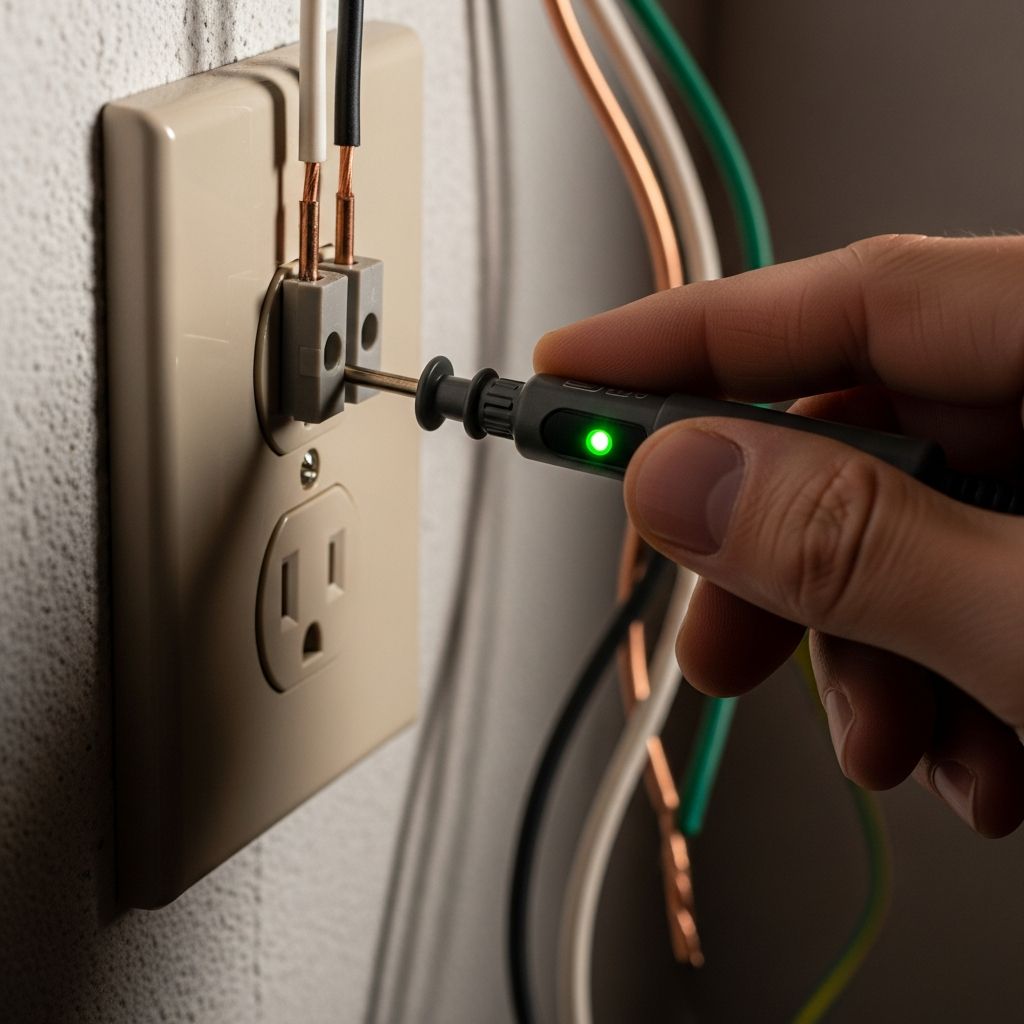
Check If Home Wiring is Grounded
Proper grounding in home electrical wiring provides a safe path for excess electricity to dissipate into the earth, preventing shocks, fires, and equipment damage. Homes built before the 1960s often lack this feature, while modern systems include it as standard.
Understanding the Role of Grounding in Household Electricity
Grounding connects your electrical system to the earth, stabilizing voltage and directing fault currents away from people and appliances. It consists of two main parts: the grounding electrode system, which links the main panel to a ground rod driven into the soil, and the equipment grounding system, which runs bare or green wires from outlets and devices back to the panel.
Without grounding, a fault like a frayed wire touching a metal appliance case can energize surfaces, posing shock risks. The ground wire offers a low-resistance path, tripping breakers quickly. National codes from the NFPA mandate these systems for all new installations to minimize hazards.
Visual Signs Your Wiring May Lack Grounding
Start inspections with obvious clues. Older outlets with two flat slots and no round hole below indicate ungrounded wiring, common in pre-1960s homes. Modern grounded outlets have three holes: two slits for hot and neutral, plus a U-shaped ground pin.
- Inspect all rooms: Kitchens, bathrooms, and garages should have grounded outlets per code.
- Check for adapter plugs: Using ‘cheater’ plugs on two-prong outlets doesn’t provide true grounding.
- Examine exposed wiring: In basements or attics, look for three-wire cables (black hot, white neutral, bare/green ground) versus two-wire types.
Even if outlets appear grounded, verify the system. Some homes have three-prong outlets wired without actual ground connections, a ‘false ground’ hazard.
Simple Outlet Testing Methods for Homeowners
Use affordable tools to test outlets safely without opening panels. A basic outlet tester, costing under $10, plugs in and uses lights or codes to indicate status.
| Test Result | Light Pattern | Meaning |
|---|---|---|
| Correctly Grounded | Two lights on (power and ground) | System is safe and wired properly. |
| Open Ground | One light on (power only) | Hot and neutral present, but no ground path. |
| Reverse Polarity | Uneven lights | Wires swapped; fix needed for safety. |
| No Ground, Bootleg | Appears grounded but isn’t | Miswired; requires professional check. |
Follow device instructions: Plug into multiple outlets per circuit. Test GFCI outlets by pressing ‘test’—they should click off, confirming protection even if ungrounded.
For advanced checks, a multimeter set to continuity tests ground continuity. Turn off power at the breaker, remove outlet cover, touch probes to ground screw and neutral bus in panel (restore power first for voltage checks). Readings near zero ohms confirm connection.
Inspecting Your Electrical Panel for Grounding Evidence
The main service panel reveals system-wide grounding. Locate it (often in basement or garage), and look for:
- A bare copper or green wire from the neutral bus bar to a ground rod outside, typically 8 feet long.
- Separate neutral and ground bars in subpanels; main panels may bond them together per code.
- Grounding electrode conductor: Thick wire (often #6 AWG copper) clamped to metal water pipes or Ufer grounds (concrete-embedded rods).
Dig around the foundation exterior for the ground rod—copper-clad steel pipe with an AC disconnect wire attached. Resistance testing with a ground tester clamp meter should show under 25 ohms to earth. Avoid DIY if unsure; panels hold lethal voltage.
Differences Between Grounding Electrode and Equipment Systems
Many confuse these distinct systems. The grounding electrode system stabilizes voltage against surges (lightning, utility spikes) by routing energy to earth via rods or pipes— it doesn’t trip breakers due to soil’s high resistance.
The equipment grounding system protects occupants: Ground wires bond metal enclosures (fridge cases, boxes) to the panel, creating a fault path that overloads breakers. In older two-wire homes, adding a ground rod alone won’t ground outlets without running new ground wires.
Bonding Requirements for Metal Pipes and Structures
Bonding equalizes potential on conductive parts. Code requires supplemental bonding jumpers on:
- Metal water pipes entering the home (clamp within 5 feet of panel).
- Gas lines, to prevent arcing during faults.
- Structural steel, pools, and HVAC ducts.
This prevents side-flash shocks. Inspect for green wires or clamps on pipes near the panel.
Risks of Ungrounded Wiring and When to Call Experts
Ungrounded systems heighten shock and fire risks, especially with high-draw appliances. Insurance may deny claims for outdated wiring, and selling homes often requires updates.
DIY limits: Never probe live wires without qualification. Hire licensed electricians for full inspections using infrared cameras or ground resistance meters. Upgrades include GFCI/AFCI breakers for two-prong outlets or full rewiring to three-wire Romex. Costs range $1,500–$10,000 depending on home size.
Upgrading to Modern Grounded Systems
Options for older homes:
- Install GFCIs on ungrounded outlets—they self-test and protect without ground.
- Run new ground wires to nearby grounded boxes or panels.
- Replace two-prong with tamper-resistant three-prong via ground-fault circuits.
- Full service upgrade for comprehensive safety.
Always pull permits and follow NEC 2023 standards. Post-upgrade, retest everything.
Frequently Asked Questions
Can I use a ground rod to fix ungrounded outlets?
No, a ground rod connects the panel to earth but doesn’t provide equipment grounding paths to outlets without new wiring.
Are three-prong outlets always grounded?
Not necessarily—test them, as bootleg grounds (neutral miswired to ground) are common and unsafe.
How often should I check grounding?
Annually, or after storms, renovations, or appliance issues. Professional inspections every 3–5 years.
Do apartments need grounding checks?
Yes, tenants can test outlets; landlords handle upgrades per local codes.
What’s the difference between grounding and GFCI?
Grounding provides a permanent fault path; GFCIs detect imbalances and cut power rapidly, ideal for ungrounded setups.
References
- Electrical Grounding and Bonding in Your Home — Golden Rule PHC. 2023. https://goldenrulephc.com/blog/electrical-grounding-and-bonding/
- Electrical Grounding Explained | Basic Concepts — YouTube (RealPars). 2019-10-15. https://www.youtube.com/watch?v=YO-Dnk6ZKrI
- What is a Ground Wire and Why is it Important? — Mister Sparky. 2023. https://www.mistersparky.com/expert-tips/circuits-and-wiring/what-is-a-ground-wire-and-why-is-it-important/
- Electrical Grounding Explained: What You Need to Know — YouTube (ElectroBOOM?). 2023. https://www.youtube.com/watch?v=5o6mdrmG_IY
- Understanding Grounding of Electrical Systems — NFPA. 2021-09-27. https://www.nfpa.org/news-blogs-and-articles/blogs/2021/09/27/grounding-understanding-the-essentials-for-building-the-foundation-of-a-structures-electrical-system
Similar Articles





Read full bio of medha deb