Choosing an Addition’s Foundation: Complete Guide
Master the essentials of selecting the right foundation for your home addition project.
Choosing an Addition’s Foundation: A Comprehensive Guide
When planning a home addition, one of the most critical decisions you’ll make is selecting the right foundation. The foundation serves as the structural backbone of your addition, supporting the weight of walls, roofing materials, and everything inside. Choosing the wrong foundation can lead to costly repairs, structural problems, and safety concerns down the road. This guide will help you understand the different foundation options available and how to select the best one for your specific needs.
Understanding Foundation Basics
A foundation is the base upon which your entire addition rests. It distributes the weight of the structure evenly across the ground and protects the building from soil movement, moisture, and frost damage. The foundation must be properly designed and constructed to prevent settling, cracking, and other structural issues that can compromise your home’s integrity.
Before selecting a foundation type, you need to consider several important factors, including your local climate, soil conditions, building codes, budget, and the specific requirements of your addition project.
Key Factors to Consider Before Choosing a Foundation
Several critical factors should influence your foundation decision:
Soil Conditions and Site Preparation
The soil on your property plays a crucial role in determining which foundation types are suitable. Poor soil conditions, such as clay, sandy, or expansive soil, may require special preparation or different foundation approaches. A professional soil engineer should evaluate your site to determine soil bearing capacity, drainage patterns, and potential issues like settling or frost heave. Understanding your soil composition helps prevent future problems and ensures your foundation remains stable for decades.
Local Climate and Frost Lines
Climate significantly impacts foundation requirements. In areas with freeze-thaw cycles, foundations must extend below the frost line to prevent frost heave, which occurs when frozen soil expands and pushes against the foundation. The frost line depth varies by location, ranging from a few inches in warm climates to several feet in northern regions. Your local building codes specify the minimum depth required for your area.
Building Codes and Regulations
Local building codes establish minimum standards for foundation construction, including depth requirements, reinforcement specifications, and drainage systems. These codes exist to ensure structural safety and protect your investment. Always check with your local building department to understand the specific requirements for your addition before beginning work.
Budget Considerations
Foundation costs vary significantly based on type and complexity. Concrete slab foundations are typically the least expensive, while basement foundations are the most costly. Your budget should factor in not only the initial construction cost but also long-term maintenance and potential repair expenses.
Types of Foundations for Home Additions
Concrete Slab Foundations
Concrete slab foundations consist of a flat, monolithic concrete surface poured directly on the ground. This is the most common foundation type for home additions in many regions, particularly in warmer climates where frost is not a concern. Slab foundations are cost-effective and relatively simple to construct.
The concrete slab typically sits on a prepared base of gravel or sand, which provides drainage and a level surface. Reinforcement, such as rebar or wire mesh, is placed within the concrete to prevent cracking and add structural strength. A vapor barrier beneath the slab helps prevent moisture from rising into the addition.
Advantages of concrete slabs include lower initial costs, faster construction timelines, and minimal excavation. However, slab foundations offer limited crawl space for utilities and repairs, and they may develop cracks if the underlying soil settles unevenly.
Pier and Beam Foundations
Pier and beam foundations, also called post and beam or raised foundations, elevate the structure above ground level using vertical support posts (piers) and horizontal beams connecting them. This type is particularly useful in areas with problematic soil, high water tables, or significant temperature fluctuations.
Piers can be constructed from concrete, treated wood, or steel, and they extend down to stable soil or bedrock. Wooden beams rest on top of the piers, creating a crawl space beneath the addition. This accessible space allows for easier installation and maintenance of utilities like plumbing and electrical systems.
The pier and beam approach offers excellent flexibility for uneven terrain and provides ventilation to reduce moisture problems. The main disadvantages are higher material costs and more complex construction compared to slab foundations.
Basement Foundations
Basement foundations involve excavating below grade to create a below-ground living space or storage area. This option provides substantial additional square footage and is ideal if you’re planning a significant expansion. However, basement construction is expensive, time-consuming, and requires careful attention to waterproofing and drainage.
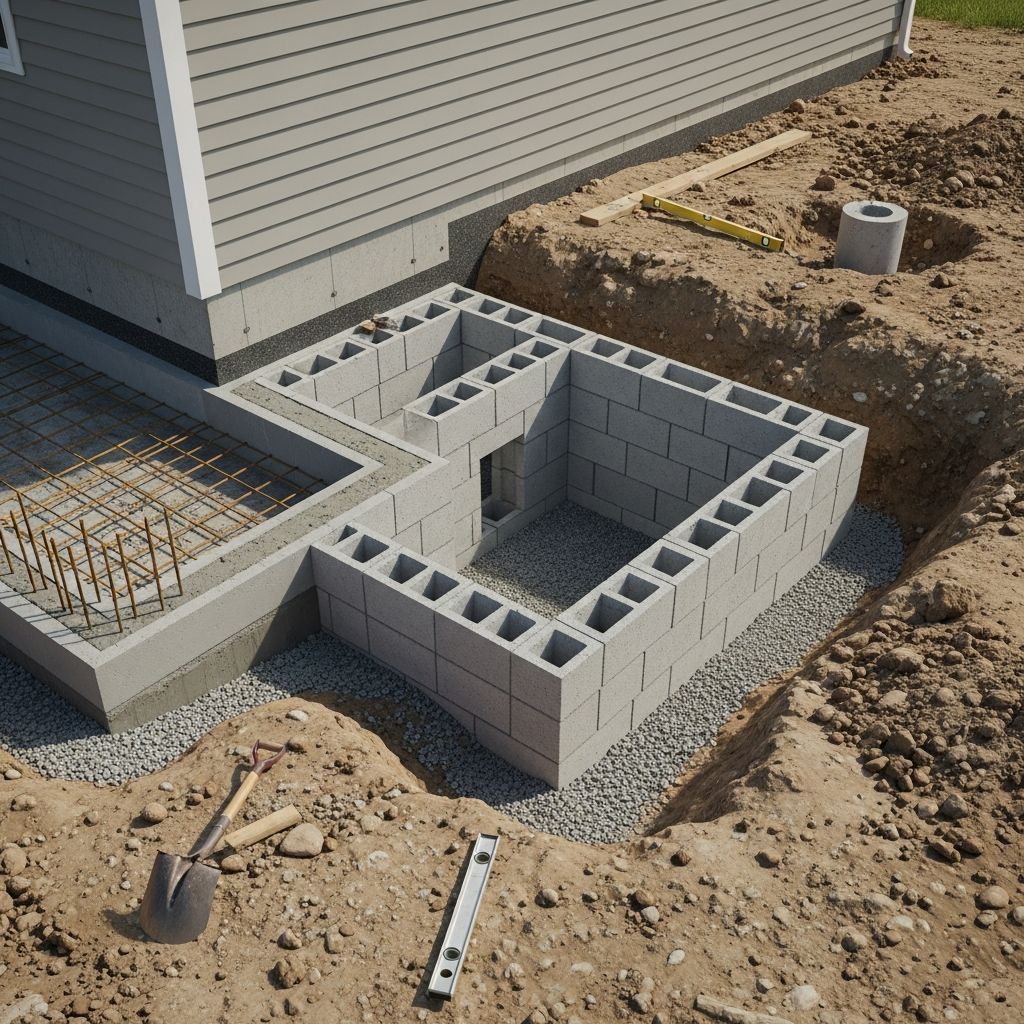
Basement foundations require extensive excavation, concrete or concrete block walls, adequate drainage systems, and proper ventilation. They must comply with stricter building codes due to occupancy considerations. While basements add valuable living space and can increase home value, they demand significant investment and ongoing maintenance to prevent water intrusion.
Foundation Depth Requirements
Your foundation must extend to an adequate depth to remain stable and safe. The required depth depends primarily on your area’s frost line depth. In northern climates, frost lines can extend 4 to 5 feet below grade, while southern regions may require only 12 to 18 inches. Building on shallow foundations in frost-prone areas results in frost heave, causing the foundation to shift and crack as frozen soil expands during winter.
Local building codes specify the minimum required depth for your specific location. When connecting a new addition to an existing house, you may need to extend the new foundation to match the existing foundation depth, ensuring consistent settlement patterns and structural integrity.
Connecting to Your Existing Foundation
If your addition connects to your existing home, the connection between the old and new foundations requires careful planning and execution. The two foundations must be properly tied together to function as a single integrated structure. This typically involves:
Creating a Proper Connection
The new foundation should extend to the same depth as the existing foundation to ensure both settle uniformly. Rebar dowels driven into the existing foundation create a mechanical bond with the new concrete, tying them together. The connection must be reinforced adequately to handle stress and movement.
Addressing Different Settlement Rates
If the new addition is built on different soil types than the existing home, settlement rates may vary. This differential settlement can cause cracking and structural problems. A structural engineer should evaluate the situation and recommend appropriate measures, which might include adjusting the foundation depth, improving the soil, or using special connection techniques.
Drainage and Moisture Protection
Proper drainage is essential for foundation longevity and is often overlooked during addition construction. Water accumulation around the foundation can lead to erosion, freezing problems, and moisture infiltration into your home. Effective drainage systems include:
Vapor Barriers and Moisture Control
A vapor barrier, typically 6-mil polyethylene plastic, should be installed beneath concrete slabs to prevent moisture migration from the soil into the concrete and living spaces above. This barrier significantly reduces potential moisture problems and improves indoor air quality.
Perimeter Drainage
Install drainage systems around the foundation perimeter to direct water away from the structure. Perforated drain pipes, usually installed at the footing level, collect and redirect groundwater. Proper grading around the addition ensures water naturally slopes away from the foundation.
Waterproofing Treatments
For below-grade portions of your addition, apply waterproofing coatings or membranes to foundation walls. These prevent water penetration and protect the interior from moisture damage, mold growth, and structural deterioration.
Reinforcement and Structural Integrity
Proper reinforcement ensures your foundation can handle structural loads and potential ground movement. Most foundations require:
Rebar Placement
Rebar (reinforcing steel bars) strengthens concrete and prevents excessive cracking. Typical placement includes rebar at the top and bottom of footings and throughout slab foundations. The spacing, size, and configuration depend on local building codes and structural requirements determined by engineers or building officials.
Reinforcement Patterns
Common reinforcement patterns include grid layouts with rebar spaced 16 inches on center in both directions. Dowels connecting old and new foundations should be properly embedded and spaced according to specifications. Improper reinforcement placement or spacing can compromise foundation strength and lead to future problems.
Common Foundation Problems and Solutions
Settlement and Cracking
Uneven settlement causes visible cracking in foundation concrete. Small hairline cracks are common and usually not serious, but larger cracks may indicate more significant problems. Wide horizontal cracks, stair-step cracking in block foundations, or recurring cracks after repair suggest serious settlement issues requiring professional evaluation and possible remediation.
Frost Heave and Movement
In freeze-thaw climates, foundations built above the frost line shift upward as soil freezes. This movement cracks concrete, pushes walls out of plumb, and damages structural connections. The solution involves digging to proper frost line depth during initial construction.
Water Intrusion and Moisture
Poor drainage or inadequate waterproofing allows water to penetrate the foundation, causing efflorescence (white mineral deposits), mold growth, and structural deterioration. Solutions include improving exterior drainage, repairing cracks, and applying waterproof coatings to interior or exterior surfaces.
Working With Professionals
Foundation selection and construction should involve qualified professionals. A structural engineer evaluates soil conditions, determines appropriate foundation types, and designs the foundation to meet building codes and your specific needs. A contractor experienced in foundation work ensures proper construction, appropriate material selection, and code compliance.
Before hiring professionals, verify their licenses, insurance, and references. Request detailed written estimates and warranties. Ensure all work complies with local building codes and obtains necessary permits and inspections.
Planning Timeline and Process
The foundation construction process typically includes:
Site Preparation
Clearing the addition area, excavating to proper depth, and preparing the soil base occur first. Temporary structures may be needed to protect existing landscaping or utilities.
Forming and Reinforcement
Wooden forms outline the foundation perimeter and depth. Rebar is placed according to specifications, and any connection points to existing foundations are prepared with dowels.
Concrete Placement
Concrete is poured, screeded to proper level, and finished. After curing (typically 7-28 days depending on conditions), forms are removed and backfilling begins.
Final Preparation
Drainage systems are completed, backfill is compacted, and grading is adjusted to direct water away from the foundation. The foundation is then ready for wall construction.
Frequently Asked Questions
How deep should my addition’s foundation be?
Your foundation must extend below your local frost line depth. Check with your local building department to determine the required depth in your area. This typically ranges from 12 inches in warm climates to 4-5 feet in northern regions.
Can I use a different foundation type than my existing home?
Yes, you can use a different foundation type for your addition if it’s disconnected from your home. However, if your addition connects to the existing structure, the foundations must be properly tied together and reach the same depth to avoid structural problems.
What’s the most cost-effective foundation for an addition?
Concrete slab foundations typically offer the lowest initial cost and fastest construction timeline. However, the most cost-effective choice depends on your soil conditions, local climate, and long-term considerations. A structural engineer can recommend the best value for your specific situation.
How long before I can build on my new foundation?
Concrete typically requires 7-14 days before it can safely support building loads, though this varies based on concrete mix, weather conditions, and thickness. Your contractor will determine when the foundation is ready for construction to continue.
What permits do I need for foundation work?
Most foundation work requires building permits from your local jurisdiction. Permits ensure compliance with building codes and allow for required inspections during construction. Your contractor should handle permit applications.
How can I prevent foundation problems in my addition?
Proper design by a qualified engineer, correct construction by experienced contractors, adequate drainage systems, appropriate soil preparation, and code compliance prevent most foundation problems. Regular inspection and maintenance also help identify and address minor issues before they become major problems.
References
- Building Code Requirements for Structural Concrete — American Concrete Institute. 2023. https://www.concrete.org/
- International Building Code (IBC) 2024 — International Code Council. 2024. https://www.iccsafe.org/products-and-services/icc-product-listing/international-building-code/
- Foundation Design and Construction — U.S. Department of Housing and Urban Development. 2023. https://www.hud.gov/
- Soil and Foundation Design Guide for Residential Construction — National Association of Home Builders. 2022. https://www.nahb.org/
- Residential Foundation Design and Construction — American Society of Civil Engineers. 2023. https://www.asce.org/
Similar Articles








Read full bio of medha deb