Choosing the Perfect Backyard Gazebo: Styles, Materials, and Buying Tips
A complete, SEO-friendly guide to picking, placing, and maintaining a gazebo that transforms your outdoor space.
How to Choose the Right Gazebo for Your Backyard
Adding a gazebo can turn a plain yard or patio into a comfortable outdoor room, but the best choice depends on your space, climate, and how you plan to use it. This guide walks through styles, materials, features, and practical buying tips so you can select a gazebo that fits your lifestyle and budget.
Why Add a Gazebo to Your Outdoor Space?
A well-chosen gazebo does more than provide shade. It creates a destination in your yard, defines a gathering zone, and can even boost your home’s curb appeal. Whether you host parties, relax with a book, or need a sheltered spot for a hot tub, the right structure can serve as a multi-season retreat.
- Shade and comfort: Protects you from direct sun and light rain, extending how long you can comfortably stay outside.
- Outdoor entertaining: Offers a focal point for dinners, birthdays, or quiet evenings with friends.
- Property value: A sturdy, attractive gazebo can make your yard more appealing to future buyers.
- Versatile use: Works as a dining area, lounge, grilling station, hot-tub cover, or quiet work-from-home nook.
Common Gazebo Styles and Shapes
Before comparing brands or prices, decide which general style fits your yard and how permanent you want the structure to be. Style affects not only how the gazebo looks, but also how difficult it is to install and move.
Permanent Backyard Gazebos
Permanent gazebos are designed to stay in one place year-round, usually anchored to a deck, patio, or concrete pads. They often feature metal or wood frames, solid roofs, and the strength to handle wind and snow when properly installed.
- Best for homeowners who want a long-term outdoor room.
- Usually more expensive but also more durable and weather-resistant.
- Can support extras like lighting, fans, curtains, and privacy screens.
Semi-Permanent and Seasonal Gazebos
Semi-permanent gazebos occupy the middle ground between heavy, fixed structures and ultra-portable pop-ups. Many have steel or aluminum frames with fabric canopies that can be removed in winter.
- Good choice if you experience moderate winters and plan to remove the canopy in harsh weather.
- Easier to disassemble or move than a fully permanent structure.
- Provides a more finished look than basic pop-up tents.
Pop-Up and Portable Gazebos
Pop-up gazebos are lightweight, foldable models typically made from steel or aluminum frames and polyester canopies. They are designed for rapid setup and takedown for events, camping trips, or temporary shade over a lawn or driveway.
- Ideal for renters, event hosts, or anyone who needs flexible shade.
- Not intended for high winds or heavy rain; often require weights or stakes.
- Generally the most budget-friendly option, but with shorter lifespans.
Shape Options: Square, Rectangular, and More
Gazebos come in several shapes, each with its own advantages for different yard layouts and uses. Choosing the right footprint helps you maximize usable floor space and circulation.
- Square: Fits well on patios and decks, easier to furnish with centered seating or a dining set.
- Rectangular: Great over long dining tables, outdoor kitchens, or hot tubs.
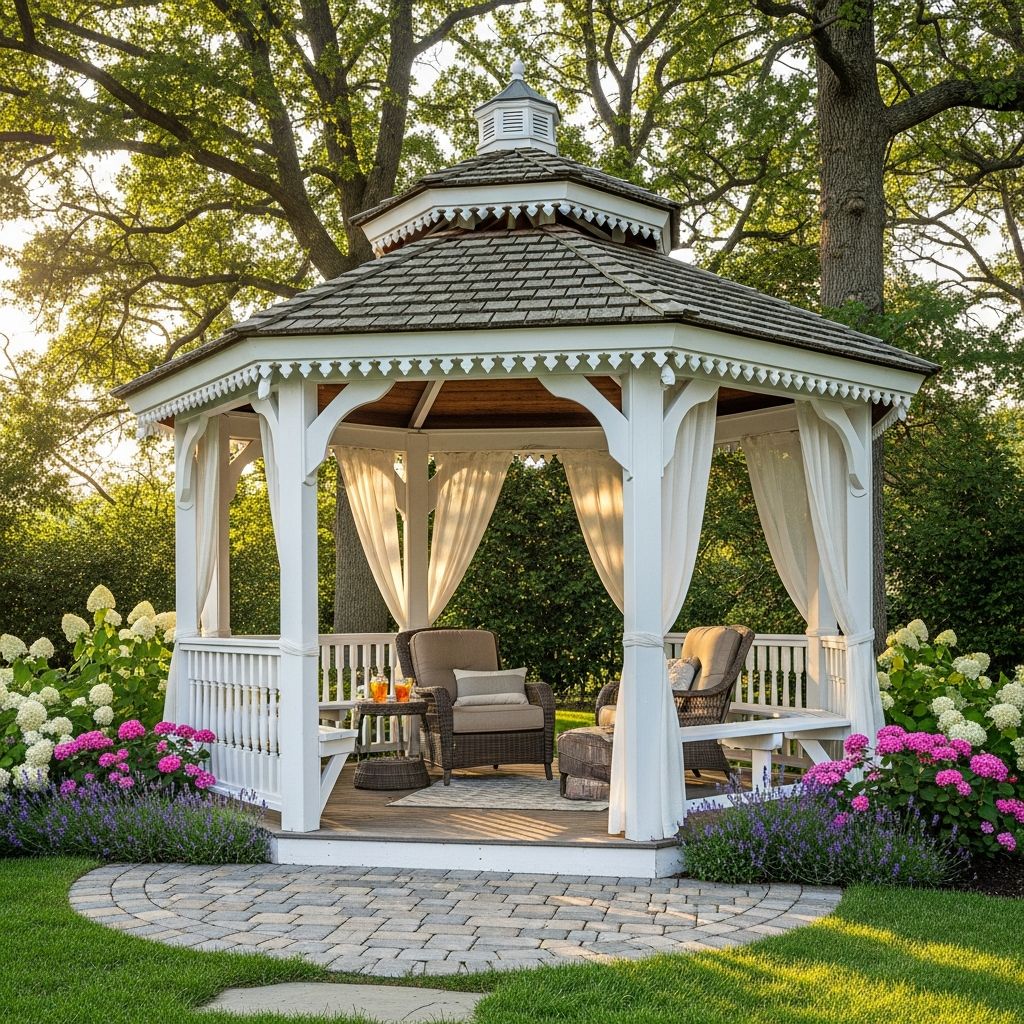
- Hexagonal or octagonal: Traditional, pavilion-like look; can be a dramatic focal point in the middle of a lawn.
- Lean-to / wall-mounted: One side attaches to a house or garage, creating a covered extension of your patio or back door.
Frame Materials: Pros and Cons
Frame material affects weight, durability, upkeep, and price. Comparing the main options side by side can clarify which direction makes most sense for your climate and maintenance preferences.
| Material | Advantages | Drawbacks | Best For |
|---|---|---|---|
| Aluminum | Lightweight, resists rust, low maintenance. | Can be less rigid than steel in extreme wind; dents more easily. | General backyard use, decks, and DIY installations. |
| Steel | Very strong, handles wind and snow loads well. | Heavier; needs protective coatings to prevent rust. | Permanent gazebos in harsher climates. |
| Wood | Warm, natural look; can be stained or painted. | Requires periodic sealing or painting; vulnerable to rot and insects if neglected. | High-visibility areas where appearance is a priority. |
| Vinyl / Composite | Minimal maintenance, resists moisture and insects. | Less traditional look than wood; limited color changes after installation. | Busy households that prefer a low-maintenance structure. |
For simple installation, aluminum frames often strike a good balance of weight and strength, especially for DIY projects. If you live in a snow-prone or windy region, a heavier steel or well-built wood frame may be worth the extra effort and cost.
Roof Options and Weather Protection
The roof type determines how well your gazebo handles sun, rain, and snow, as well as how the structure looks from both inside and outside. When comparing models, note whether the roof is soft (fabric) or hard (rigid panels or shingles).
Soft-Top (Fabric) Roofs
Fabric roofs are usually made from polyester, canvas, or similar materials. They are common on pop-up and budget-friendly gazebos and are typically lighter and easier to replace than hard panels.
- Provide good shade and basic rain protection.
- Often removable for winter storage to prolong their lifespan.
- More vulnerable to UV fading, tearing, and pooling water if not properly tensioned.
Hard-Top Roofs
Hard-top gazebos feature rigid roofing such as steel panels, aluminum, polycarbonate, or shingles. Although usually more expensive, they offer better long-term durability and can handle a wider range of weather conditions.
- Better for permanent or multi-season use, especially where strong sun or snow is common.
- Less likely to sag, tear, or need yearly replacement.
- Heavier, so they require a sturdier frame and more robust anchoring.
Ventilation Features
Some gazebo roofs include a double-tiered design or a central vent to let hot air escape and reduce wind uplift. This detail can make a noticeable difference in summer comfort and roof stability.
- Look for a vented top in hot or humid climates.
- Ensure that vents are protected to keep rain from blowing inside during storms.
Size, Layout, and Space Planning
Choosing a gazebo that looks great but overwhelms your yard is a common mistake. A bit of planning ensures you have enough room to move around furniture comfortably without blocking doors or views.
- Measure carefully: Map out the footprint with string or landscape paint, confirming clearances from fences, utilities, doors, and windows.
- Allow walking space: Leave at least 2–3 feet around furniture so people can move easily.
- Think ahead: Decide if you might add a grill, bar cart, or hot tub later and size up accordingly.
For dining use, plan for at least a 10 x 10 foot structure for a small table and chairs and more if you regularly host larger gatherings. For a lounge area with a sectional sofa or daybeds, rectangular gazebos often make better use of space.
Anchoring, Flooring, and Safety
A gazebo is only as safe as its foundation and anchoring. Even a sturdy frame can become unstable if it is not properly secured to the ground or to a deck.
- Anchoring methods: Common options include concrete footings, anchor plates on a patio or deck, ground stakes, and weighted bases for portable models.
- Local codes: Some areas require permits or have rules about permanent structures near property lines or pools.
- Wind precautions: Remove fabric canopies or sidewalls during storms, and never leave pop-up models unattended in strong gusts.
Flooring is optional but can make the space more comfortable and usable. Gazebos can sit on lawns, concrete slabs, pavers, composite decking, or wood platforms, depending on your budget and design style.
Features and Accessories to Consider
Thoughtful add-ons can transform a basic gazebo into a fully functional outdoor room. When comparing products, think about how much flexibility you want for privacy, bug control, and nighttime use.
- Mosquito netting: Zip-on screens keep insects out while allowing airflow; ideal near water or in buggy climates.
- Privacy curtains: Fabric panels block wind, sun glare, and neighbors’ views; many models include tiebacks.
- Lighting: Look for built-in hooks or center points to hang string lights, lanterns, or a damp-rated ceiling fan.
- Gutter systems: Some hard-top gazebos have integrated gutters that direct rainwater away from the seating area.
- Sidewalls and solid panels: Half-walls or slatted panels can define zones and provide a windbreak without fully closing off the space.
When possible, choose a gazebo that includes or supports these accessories from the start, rather than trying to retrofit later with mismatched add-ons.
Budgeting: What Impacts Gazebo Price?
Gazebo costs span a wide range, from inexpensive pop-ups to custom-built structures. Understanding what drives price helps you prioritize where to spend and where to save.
- Size: Larger footprints require more materials and often heavier frames.
- Material quality: Thicker metal, denser wood, and UV-resistant fabrics generally cost more but last longer.
- Roof type: Hard-top roofs add significantly to the price compared with basic fabric canopies.
- Included accessories: Netting, curtains, and decorative trim increase cost but may be cheaper bundled than added later.
- Installation: DIY assembly saves money, while professional installation or custom builds add labor costs.
For many homeowners, a mid-range aluminum or steel gazebo with a hard roof and included netting offers the best mix of value and durability. If you just need occasional shade, a lower-cost soft-top or pop-up model may be enough.
Basic Maintenance and Care Tips
Even low-maintenance gazebos benefit from periodic cleaning and inspection. A simple seasonal routine can dramatically extend the life of both frame and roof.
- Brush off leaves and debris from the roof to prevent staining and moisture buildup.
- Wash fabric canopies and curtains with mild soap and water; allow to dry fully before storage.
- Inspect hardware, bolts, and anchors twice a year and tighten as needed.
- For wood, reapply stain or sealant on the schedule recommended by the product manufacturer.
In snowy regions, remove heavy snow loads from the roof unless the structure is rated for that weight. For fabric-topped models, consider taking down the canopy before winter storms to prevent tears and bent frames.
Frequently Asked Questions About Gazebos
How big should my gazebo be?
The right size depends on how many people you expect to host and what furniture you plan to use. For a small dining set that seats four, a 10 x 10 foot gazebo usually works; if you plan to add a large table, grill, or lounge seating, consider going up to 12 x 12 feet or larger.
Can I put a gazebo on my deck?
Yes, many homeowners place gazebos on wood or composite decks, but the structure must be properly anchored, and the deck needs to be strong enough to support the weight. When in doubt, consult a contractor or structural professional, especially for heavy hard-top gazebos.
Do I need a permit to install a gazebo?
Requirements vary by location. Some areas exempt small, temporary structures, while others regulate permanent or roofed additions. Checking with your local building department before installation can prevent costly corrections later.
Which is better: soft-top or hard-top?
Soft-top gazebos cost less and are easier to move or store, making them good for seasonal or flexible use. Hard-top models demand a larger investment but provide stronger, more reliable protection from sun and rain for long-term setups.
How long does a typical gazebo last?
Lifespan depends on material quality, climate, and maintenance. Metal and well-maintained wood frames can last many years, while fabric components may need replacement every few seasons, especially in harsh sun or strong winds.
Simple Checklist Before You Buy
Use this quick checklist to compare gazebo options and avoid common regrets.
- Measure your yard, patio, or deck and confirm a clear footprint.
- Decide whether you want a permanent, semi-permanent, or portable structure.
- Choose frame and roof materials that fit your climate and maintenance tolerance.
- Plan for anchoring and verify that your surface can support the weight.
- Look for accessories like netting, curtains, and lighting attachment points.
- Check local rules or permit requirements for roofed structures.
Taking time to think through these details before you order ensures that your new gazebo feels like a natural extension of your home rather than an awkward afterthought.
Similar Articles







Read full bio of medha deb