Christmas Lights Repair Tool: Fix Broken Strands Fast
Master Christmas light repairs with the right tools and techniques for quick fixes.
Christmas Lights Repair Tool: Everything You Need to Know
The holiday season brings joy and festive cheer, but it can also bring frustration when your Christmas lights fail to illuminate. Rather than discarding an entire strand of lights because a few bulbs have burned out, modern repair tools make it possible to diagnose and fix problems quickly and affordably. Understanding how to use these specialized tools can save you time, money, and the hassle of replacing perfectly good light strings.
Understanding the Problem With Christmas Lights
Before diving into repair solutions, it’s important to understand why Christmas lights fail. The typical small Christmas light bulb contains a filament that passes electricity through and creates light. When a filament burns out, the bulb no longer illuminates. However, beneath the filament is a small wire called a shunt that continues to allow electricity to pass through, even when the bulb is no longer lit.
The problem occurs when these shunts become clogged or blocked, preventing electricity from flowing to the rest of the light strand. This blockage stops the entire section of lights from working, even though most of the bulbs remain functional. Without the proper diagnostic tool, identifying which bulb is causing the blockage becomes an exercise in frustration, as simply wiggling bulbs rarely solves the problem.
Top Christmas Light Repair Tools Available
The LED Keeper
The LED Keeper is specifically designed as the only kit able to diagnose and repair LED light sets. This comprehensive tool includes multiple functions in a single device:
- A bulb tester to check individual bulbs
- A fuse tester to identify blown fuses
- A bulb puller for easy bulb removal
- A 9-volt battery for powering the device
- Two place markers to assist in systematic testing
- Two Universal Bulb Replacement PODs for sets with non-replaceable bulbs
The all-in-one design of the LED Keeper makes it an excellent choice for anyone with multiple strings of LED lights to maintain and repair throughout the holiday season.
The Light Keeper Pro
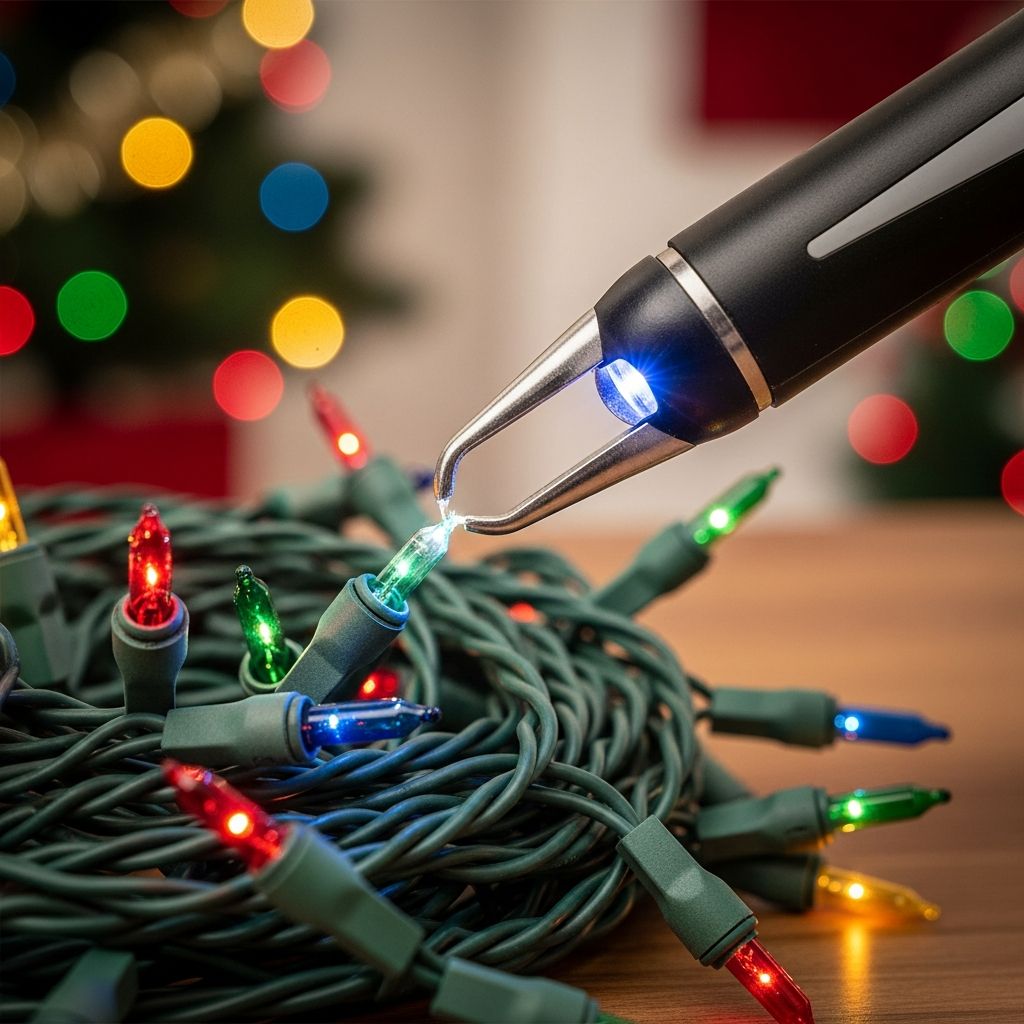
The Light Keeper Pro is another popular option that combines multiple repair capabilities into a single handheld device. This tool features several innovative functions that address the most common Christmas light problems.
The Quick Fix Trigger Feature: The most notable feature of the Light Keeper Pro is its quick fix trigger mechanism. When you insert a bulb into the device and pull the trigger, it sends a controlled electrical current through the bulb. This current breaks up clogged shunts that have become blocked, allowing electricity to flow freely through the light strand again. Most users report needing to pull the trigger 20 to 30 times to fully clear a blockage and restore power to an entire section of lights.
Audible Voltage Detector: By pushing a small button on the device, users can activate an audible voltage detector. This feature beeps when current is flowing through a bulb and remains silent when no voltage is present. This allows systematic testing of each bulb in a strand to quickly identify which bulb or connection is causing the problem. Simply move the detector along your light strand, and the beeping pattern will reveal problem areas.
Built-in Bulb Tester: The Light Keeper Pro includes a top-mounted bulb tester where you can insert individual bulbs to verify whether they’re functioning properly. This eliminates the need for trial and error and helps you determine whether a problem is caused by a burned-out bulb or a blocked shunt.
Fuse Tester: For light strings with replaceable fuses, the device includes a fuse testing feature. Simply place a standard glass fuse between the tester contacts to determine if it’s functioning or needs replacement.
Step-by-Step Guide to Using Christmas Light Repair Tools
Diagnosing the Problem
The first step in repairing Christmas lights is identifying where the problem exists. Start by carefully examining your light string for any visibly burned-out bulbs or loose connections. Make note of the areas where lights appear to be out.
Use the audible voltage detector feature (if your tool includes one) to systematically check each bulb. Starting from the plug end, move the detector along the strand. The beeping will guide you to the exact location where voltage stops flowing, pinpointing the problematic bulb.
Testing Individual Bulbs
Once you’ve identified the general problem area, remove a suspected bulb and insert it into the bulb tester. If the bulb is still functional, the tester will confirm this. If the bulb is burned out, it’s time to replace it with a new one.
Using the Quick Fix Feature
If the bulb tests as functional but the section of lights remains dark, the problem is likely a blocked shunt. Remove the bulb and insert it into the Light Keeper Pro’s quick fix chamber. Pull the trigger repeatedly (typically 20 to 30 times) to send electrical pulses through the bulb’s shunt. These pulses break apart the blockage and restore conductivity.
After using the quick fix feature, reinsert the bulb into its socket and test the lights. In most cases, the entire section will now illuminate. If it doesn’t, move to the next bulb and repeat the process.
Checking Fuses
If your light string uses a replaceable fuse and lights won’t work even after testing bulbs and using the quick fix feature, the fuse may be blown. Locate the fuse holder (usually near the plug end) and remove the fuse. Insert it into the fuse testing feature of your repair tool to determine if it needs replacement.
Advantages of Using Specialized Repair Tools
| Advantage | Benefit |
|---|---|
| Time Savings | Repair damaged strands in minutes instead of hours of troubleshooting |
| Cost Effective | Fix functional strands instead of replacing entire light sets |
| Environmental Impact | Reduce waste by repairing rather than discarding |
| Accuracy | Pinpoint exact problems without guesswork |
| Multiple Functions | One tool addresses multiple types of light problems |
| User Friendly | Simple to use without technical expertise |
Common Christmas Light Problems and Solutions
Half-On, Half-Off Strands
When a section of your lights works while another section remains dark, a blocked shunt is typically the culprit. Use the quick fix feature to restore conductivity and bring those dark sections back to life.
Completely Dark Strands
If an entire strand refuses to light up, check the fuse first. If the fuse is intact, systematically test bulbs starting from the plug end. Replace any burned-out bulbs you find.
Flickering Lights
Flickering often indicates loose bulbs or poor connections. Ensure all bulbs are properly seated in their sockets and check for any corroded or damaged connections.
Burned-Out Bulbs
Individual bulb testers make identifying burned-out bulbs simple and quick. Replace them with compatible bulbs designed for your specific light strand.
Prevention Tips for Long-Lasting Christmas Lights
While repair tools are invaluable, preventing damage in the first place extends the life of your light strings:
- Store lights properly in dry conditions during the off-season
- Avoid excessive tangling when storing light strands
- Use surge protectors when plugging in outdoor lights
- Don’t overload circuits with too many connected strings
- Keep lights away from moisture and extreme temperatures
- Inspect lights before installation each season
When to Repair vs. When to Replace
Most light strings are worth repairing if fewer than 25% of the bulbs are burned out or if only one or two sections have failed. If more than half of your lights are damaged or if the string is very old and outdated, replacement might be more economical than repair.
However, for newer, quality light strands, a repair tool investment pays for itself within the first use, especially if you have multiple strings of lights throughout your home.
Frequently Asked Questions
Q: How much does a Christmas light repair tool cost?
A: Most quality Christmas light repair tools range from $15 to $30, making them an affordable investment that pays for itself by repairing just one or two light strands.
Q: Can repair tools work on all types of Christmas lights?
A: Most modern repair tools are designed to work with both traditional incandescent and LED lights, though some are specifically optimized for one type. Always check the manufacturer’s specifications.
Q: How long does it typically take to repair a light strand?
A: Once you identify the problem, repairs usually take just a few minutes to complete, compared to hours of trial-and-error troubleshooting without the proper tools.
Q: Are Christmas light repair tools safe to use?
A: Yes, these tools are specifically designed to be safe for consumers to use. They use low electrical currents and include safety features to prevent injury.
Q: What if my lights still don’t work after using a repair tool?
A: If repairs are unsuccessful, the light string may have a more serious electrical problem. At this point, replacement is typically the best option.
References
- How To Use A Christmas Bulb Light Tester — ACE Hardware. Accessed 2025. https://tips.acehardware.com/videos/how-to-use-a-christmas-bulb-light-tester/
- Christmas Light Repair Tool Review/Demo, Light Keeper Pro — YouTube. Accessed 2025. https://www.youtube.com/watch?v=g0ZrLhOEF2g
Similar Articles








Read full bio of Sneha Tete