Clean Upholstery with Baking Soda: Complete Guide
Master the art of cleaning upholstery using baking soda for fresh, odor-free furniture.
How to Clean Upholstery with Baking Soda
Baking soda is one of the most versatile and cost-effective cleaning agents available in your kitchen pantry. When it comes to upholstery maintenance, this humble white powder works wonders for both deodorizing and cleaning your furniture. Whether you’re dealing with everyday dust, pet odors, or stubborn stains, baking soda offers a natural, non-toxic solution that’s safe for your family and pets.
The effectiveness of baking soda lies in its chemical properties. Sodium bicarbonate, commonly known as baking soda, is mildly alkaline and has natural odor-neutralizing capabilities. It works by absorbing and neutralizing odors rather than simply masking them, making it ideal for keeping your furniture smelling fresh between deep cleaning sessions.
Why Baking Soda Works for Upholstery
Baking soda is particularly effective for upholstery because it addresses multiple cleaning challenges simultaneously. Its granular texture allows it to penetrate fabric fibers, reaching areas where dust, dirt, and odors accumulate. Unlike harsh chemical cleaners, baking soda is gentle enough for delicate fabrics yet powerful enough to handle tough odor problems.
The odor-neutralizing properties of baking soda make it especially valuable for households with pets, children, or smokers. Rather than adding fragrance to cover bad smells, baking soda chemically neutralizes odor molecules, leaving your upholstery genuinely fresh rather than artificially scented.
Basic Upholstery Deodorizing with Baking Soda
Step-by-Step Deodorizing Process
The simplest and most effective way to use baking soda for upholstery deodorizing follows a straightforward process that requires minimal effort and investment.
Step 1: Prepare Your Furniture
Begin by vacuuming your upholstery thoroughly using the upholstery attachment on your vacuum cleaner. This removes loose dust, crumbs, and debris that may interfere with the baking soda’s effectiveness. Pay special attention to crevices, seams, and areas between cushions where debris tends to accumulate.
Step 2: Apply Baking Soda Liberally
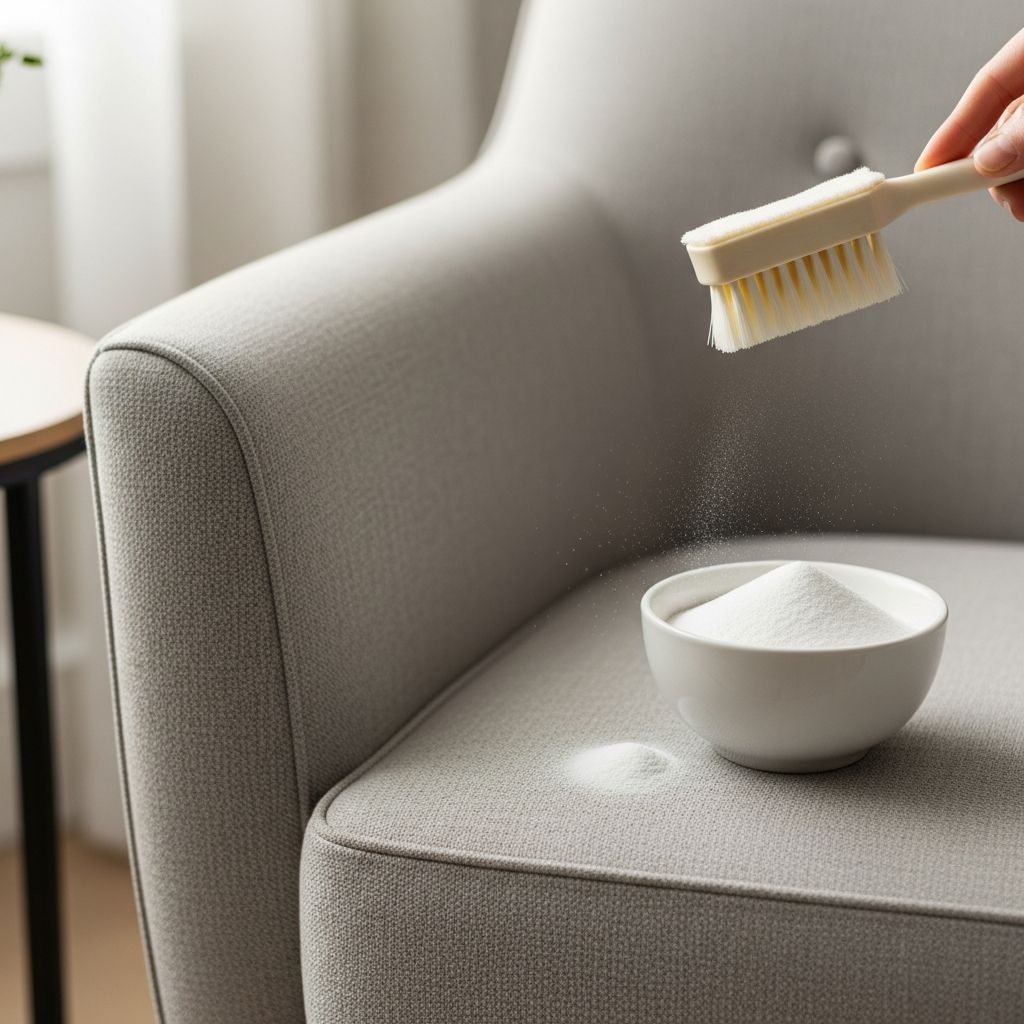
Sprinkle baking soda evenly across the entire upholstered surface. Don’t hold back—generous application ensures thorough coverage of all fabric areas. Make sure to work the powder into corners, creases, and the sides of cushions where odors tend to linger. For heavily soiled or odorous furniture, don’t worry about using too much; excess baking soda can be vacuumed away easily.
Step 3: Allow Adequate Sitting Time
Let the baking soda sit on your upholstery for at least 15 to 20 minutes. During this time, the powder absorbs odors from the fabric. For more stubborn odors, you can leave it for up to one hour. This waiting period is crucial—the longer the baking soda sits, the more effective it becomes at neutralizing odors trapped deep within the fabric fibers.
Step 4: Vacuum Thoroughly
Using your vacuum’s upholstery attachment, carefully remove all the baking soda from the furniture. Make several passes over each area to ensure complete removal. Pay particular attention to seams, piping, and textured areas where baking soda powder can hide. A thorough vacuuming is essential to prevent white residue from remaining on your furniture.
Combining Baking Soda with Other Cleaning Solutions
DIY Baking Soda Cleaning Paste
For stains that won’t respond to baking soda alone, create a more powerful cleaning solution by mixing baking soda with water. This paste can tackle stubborn spots and set-in stains that simple deodorizing won’t address.
Recipe for Baking Soda Paste
Mix baking soda with just enough water to create a thick, spreadable consistency. The paste should be thick enough to stay where you apply it without running or dripping. Apply the paste directly to the stain and let it sit for 15 to 30 minutes, allowing the baking soda to work on breaking down the stain. Gently scrub the area with a soft brush or cloth using circular motions, then wipe away with a damp cloth and blot dry.
Baking Soda and Vinegar Solution
The combination of baking soda and white vinegar creates a powerful yet safe cleaning solution. This dynamic duo works through different mechanisms—baking soda neutralizes odors while vinegar cuts through grease and stains.
Creating the Solution
Combine one teaspoon of dishwashing liquid, one tablespoon of white vinegar, and one cup of warm water in a spray bottle. Add one teaspoon of baking soda and quickly seal the bottle. The baking soda and vinegar will react and create bubbles—this is normal and indicates the cleaning power is being activated.
Application Method
Spray the solution onto a clean white cloth rather than directly onto the upholstery to avoid oversaturation. Gently dab and blot stained areas using the damp cloth. Work from the outside of the stain toward the center to prevent spreading. For overall freshening, you can wipe down the entire couch with the solution. Allow the fabric to dry completely before using the furniture.
Treating Specific Types of Stains
Fresh Spill Treatment
Immediate action is crucial when dealing with fresh spills. The faster you address a stain, the easier it is to remove. Never rub the stained area, as this pushes the stain deeper into the fabric fibers. Instead, gently blot the area with a clean cloth to absorb excess liquid.
Create a simple cleaning solution with mild dish soap and lukewarm water. Blot the stain repeatedly with a cloth dampened in this solution, using gentle pressing motions. Finish by blotting with a clean, dry cloth to remove excess moisture.
Stubborn and Set-In Stains
Older stains that have had time to set require more aggressive treatment. Apply a thick baking soda and water paste directly to the stain and allow it to dry completely. This may take several hours. Once dry, gently scrape away the paste with a soft brush or cloth, then vacuum thoroughly. For particularly stubborn stains, repeat this process or use a specialized upholstery cleaner designed for your specific fabric type.
Grease and Oil Stains
Baking soda is particularly effective for absorbing grease and oil. Sprinkle baking soda directly on the oily stain and let it sit for 15 minutes to absorb the oils. Vacuum up the powder, then treat any remaining stain residue with your baking soda paste or the vinegar solution described above.
Ink and Marker Stains
For ink stains, rubbing alcohol proves more effective than baking soda alone. Dab rubbing alcohol on a cotton ball and gently blot the ink stain. Be cautious not to oversaturate the fabric, as this can cause the ink to spread further. After treating with alcohol, apply baking soda to neutralize any remaining odor from the stain.
Deep Cleaning with Baking Soda and Steam
For comprehensive upholstery cleaning, combining baking soda with steam cleaning provides superior results. Steam penetrates deep into fabric layers, dislodging dirt and bacteria while baking soda absorbs odors and residual particles.
Steam Cleaning Process
After applying and vacuuming baking soda as described earlier, use an upholstery steam cleaner according to the manufacturer’s instructions. The heat and moisture help lift stubborn stains while steam kills bacteria and allergens. Always check your furniture manufacturer’s recommendations before using steam on delicate fabrics.
Allow the furniture to dry completely after steam cleaning. Ensure proper ventilation by opening windows or using fans to speed drying and prevent moisture from lingering in the fabric.
Essential Tools and Supplies
Having the right tools makes upholstery cleaning with baking soda significantly easier and more effective. Here are the essential items you should keep on hand:
– Baking Soda: Stock several boxes for regular use. A standard 16-ounce box costs just a few dollars and treats multiple furniture pieces.- Vacuum with Upholstery Attachment: A quality attachment ensures thorough removal of baking soda and debris without damaging delicate fabrics.- Spray Bottle: Use for applying your DIY cleaning solutions evenly and with controlled moisture.- Microfiber Cloths: These absorbent, lint-free cloths are perfect for blotting stains and applying solutions without leaving residue.- Soft-Bristled Brush: Useful for gently working baking soda into fabric or removing dried paste from stains.- White Cloths: Always use white cloths to avoid transferring dyes to your upholstery.- Upholstery Steam Cleaner: A worthwhile investment for thorough deep cleaning, though rentals are available if you don’t want to purchase.
Fabric Considerations and Testing
Before applying any cleaning solution to your upholstery, always test it on a hidden area first. Different fabrics respond differently to various cleaning methods, and what works on sturdy canvas may damage delicate silk or velvet.
Testing Guidelines
Apply a small amount of your baking soda solution or paste to an inconspicuous area, such as the back of a cushion or underneath a sofa. Wait 24 hours to observe any adverse reactions including discoloration, fabric damage, or texture changes. Only proceed with full treatment if the test area shows no negative effects.
For naturally delicate fabrics like silk, velvet, or antique upholstery, professional cleaning may be safer than DIY baking soda methods. Check your furniture manufacturer’s care instructions for specific recommendations about cleaning products and methods.
Maintenance Tips for Long-Term Freshness
Regular maintenance prevents odors and stains from becoming entrenched in your upholstery. Establish a cleaning routine that keeps your furniture fresh between deep cleanings.
– Weekly Vacuuming: Regular vacuuming removes dust and debris that can trap odors. Use the upholstery attachment for best results.- Monthly Baking Soda Treatment: Apply baking soda monthly to deodorize and refresh your upholstery, even without visible stains.- Immediate Spill Response: Address spills immediately by blotting with a clean cloth. Quick action prevents stains from setting.- Sunlight Exposure: When weather permits, place upholstered furniture in sunlight. Natural UV rays naturally kill odor-causing bacteria and freshen fabrics.- Professional Cleaning: Schedule professional upholstery cleaning annually or as needed for heavily used furniture or households with pets.
When to Call Professional Cleaners
While baking soda solves many upholstery problems, certain situations warrant professional intervention. Deep-set stains that resist multiple DIY attempts, stubborn odors that persist after treatment, or damage to delicate fabrics all benefit from professional expertise.
Professional cleaners have industrial-grade equipment and specialized knowledge to handle challenging cleaning situations safely. They can also address health concerns like allergen removal or mold treatment that go beyond surface cleaning.
Frequently Asked Questions
Q: Is baking soda safe for all upholstery fabrics?
A: Baking soda is generally safe for most upholstery fabrics, but delicate materials like silk, velvet, and antique fabrics may benefit from professional cleaning. Always test on a hidden area first and follow manufacturer recommendations.
Q: How long should baking soda sit on upholstery?
A: Minimum sitting time is 15-20 minutes for basic deodorizing. For stronger odors or set-in stains, you can leave baking soda on the furniture for up to one hour without causing damage.
Q: Can I use baking soda on leather furniture?
A: Baking soda can be used on leather, but use it sparingly and vacuum immediately to prevent powder from settling into pores. For leather care, specialized leather cleaners and conditioners are often more appropriate.
Q: Does baking soda remove all types of stains?
A: Baking soda works best on odors, light stains, and grease. For ink, pet stains, or other stubborn marks, combining baking soda with vinegar, rubbing alcohol, or professional cleaning produces better results.
Q: How often should I apply baking soda to my upholstery?
A: Monthly baking soda treatments maintain freshness in regular use furniture. High-traffic pieces or homes with pets may benefit from more frequent applications.
Q: Will baking soda leave white residue on my furniture?
A: Thorough vacuuming removes all baking soda residue. If white powder remains, vacuum again with multiple passes, paying special attention to seams and textured areas where powder can hide.
References
- Top Upholstery Cleaning Hacks for Parents — Steamy Concepts. 2024-08-15. https://www.steamyconcepts.com/blog/2024/08/15/top-upholstery-cleaning-hacks-for-parents/
- How to Clean Your Couch or Sofa – Expert Tips & Tricks — Molly Maid. https://www.mollymaid.com/cleaning-tips/living-rooms/how-to-clean-couch-stains/
- Effective Sofa Cleaning: A Step-by-Step Guide Using Baking Soda for Freshness and Stain Removal — DHgate Smart. https://smart.dhgate.com/effective-sofa-cleaning-a-step-by-step-guide-using-baking-soda-for-freshness-and-stain-removal/
Similar Articles




Read full bio of Sneha Tete