Cloning Fruit Trees From Branches: 3 Proven Methods
Master the art of propagating fruit trees from branches using air layering and cuttings for identical, fruit-bearing clones in your garden.
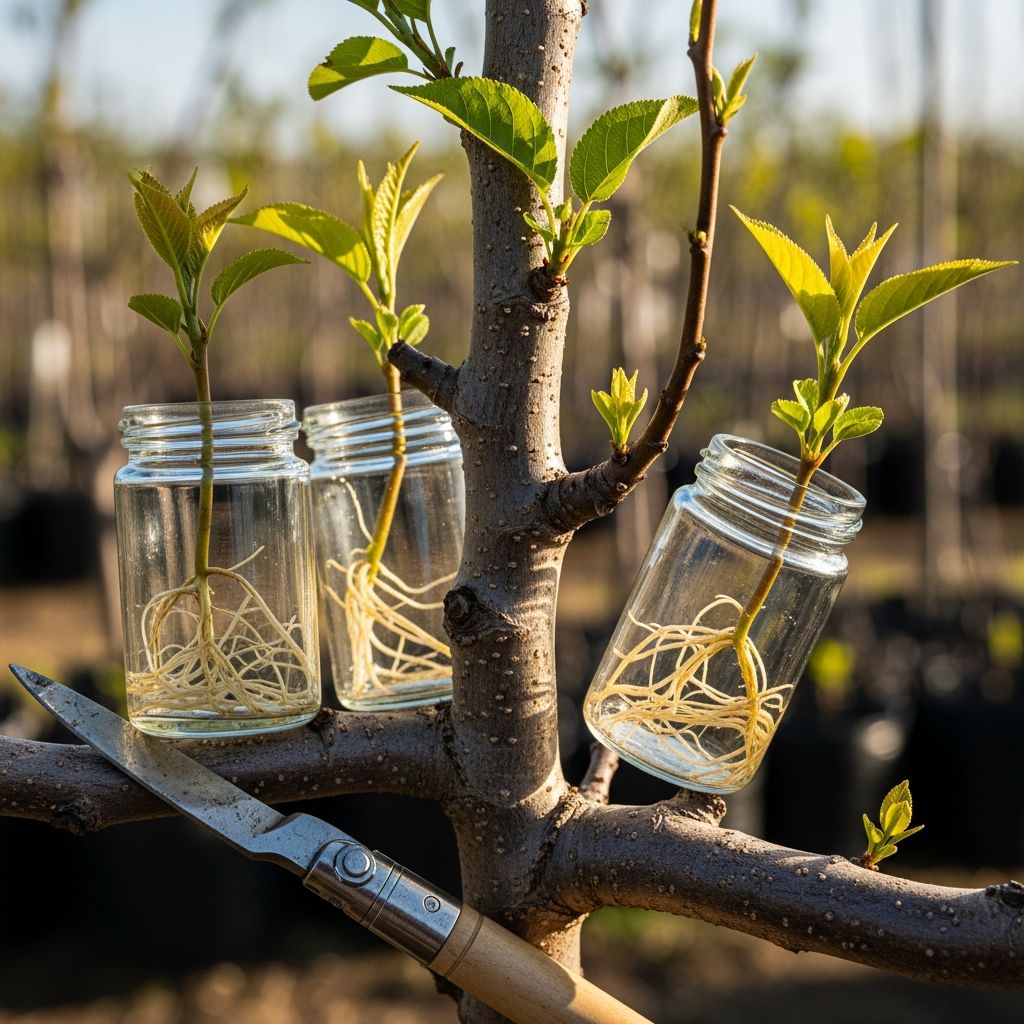
Cloning Fruit Trees from Branches: A Complete Guide
Propagating fruit trees from branches allows gardeners to create genetically identical copies of their favorite varieties, preserving exact fruit quality, flavor, and size that seed propagation often fails to replicate. Unlike seeds, which introduce genetic variation and delay fruiting for years, branch-based methods like air layering and cuttings produce mature, fruiting trees in 1-3 years.
Why Propagate Fruit Trees Vegetatively?
Vegetative propagation, or asexual reproduction, clones the parent plant’s desirable traits. This is essential for fruit trees because many hybrids do not come true from seed—offspring may lack the superior taste or vigor of the parent. Rootstocks further enhance clones by providing disease resistance, dwarfing for easier harvesting, or adaptation to poor soils, as seen in grapevines grafted onto phylloxera-resistant American rootstocks.
Common benefits include faster fruit production and uniformity. For tropical species like guava, lychee, and mango, air layering yields sturdy plants with established roots while still nourished by the mother tree. University research confirms high success rates: air layering succeeds in 80-90% of cases for species like longan and Spanish lime when done May through September.
Essential Tools and Materials for Success
Before starting, gather these items:
- Sharp pruning shears or grafting knife for clean cuts.
- Rooting hormone (IBA or NAA-based) to stimulate root growth.
- Moist sphagnum moss, potting mix, or coco coir for rooting medium.
- Plastic wrap, aluminum foil, or grafting tape to retain moisture.
- Grafting wax or pruning sealant for wound protection.
- Two-gallon pots with well-draining soil for transplanting.
Sterilize tools with alcohol to prevent disease transmission.
Method 1: Air Layering for Reliable Rooting
Air layering induces roots on a living branch while it remains attached to the parent tree, ensuring high survival rates. This technique excels for hard-to-root tropical fruits like citrus, guava, and avocado.
Step-by-Step Air Layering Process
- Select a branch: Choose a healthy, pencil-thick (1/2-inch diameter), one-year-old branch with new growth in spring or early summer (April-May ideal).
- Girdle the stem: Make two parallel cuts 1 inch apart around the branch, removing bark and cambium to expose wood. Scrape gently to prevent regrowth.
- Apply hormone: Dust the exposed area with rooting powder to accelerate root formation.
- Pack with medium: Wrap moist sphagnum moss or soil around the girdled section, forming a 4-inch ball.
- Seal tightly: Cover with plastic film, twisting and tying ends with twine or wire. Foil outside protects from sun.
- Monitor and wait: Roots form in 8-12 weeks. Check by gently squeezing for firmness.
- Sever and pot: Cut below roots, plant in well-draining soil, and fertilize lightly with 20-20-20 solution.
Success tip: For stubborn species, use the tourniquet method—wrap wire tightly instead of girdling to constrict nutrient flow and force rooting. Citrus trees like sweet lemon root reliably, bearing fruit within a year post-planting.
Method 2: Rooting Cuttings for Quick Starts
Cuttings involve severing a stem section and coaxing roots in a controlled environment. Best for pitaya, spondias, and some bushes; avoid for top-heavy trees like mango that develop weak roots.
How to Root Fruit Tree Cuttings
| Step | Action | Tips for Success |
|---|---|---|
| 1. Timing | Take 6-8 inch semi-hardwood cuttings May-September. | Choose disease-free branches with 2-3 nodes. |
| 2. Prepare | Dip basal end in rooting hormone. | Remove lower leaves to reduce transpiration. |
| 3. Plant | Insert in perlite-sand mix; mist regularly. | Maintain 70-80°F bottom heat. |
| 4. Acclimate | Roots in 4-8 weeks; harden off gradually. | Success rate: 50-70% for compatible species. |
Apples can root in a month under greenhouse conditions, resembling small trees soon after. However, many fruit trees require grafting post-rooting for vigor.
Method 3: Grafting for Superior Trees
Grafting joins a scion (fruiting branch) to a rootstock, combining top quality with robust roots. Preferred for most temperate and tropical fruits.
Popular Grafting Techniques
- Whip-and-Tongue: Diagonal cuts with interlocking ‘tongues’ on scion and rootstock; bind and wax. Ideal for small diameters in spring.
- Bud Grafting (T-Budding): Insert a single bud under rootstock bark in late summer; 70-90% success.
- Cleft Graft: Split rootstock vertically, wedge in scion; for larger trunks.
Match cambium layers precisely for union. Rootstocks confer phylloxera resistance or dwarfing. Practice on compatible pairs: dwarf M9 for apples, or tropical equivalents.
Choosing the Right Propagation for Your Fruit Tree
| Fruit Type | Best Method | Time to Fruit | Success Rate |
|---|---|---|---|
| Citrus, Guava | Air Layering | 1-2 years | High (80-90%) |
| Pitaya, Spondias | Cuttings | 1 year | Medium-High |
| Apple, Mango | Grafting | 2-3 years | High with practice |
| Lychee, Longan | Air Layering | 2 years | High |
Care for New Propagules: From Rooting to Fruiting
Post-propagation, provide partial shade, consistent moisture, and balanced fertilizer. Protect from pests with neem oil. Transplant to ground after 6-12 months when roots fill pots. Expect first fruits in 1-3 years, depending on variety and method.
Troubleshooting: Wilting indicates under-watering; rot from overwatering or poor drainage. Success improves with bottom heat mats and humidity domes.
Frequently Asked Questions (FAQs)
What is the fastest way to clone a fruit tree from a branch?
Air layering is fastest and most reliable, producing a rooted branch ready to pot in 2-3 months while drawing nutrients from the parent.
Can all fruit trees be propagated from cuttings?
No; many like mango form weak roots. Opt for air layering or grafting instead.
When is the best time for branch propagation?
Spring to summer (April-September) during active growth for optimal rooting.
Do cloned trees produce the same fruit as the parent?
Yes, vegetative methods ensure identical genetics, unlike seeds.
How long until a propagated tree bears fruit?
1-3 years, far quicker than 5-10+ from seed.
Advanced Tips for Expert Propagators
Experiment with tissue culture for mass production, though it’s lab-intensive. For temperate fruits, collect dormant scion wood in winter for spring grafting. Track varieties in a journal for best performers.
Propagation builds self-sufficient orchards. Start with easy air layering on guava or citrus to gain confidence, scaling to complex grafts.
References
- Tropical Fruit Tree Propagation Guide — CTAHR, University of Hawaii. 2013. https://www.ctahr.hawaii.edu/oc/freepubs/pdf/F_N-49.pdf
- Fruit tree propagation — Wikipedia (sourced from primary refs). 2023. https://en.wikipedia.org/wiki/Fruit_tree_propagation
- Tropical and Subtropical Fruit Propagation — EDIS, University of Florida IFAS. 2022. https://edis.ifas.ufl.edu/publication/HS1349
- Beginner’s Guide to Propagating Fruit — Permaculture Magazine. 2021. https://www.permaculture.co.uk/articles/beginners-guide-to-propagating-fruit/
- Propagation of Fruit Bearing Trees by Air-Layering — Instructables. 2019. https://www.instructables.com/Propagation-of-Fruit-Bearing-Trees-by-Air-Layering/
Similar Articles




Read full bio of medha deb