Cloning Trees from Cuttings: Complete Guide
Master the art of propagating trees using clippings with proven techniques for perfect genetic duplicates in your garden.
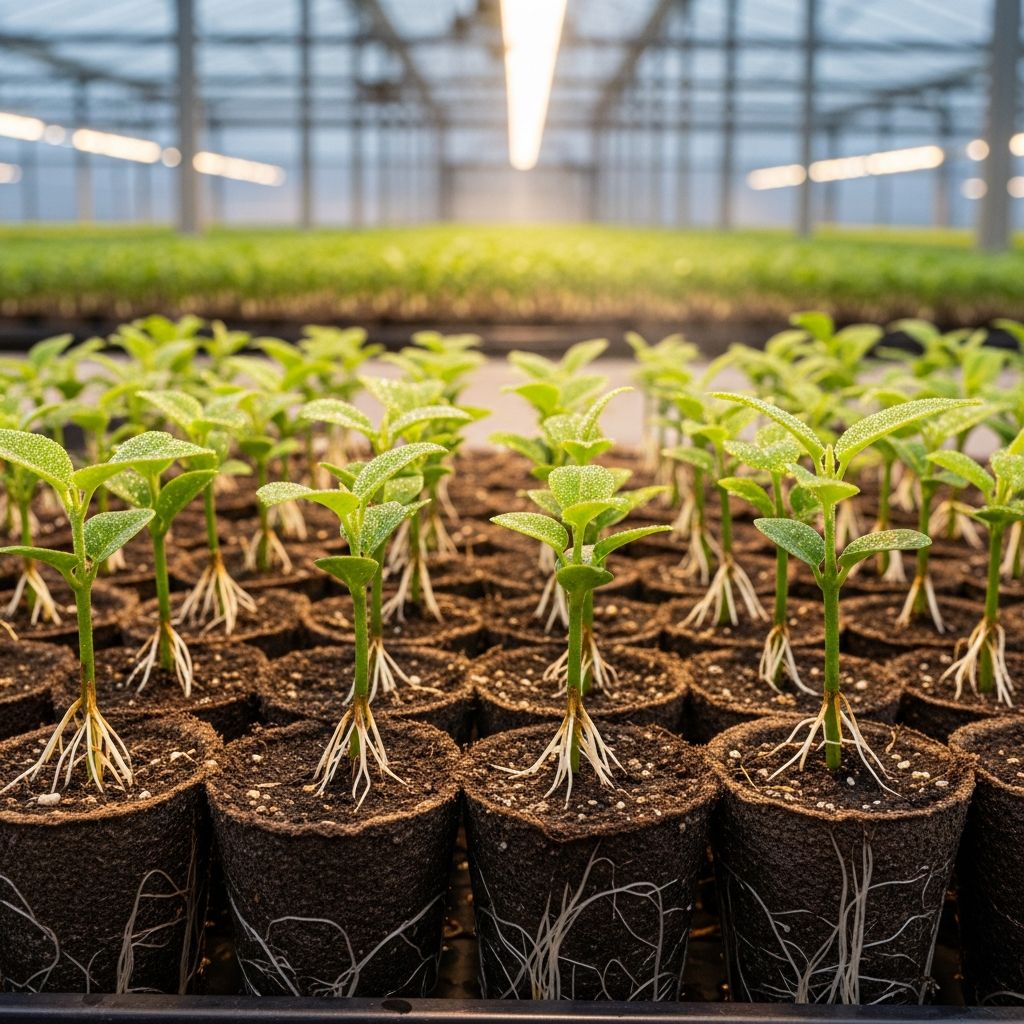
Replicating your favorite trees through cuttings offers a reliable way to produce genetically identical plants, preserving desirable traits like fruit quality or disease resistance. This process, known as vegetative propagation, bypasses seeds to ensure clones match the parent tree exactly.
Why Clone Trees Using Cuttings?
Cloning trees from clippings provides numerous advantages for gardeners and horticulturists. It allows preservation of superior specimens, such as those with exceptional yield or resilience, without relying on variable seed genetics. Unlike seeding, which can lead to inconsistent offspring, cuttings guarantee uniformity in growth habits, fruit production, and appearance. Additionally, this method accelerates establishment since clones often mature faster than seedlings.
- Genetic Fidelity: Clones inherit all parent characteristics, ideal for heirloom varieties.
- Speed: New plants root and grow quickly on established rootstock.
- Resource Efficiency: Uses minimal space and materials compared to growing from seed.
- Disease Management: Propagate resistant trees to combat pests like those affecting beech species.
Common trees suitable for cloning include fruit varieties like apple, citrus, and fig, as well as ornamentals such as oak and magnolia. Success rates improve with healthy parent trees and proper timing, typically spring or early summer when growth is active.
Essential Tools and Materials for Tree Cloning
Before starting, gather supplies to maximize rooting success. Basic items include sharp pruners for clean cuts, rooting hormone (powder, gel, or liquid forms), and growing mediums like potting soil or rockwool.
| Item | Purpose | Tips |
|---|---|---|
| Pruning Shears | Clean cuts to prevent disease | Sterilize with alcohol |
| Rooting Hormone | Stimulates root development | Dip base for 15-30 seconds |
| Moist Medium (Soil, Rockwool) | Supports root growth | pH neutral; soak rockwool first |
| Plastic Wrap/Aluminum Foil | Maintains humidity for air layering | Seal tightly around wounds |
| Grafting Knife | Precise cuts for grafting | Used for scion and rootstock matching |
Humidity domes or propagation trays help retain moisture, while a heat mat boosts rooting in cooler conditions. Select semi-hardwood cuttings—flexible yet sturdy—from vigorous branches.
Step-by-Step Air Layering Technique
Air layering induces roots on a living branch while attached to the parent tree, making it foolproof for hard-to-root species like fruit trees. This method works well for ficus, elm, oak, and magnolia.
- Select Branch: Choose a healthy, pencil-thick branch in active growth, ideally 12-18 inches long.
- Wound the Stem: About 12 inches from the tip, make two circular cuts 1 inch apart, removing bark and cambium layer to expose wood. Scrape gently to prevent healing over.
- Apply Hormone: Dust the wound with rooting powder to encourage root initiation.
- Wrap with Medium: Pack moist sphagnum moss around the area, then cover with aluminum foil or plastic, securing with tape. Keep moss damp by checking weekly.
- Monitor Roots: Roots form in 4-12 weeks; visible through wrapping.
- Sever and Pot: Cut below new roots, plant in potting mix, and acclimate gradually.
Air layering succeeds because the branch retains nutrients from the parent, reducing stress. It’s particularly effective for tropical and fruit trees, yielding robust clones.
Rooting Cuttings in Soil or Rockwool
For quicker results, sever cuttings and root them independently. This suits softer woods but requires precise conditions.
Soil Method
Fill pots with sterile potting soil, saturate, and insert hormone-dipped cuttings 2-3 inches deep. Cover with a dome for humidity, maintaining 70-80°F. Roots emerge in 3-6 weeks.
Rockwool Method
Soak cubes in pH-adjusted water overnight. Insert dipped cuttings into holes, place in trays with misting. High oxygen levels promote fast rooting.
Water cloning involves suspending cuttings in aerated water, changing it frequently to avoid rot. Expect 50-80% success with proper hormone use.
Advanced Grafting for Tree Cloning
Grafting joins a scion (desired variety) to rootstock for vigor and compatibility. Ideal for trees, it combines traits like disease resistance.
- Whip-and-Tongue Graft: Matching angled cuts interlock scion and rootstock.
- Cleft Graft: Split rootstock trunk, wedge in scion(s).
- Hot-Callus Grafting: Apply heat to wounds for beech and ash, enhancing union.
Perform in dormant season. Seal with wax or tape. Success relies on cambium alignment; survival rates reach 90% with practice. Tissue culture like somatic embryogenesis scales clones massively but requires labs.
Caring for New Clones Post-Propagation
Transplanted clones need protection. Provide bright, indirect light, consistent moisture without sogginess, and 60-75°F temperatures. Harden off over 1-2 weeks before outdoor planting.
Fertilize lightly after rooting with balanced NPK. Monitor for damping-off fungus; use fungicides if needed. Clones from basal sprouts root easiest. Multiple attempts improve odds, as not all cuttings succeed.
Common Challenges and Solutions
| Problem | Solution |
|---|---|
| No Roots Forming | Increase humidity, check hormone application |
| Rotting Cuttings | Improve drainage, sterilize tools |
| Graft Failure | Ensure cambium contact, use fresh cuts |
| Wilting Clones | Shade and mist during acclimation |
Juvenile tissues root best; older trees may need mound layering, burying shoots to multiply clones. Patience yields results—clones thrive long-term.
Frequently Asked Questions (FAQs)
Can any tree be cloned from cuttings?
Most can, but success varies. Fruit trees like citrus excel with air layering; conifers prefer grafting.
How long until clones produce fruit?
1-3 years, faster than seedlings, depending on variety and method.
Does cloning harm the parent tree?
No, if done moderately. Limit to healthy branches.
What’s the best season for cuttings?
Spring/early summer for softwood; fall for hardwood.
Is rooting hormone necessary?
Highly recommended; boosts success by 50-70%.
References
- CLONE a FRUIT TREE the EASY WAY | Air Layering Fruit Trees — YouTube (GrowAce). 2020. https://www.youtube.com/watch?v=fyISWJrIlWM
- Micropropagation, Grafting, and Layering Guide — GrowAce. 2019. https://growace.com/blogs/learning-center/micropropagation-grafting-and-layering-cloning-your-plants-a-different-way
- How to Clone Plants (with Pictures) — Trees.com. Recent access 2026. https://www.trees.com/gardening-and-landscaping/how-to-clone-plants
- Somatic Embryogenesis in Forestry: A Practical Approach — USDA Forest Service (SRS). 1997 (authoritative standard). https://www.srs.fs.usda.gov/pubs/ja/ja_diner003.pdf
- How to Clone a Tree — Holden Forests & Gardens. Recent. https://holdenfg.org/blog/how-to-clone-a-tree/
- CLONE Your Favorite Plants & Trees | AIR LAYERING — YouTube. Recent. https://www.youtube.com/watch?v=rOjf7LliPmM
Similar Articles








Read full bio of Sneha Tete