Complete Guide to Furnace Replacement
Learn everything about replacing your furnace, from signs to costs to DIY installation tips.
Your furnace is one of the most critical systems in your home, responsible for keeping your family warm during cold months. Understanding when and how to replace it can save you thousands of dollars and ensure your home remains comfortable year-round. This comprehensive guide covers everything you need to know about furnace replacement, from recognizing warning signs to understanding your options and installation procedures.
When Should You Replace Your Furnace?
Knowing the right time to replace your furnace can prevent unexpected breakdowns and emergency repair costs. Several key indicators suggest it’s time for a replacement:
Age of Your Furnace
The most significant factor in determining replacement timing is your furnace’s age. Most furnaces last between 15 to 20 years with proper maintenance. If your furnace is 15 years or older, you should start considering replacement options, even if it’s still functioning. Older furnaces become increasingly inefficient and prone to costly repairs as they age.
Rising Repair Costs
When repair bills start accumulating, replacement may be more economical than continued repairs. If a single repair costs 50% or more of a new furnace’s price, or if you’re spending $500 to $1,000 annually on repairs, replacement is typically the wiser financial decision. Older furnaces requiring frequent repairs signal declining efficiency and reliability.
Inconsistent Heating
If some rooms in your home are significantly warmer or cooler than others, your furnace may be failing to distribute heat evenly. This inconsistency often indicates internal problems such as a deteriorating heat exchanger or failing blower motor.
Strange Noises and Odors
Unusual grinding, banging, or squealing sounds suggest mechanical problems within your furnace. Similarly, burning smells or other strange odors warrant immediate attention and likely indicate replacement is necessary for safety reasons.
Rising Energy Bills
An aging furnace loses efficiency over time, forcing it to work harder to heat your home. If your heating bills have increased significantly despite stable usage patterns, your furnace’s declining efficiency is likely the culprit.
Understanding Furnace Costs and Efficiency
Furnace replacement represents a substantial investment, but understanding cost factors and efficiency ratings helps you make informed decisions.
Furnace Pricing
The cost of furnace replacement varies based on several factors including unit size, efficiency rating, brand, and installation complexity. Basic furnaces start around $2,500 to $4,000, while high-efficiency models can range from $6,000 to $10,000 or more when installed. These prices typically include both equipment and professional installation labor.
Efficiency Ratings Explained
Modern furnaces are rated by their Annual Fuel Utilization Efficiency (AFUE), which indicates what percentage of fuel is converted to heat. Standard furnaces have an AFUE of 80-85%, while high-efficiency models achieve 90-98% AFUE. Higher efficiency ratings mean lower operating costs over the furnace’s lifespan, often justifying the higher initial investment through energy savings.
Tax Credits and Rebates
Federal tax credits are available for upgrading to high-efficiency furnaces, and many utility companies offer rebates for energy-efficient installations. These incentives can significantly offset replacement costs, making high-efficiency models more affordable than initially apparent.
Proper Furnace Sizing
Selecting the correct furnace size is crucial for optimal performance, efficiency, and comfort. An undersized furnace won’t adequately heat your home, while an oversized unit cycles on and off frequently, reducing efficiency and increasing wear.
Professional HVAC technicians calculate proper sizing using heating load calculations based on your home’s square footage, insulation levels, climate zone, and window configurations. This technical assessment ensures your new furnace matches your home’s specific heating requirements. Improper sizing results in higher energy costs, uncomfortable temperature fluctuations, and premature furnace failure.
Professional Installation vs. DIY Installation
While some homeowners consider DIY furnace replacement to save money, this decision requires careful consideration of skill level, local codes, and safety requirements.
Professional Installation Advantages
Professional HVAC technicians bring expertise, proper tools, and knowledge of local building codes and safety standards. They ensure correct sizing, proper ventilation setup, gas line connections, electrical work, and refrigerant handling (for systems with air conditioning components). Professional installation includes warranty coverage on both labor and parts, providing protection if problems arise.
DIY Installation Considerations
If you have substantial HVAC experience, proper tools, and understand your local codes, DIY installation is possible. Key steps include shutting off gas and electrical power, disconnecting existing ductwork and gas lines, removing the old furnace, installing mounting brackets, connecting new gas lines (with thorough leak testing), establishing proper electrical connections, setting up ventilation and condensate drainage, and configuring the thermostat wire connections.
However, DIY installation risks include improper ventilation leading to carbon monoxide hazards, incorrect gas line connections causing fire risks, failed electrical connections, voided warranties, and code violations. Most municipalities require licensed contractors to perform furnace installations, and improper installation can compromise your home’s safety and void manufacturer warranties.
Furnace Installation Process Overview
Understanding the professional installation process helps you appreciate the complexity and importance of proper setup.
Pre-Installation Preparation
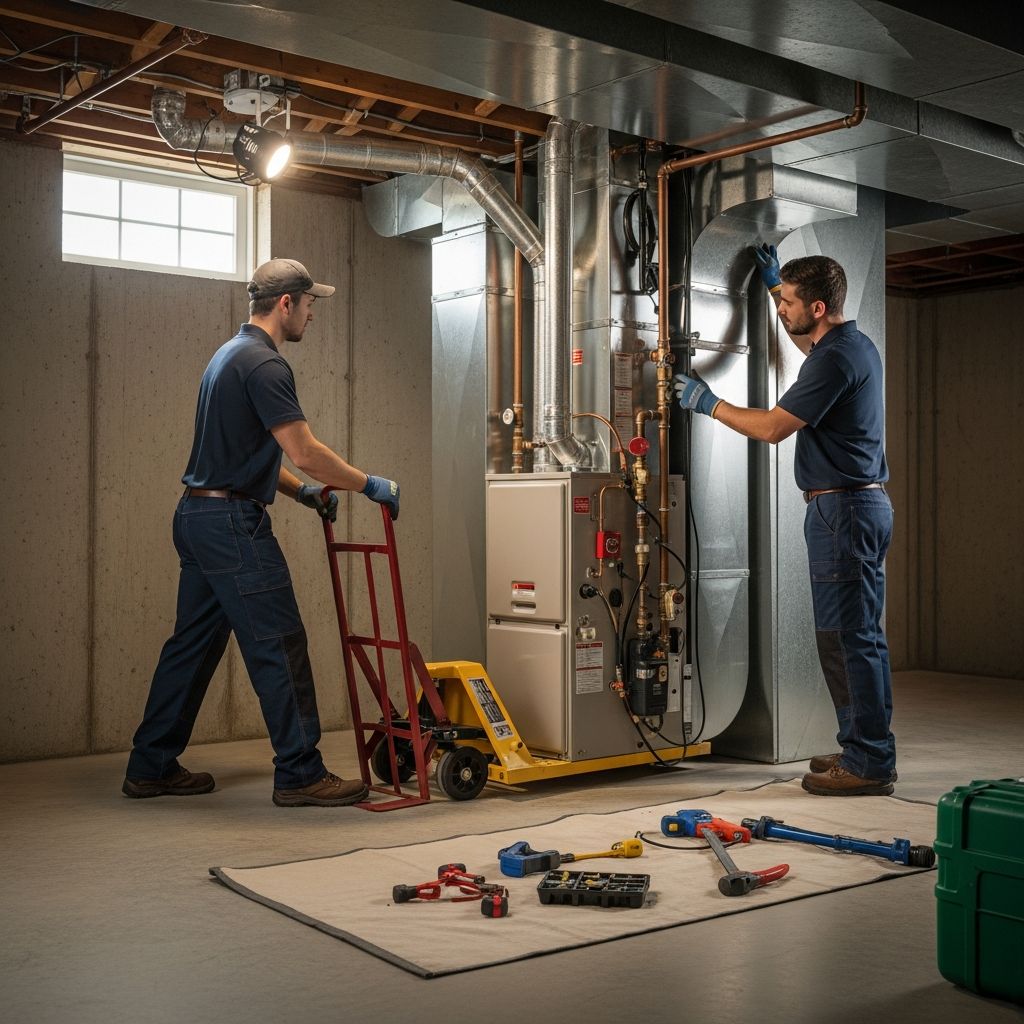
The installation begins with clearing adequate workspace around your furnace location. The technician shuts off gas at the exterior meter and turns off electrical power at the breaker panel. They then disconnect and carefully remove existing ductwork, beginning with supply and return plenums, disconnecting refrigerant lines if an air conditioning system is present, and removing gas and electrical connections.
Old Unit Removal
After disconnecting all lines and electrical connections, the technician removes sheet metal securing the old furnace box and carefully slides the old unit out. This step requires careful handling to avoid damaging surrounding ductwork and structures.
New Unit Installation
The new furnace is positioned in place and secured with appropriate mounting brackets. Sheet metal ducts are carefully reconnected, ensuring all joints are properly sealed to prevent air leaks. For systems with air conditioning components, refrigerant lines are carefully connected and pressure-tested.
Gas Line Connection
The new gas line is connected using appropriate fittings and materials as specified by local codes. After connection, the technician thoroughly tests all joints with a soap solution and gas leak detector to ensure safety. This step is critical for preventing dangerous gas leaks.
Electrical Connections
Proper electrical setup involves connecting the furnace to a dedicated 15-amp household circuit. Black wire is connected to the hot terminal, white wire to neutral, and green or copper wire to ground. A disconnect switch is typically installed in the circuit for safety and maintenance purposes. All connections are made inside the junction box built into the furnace or through a separate junction box mounted nearby.
Thermostat Installation
New thermostat wiring is installed using proper gauge wire and secure connections. For systems with both heating and cooling components, connections from both the furnace and outdoor condensing unit must be properly integrated at the thermostat.
Ventilation and Drainage Setup
Proper ventilation venting is installed to safely remove combustion byproducts outdoors. For systems with air conditioning, condensate drain lines are properly sloped and connected to appropriate drainage points to prevent water backup. All connections are sealed with appropriate materials to ensure proper performance.
System Testing and Calibration
After installation, the technician performs comprehensive testing including checking for gas leaks, verifying proper electrical connections, testing airflow and static pressure, and ensuring the system cycles on and off appropriately. Many installers use specialized equipment like manometers to verify static pressure is within manufacturer specifications.
Maintenance After Replacement
Proper maintenance extends your new furnace’s lifespan and maintains efficiency. Annual professional inspections before heating season, regular filter changes (typically every 1-3 months), and keeping vents clear of obstructions all contribute to long-term performance and reliability.
Frequently Asked Questions
Q: How long does furnace installation typically take?
A: Professional furnace installation usually takes 8 to 12 hours for a complete replacement, depending on complexity, existing conditions, and whether upgrades to ductwork or electrical systems are needed.
Q: Can I install a furnace myself to save money?
A: While experienced DIYers with proper knowledge may attempt installation, most municipalities require licensed contractors. Professional installation ensures compliance with codes, safety standards, and warranty coverage, making it worth the investment.
Q: What’s the difference between high-efficiency and standard furnaces?
A: High-efficiency furnaces (90-98% AFUE) convert more fuel to usable heat than standard models (80-85% AFUE), resulting in significantly lower operating costs despite higher upfront prices.
Q: Should I replace my furnace before it completely fails?
A: Yes, replacing a furnace before complete failure prevents emergency situations, allows time to research options and secure quotes, and typically results in better deals than emergency replacements.
Q: Are there tax credits available for furnace replacement?
A: Federal tax credits are available for energy-efficient furnace installations, and many utility companies offer additional rebates, significantly reducing your net replacement cost.
Q: How often should I maintain my new furnace?
A: Schedule annual professional maintenance before heating season, change filters every 1-3 months depending on conditions, and keep all vents and returns clear of obstructions.
References
- Replacing Your Gas Furnace Is Easier Than You’d Think — The DIY HVAC Guy. YouTube video. https://www.youtube.com/watch?v=gLdV-lz39q8
- Save THOUSANDS Replacing Your Gas Furnace Yourself — The DIY HVAC Guy. YouTube video. https://www.youtube.com/watch?v=jo98d4lx0FQ
- How to Replace Your Own Furnace — Mr. Money Mustache. 2015-11-23. https://www.mrmoneymustache.com/2015/11/23/diy-gas-furnace/
- Complete Furnace Replacement Guide for 2025 — Budget Heating. https://www.budgetheating.com/blog/complete-furnace-replacement-guide/
- 5 Bad Signs To Replace Your Furnace — Automatic Climate. https://automaticclimate.com/5-signs-to-replace-your-furnace/
Similar Articles







Read full bio of Sneha Tete