Lawn Dethatching: Complete Guide To Revitalize Your Grass
Master the art of removing thatch to restore your lawn's health and vitality.
Complete Guide to Lawn Dethatching: Revitalize Your Grass
A healthy, vibrant lawn requires more than just regular mowing and watering. One of the most overlooked yet essential maintenance tasks is dethatching—the process of removing accumulated dead plant material that builds up at the base of your grass. This comprehensive guide will walk you through everything you need to know about dethatching, from identifying when your lawn needs it to performing the task yourself and caring for your lawn afterward.
Understanding Thatch and Why It Matters
Thatch is a naturally occurring layer of dead grass, roots, and other organic debris that accumulates between the green grass blades and the soil surface. While a thin layer of thatch (up to half an inch) can actually be beneficial, providing insulation and protection for grass roots, excessive thatch becomes problematic. When this layer becomes too thick, it prevents water, air, and nutrients from penetrating the soil, essentially smothering your grass and creating conditions favorable to disease and pest infestations.
Think of thatch as a barrier that suffocates your lawn. Instead of nutrients and moisture reaching the root system where they’re needed most, they get trapped above the soil surface. This leads to weak, thin grass growth, patchy areas, and an overall decline in lawn appearance and health.
Recognizing When Your Lawn Needs Dethatching
Before you start the dethatching process, you need to determine whether your lawn actually requires it. Not every lawn needs annual dethatching, and over-dethatching can damage healthy grass. The most reliable way to assess your thatch layer is through a simple inspection.
How to Check Your Thatch Layer:
Using a spade or garden trowel, carefully cut out a small plug or wedge from your lawn, including the soil beneath it. Examine the cross-section you’ve created. You should see three distinct layers: green grass blades on top, the brown thatch layer in the middle, and dark soil at the bottom. Measure the thickness of that brown middle layer.
If the thatch layer measures more than half an inch (approximately 12-13 mm) thick, your lawn would benefit from dethatching. If it measures 1 to 2 inches or more, your lawn is likely already showing signs of decline, including weak growth, thin patches, and discoloration.
Visual Signs Your Lawn Needs Dethatching:
- Thin, sparse grass that doesn’t fill in bare spots naturally
- Patchy areas throughout the lawn
- Pale or yellowish grass color despite adequate watering
- Poor drainage or water pooling on the surface
- Increased susceptibility to disease and pests
- Grass that feels spongy or bouncy underfoot
Timing Your Dethatching Project
When you dethatch matters significantly. Performing this aggressive maintenance during the wrong season can stress or damage your lawn beyond recovery. The optimal timing depends entirely on what type of grass grows in your yard.
For Cool-Season Grasses:
If your lawn consists of cool-season varieties such as Kentucky bluegrass, perennial ryegrass, or fine fescue, dethatching works best in late summer or early fall. Some experts recommend spring dethatching as an alternative, particularly to remove thatch that accumulated over winter. Cool-season grasses are most active during spring and fall months when temperatures are moderate, making these ideal periods for recovery.
For Warm-Season Grasses:
Warm-season varieties including Bermudagrass, Zoysia, St. Augustine, Bahia grass, and Couch grass should be dethatched in late spring or early summer, after spring green-up when the grass enters its peak growth phase. These grasses thrive during hot months and can recover quickly from the stress of dethatching when they’re actively growing.
Critical Timing Rules:
Never dethatch when your grass is dormant or stressed by drought, heat, or cold. Dethatching during dormancy removes living grass tissue along with dead material, potentially damaging the lawn beyond recovery. If your region is experiencing drought conditions or extreme heat, postpone dethatching until conditions improve and growth resumes.
Most homeowners will only need to dethatch once every two to three years after the initial process. However, lawns with chronic thatch buildup may require more frequent attention, potentially annually.
Essential Tools for Dethatching
You have several options when it comes to tools, ranging from basic implements to powered equipment. Your choice depends on your lawn size, physical capability, and budget.
| Tool Type | Best For | Effort Level | Cost |
|---|---|---|---|
| Standard Leaf Rake | Very small areas or light thatch | Very High | Low (likely already owned) |
| Dethatching Rake | Small to medium lawns | High | Low to Moderate |
| Power Dethatcher/Scarifier | Large lawns or heavy thatch | Moderate | Moderate to High (rental available) |
Standard Leaf Rake:
If you don’t own specialized gardening tools, a standard leaf rake can work in a pinch. However, leaf rake tines are designed for surface debris removal, not for digging into tangled thatch layers. This option is extremely labor-intensive and only practical for very small lawn areas or minor thatch problems.
Dethatching Rake (Spring Tine Rake):
This is the best manual solution for most homeowners. A dethatching rake features short, sharp tines that cut into the thatch layer and pull it upward. Many models have straight tines on one side for pulling up thatch and curved tines on the other side for cultivating soil. This tool requires significant physical effort but provides good control and works well for small to medium-sized lawns.
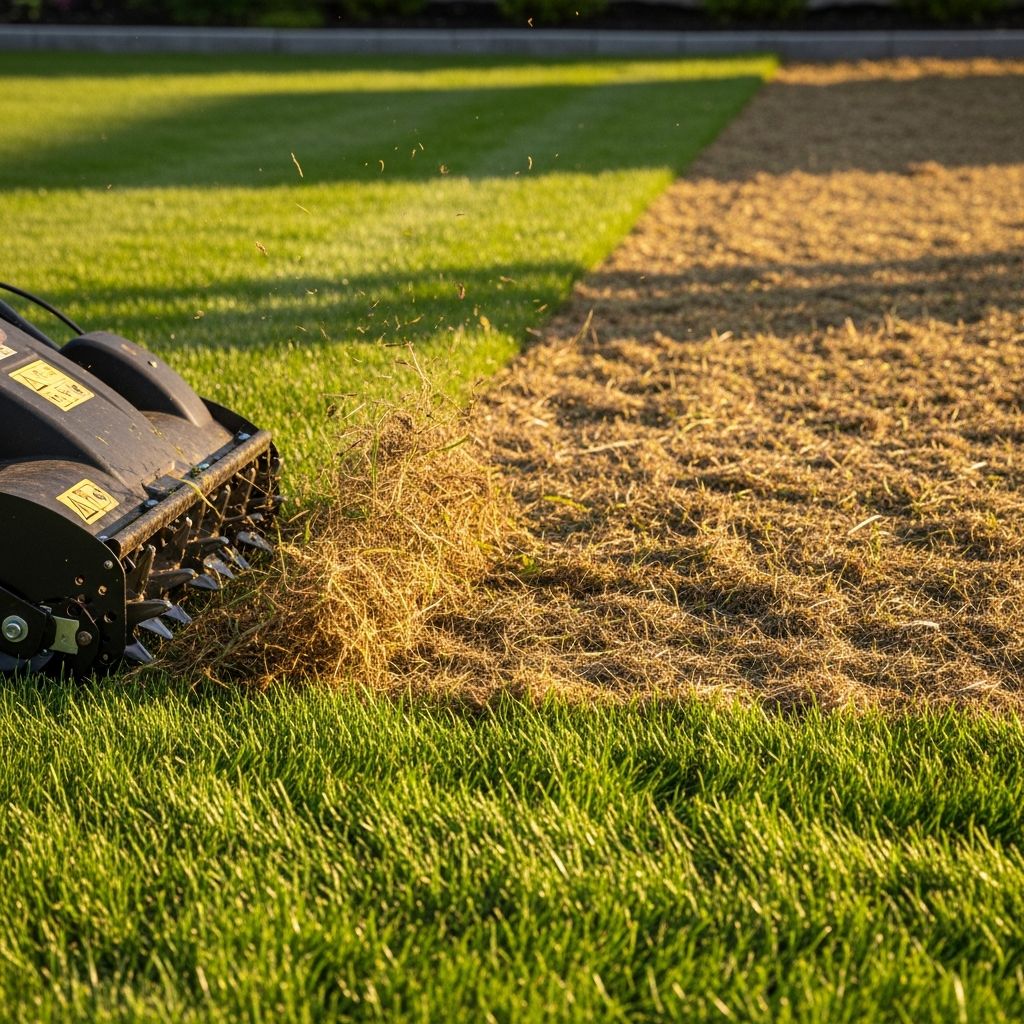
Power Dethatcher or Vertical Mower:For larger lawns or thick thatch buildup, powered equipment is more efficient. A power dethatcher or scarifier uses rotating metal tines or blades to remove thatch more quickly than manual methods. Many equipment rental stores stock these machines, especially during spring and fall dethatching seasons. This option requires less physical exertion and covers larger areas faster, though it does produce significant noise and vibration.
Step-by-Step Dethatching Process
Once you’ve determined your lawn needs dethatching and chosen your tool, follow this systematic approach to remove thatch effectively while minimizing stress to your grass.
Step 1: Prepare Your Lawn
Begin by mowing your lawn to a short height, as you would for normal maintenance. This accomplishes two things: it removes surface-level debris and makes it easier to access and remove the thatch layer below. Short grass also allows you to see the thatch more clearly and ensures your tool makes good contact with the problem area.
Step 2: Loosen the Soil Foundation
Before beginning to rake, lightly water your lawn to protect grass roots from the stress of dethatching. Using a garden fork, gently loosen the soil across the area. This step makes thatch removal easier and reduces damage to grass roots. You’re not digging deeply—just enough to break up compaction and create space for tool penetration.
Step 3: Perform the Dethatching
Now comes the main work. Using your chosen tool, rake in a crisscross pattern over the affected area. Push the rake or dethatcher deeply into the ground to properly dislodge the thatch layer. If using a manual rake, work systematically in one direction, then repeat in the perpendicular direction to ensure complete coverage.
For powered equipment, follow the manufacturer’s instructions. Most power dethatchers have collection boxes or bags attached; if yours doesn’t, you’ll need to remove debris as you work.
Step 4: Remove Debris
After dethatching, significant amounts of dead material will be scattered across your lawn. Use a standard rake to collect this debris into piles for removal. Alternatively, set your rotary mower to a high cutting height and run it over the lawn; this collects thatch into the mower bag. Either way, clear all visible thatch and dead grass from the lawn surface.
Step 5: Final Mowing
Once debris is removed, mow your lawn again at normal height to remove any remaining loose thatch and help the grass look uniform.
Post-Dethatching Care and Recovery
Your lawn has undergone significant stress during dethatching, even though the process was necessary for its health. How you care for your grass immediately after dethatching heavily influences how quickly it recovers.
Watering:
Water your lawn thoroughly after dethatching to help the grass recover from the stress of the process. This moisture penetrates the soil now that thatch is no longer blocking it, reaching the root system where it’s most beneficial. Maintain consistent moisture for the next few weeks without overwatering, which can promote disease.
Fertilizing:
Apply a balanced fertilizer to your dethatched lawn to support recovery and encourage new growth. Fertilization provides essential nutrients that the grass roots can now access more readily without the thatch barrier. Choose a fertilizer appropriate for your grass type and follow application rates carefully.
Reseeding:
If dethatching removed substantial living grass along with dead material, leaving significant bare spots, overseed the affected areas. Use seed appropriate for your grass type and climate. The newly prepared soil from dethatching actually provides ideal conditions for seed germination.
Avoid Additional Stress:
Don’t apply herbicides or additional treatments for several weeks after dethatching. Your lawn is temporarily weakened and needs time to recover. Keep foot traffic and activity on the lawn minimal during the recovery period.
Frequently Asked Questions
How often should I dethatch my lawn?
Most lawns require dethatching only once every two to three years after initial treatment. Lawns with severe thatch buildup may need annual dethatching, while lawns with minimal thatch might only need attention every few years.
Can I dethatch my lawn myself, or should I hire a professional?
Dethatching is definitely a DIY-friendly project for small to medium lawns using manual tools. For very large lawns or extremely thick thatch, renting powered equipment might be more practical. Hiring professionals is an option but usually unnecessary for homeowners willing to put in the physical effort.
What’s the difference between dethatching and scarifying?
These terms are often used interchangeably, though some regions distinguish between them. Dethatching typically refers to removing thatch with spring tine rakes or power dethatchers, while scarifying sometimes implies more aggressive removal that also cuts into the soil surface. For most homeowners, both terms describe the same general process.
Will dethatching damage my lawn?
When performed at the right time during active growth periods, dethatching causes minimal permanent damage. Yes, your lawn will look rough immediately after the process, but it recovers within weeks to a few months. Improper timing (during dormancy or drought) is what causes serious damage.
Can I dethatch immediately after applying weed killer?
No. Wait at least several weeks after any chemical applications before dethatching. Similarly, don’t apply chemicals for several weeks after dethatching. Your lawn needs time to recover without additional chemical stress.
Conclusion
Dethatching is one of the most impactful lawn maintenance tasks you can perform, yet many homeowners overlook it or perform it incorrectly. By understanding your grass type, checking your thatch layer regularly, timing the work appropriately, using the right tools, and providing proper post-care, you can restore your lawn’s health and appearance dramatically. The investment of time and effort pays dividends in a lush, vibrant lawn that resists disease, tolerates stress better, and requires less overall maintenance going forward.
References
- The Only Dethatching Lawn Guide You’ll Ever Need — Atlas Turf. Accessed February 2026. https://atlasturf.com.au/lawn-care-tips/dethatching-lawn/
- How to Dethatch Your Lawn the Right Way — House Beautiful. Accessed February 2026. https://www.housebeautiful.com/lifestyle/gardening/a65823549/how-to-dethatch-lawn-guide/
- The Basics of Dethatching Your Lawn — Opeit’s Mow Time. Accessed February 2026. https://www.opeitsmowtime.com/post/the-basics-of-dethatching-your-lawn
- Dethatch or Scarify Your Lawn: A Guide for Homeowners — Ripon Groundcare. Accessed February 2026. https://ripongroundcare.com/blogs/lawn-care/dethatch-scarify-lawn
- Why, When and How to Dethatch Your Lawn — Pennington Seed. Accessed February 2026. https://www.pennington.com/all-products/grass-seed/resources/why-when-and-how-to-dethatch-your-lawn
Similar Articles



Read full bio of medha deb