Complete Guide to Nurturing Climbing Roses
Master the art of growing vibrant climbing roses with expert care techniques and seasonal strategies.
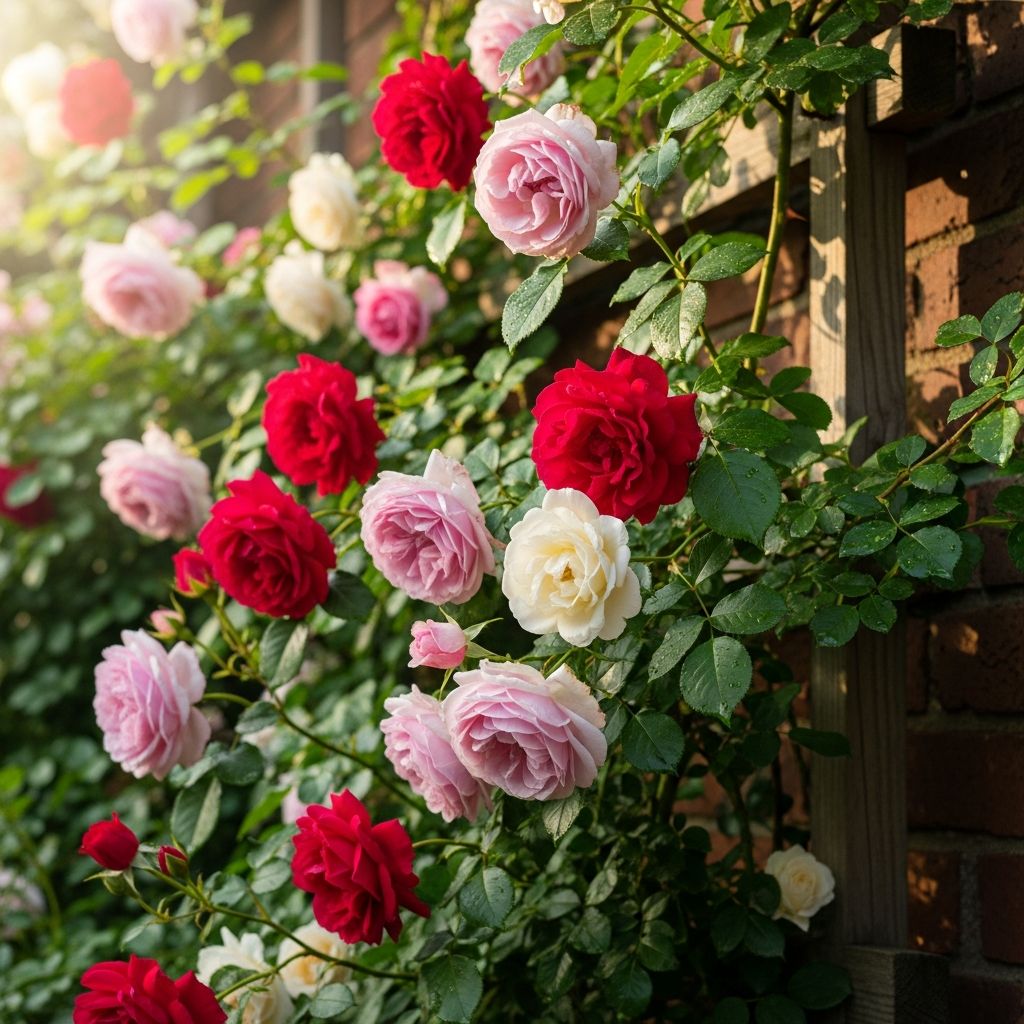
Understanding the Foundation: Where to Plant Your Climbing Roses
The success of your climbing roses begins long before you see the first bloom. Location selection determines whether your roses will flourish or merely survive. Climbing roses thrive in environments with full sun exposure, ideally receiving at least six to eight hours of direct sunlight daily. While some cultivars demonstrate tolerance for partial shade, the most robust flowering occurs in sunny positions with excellent light penetration throughout the day.
Beyond sunlight, the soil composition plays an equally critical role in establishing healthy plants. Your climbing roses require moist yet well-drained soil enriched with organic matter such as compost or aged manure. This dual requirement ensures roots receive adequate moisture while preventing waterlogging, which creates conditions favorable to fungal infections. The soil should be fertile enough to support vigorous growth without requiring excessive supplemental feeding.
Consider the microclimate around your planting site carefully. Air circulation significantly influences disease prevention, as stagnant air promotes fungal proliferation. When positioning climbing roses near walls or trellises, maintain several inches of space between the support structure and the wall to allow air movement. This simple adjustment dramatically reduces humidity levels that contribute to black spot, powdery mildew, and other fungal problems.
Planting Strategy and Initial Establishment
Timing matters when introducing climbing roses to your garden. Plant your roses during dormant periods—either in early spring or late autumn on a dry, frost-free day. These seasons allow the root system to establish before facing temperature extremes or intensive growth demands.
The planting procedure itself deserves careful attention. Excavate a planting hole that measures at least twice the depth and width of the root ball. This spacious accommodation allows roots to expand into loosened soil without encountering resistance. Incorporate well-rotted organic matter into the excavated soil—this amendment improves drainage, enhances nutrient content, and facilitates beneficial microbial activity that supports root development.
When positioning the rose in the hole, ensure it sits at the identical depth it occupied in its nursery container. Look for the soil tide mark on the stem—this visible line indicates the previous soil level. Gently tease apart compacted roots before backfilling with amended soil, then firm the soil with your heel and water thoroughly to eliminate air pockets. This establishment irrigation proves critical for settling the soil and initiating root-soil contact.
For gardeners with limited space or poor soil conditions, container cultivation offers a viable alternative. Select the largest pot manageable, as expanded soil volume provides superior nutrient reserves and moisture buffering. Position the container against the wall or support structure before planting to avoid root disturbance during arrangement adjustments.
Training and Support Systems: Shaping Growth Direction
Unlike shrub roses that develop naturally compact forms, climbing roses require active training to maximize flowering potential and aesthetic appeal. During the first two years after planting, focus on establishment rather than pruning. Your primary objective involves guiding stems in the desired direction and allowing the plant to develop a substantial base for fuller appearance. Remove only obviously dead, diseased, or damaged wood during this period.
The choice of support structure influences both plant performance and maintenance requirements. Horizontal training systems—including trellises, wire frameworks, and pergolas—encourage flowering more effectively than purely vertical arrangements. When stems grow horizontally, flowering breaks develop along the entire length rather than concentrating at the terminal points. This architectural approach to training transforms sparse, top-heavy specimens into abundant bloomers that cover support structures comprehensively.
Secure stems using soft materials such as plant tape or loosely tied natural fiber string. Rigid bindings damage tender growth and restrict sap movement, while flexible fasteners accommodate stem expansion as the plant develops. Tie in new growth regularly throughout the growing season, gently manipulating stems toward their intended positions. This ongoing attention prevents tangled growth, reduces winter storm damage risk, and maintains the architectural framework you envision.
Hydration Practices: Finding the Water Balance
Climbing roses demand consistent, regular watering, particularly during the establishment year and throughout growing seasons. The fundamental principle involves providing adequate moisture without creating waterlogged conditions that invite root rot and fungal diseases. Morning watering proves superior to evening irrigation, as it reduces foliar wetness duration and allows leaves to dry quickly under sun exposure.
Direct water toward the soil surface at the plant’s base rather than overhead sprinkling. Wet foliage creates ideal conditions for fungal spore germination and infection establishment. For potted roses, check soil moisture daily during summer months by inserting your finger several inches into the growing medium—if the compost feels dry, water thoroughly until moisture drains from the container base. Container specimens require more frequent irrigation than in-ground plants because soil volume is limited and moisture depletes rapidly.
Roses require approximately 2.5 centimeters (one inch) of water weekly, whether delivered through rainfall or supplemental irrigation. During extended dry periods, increase watering frequency while maintaining the principle of deep, thorough applications rather than light, frequent sprinkling. Deep watering encourages root systems to extend downward, creating more resilient plants capable of accessing moisture during temporary dry spells.
Nutritional Support: Feeding Programs Through the Season
Climbing roses extract significant nutrients from the soil during vigorous growth and prolific flowering. A well-planned feeding strategy sustains plant vigor without promoting excessive vegetative growth at the expense of flower production. Begin with a slow-release, time-release granular fertilizer applied in early spring before new growth emerges. Water thoroughly before and after feeding to prevent fertilizer burn that damages root tissue.
For potted roses, the feeding regimen requires intensification because container compost contains limited nutrient reserves. Apply the initial slow-release fertilizer in early spring, then follow with fortnightly liquid fertilizer applications throughout the flowering season. A high-potash formulation—similar to tomato fertilizers applied at half strength—encourages bloom development while supporting sturdy stem formation.
Mulching complements chemical fertilization by slowly releasing nutrients as organic matter decomposes. Apply several inches of mulch around the plant base using well-rotted compost, aged manure, or leaf mold in spring. This organic layer moderates soil temperature fluctuations, suppresses competing weeds, and retains moisture during warm weather. In late autumn, add additional mulch to provide winter insulation, then remove excess material once ground temperatures begin warming in spring.
Pruning Techniques: Developing Structure and Abundance
Strategic pruning transforms climbing roses from unruly tangles into structured specimens that bloom prolifically. The approach changes as plants mature. During the first few years post-planting, minimal pruning occurs—simply train new stems and remove obviously dead wood. Once the plant establishes itself, typically in year three or four, systematic pruning becomes essential for sustained performance.
Annual winter pruning forms the cornerstone of climbing rose maintenance. Conduct primary pruning in late winter or early spring, before vigorous growth begins. Remove any dead, diseased, broken, or crossing canes, cutting just above a dormant bud pointing in the growth direction you wish to encourage. Avoid cutting above buds that direct growth toward pathways or undesired directions.
Lateral shoots—the side branches—receive lighter pruning than main framework canes. These laterals produce the majority of flowers, so prune them to approximately four healthy buds rather than removing them entirely. Some gardeners employ a staggered pruning approach, removing approximately 30 percent of branches down to two-thirds plant height, another 30 percent to one-third height, and tidying the remainder. This technique distributes flowering along the entire structure rather than concentrating blooms at terminal positions.
Ongoing maintenance pruning occurs throughout the growing season. Deadheading—removing spent flowers—encourages repeat blooming on recurrent flowering varieties and prevents seed development that redirects energy away from new flowers. Lateral shoots can be lightly pruned any time to maintain shape and tidy appearance. This consistent attention prevents overgrowth that becomes difficult to manage and maintains the aesthetic framework you’ve developed.
Disease Recognition and Management Strategies
Climbing roses generally demonstrate superior disease resistance compared to hybrid tea or floribunda varieties, yet they remain vulnerable to several fungal infections. Black spot, powdery mildew, rust, and anthracnose represent the most common fungal problems, typically triggered by excessive moisture, humidity, or poor air circulation. These infections manifest as darkened lesions on foliage, whitish powder coatings, or rusty pustules—symptoms that worsen rapidly without intervention.
Prevention strategies prove far more effective than treatment. Maintain good air circulation through proper spacing and strategic pruning. Water at the soil surface during morning hours to keep foliage dry and allow any moisture to evaporate quickly. Remove fallen leaves and spent flowers promptly, clearing the ground around plant bases to eliminate debris that harbors fungal spores. In autumn, this cleanup becomes especially important as disease pressure peaks during cool, moist conditions.
When disease becomes established despite preventive measures, interventions range from cultural practices to chemical applications. Regular hosing with water washes spores from foliage, providing short-term relief. Winter sterilizing washes applied during dormancy address overwintering spores. Some gardeners report success with skimmed milk solutions sprayed on affected foliage, though scientific evidence supporting this approach remains limited. For severe infections, commercial fungicides formulated for roses may become necessary.
Pest Control: Managing Unwanted Insects
While disease presents the primary challenge for climbing roses, several insect pests can compromise plant health and appearance. Aphids, scale insects, whiteflies, and rose curculio weevils commonly infest climbing roses, feeding on sap or damaging foliage and buds.
Begin with non-chemical control methods whenever feasible. A forceful water spray effectively dislodges aphids and whiteflies, temporarily removing pest pressure while you implement longer-term solutions. Yellow sticky traps attract and capture flying insects, reducing reproduction rates through mechanical control. These approaches integrate naturally into organic gardening systems without introducing chemical residues.
For more persistent infestations, insecticidal soap works rapidly on contact, eliminating soft-bodied insects without the environmental persistence of synthetic pesticides. Apply soap-based products thoroughly, ensuring coverage of stems, leaf undersides, and buds where pests congregate. Multiple applications at five- to seven-day intervals may be necessary for complete control.
Maintaining vigorous, healthy plants through proper cultivation naturally reduces pest susceptibility. Stressed plants suffer greater damage from insect feeding and demonstrate reduced ability to recover. Regular inspection catches infestations early, when populations remain manageable through simple interventions.
Seasonal Transitions: Preparing for Winter and Spring
Climbing roses experience distinct seasonal cycles that demand adjusted care approaches. As autumn progresses and temperatures cool, gradually reduce supplemental watering while allowing rainfall to supply plant needs. Clear fallen leaves and debris from around plant bases to prevent fungal overwintering and pest habitat creation. Apply additional mulch in late autumn, piling several inches around the base for winter insulation and root protection during freeze-thaw cycles.
Spring renewal begins when ground temperatures warm and buds show swelling. Remove excess mulch accumulated during winter to allow soil warming and air penetration. Conduct primary annual pruning before vigorous growth begins. Resume regular fertilizing and watering as new growth emerges and the plant transitions into intensive growth and flowering phases.
Container Growing: Adaptations for Pot Cultivation
Climbing roses grown in containers require adjusted care that accounts for the confined growing medium. Select the largest pot practical for your space, as expanded soil volume provides superior insulation against temperature fluctuations and maintains more consistent moisture availability. Use one plant per container to prevent root competition and ensure each specimen receives adequate resources.
Position containers against their intended support structure before planting to avoid disturbing roots later. Container soil dries more rapidly than in-ground soil, necessitating daily moisture checks during summer months. Insert your finger several inches into the compost—if it feels dry, water thoroughly until drainage appears from the container base.
Container roses benefit from aggressive feeding schedules. Beyond the initial spring slow-release fertilizer, apply fortnightly liquid feeds throughout the growing season. This intensive feeding compensates for nutrient depletion in the limited compost volume and supports sustained flowering. Apply mulch in spring to moderate temperature fluctuations and reduce watering frequency, using well-rotted compost or bark materials.
Frequently Asked Questions
Q: How often should I water climbing roses?
A: Climbing roses need consistent watering throughout the growing season, requiring approximately 2.5 centimeters (one inch) weekly. Water at the soil base during morning hours, and water daily during summer for potted roses if the top inches of soil feel dry to the touch.
Q: When is the best time to prune climbing roses?
A: Prune in late winter or early spring before new growth emerges. For established plants, focus on removing dead, diseased, or crossing canes while lightly pruning lateral shoots to approximately four healthy buds. Deadhead spent flowers throughout the growing season to encourage repeat blooming.
Q: Can climbing roses grow in partial shade?
A: While climbing roses prefer full sun with at least six to eight hours of direct light daily, some cultivars tolerate partial shade. However, flowering will be less abundant than in sunny locations, and disease pressure may increase due to reduced air circulation and slower foliage drying.
Q: What causes black spot on my climbing roses?
A: Black spot develops due to fungal infections triggered by excessive moisture, humidity, or poor air circulation. Prevent this disease by watering at soil level during morning hours, maintaining adequate spacing for air flow, and removing fallen foliage promptly. Apply fungicidal treatments for established infections.
Q: How much sun do climbing roses need?
A: Climbing roses thrive with full sun exposure, ideally six to eight hours of direct sunlight daily. Excellent light exposure promotes robust flowering, strengthens stems, and reduces fungal disease incidence through faster foliage drying and improved air circulation.
Q: How do I support climbing roses on a wall?
A: Use a free-standing support structure positioned several inches away from the wall to allow air circulation. Train horizontal growth to maximize flowering potential, using soft plant tape or natural fiber string to secure stems. Hand-tie stems to the support as the climber grows, guiding them in your desired direction.
References
- How to Grow Climbing Roses in Your Garden — Garden Design. 2024. https://www.gardendesign.com/roses/climbing.html
- How to grow climbing roses — Gardeners’ World. 2024. https://www.gardenersworld.com/how-to/grow-plants/how-to-grow-climbing-roses/
- A Guide to Growing Climbing and Rambling Roses in Pots — David Austin Roses. 2024. https://www.davidaustinroses.com/blogs/rose-care/planting-climbing-and-rambling-roses-in-pots
- Rose (Climbing) Grow Guide — Grow Veg. 2024. https://www.growveg.com/plants/us-and-canada/how-to-grow-rose-climbing/
- Maintaining Climbing & Rambling Roses Workshop Fact Sheet — Peter Beales Roses. 2024. http://www.peterbealesroses.com/
Similar Articles








Read full bio of Sneha Tete